Am I Wrong for Destroying Embryos After My Friendship Fell Apart?
What began as an act of kindness between friends ended in broken trust, threats, and a legal fight.
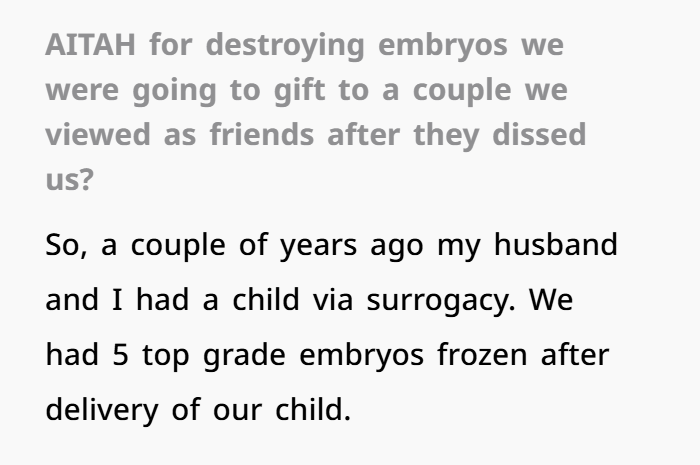
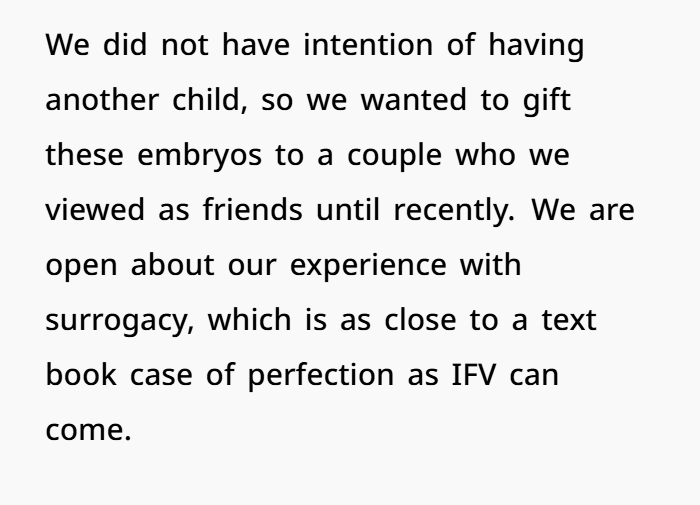
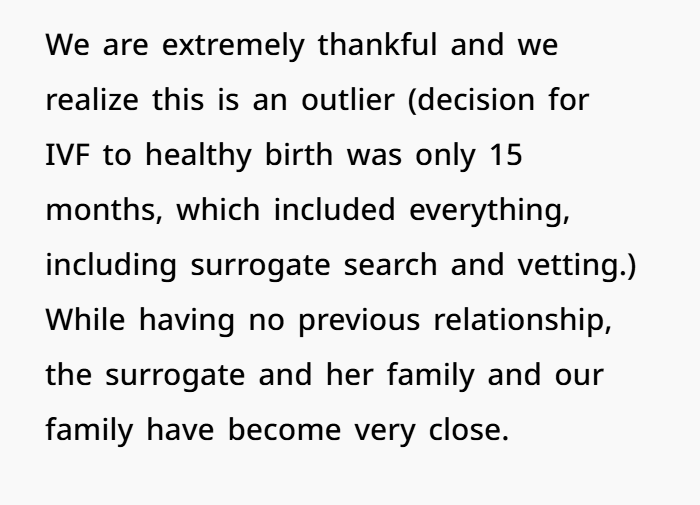
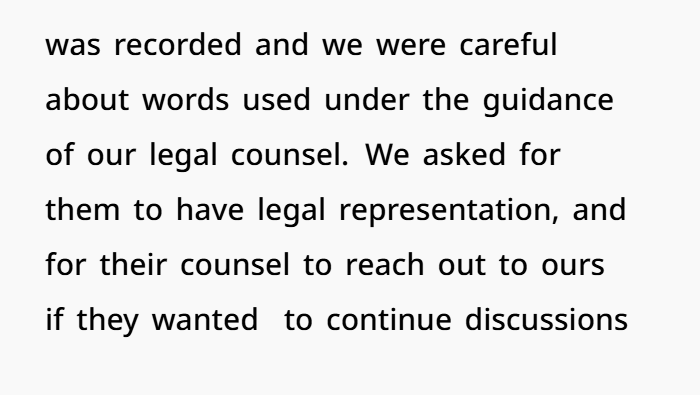
A couple who had welcomed a child through surrogacy still had five healthy embryos left. Since they weren’t planning to have more children, they thought about helping another couple who couldn’t have a baby.
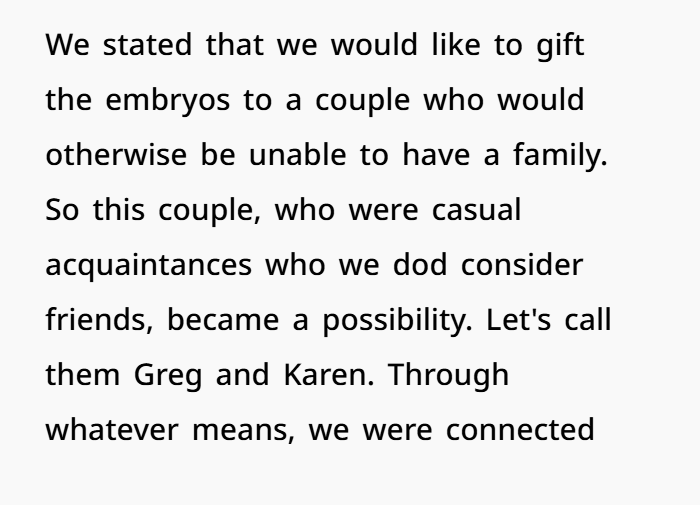
They decided to offer the embryos to Greg and Karen, two people they had grown close to over the years. At first, everything seemed fine. Both couples were happy with the idea, and it looked like a chance to help their friends start a family.
But things soon took a bad turn.
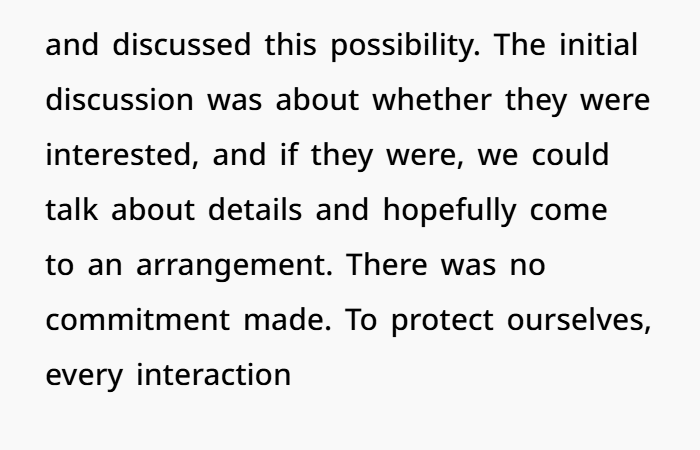
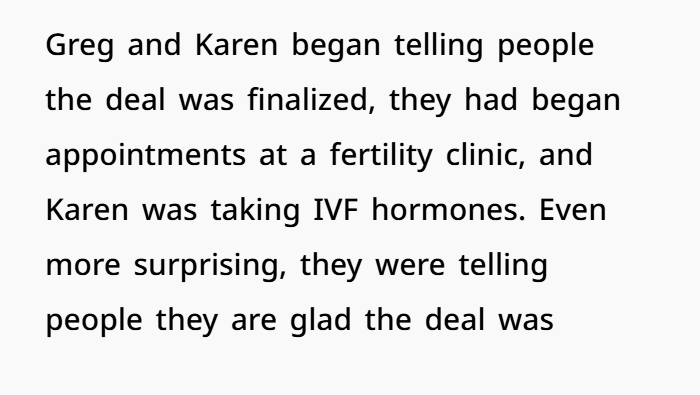
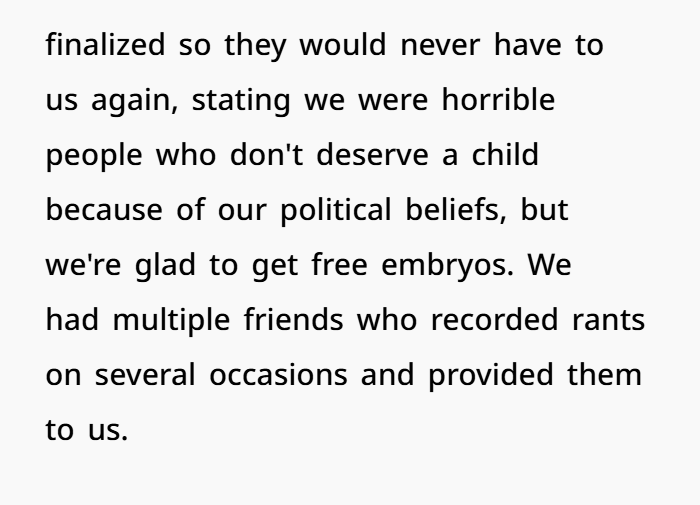
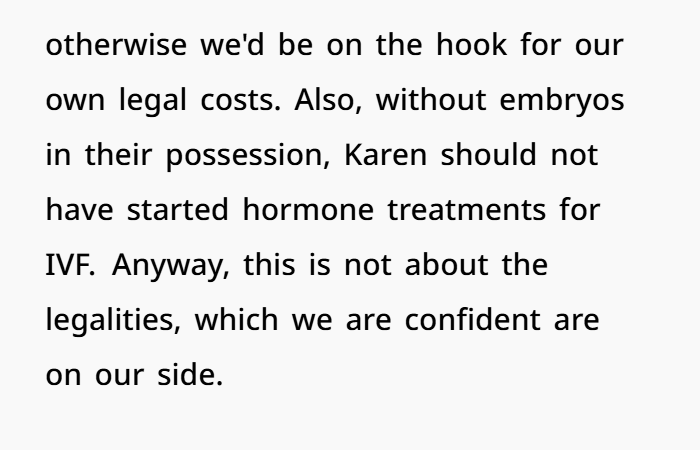
Although they had talked about donating the embryos, nothing had been signed. There was no legal deal in place. Still, Greg and Karen began acting as though the embryos already belonged to them.
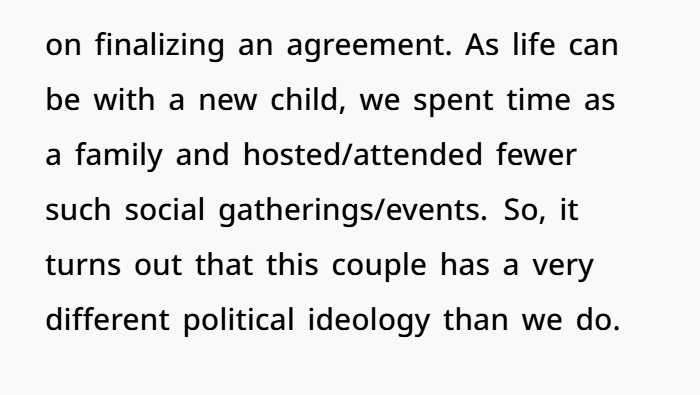
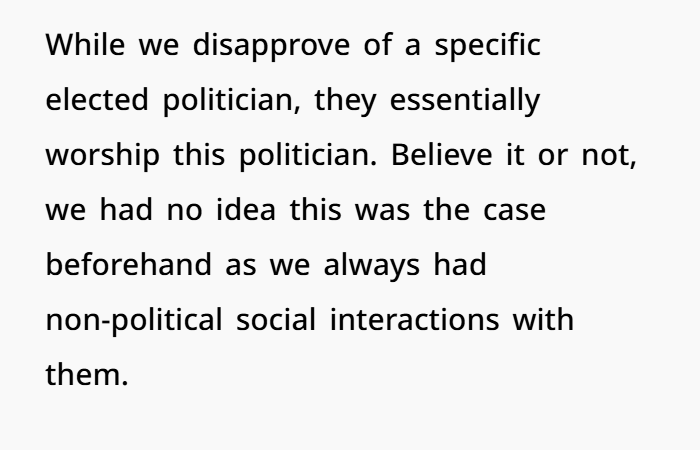
The friendship grew tense when the original couple heard that Greg and Karen had been spreading rumors and saying hurtful things about them.
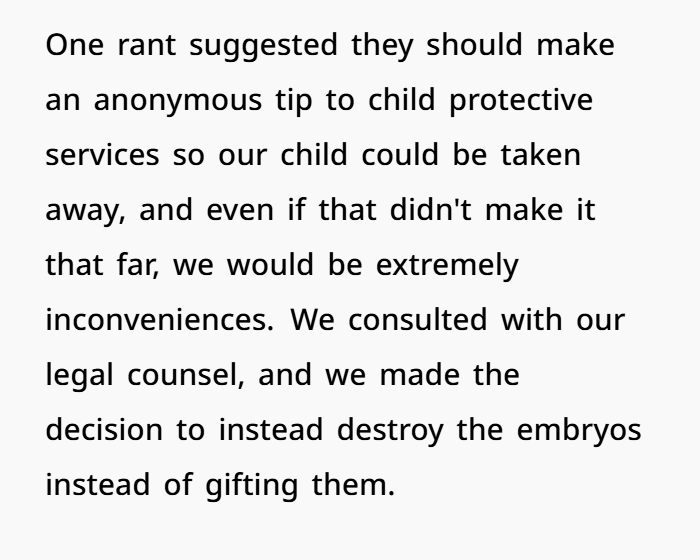
Then came something even more upsetting. The couple learned that Karen had allegedly joked about making a false report to child services because she was angry with them.
That was the final straw.
The couple no longer felt they could trust Greg and Karen. They were also worried about the idea of their embryos being used to create a child who would share their DNA.
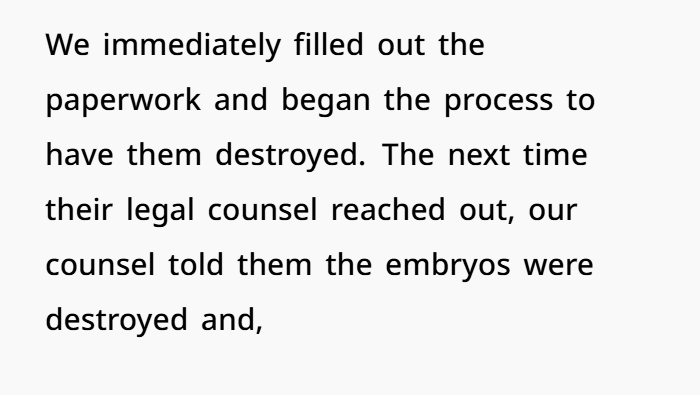
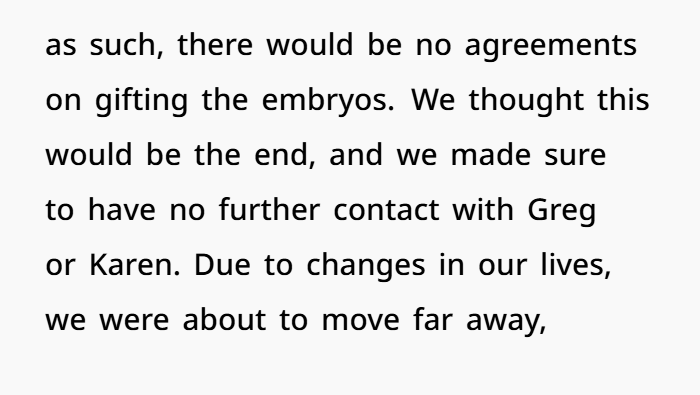
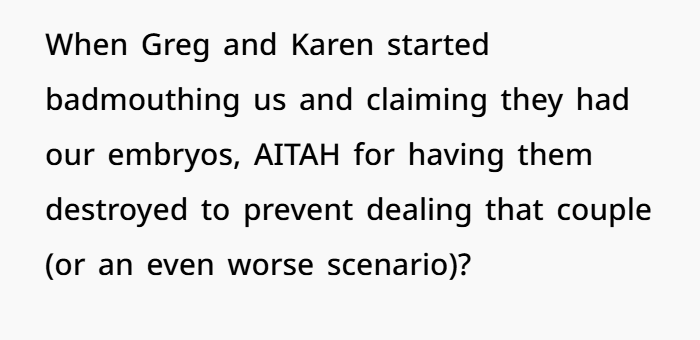
After thinking about what had happened, they made the difficult choice to have the remaining embryos destroyed.
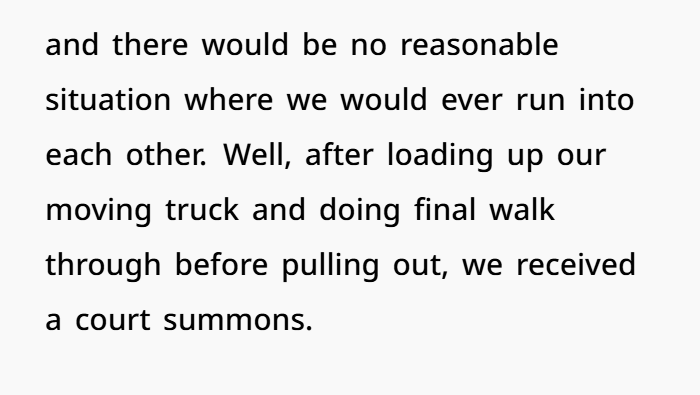
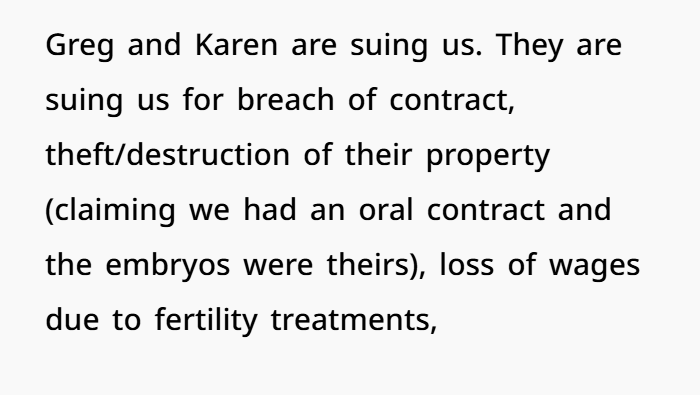
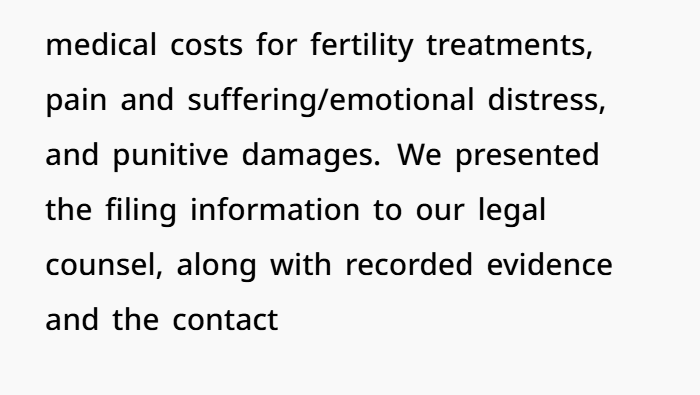
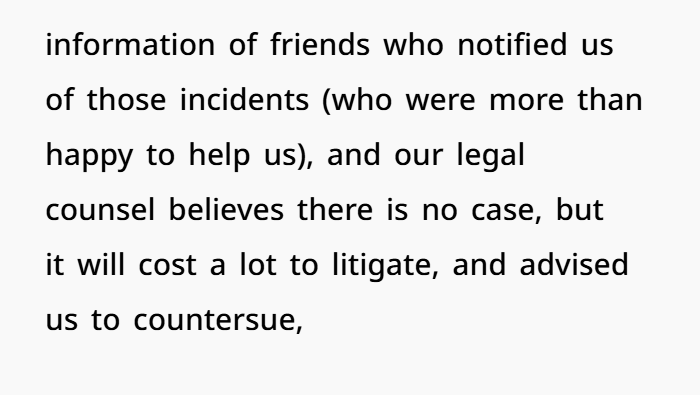
But Greg and Karen didn’t accept the decision. Instead, they took the matter to court. They claimed the couple had broken an agreement, violated their rights, and caused them emotional pain.
Now, what started as an offer to help friends have a baby has turned into a bitter dispute.
The situation raises a difficult question. Was the couple wrong to destroy the embryos after losing trust in their friends? Or did they have the right to change their minds before any legal deal was signed?
It also shows how quickly a kind offer can turn into a serious problem when trust breaks down and clear agreements are missing.
But after learning what those friends were saying behind their backs, they decided to have the embryos destroyed
Embryo donation gives people who struggle to have children another chance to build a family. It can help couples facing fertility problems, LGBTQ+ families, and people who cannot create healthy embryos on their own.
But giving unused embryos to someone else isn’t as simple as handing over a gift. There are legal rules, medical steps, and personal feelings to think about.
Advertisement – Continue Reading Below
Who gets to make decisions about the embryos? What happens if someone changes their mind? And what if the people involved stop trusting each other?
These questions can turn a kind offer into a serious dispute.
1. Are Embryos Property or Potential Human Life?
One of the hardest questions in these cases is how the law treats embryos.
Are they property? Should they be treated as potential human life? Or do they fall somewhere between the two?
The answer depends on where the case takes place.
Different states have different laws, and courts don’t always agree. Some treat embryos as a special kind of property, while others place more weight on their potential to become human life.
A well-known U.S. court case, Davis v. Davis (1992), dealt with this issue. The court placed embryos in a special category because they have the potential to become human life.
That matters in cases like this one.
Greg and Karen may believe the embryos were promised to them. But believing something belongs to you isn’t the same as having legal rights to it.
If no signed agreement gave them control over the embryos, proving their claim could be difficult.
Still, the lack of a written contract doesn’t settle every legal question. Courts may also look at messages, past actions, clinic records, and local laws.
Fertility clinics usually require written consent before embryos can be donated, transferred, or destroyed. These rules help make sure everyone understands what they are agreeing to.
2. Can a Verbal Promise Count as a Legal Agreement?
This is another major issue in the dispute.
Greg and Karen may argue that the couple promised them the embryos. But does a spoken promise give them the right to demand those embryos?
Not always.
Embryo donation involves medical care, family rights, and choices that can affect people for years. That’s why these arrangements are usually handled through written forms and legal agreements.
The American Society for Reproductive Medicine (ASRM) supports clear consent and legal guidance for embryo donation.
Written agreements can explain who controls the embryos, what each person has agreed to, and what happens if plans change.
In this case, the couples had talked about the donation, but nothing had been signed.
That could make Greg and Karen’s claim harder to prove.
However, spoken agreements can sometimes carry legal weight. Whether one can be enforced depends on local law and the facts of the case.
Messages or other records showing that the donation was still being discussed could help explain what both sides understood.
The key question is whether the couple made a firm agreement or simply talked about a plan they later changed.
3. Can Greg and Karen Sue for Emotional Harm?
Losing the chance to have a child can cause deep pain, especially for people who have struggled with fertility.
Greg and Karen may feel hurt, angry, or betrayed after learning that the embryos were destroyed.
But feeling hurt doesn’t always mean someone has a valid legal claim.
Claims for emotional harm often require proof that certain legal rules were broken. The exact rules depend on the state and the type of claim.
In this situation, the original couple may argue that they changed their minds because they no longer trusted Greg and Karen.
They may also point to the alleged threats and rumors as reasons for ending the donation plan.
If Karen really made a comment about filing a false report with child services, that could help explain why the couple became worried.
Any saved messages, recordings, or witness statements could matter if the case goes to court.
Still, those details wouldn’t settle the lawsuit on their own. A court would need to review the evidence and decide which laws apply.
4. How Did a Kind Offer Turn Into Such a Bitter Fight?
At first, the plan seemed simple.
One couple had embryos they no longer planned to use. Their friends wanted a child, so they offered to help.
But things changed when trust between the two couples began to fall apart.
The original couple reportedly heard that Greg and Karen were making hurtful comments about them. Then came the alleged joke about making a false report to child services.
For parents who already have a child, even the thought of someone making such a report can be frightening.
Whether Karen meant the comment as a joke or not, the couple took it seriously.
They began to question whether they wanted Greg and Karen to raise a child who shared their DNA.
This is what makes embryo donation different from many other gifts.
The decision can lead to the birth of a child and create lasting ties between families. That makes trust especially important.
Once the friendship became hostile, the couple no longer felt comfortable moving forward.
5. Was Destroying the Embryos Wrong?
This may be the hardest part of the story.
Destroying embryos can carry deep meaning for people who have gone through fertility treatment. Some see embryos as potential children, while others view them as part of a medical process.
People can have very different feelings about what should happen to unused embryos.
In this case, the couple had already decided they didn’t want more children. Their first plan was to help another family.
But after their friendship with Greg and Karen fell apart, they changed their minds.
From their point of view, the decision wasn’t just about anger. It was about no longer feeling safe with the people they had planned to help.
They may have believed that ending the plan was better than creating a lasting family tie with people they no longer trusted.
Others may feel that destroying the embryos was too final, especially when other choices might have been available.
Both the legal rights and the moral questions depend on facts that aren’t fully clear from the story.
What matters is that embryo donation should involve clear consent from everyone whose approval is required.
A promise made during a friendship shouldn’t replace the legal and medical steps needed for such a serious choice.
6. Does Having No Contract Mean Greg and Karen Have No Case?
It’s tempting to think that no signed contract means no lawsuit can succeed.
But the law isn’t always that simple.
A written agreement can provide strong proof of what people accepted. Without one, a dispute may be harder to resolve.
Greg and Karen could try to show that the couple made a promise they relied on. The original couple could argue that the donation was never final.
A court would need to examine the facts before deciding whether any legal duty existed.
That could include looking at:
- Messages and emails: What did the couples actually promise each other?
- Clinic records: Were any consent forms signed or rights transferred?
- Witness statements: Did anyone hear what the couples agreed to?
- Local laws: What rules apply to embryo donation and disposal?
- The timeline: When did the friendship break down, and when were the embryos destroyed?
The outcome would depend on the evidence, not simply on which side feels more hurt.
For the original couple, speaking with a lawyer who handles fertility law would be an important step.
A lawyer could review the lawsuit, explain their rights, and help them decide how to respond. They could also ask whether recovering legal costs is possible under the rules that apply.
Final Thoughts
This story shows why embryo donation needs more than good intentions.
The couple wanted to help friends have a child. But when the friendship turned hostile, they no longer felt comfortable with the plan.
Greg and Karen may feel they lost something deeply important. At the same time, the original couple may believe they had every right to change their minds.
Without knowing the full legal details, it’s impossible to say how the lawsuit will end.
What is clear is that embryo donation involves choices that can affect several lives for years to come.
Trust matters, but clear agreements matter just as much.
A kind offer should never leave people confused about their rights, their duties, or what happens if someone changes their mind.
That’s why anyone thinking about donating embryos should seek legal advice, understand the clinic’s rules, and put clear terms in writing before moving forward.
The author shared more details in the comments
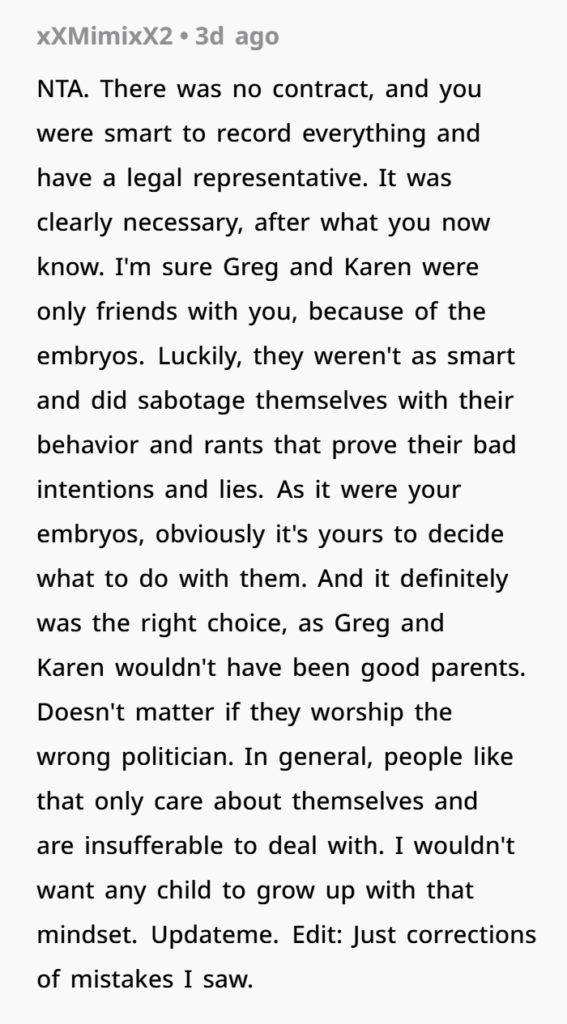
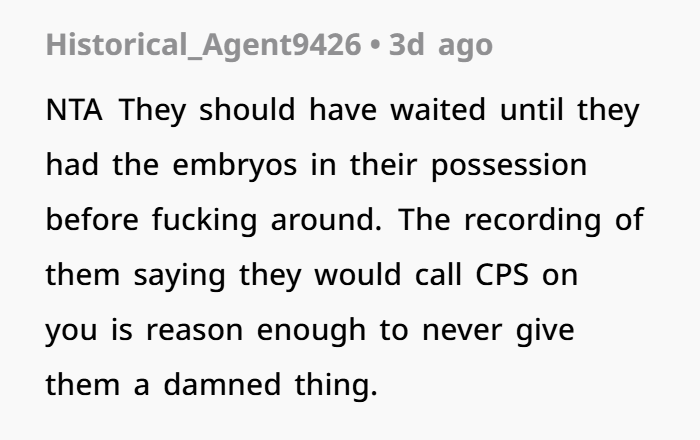
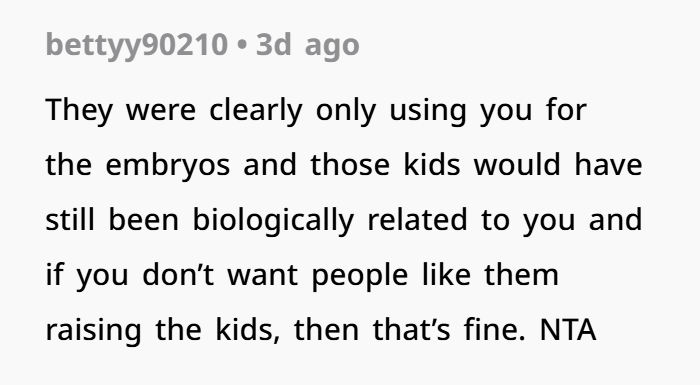
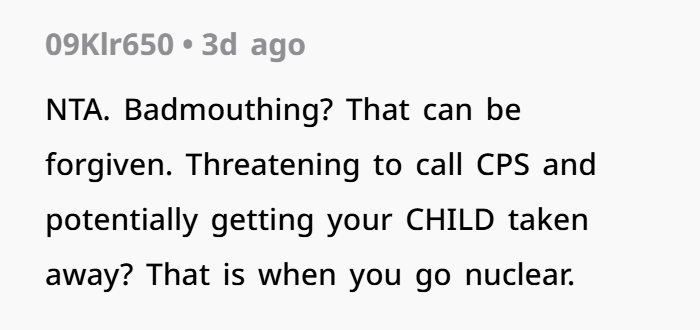
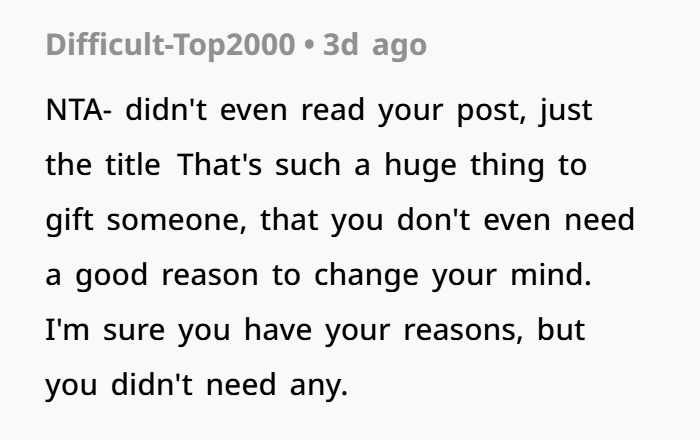
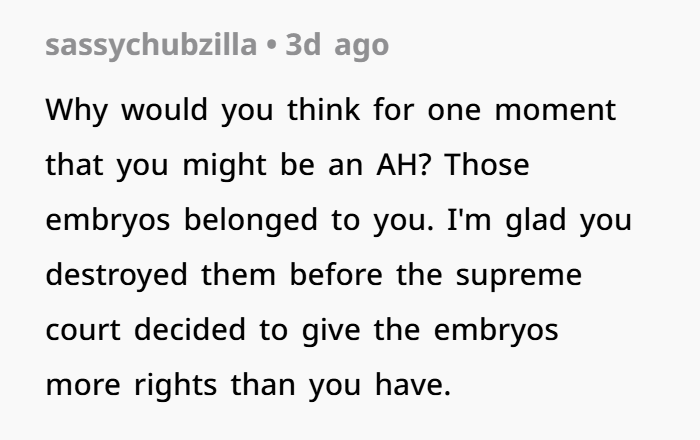

So, was the couple wrong for destroying the embryos? Many people would say no.
They originally wanted to help their friends have a child. But when the friendship fell apart and trust was lost, they no longer felt comfortable going ahead with the plan.
The embryos were deeply personal to them, and their choice could have affected their family for years. They felt they needed to protect themselves and set clear boundaries.
Without a signed agreement, both sides may have had different ideas about what had been promised. That doesn’t mean the legal outcome is clear, but it shows why written agreements matter.
If Karen started medical treatment before the donation was final, she may have taken a risk by relying on a plan that wasn’t settled.
In the end, this story shows why trust, honest talks, and clear legal agreements are so important when making choices about embryos and starting a family.