Her Sister With Alzheimer’s Is Having a Baby, and the Family Expects Her to Raise the Child
This situation involves strong family emotions and difficult questions about long-term responsibility.
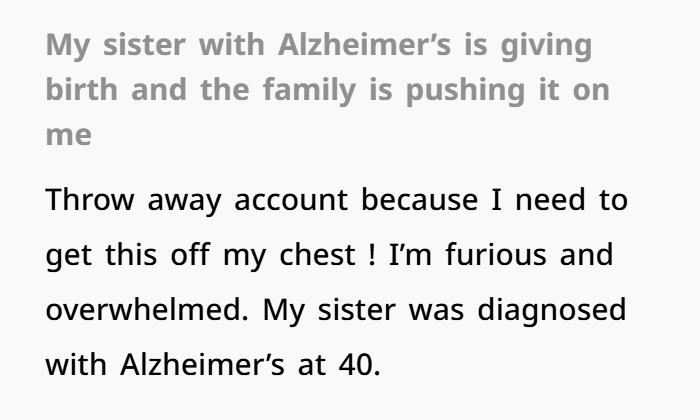
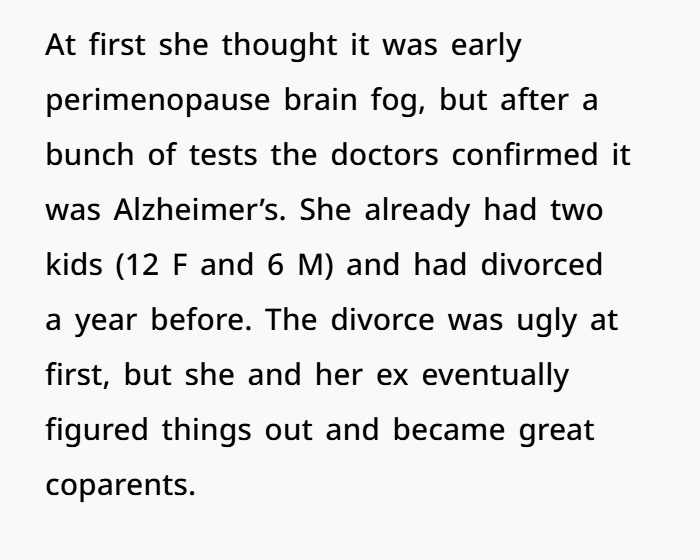
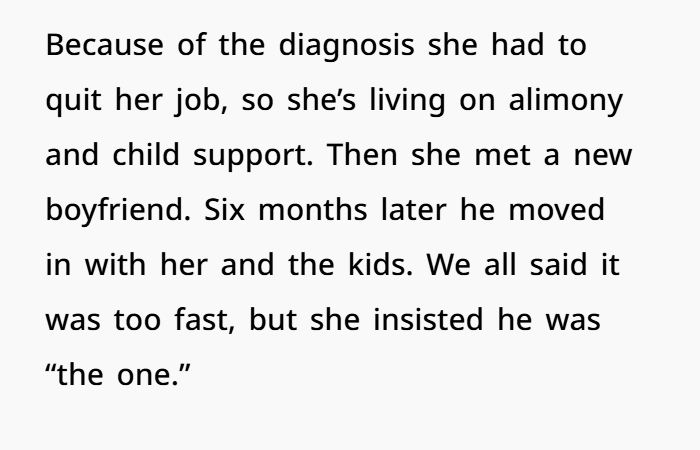
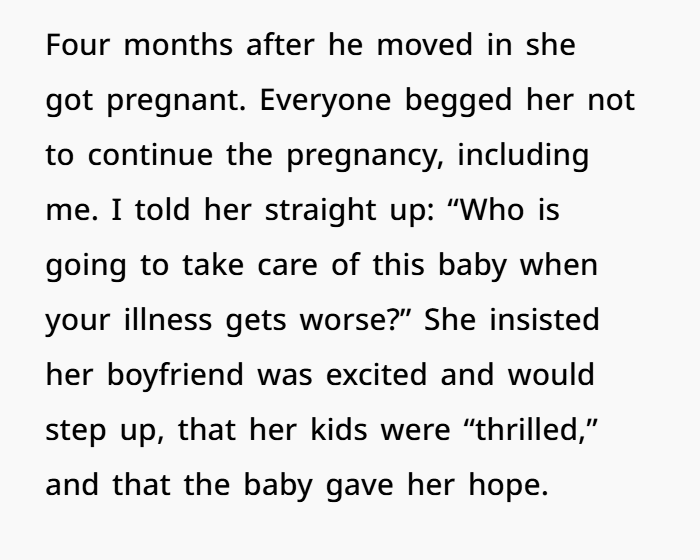
A woman shared that her 40-year-old sister has early-onset Alzheimer’s and is pregnant. According to her account, the baby’s father is not involved.
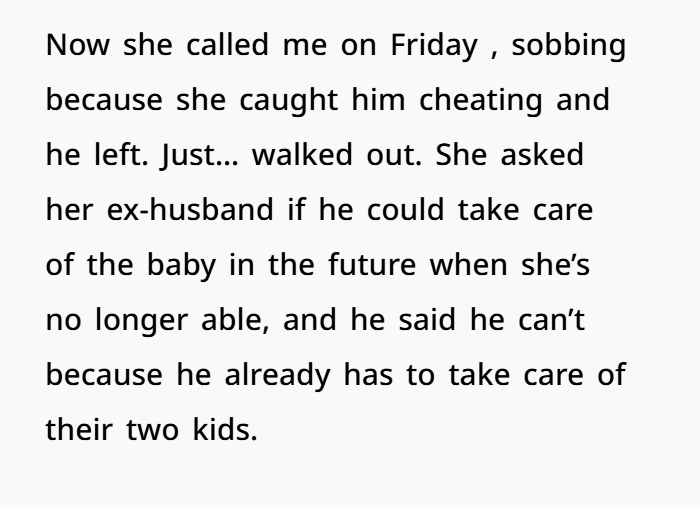
There is also no clear plan for who will care for the child after birth.
The uncertainty has placed pressure on the entire family. Relatives have started discussing who should take responsibility if the mother cannot provide long-term care.
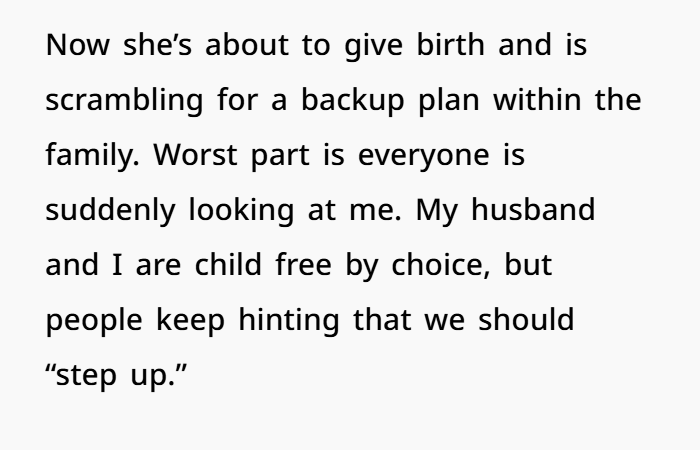
The woman said she has always chosen not to have children. She does not want to become a parent and feels unprepared to raise a baby.
Despite that choice, she feels her family expects her to step in.
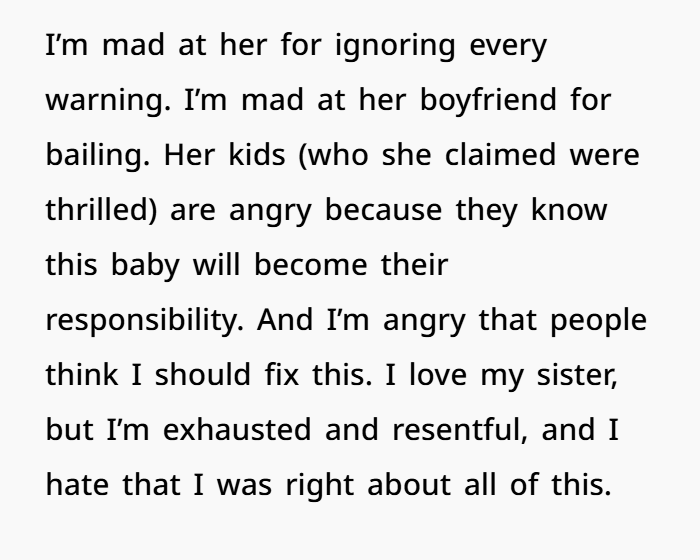
She cares about her sister but does not believe that makes her responsible for raising the child. Becoming a parent would mean accepting a lifelong role she never chose.
The situation has created tension around caregiving, family duty, and personal boundaries.
It also raises a difficult question: How much responsibility should someone accept when a family crisis changes everyone’s plans?
Supporting a loved one during a serious illness can take many forms. But offering help is different from taking on full responsibility for raising a child.
For this family, finding a long-term care plan may require difficult conversations about what each person can realistically provide.
But one woman was unsure of what to do when her family wanted her to adopt her sick sister’s baby
This situation is emotional and complex. It involves much more than an unexpected pregnancy.
A serious illness, family pressure, and future caregiving needs all add to the stress. Each issue brings difficult choices for everyone involved.
There are also questions about who should care for the baby long term. At the same time, family members must consider their own limits and responsibilities.
Understanding the full situation means looking at each challenge with care, fairness, and respect for everyone involved.
 Early-Onset Alzheimer’s: A Serious Health Condition
 Early-Onset Alzheimer’s: A Serious Health Condition
Alzheimer’s disease is often linked with older adults. However, symptoms can begin before age 65.
Advertisement – Continue Reading Below
This is commonly called early-onset Alzheimer’s disease. It is less common, but it can have a major effect on daily life.
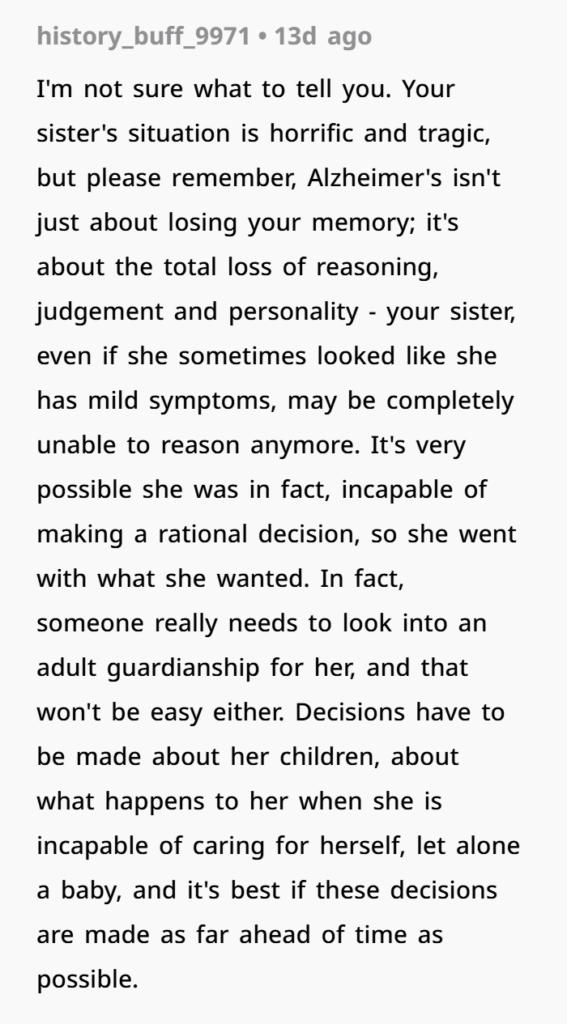
The disease can affect memory, thinking, judgment, and behavior. Symptoms may become more severe as the condition progresses.
Common symptoms can include:
- Memory problems
- Confusion
- Trouble making decisions
- Changes in mood or behavior
The rate of decline differs from person to person. It is difficult to predict exactly how quickly someone’s condition will change.
In this story, the sister was reportedly diagnosed at age 40. Such a diagnosis can affect future plans, independence, and the level of care someone may need.
It can also place new responsibilities on family members as they plan for future support and caregiving.r time.
Pregnancy and Alzheimer’s: A Very Complex Situation
 Pregnancy and Alzheimer’s: A Very Complex Situation
Pregnancy can become more complex when someone has a progressive brain condition.
The exact risks depend on the person’s health and stage of illness. Medical teams may need to consider issues such as:
- Changes in memory and confusion
- Managing medical care and appointments
- Emotional and mental health needs
- The person’s ability to understand and make care decisions
A diagnosis does not automatically mean someone cannot make their own medical choices. Decision-making ability must be considered based on the person and the decision involved.
In this story, the family reportedly had concerns about the pregnancy. As it continued, questions about care and the baby’s future became more urgent.
Situations like this may require support from several types of medical and care professionals. Families may also need to make long-term plans for both the parent and child.
Clear communication and careful planning can help everyone prepare for changing needs.
Family Pressure and Unfair Expectations
 Family Pressure and Unfair Expectations
The biggest issue here is not only the baby. It is also about who will take responsibility.
The family reportedly expects the woman to help raise the child. But she had already chosen a child-free life.
Now, she feels pressured to accept a parenting role she never wanted or agreed to take on.
Family members often want to help during a crisis. But raising a child is a long-term commitment that can change someone’s entire life.
Caring for the baby would affect her time, finances, work, relationships, and future plans.
Such a major decision requires willingness and careful thought. It should not be pushed onto someone through guilt or family pressure.
Supporting a loved one does not always mean becoming responsible for every problem. Families may need to work together to find a plan that respects everyone’s needs and limits.
Why OP’s Feelings Are Completely Understandable
 Why OP’s Feelings Are Completely Understandable
The woman described feeling several strong emotions as the situation became more difficult.
She reportedly feels:
- Angry that her earlier concerns were ignored
- Stressed about being expected to raise the child
- Hurt that her choice to remain child-free is not being respected
- Worried about the effect on her marriage and well-being
These feelings reflect the pressure of being asked to accept a major responsibility she never planned for.
Families sometimes turn to the person they see as stable or dependable during a crisis. That can place a large burden on one person.
Over time, unwanted caregiving duties can cause stress, resentment, and exhaustion.
Raising a child requires time, money, patience, and long-term commitment. It can also affect work, relationships, and personal goals.
Caregiving works best when someone understands the responsibility and willingly accepts it. Family pressure should not replace a person’s right to make that choice.
Possible Realistic Solutions
 Possible Realistic Solutions
This situation needs practical planning, not pressure on one person.
Child Care and Legal Planning
 Child Care and Legal Planning
The baby may need a long-term care plan if the mother becomes unable to provide safe care.
Depending on local laws and the family’s situation, possible steps may include:
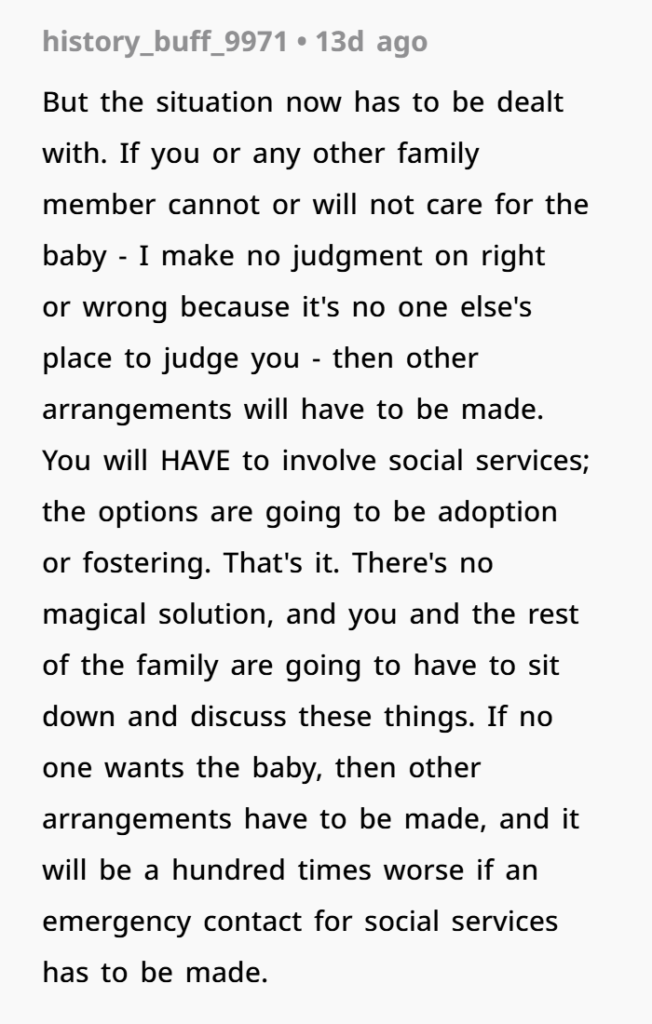
- Contacting local child or family services
- Exploring care with suitable relatives
- Considering foster care when needed
- Seeking legal advice about guardianship
The goal should be to create a safe and stable plan for the child.
These choices can involve complex legal and family issues. Planning early can help prevent rushed decisions if the mother’s condition becomes worse.
Legal Responsibility of the Father
 Legal Responsibility of the Father
The biological father may also have legal responsibilities toward the child.
Depending on local laws and the facts of the case, those duties could include:
- Paying child support
- Taking part in the child’s care
- Establishing legal parentage
- Following court orders involving custody or support
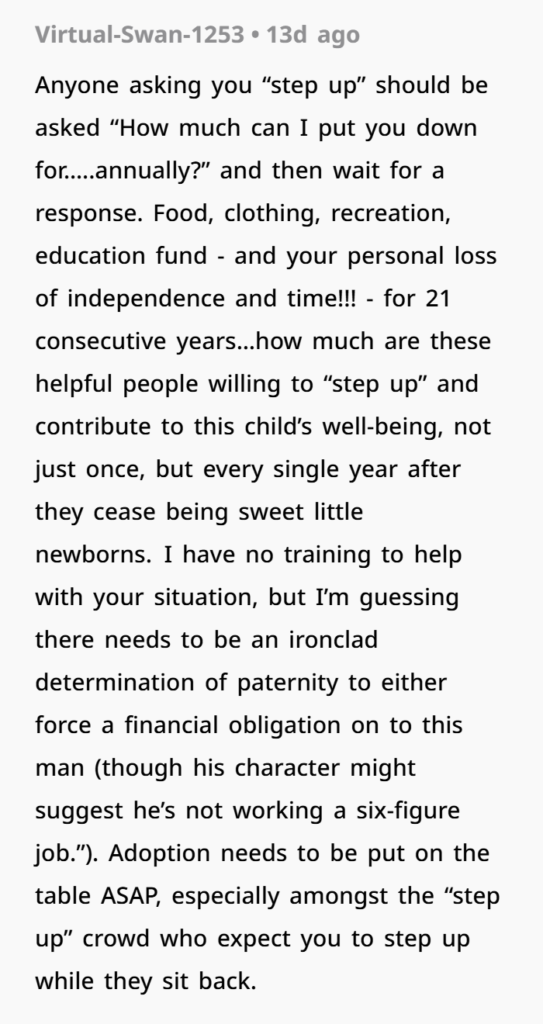
A parent may not be able to avoid financial duties simply by choosing not to be involved.
However, parental rights and duties vary by location. Custody, support, and guardianship decisions may also depend on what a court decides is best for the child.
The family may need legal advice to understand the father’s duties and the options available for the baby’s future care.
Shared Family Support
 Shared Family Support
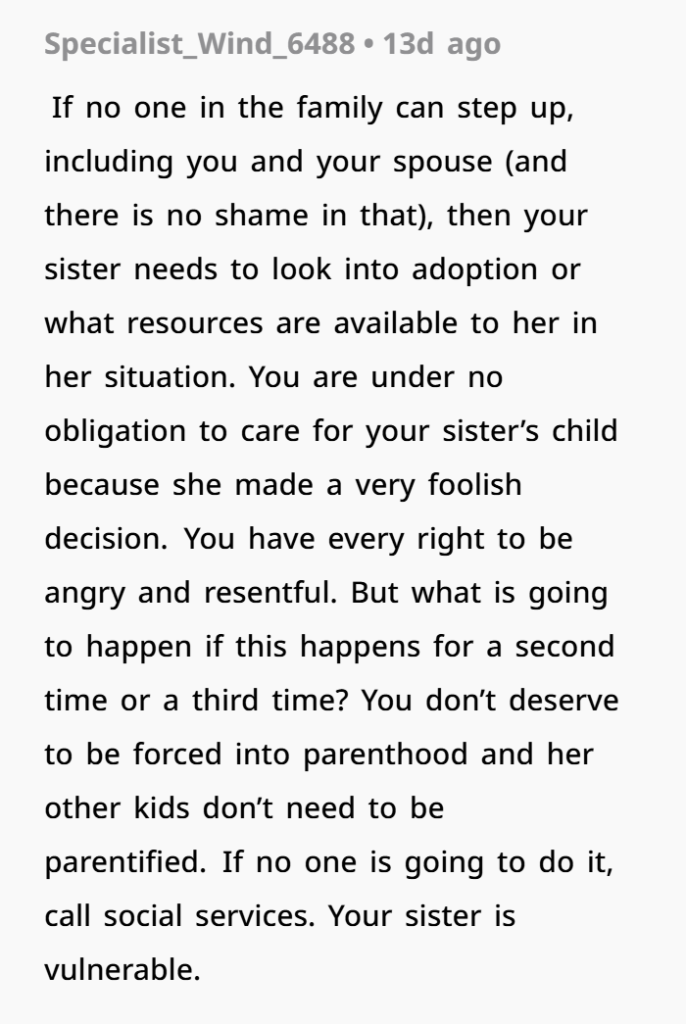
If the family is worried about the future, one person should not carry the entire burden.
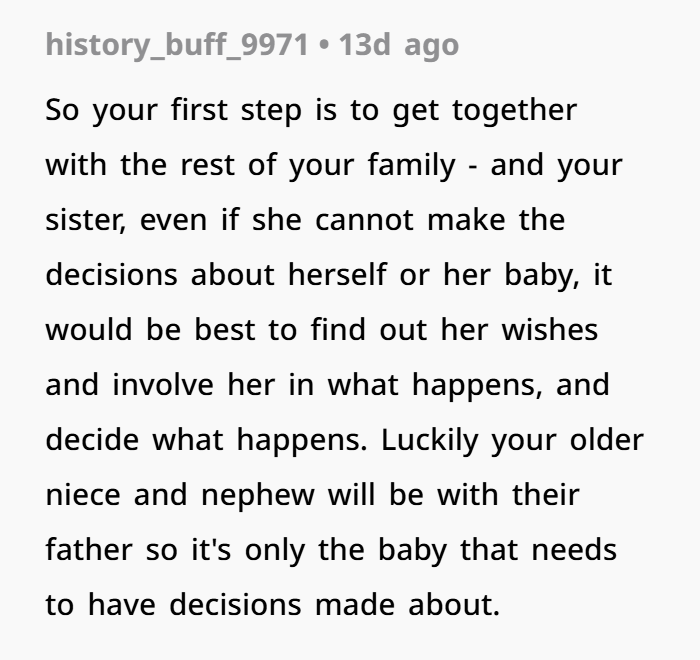
Family members can discuss what each person is willing and able to provide. Some may offer time, money, transportation, or other forms of support.
Not everyone can take on the same role. Raising a child is also very different from offering occasional help.
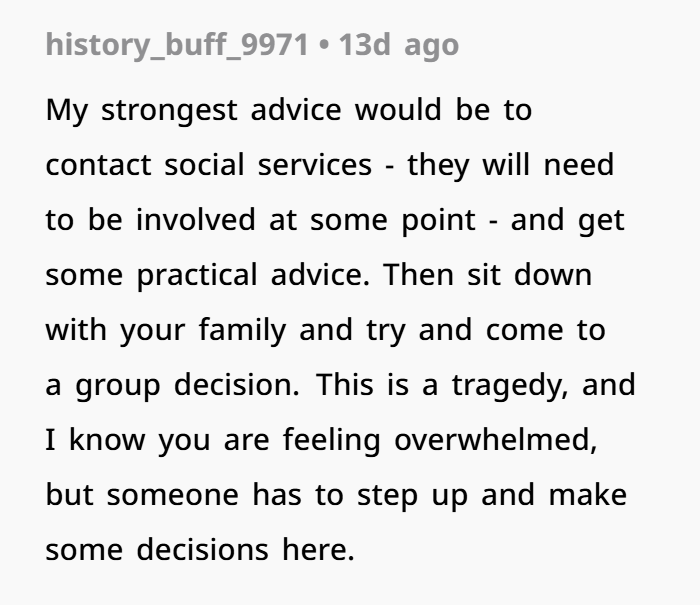
If the family cannot create a safe long-term plan, outside support may be needed. Healthcare teams, social services, and local support groups may offer useful guidance.
Asking for help does not mean the family has failed. It can help create a safer plan for both the mother and the child.
Support for the Older Children
 Support for the Older Children
Children already in the family may also be affected by the situation.
They may feel confused, worried, or stressed as family roles and plans begin to change. Their emotional needs should not be overlooked.
They may benefit from:
- Honest, age-appropriate conversations
- Emotional support from trusted adults
- Counseling or therapy when needed
- Stable routines during uncertain times
Children do not need every detail about adult problems. But clear and calm communication can help them feel safer.
Giving them support and stability can help protect their well-being as the family handles difficult changes.
Important Legal and Emotional Boundaries
The woman may also need to protect her own interests as the family makes future plans.
Depending on local laws and the situation, she could consider:
- Speaking with a lawyer about guardianship and possible legal duties
- Clearly telling her family that she does not agree to become the child’s guardian
- Keeping firm boundaries about the support she is willing to provide
Setting these limits does not mean she does not care about her sister or the baby.
It simply makes her position clear before major decisions are made.
Legal rules about guardianship and family responsibility vary by location. Getting advice from a qualified local lawyer can help her understand her rights and avoid unwanted legal commitments.
Why Honest Conversations Are Necessary
 Why Honest Conversations Are Necessary
The family needs an honest discussion about what will happen after the baby is born.
Important questions include:
- Who is willing and able to care for the baby?
- What help can other family members provide?
- What outside support is available?
- Should adoption or foster care be considered?
- What plan will remain realistic over the long term?
Ignoring these questions will not make them disappear. Placing all the pressure on one person can also create more stress and resentment.
The family needs a plan that considers the mother’s changing needs and the child’s future care.
That may require help from doctors, social workers, lawyers, or local support services.
This crisis cannot depend on one unwilling family member stepping in. A safe plan requires honest talks, shared effort, and realistic choices about what everyone can provide.
Some folks needed more info
Final Thoughts
 Final Thoughts
Based on her account, the woman has been clear about what she can and cannot accept.
She says she:
- Raised concerns before the situation reached this point
- Set clear boundaries with her family
- Does not want to become a parent
- Wants to protect her marriage and well-being
Supporting family does not always mean taking full responsibility for every crisis.
Someone can love their family while still having limits. Refusing a lifelong parenting role does not mean they do not care about the child.
The baby deserves safety, care, and a stable home. But creating that future requires a realistic plan involving the people and services able to help.
The responsibility should not simply fall on one person because the family sees them as the easiest choice.
Clear boundaries and honest planning may be difficult now, but they can prevent even greater problems later.