AITAH for Keeping My Distance From Female Coworkers After My Predecessor Crossed Professional Boundaries?
Taking over a job after a well-liked coworker leaves isn’t always easy. People often expect the new employee to have the same personality and work habits as the person before them.
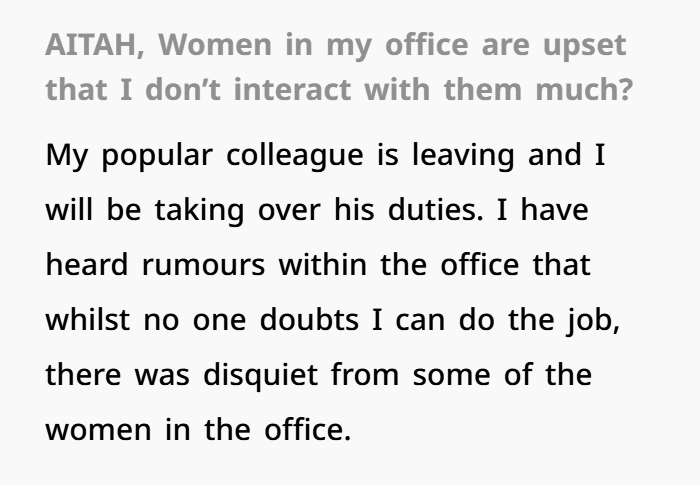
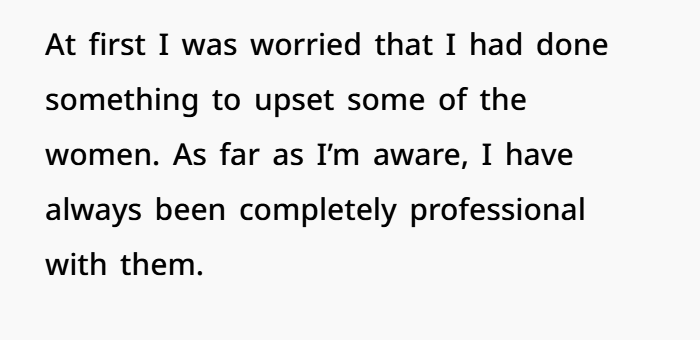
One man found himself in this situation after replacing a coworker known for being friendly and outgoing. While he handles his work well, some female colleagues seem disappointed that he doesn’t interact with them in the same way.
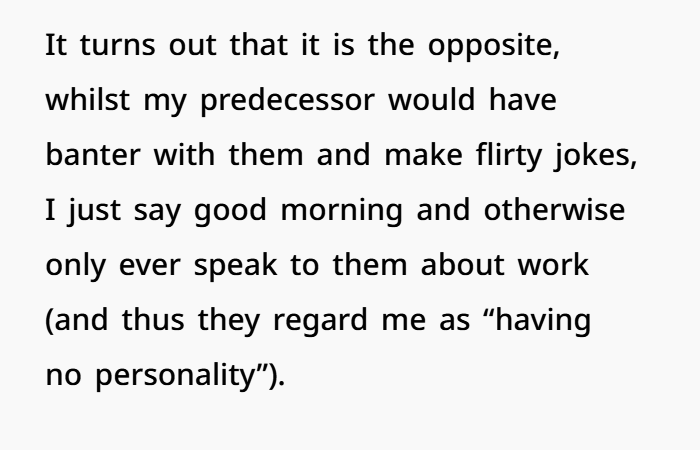
Unlike his predecessor, he prefers to keep conversations focused on work rather than personal topics or casual jokes.
The problem isn’t his job performance. It’s that his coworkers are used to a different way of communicating.
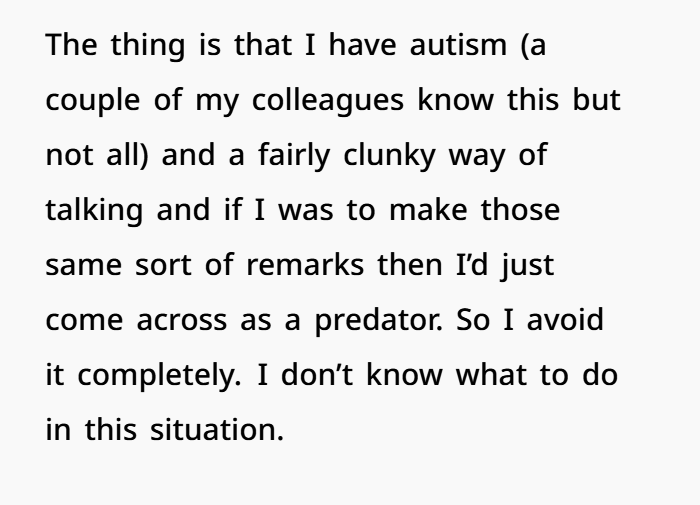
The employee is on the autism spectrum. He feels more comfortable with clear, direct conversations and prefers to maintain professional boundaries.
He isn’t trying to be rude or unfriendly. He simply wants to treat everyone with respect, work well with his team, and avoid conversations that make him uncomfortable.
However, his reserved approach has left some coworkers feeling that he isn’t as approachable as the person who held the role before him.
Now, he’s wondering whether he should make an effort to become more social or continue working in a way that feels natural to him.
His experience raises important questions about workplace expectations and personal boundaries. Should employees have to change their personalities to make others comfortable?
It also highlights the need for workplaces to respect different ways of communicating. Not everyone enjoys small talk or personal jokes, but that doesn’t mean they can’t be good teammates.
A respectful workplace should make room for different personalities and communication styles, as long as everyone works together professionally and treats others fairly.

This situation shows how workplace expectations and personal boundaries can sometimes differ.
Some workplaces encourage casual conversations and humor, while others focus mainly on tasks and results. Since people communicate in different ways, copying someone else’s style is not always the best approach.
People on the autism spectrum may experience social interactions differently. Casual jokes, sarcasm, or unclear comments may not always feel natural or comfortable. Because of this, some employees choose a more professional communication style that helps them avoid confusion and maintain respectful relationships.
It is understandable that the employee worries about how coworkers see him. Many workplaces value social connections along with job performance. However, being quiet or less involved in casual conversations does not mean someone is less capable or less valuable. Many successful professionals build strong careers while keeping clear boundaries.
A major challenge in this situation is being compared to the previous employee. When a well-liked coworker leaves, people may expect the replacement to have the same personality. The former employee’s friendly and outgoing nature may have made him popular, but being social is not the only measure of workplace success.
Advertisement – Continue Reading Below
A helpful approach is finding simple ways to connect with coworkers without changing who you are. Small actions, such as asking about someone’s weekend, thanking a teammate, or recognizing a coworker’s effort, can build positive relationships while keeping conversations comfortable.
Workplace communication training can also help. These programs can support employees in building confidence, improving teamwork, and understanding different communication styles. The goal is not to become someone else but to create healthy workplace connections.
It is also important to understand that coworkers may be reacting to a change in routine. They were familiar with the previous employee’s style, so the difference may feel noticeable. However, a workplace can still be successful when employees have different personalities and ways of communicating.
If the employee feels comfortable, explaining communication preferences to a manager, human resources, or trusted coworkers may help prevent misunderstandings. Many workplaces now recognize that people contribute in different ways.
Managers also have a role in creating a respectful environment. Good leadership values teamwork, performance, and employee well-being rather than expecting everyone to have the same personality.
Professional boundaries are not a problem. Employees do not need to copy a former coworker to succeed. A balance of respect, professionalism, and small friendly interactions can help build strong workplace relationships.
Simple steps can make social situations easier. Employees can discuss shared work goals, talk about neutral topics, join team events when comfortable, and practice active listening.
Basic habits like greeting coworkers, showing interest, and asking simple questions can also improve connections. These small efforts can support teamwork and career growth while allowing people to stay true to their own communication style.
See The Comments Below
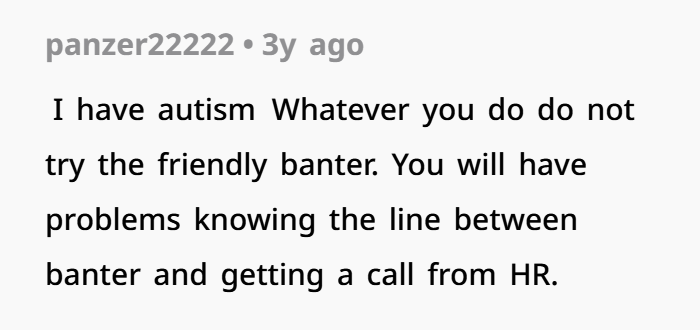
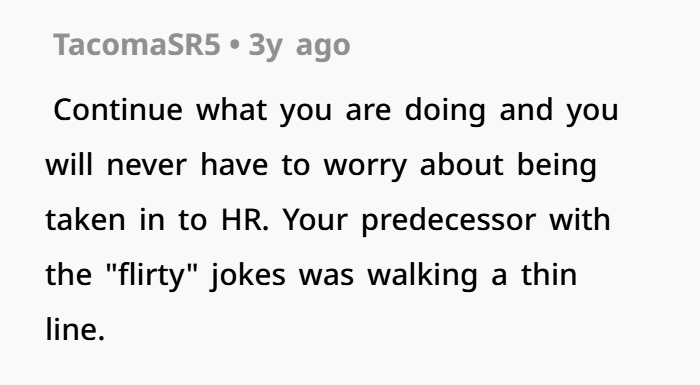
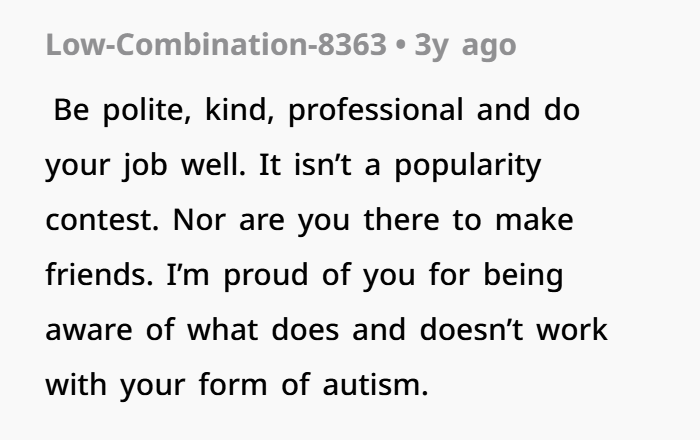
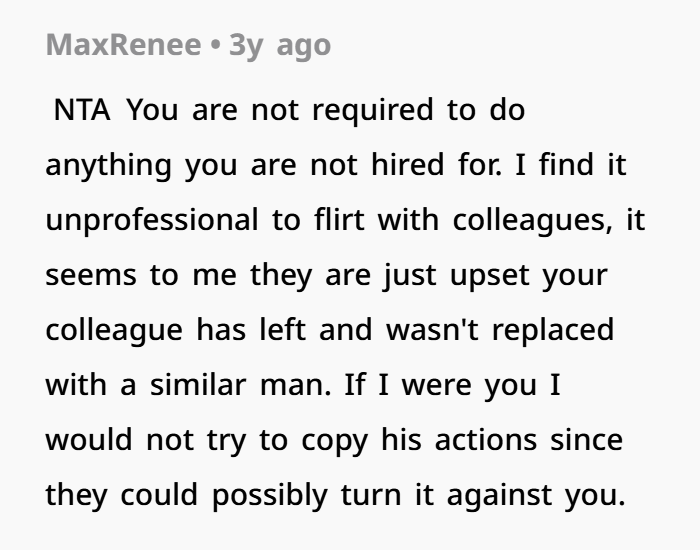
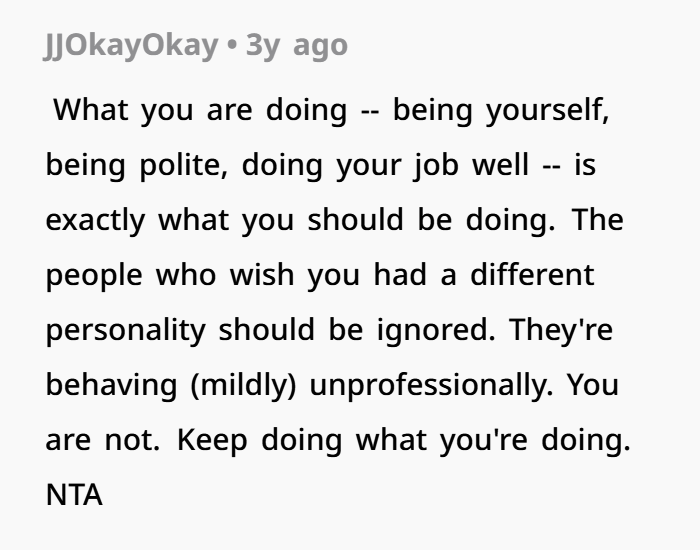
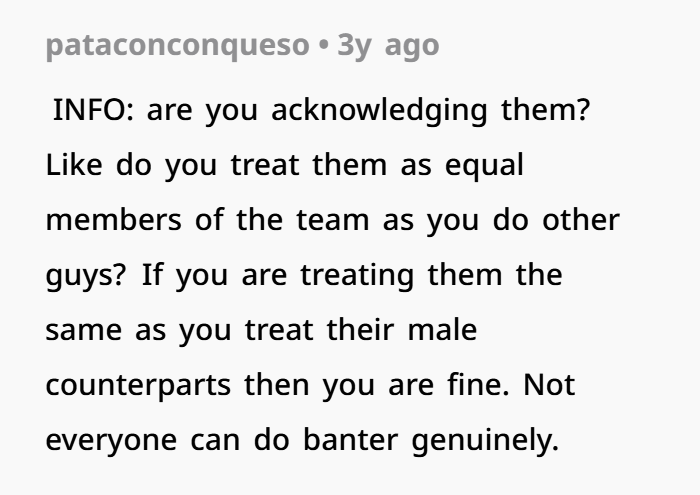
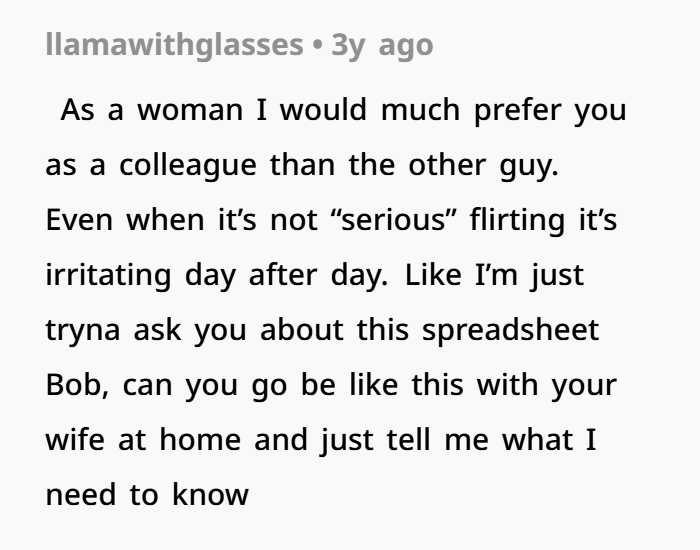
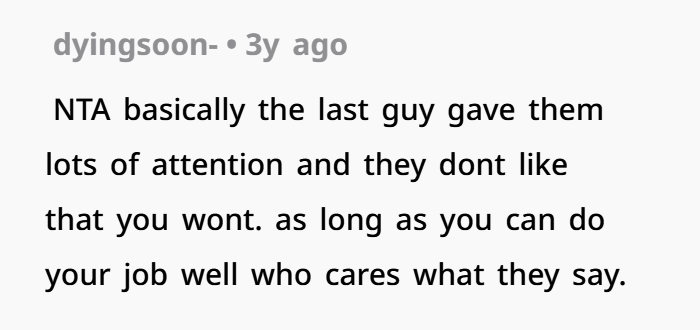
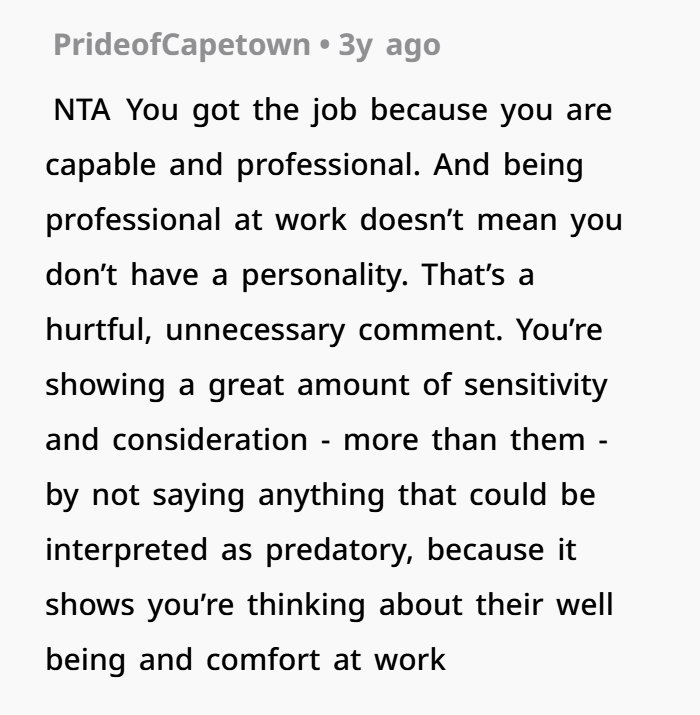
NTA (Not The Asshole).
You do not need to copy someone else’s personality to feel accepted at work.
If a certain communication style feels uncomfortable or creates confusion, it is reasonable to choose a more professional approach.
For someone on the autism spectrum, keeping conversations clear, respectful, and work-focused can be a helpful way to build positive relationships.
Small friendly actions, such as greeting coworkers or showing appreciation, can help create connections if they feel comfortable.
However, there is no need to copy another person’s humor, casual style, or personal interactions.
Personal boundaries and comfort should always be respected in the workplace.