AITA for Choosing to Stay Behind While My Stepfamily Relocated for Cancer Treatment?
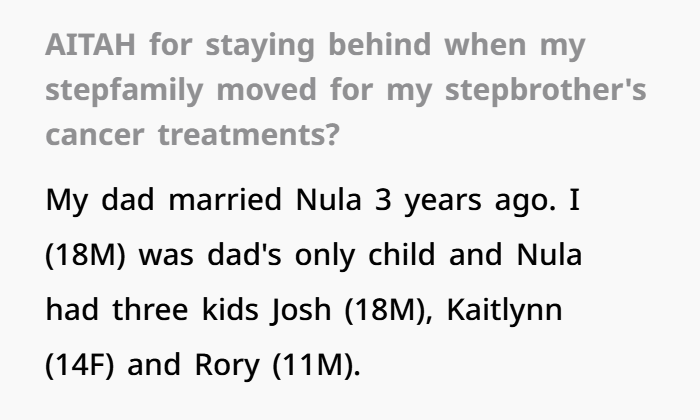
AITA for Staying Behind While My Stepfamily Moved Away for Cancer Treatment?
When someone in a family is diagnosed with cancer, life can change overnight. Plans are put on hold, routines fall apart, and everyone must adjust to a new reality.
For one 18-year-old student, his stepbrother’s cancer diagnosis led to a difficult choice. He had to decide whether to move with his family or stay behind to finish high school.
His decision left his father and stepmother upset and created tension with his stepbrother.
A Cancer Diagnosis Changed the Family’s Plans
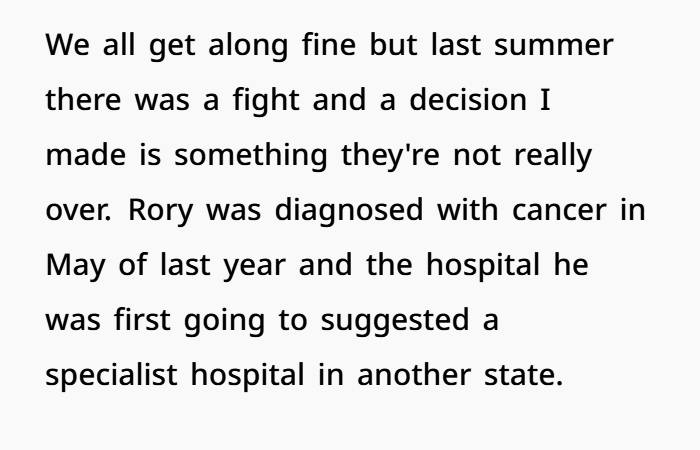
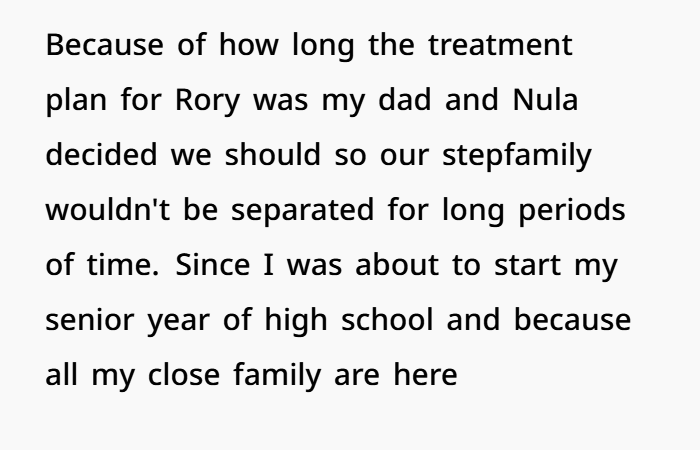
The young man’s stepbrother, Rory, was diagnosed with cancer. His parents decided to move to another state so Rory could receive the medical care he needed.
The move meant leaving behind their home, school, friends, and daily routines.
His younger step-siblings were going with the family. However, the 18-year-old had a different plan.
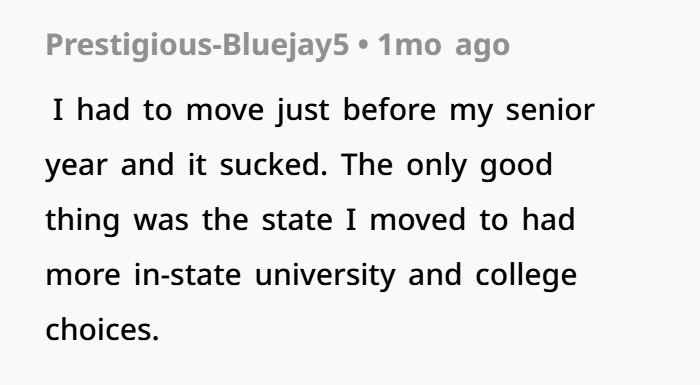
He was in his final year of high school, an important time for graduation and college preparation. Moving to another state could mean changing schools, adjusting to a new routine, and possibly affecting his plans for the future.
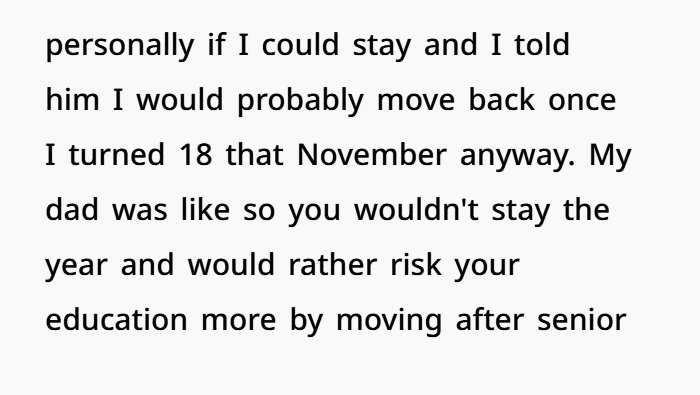
He didn’t want to risk disrupting his education during such an important year.
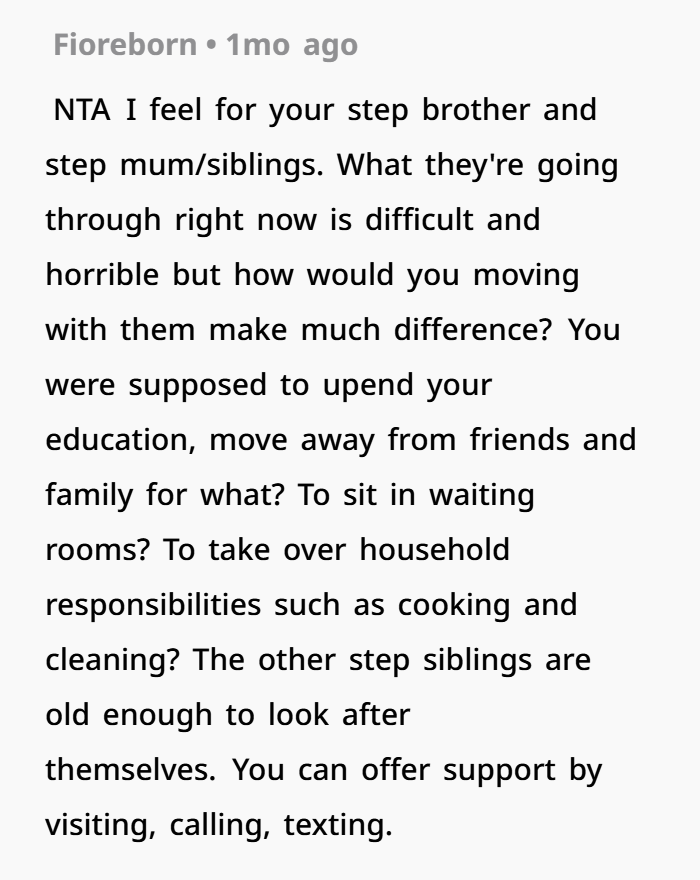
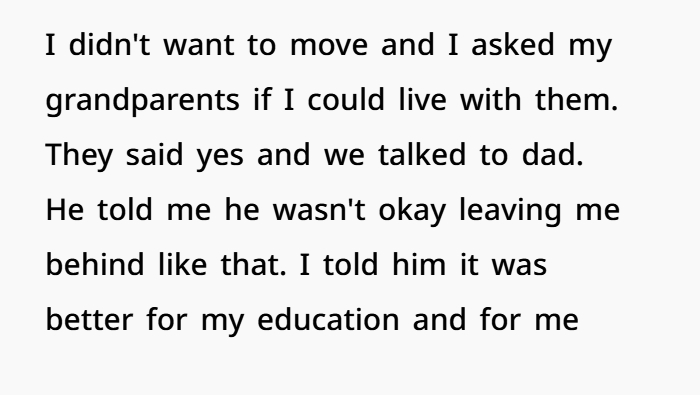
After thinking about his options, he decided to stay with his grandparents while the rest of the family moved.
His Decision Upset His Father and Stepmother
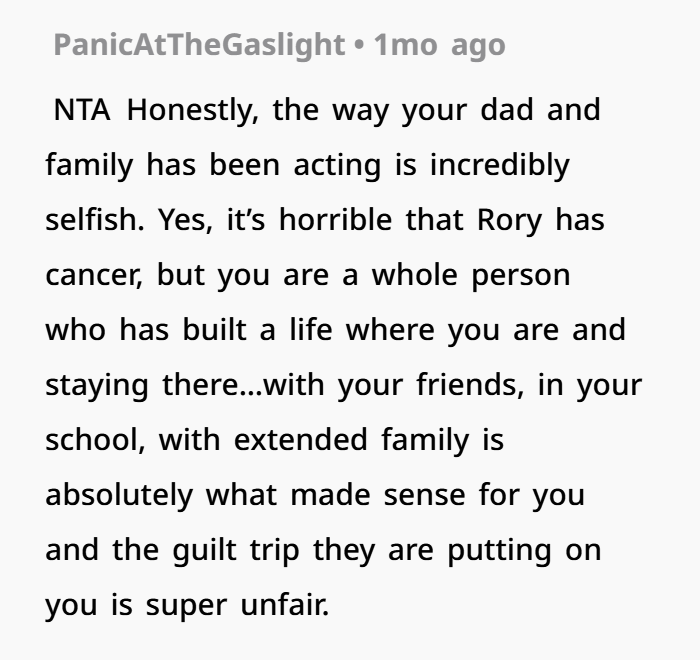
Although the student believed staying behind was the best choice for his future, his father and stepmother didn’t see it the same way.
They were already dealing with the fear and stress of Rory’s illness. Having another family member choose not to move with them added to their emotional burden.
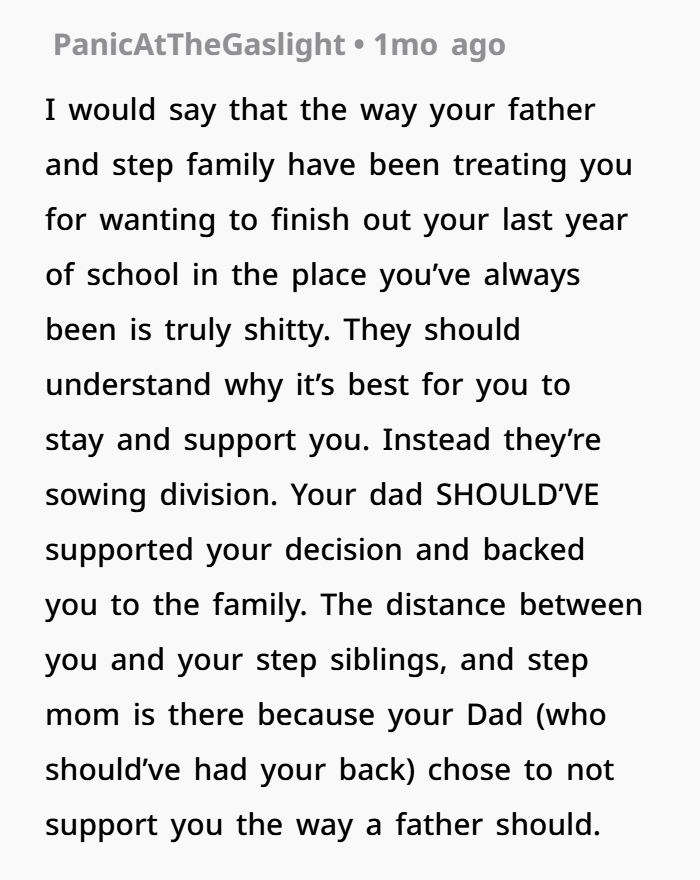
His father felt that the family should remain together during such a serious health crisis.
From his point of view, supporting Rory meant being physically present and facing the difficult situation as a family.
His stepmother was also hurt by the decision.
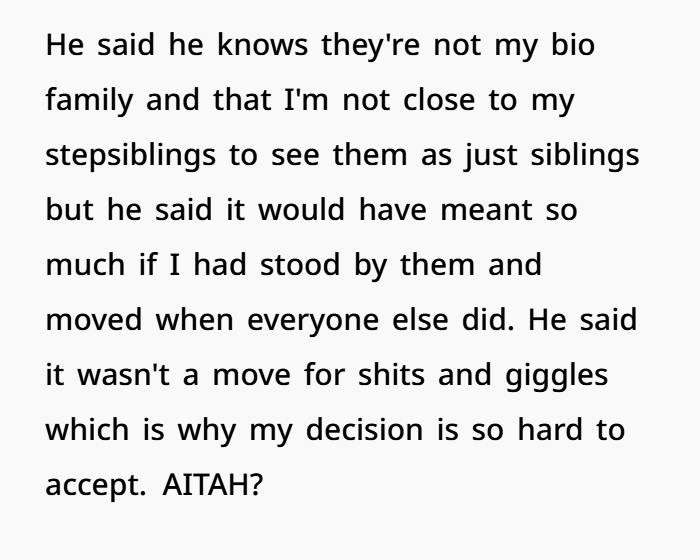
Rory reportedly struggled with the feeling that his stepbrother wasn’t there for him during his cancer treatment.
Advertisement – Continue Reading Below
The student understood why they were upset, but he didn’t believe staying behind meant he cared any less about Rory.
He Still Tried to Support His Family
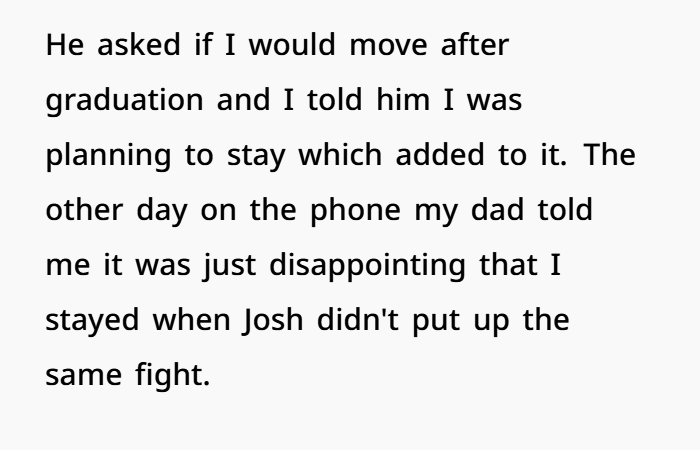
According to his Reddit post, the young man didn’t cut contact with his family after they moved.
He continued speaking with them through phone calls and messages. He also visited when he could.
He wanted Rory to know that he cared about his health and recovery, even though they weren’t living in the same state.
At the same time, he focused on completing his final year of high school.
Graduation and college plans were important to him, and he didn’t want to lose the progress he had already made.
He felt that staying with his grandparents allowed him to keep some stability while his family dealt with the medical crisis.
But despite his efforts to remain involved, the tension didn’t disappear.
The Family Saw Support in Different Ways
One of the biggest problems was that the family had different ideas about what support should look like.
His father and stepmother believed being together was important during Rory’s treatment.
They wanted the young man nearby, sharing the emotional weight of the situation and showing his stepbrother that the whole family stood behind him.
The student saw things differently.
He believed he could still offer love and support through calls, messages, and visits without giving up his education.
He wasn’t refusing to acknowledge Rory’s illness. He was trying to protect his future while remaining connected to his family.
Neither side found it easy to accept the other’s point of view.
An Important Year of School Made the Choice Harder
For an 18-year-old, the final year of high school can shape what comes next.
Students often spend this time preparing for graduation, applying to colleges, and making plans for their future.
Changing schools during that period can bring stress and uncertainty.
The young man had already built a life around his current school. Staying with his grandparents meant he could finish the year without starting over somewhere new.
His choice wasn’t simply about avoiding a difficult family situation.
It was also about keeping his education on track.
Still, his family felt that Rory’s health should have come before those plans.
That difference in priorities became the heart of their disagreement.
Can Family Support Exist From a Distance?
The situation raises an important question: Does supporting a sick family member always mean being physically present?
For some families, being together provides comfort and strength during medical treatment.
For others, distance doesn’t prevent people from showing care.
Regular phone calls, thoughtful messages, and visits can help someone feel remembered and supported.
However, emotional needs are different for everyone.
Rory may have wanted his stepbrother nearby during treatment, while the student believed staying in touch was enough to show that he cared.
Both feelings can exist at the same time.
The challenge is finding a way to respect those needs without creating more hurt.
Final Thoughts
This family’s disagreement shows how a serious illness can place people in painful situations.
The father and stepmother wanted their family together while Rory received cancer treatment. Their wish came from a need for support during a frightening time.
The 18-year-old, meanwhile, wanted to finish high school and protect the future he had been working toward.
He chose to stay with his grandparents but continued trying to support his family from a distance.
The decision left hurt feelings on both sides, and rebuilding those relationships may take time.
Honest conversations could help them better understand each other’s fears, needs, and reasons for making their choices.
Caring about family doesn’t always mean making the same sacrifices. Sometimes, people must find a way to support the ones they love while also protecting their own future.
Make the story feel less repetitiveAdd a stronger Reddit-style opening

Choosing Between Family Support and Education During a Health Crisis
When a family faces a serious illness, everyone feels the pressure. Parents worry about their sick child, siblings struggle with fear, and daily life can change overnight.
But what happens when supporting your family means giving up something important in your own life?
That’s the difficult choice one 18-year-old faced when his stepbrother was diagnosed with cancer. His family moved to another state for treatment, but he decided to stay with his grandparents and finish high school.
His choice upset his father and stepmother, raising questions about family loyalty, personal goals, and what it means to support someone you love.
1. Why Senior Year of High School Matters
The final year of high school is an important time for many teenagers. Students prepare for graduation, apply to colleges, look for scholarships, and make plans for their future.
Moving to another state during this period can create problems.
A student may have to adjust to a new school, different classes, and unfamiliar teachers. They may also lose daily contact with friends who have supported them for years.
For this teenager, staying behind meant keeping his education on track.
His grandparents offered him a safe place to live, so he didn’t have to face the challenges of moving to a new state.
He could remain at his school, finish his final year, and continue working toward his goals.
His decision wasn’t necessarily about avoiding his family. It was about protecting the future he had already started building.
2. Why His Family Felt Hurt
While the teenager had reasons for staying, his family’s feelings also deserve attention.
Rory’s cancer diagnosis brought fear and uncertainty into their lives. His parents were focused on getting him the care he needed while dealing with the stress of a major move.
During serious illnesses, families often want to remain close.
Being together can provide comfort, reduce feelings of loneliness, and help everyone face difficult moments.
His father and stepmother may have believed that moving together was the best way to support Rory.
When the teenager chose to stay behind, they saw his decision differently.
Instead of focusing on his education, they may have felt that he was placing his own plans ahead of the family’s needs.
That difference in how they viewed the situation created tension.
3. Supporting Family Doesn’t Always Mean Living Together
One important lesson from this situation is that family support can take many forms.
Living in the same house isn’t the only way to show someone you care.
Phone calls, video chats, messages, and visits can help people stay close, even when they live far apart.
For someone facing cancer treatment, hearing from loved ones can offer comfort during difficult days.
The teenager continued contacting his family and visiting when possible.
He wasn’t cutting them out of his life or refusing to acknowledge Rory’s illness.
Instead, he was trying to balance his education with his family relationships.
Although being physically present can be valuable, emotional support can still exist across long distances.
What matters is making a real effort to stay involved.
4. Why Comparing Siblings Isn’t Always Fair
Another issue in this situation was the comparison between the teenager and his younger step-siblings.
His family felt that the other children had moved without the same objections.
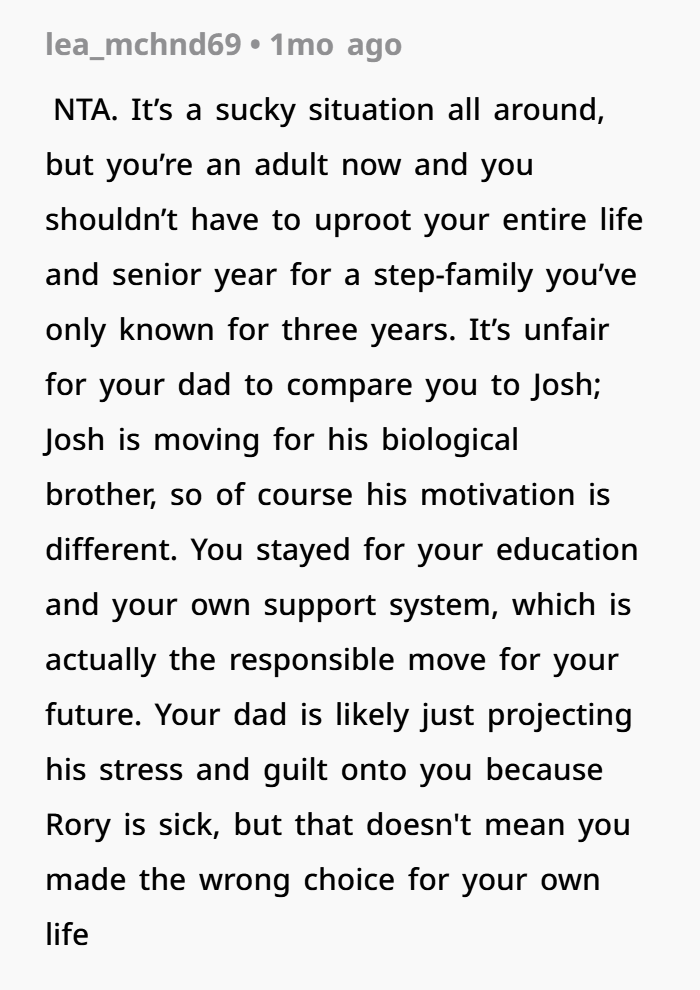
However, every child’s needs and circumstances are different.
An 18-year-old preparing for graduation may face challenges that younger students don’t.
Changing schools during the final year can affect college plans, academic progress, and friendships.
Younger siblings may have more time to adjust before reaching those same milestones.
That doesn’t mean one child’s needs are more important than another’s.
It means families should consider each person’s situation before expecting everyone to make the same choice.
Fairness isn’t always about treating everyone exactly alike. Sometimes, it means understanding why different people need different things.
5. Why Blended Families Can Face Extra Challenges
Blended families often bring together people with different backgrounds, experiences, and expectations.
Some family members may feel close right away, while others need more time to build strong relationships.
During a health crisis, these differences can become more noticeable.
Parents may expect everyone to act as one family, while individual children may have different feelings about their roles and responsibilities.
In this case, the teenager cared about Rory but also wanted to protect his education.
His choice didn’t automatically mean he valued his stepfamily less.
Family loyalty shouldn’t be measured only by how much someone is willing to give up.
Respecting personal needs can also help families build stronger relationships.
6. Understanding Rory’s Feelings
Rory’s feelings are an important part of the story.
Cancer treatment can be frightening, exhausting, and emotionally draining. During such a difficult experience, having loved ones nearby may bring comfort.
Rory may have hoped his stepbrother would move with the family.
When that didn’t happen, he may have felt disappointed or unsupported.
Those feelings deserve care and understanding.
However, the teenager’s decision to stay behind doesn’t mean he stopped caring about Rory.
Both brothers were facing difficult circumstances, even though their challenges were different.
Keeping in touch, offering encouragement, and making time for visits could help protect their bond.
Their relationship doesn’t have to depend entirely on living in the same state.
7. Why Parents Should Listen to Their Children’s Needs
Communication plays a major role in family disagreements.
The father appeared to view the decision as a choice between family loyalty and personal goals.
But the teenager may not have seen those things as opposites.
He wanted to support Rory while also finishing school.
Instead of treating the situation as a test of loyalty, the family could benefit from discussing everyone’s concerns.
Parents can ask why a decision matters to their child and what support they need.
Teenagers can also explain their feelings while showing that they understand the family’s struggles.
These conversations may not solve every disagreement, but they can reduce hurt feelings and help people understand each other.
8. Learning to Make Personal Decisions at 18
Turning 18 often brings new responsibilities.
Young adults begin making choices about education, work, friendships, and their future.
These decisions aren’t always easy, especially when family expectations are involved.
The teenager had to think about what moving would mean for his final year of school.
He also had to consider his relationship with his father, stepmother, and stepbrother.
Choosing to stay with his grandparents gave him a way to maintain stability while remaining connected to his family.
His decision showed that he was thinking about his long-term plans.
Even when parents disagree with their adult children’s choices, listening and showing respect can help keep their relationships strong.
9. Finding a Balance Between Family and Personal Goals
The main challenge in this story was finding a balance between two important needs.
The family wanted to remain together while Rory received cancer treatment.
The teenager wanted to finish school without putting his future plans at risk.
Both concerns mattered.
A possible middle ground could include regular calls, planned visits, and honest conversations about how he could support Rory from a distance.
The family could also make space for the teenager to share important moments from his senior year.
This approach wouldn’t remove every difficult feeling, but it could help everyone feel more included.
Supporting a loved one doesn’t always require giving up every personal goal.
Sometimes, families need to find ways to care for each other while respecting different needs.
Final Thoughts
This situation shows how difficult family decisions can become during a serious health crisis.
Rory needed medical care and emotional support. His parents wanted the family together during a frightening time.
Meanwhile, the 18-year-old wanted to complete his final year of high school and protect his future.
He had a safe home with his grandparents and continued making efforts to stay connected with his family.
Although his decision caused hurt feelings, it wasn’t necessarily a rejection of his stepbrother or the rest of the family.
Moving forward, honest conversations and mutual respect could help repair their relationships.
The biggest lesson is that caring for family and protecting your future don’t have to be opposing choices. With understanding, patience, and open communication, both can remain important parts of someone’s life.
Add the teenager’s name consistentlyReduce repeated points across sections
“I should have gone with them to support the family and show that we were standing together,” the teenager explained, describing how his father viewed his decision to stay behind.