A Simple Stage Kiss Turned Into an Unexpected Relationship Drama
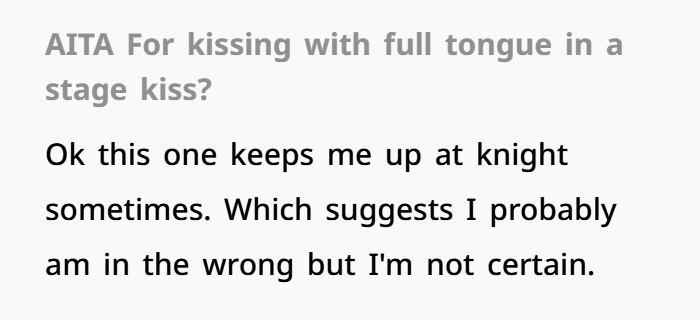
What started as a normal university theater performance eventually became a source of tension between two former students. A kiss that was meant to be part of a play led to confusion, hurt feelings, and a disagreement that resurfaced years later.
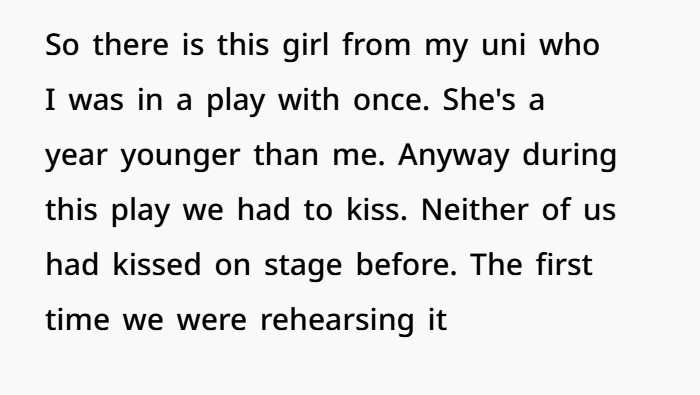
The two students were taking part in a university production that included a romantic scene. Their characters were supposed to kiss, something that isn’t unusual in theater. However, neither student had much experience with intimate scenes on stage.
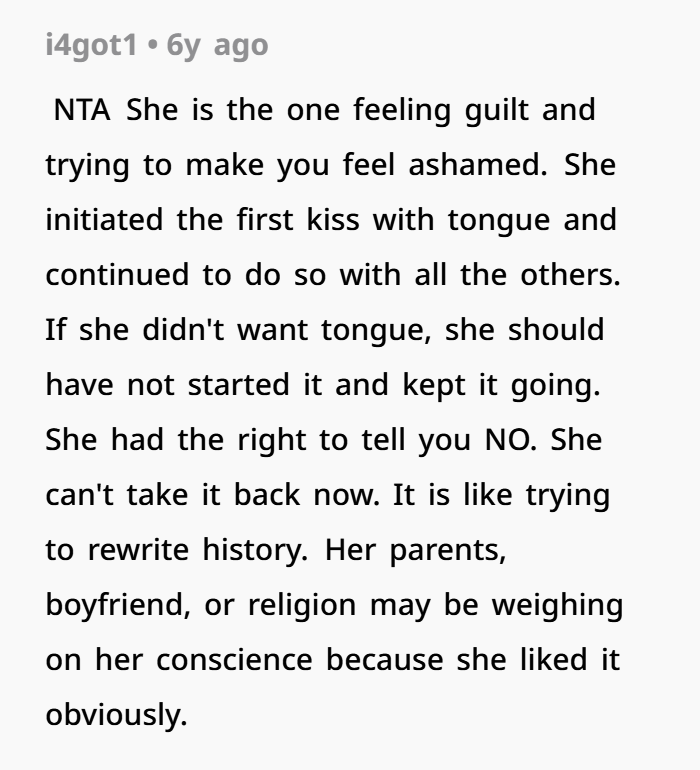
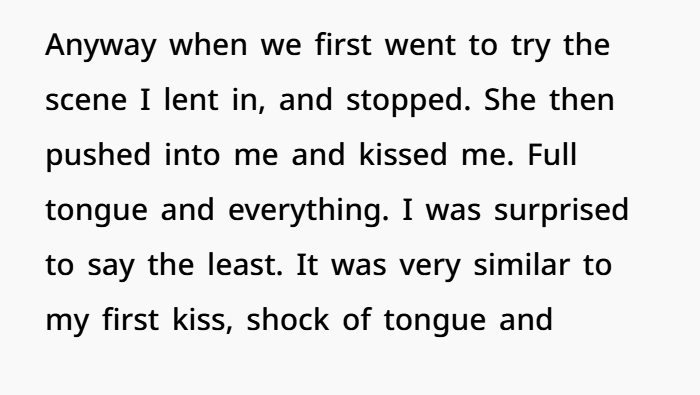
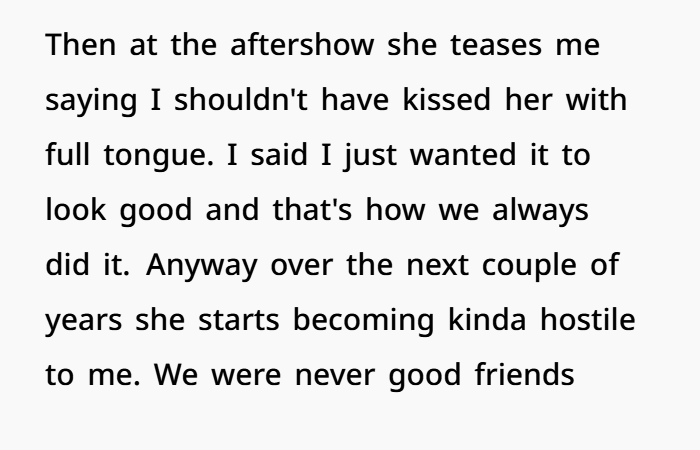
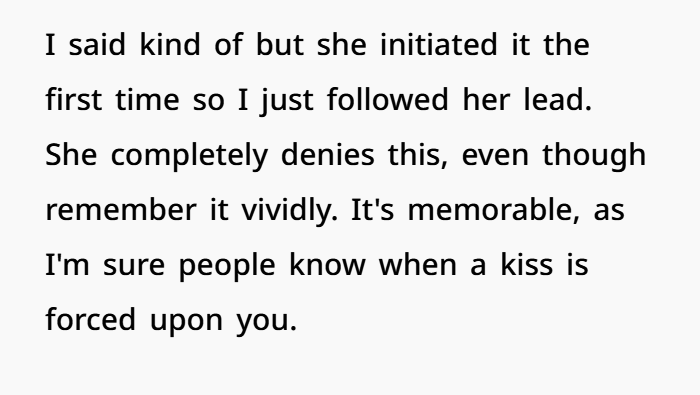
During their first rehearsal, the male student wasn’t sure how to approach the kiss. Before he could decide what to do, his female co-star leaned in and kissed him more deeply than he had expected.
Caught off guard, he went along with it.
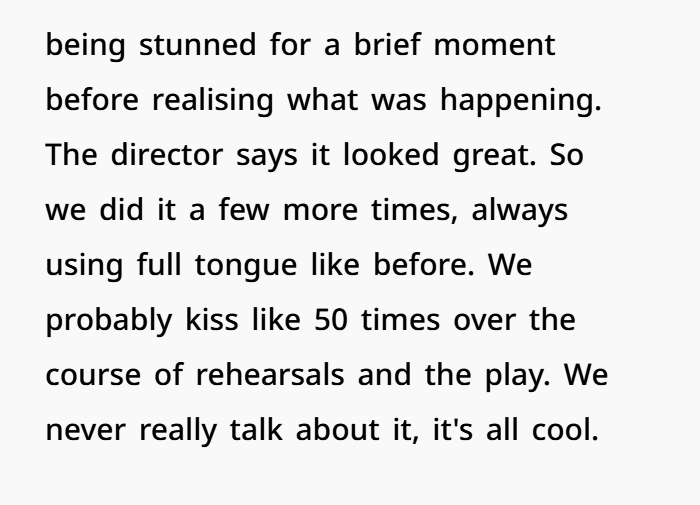
Since the director had approved the scene, he assumed they were both comfortable with how it was being performed. The kiss became part of their regular rehearsals and later appeared in the actual performances.
But there was one important problem. Neither student had clearly discussed what they were comfortable doing.
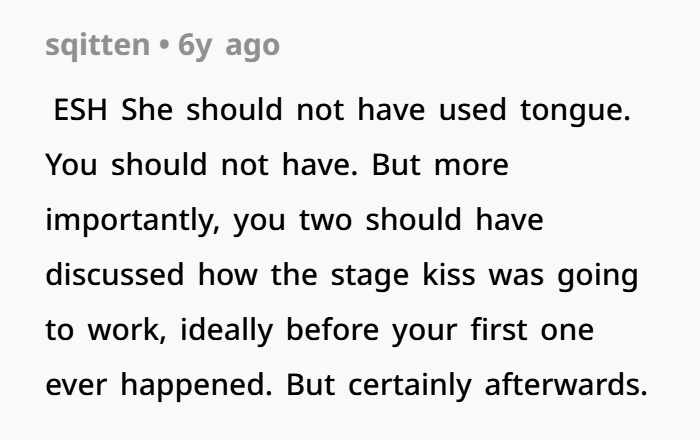
They hadn’t talked about how long the kiss should last, whether it should involve tongue, or what boundaries they wanted to keep.
At the time, the male student didn’t think much of it. He believed they were simply following the director’s instructions and doing what the scene required.
Things became more confusing after a theater afterparty.
Someone suggested that his female co-star might not have been entirely comfortable with the kissing scenes.
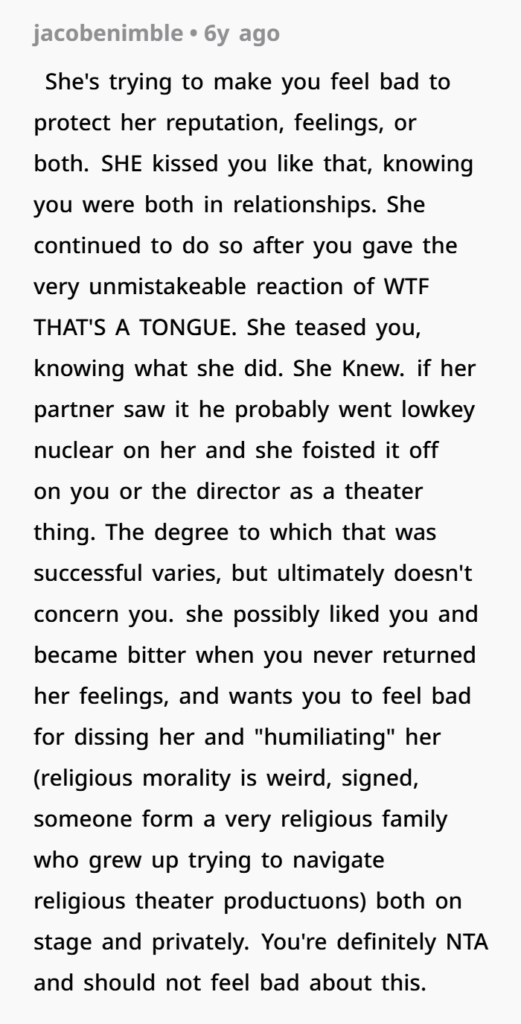
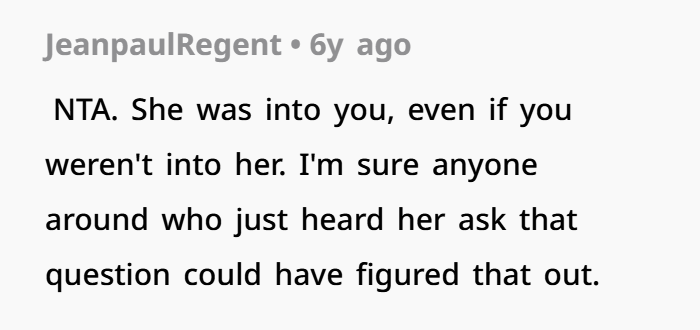
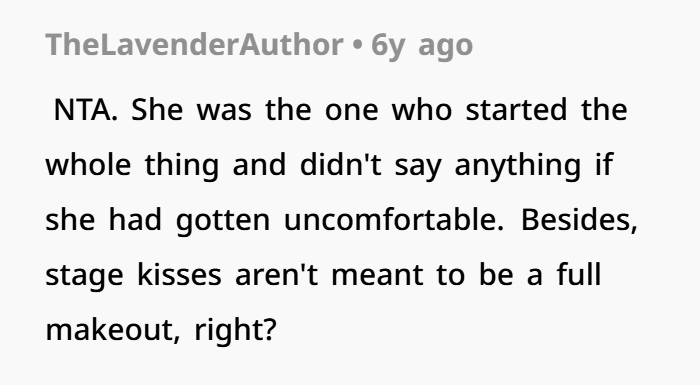
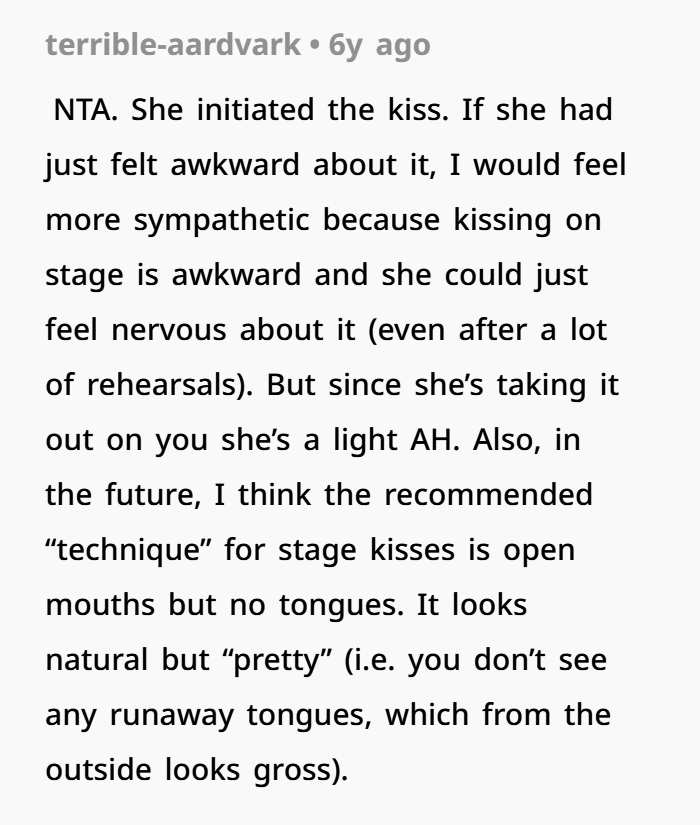
The comment surprised him because she hadn’t raised any concerns with him during rehearsals or performances. From his point of view, she had taken the lead during their first kiss.
Still, the comment left him wondering whether they had understood the situation in the same way.
For a while, the issue seemed to fade into the past.
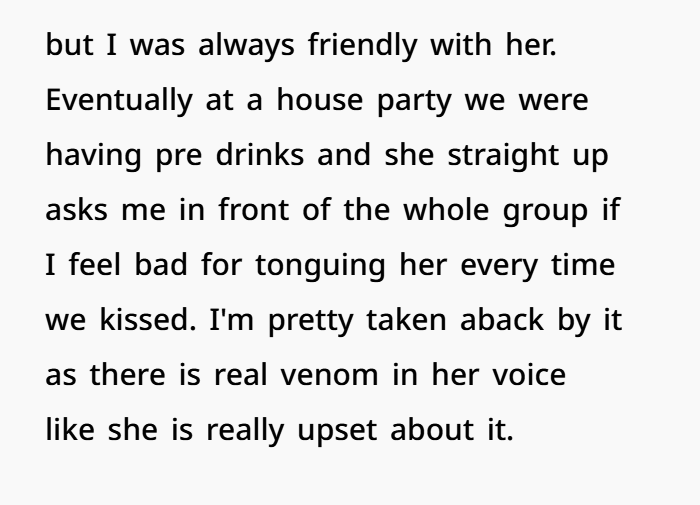
But years later, the disagreement returned during a social gathering.
His former co-star accused him of crossing personal boundaries during their university theater performances.
He was shocked by the accusation.
Advertisement – Continue Reading Below
He remembered their first rehearsal differently and believed she had initiated the deeper kiss. He also thought the director’s approval meant they were both comfortable with the scene.
However, her later comments suggested that she had experienced those moments differently.
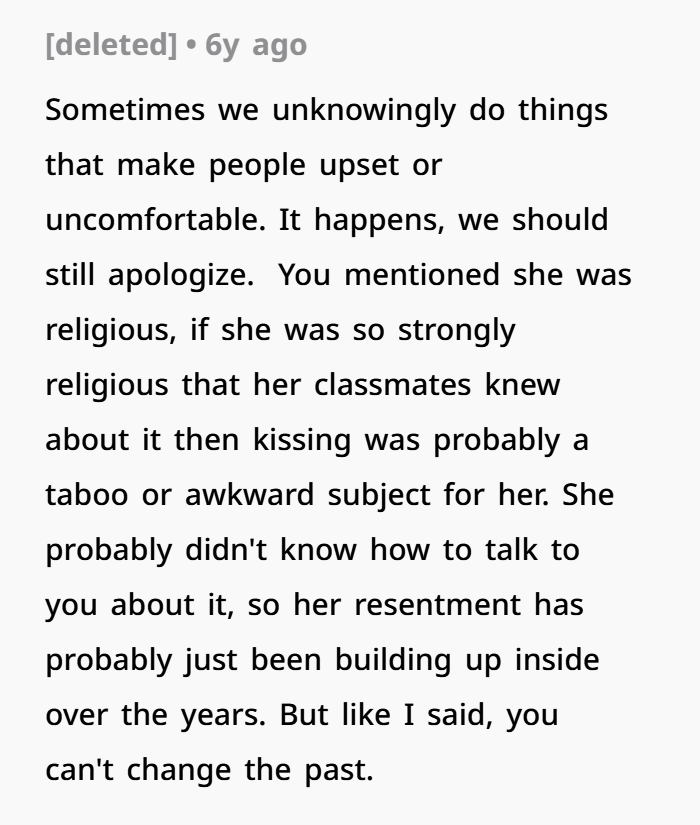
What he remembered as an agreed part of the performance had become a painful memory for her.
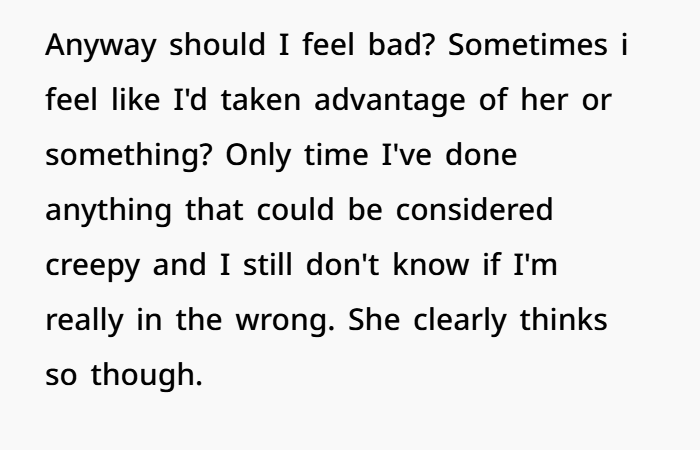
The disagreement left him confused and unsure how to respond.
He didn’t believe he had knowingly crossed a boundary, but he also had to face the fact that they had never openly discussed their comfort levels.
The situation shows how easily problems can arise when people make assumptions instead of having clear conversations.
A director approving a scene doesn’t automatically mean every performer feels comfortable with every detail. In the same way, someone’s willingness to take part in a scene doesn’t mean they have agreed to every form of physical contact.
Both actors needed clear guidance about what the kiss would involve and the freedom to raise concerns without feeling pressured.
Looking back, the male student was left questioning what had gone wrong. Was it a misunderstanding between two inexperienced actors, or had the lack of clear boundaries created a problem neither person fully understood at the time?
Their different memories made the situation even harder to resolve.
The experience also raises questions about how theater groups handle romantic scenes, especially when students have little experience with stage intimacy.
Clear consent, open conversations, and agreed boundaries can help prevent confusion before rehearsals begin.
A stage kiss may be part of a performance, but the people involved still deserve to feel safe and respected. When boundaries are left unclear, even a brief scene can lead to hurt feelings that last for years.

When a Stage Kiss Leads to Confusion: Understanding Consent, Trust, and Boundaries
A stage kiss may seem like a small part of a theater performance, but it can become a serious issue when boundaries aren’t clear.
In this case, two university students took part in a play that required them to kiss. What seemed like a normal acting scene later became a source of tension because they remembered the experience differently.
The situation raises important questions about consent, personal comfort, and why honest conversations matter when actors perform intimate scenes.
1. Why Stage Kissing Can Be Complicated
Acting sometimes requires people to show love, anger, sadness, or physical closeness. Kissing scenes are common in plays, films, and theater productions.
However, performing a romantic scene doesn’t mean actors are comfortable with every kind of physical contact.
In professional productions, trained intimacy coordinators may help actors agree on boundaries before filming or rehearsing these scenes.
Student theater groups may not have the same support.
When actors aren’t given clear guidance, they may feel unsure about what is expected. They might also avoid asking questions because they don’t want to interrupt rehearsals or upset other performers.
This can lead to confusion, even when nobody intends to cause harm.
2. What Went Wrong During the Performance?
In this situation, the male student wasn’t sure how to handle the kissing scene during the first rehearsal.
According to his account, his female co-star leaned forward and kissed him more deeply than he expected. He was surprised but continued with the scene.
Because the director had approved the performance, he assumed everything was acceptable.
The same style of kissing continued during later rehearsals and performances.
However, neither actor had clearly discussed what they were comfortable doing.
They hadn’t agreed on how the kiss should happen, how much physical contact was acceptable, or what to do if either person felt uncomfortable.
That missing conversation became a major part of the later disagreement.
3. Why Silence Doesn’t Always Mean Consent
One of the biggest lessons from this situation is that silence should never be treated as clear agreement.
People sometimes go along with uncomfortable situations because they don’t want to create problems.
For example, an actor may hesitate to stop a rehearsal because they fear embarrassing themselves or disappointing the director.
Someone might also assume that their scene partner is comfortable simply because they haven’t complained.
But those assumptions can be wrong.
Consent should be clear, freely given, and based on what each person has agreed to do.
Even when someone agrees to a kissing scene, that doesn’t mean they have agreed to every type of kiss.
Both actors should have the chance to discuss their limits before physical contact begins.
4. How Two People Can Remember the Same Event Differently
Another difficult part of this story is that the two former students remembered the experience in different ways.
The male student believed his co-star had initiated the deeper kiss. He also remembered the scene continuing without either person raising concerns.
Years later, his former co-star said he had crossed her boundaries during those performances.
These different accounts made the disagreement harder to understand.
Human memory isn’t a perfect recording of the past. As time passes, people may remember certain details differently or give old experiences new meaning.
One person might remember a moment as a normal part of acting, while another remembers feeling uncomfortable.
Neither person’s feelings should be dismissed simply because their memories don’t match.
At the same time, different memories alone cannot prove exactly what happened.
A calm conversation may help both people understand each other’s experiences, even if they never fully agree.
5. Why the Conflict Became More Emotional Years Later
The disagreement didn’t end when the theater production finished.
Years later, the issue came up again during a social gathering.
The male student was surprised when his former co-star accused him of crossing boundaries during their performances.
From his point of view, the kissing scenes had been part of the play, and he hadn’t known she felt uncomfortable.
Her comments suggested she viewed those moments differently.
Discussing such a personal issue in front of others can make the situation even harder.
People may become defensive, embarrassed, or upset when sensitive concerns are raised publicly.
A private conversation can sometimes create more room for listening and understanding.
However, someone who feels hurt may also need time before they are ready to discuss what happened.
6. Understanding Intent and Impact
An important part of this situation is the difference between what someone intended and how their actions affected another person.
Intent means what someone meant to do.
Impact means how their actions affected someone else.
For example, the male student may have believed he was simply following the script and doing his job as an actor.
His former co-star may have experienced the same scene as uncomfortable or upsetting.
Both experiences deserve to be heard.
Not intending harm doesn’t automatically mean no harm occurred. Likewise, someone’s discomfort doesn’t, by itself, prove that the other person acted with harmful intent.
Understanding this difference can help people discuss difficult experiences without immediately turning the conversation into an argument.
7. Could Better Communication Have Prevented the Problem?
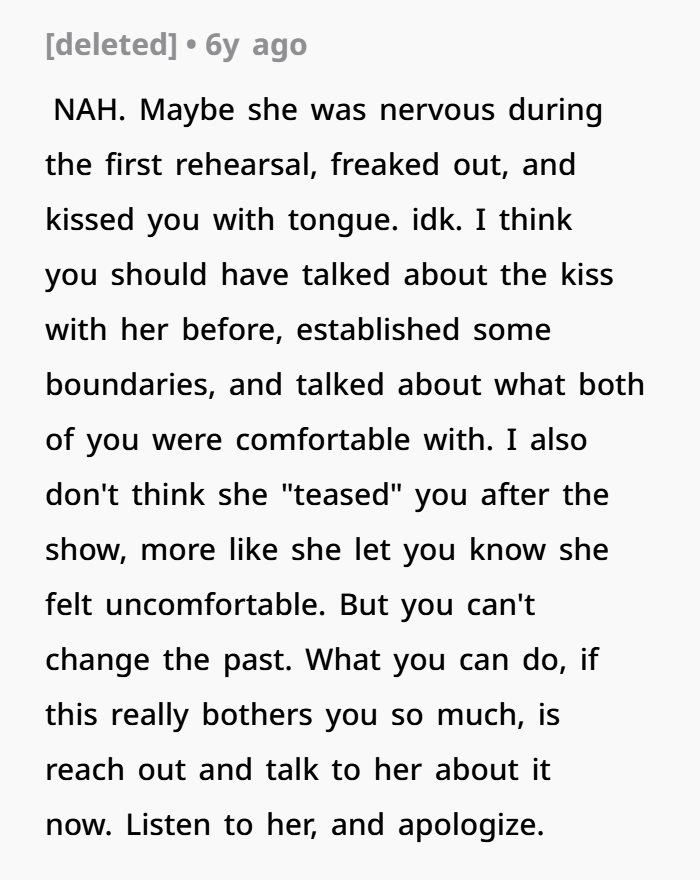
Clear communication before rehearsals could have reduced the chance of confusion.
Before performing a kissing scene, actors should discuss what will happen and what each person feels comfortable doing.
Simple questions can help:
- Are we both comfortable with this kiss?
- Should the kiss be brief or longer?
- Is tongue contact off-limits?
- What should we do if either person wants to stop?
- Can we change the scene if someone feels uncomfortable?
The director should also help create an environment where actors can raise concerns without fear of judgment.
Physical scenes should be planned and rehearsed with clear limits rather than left to guesswork.
These steps help protect everyone involved.
8. Was Anyone Clearly at Fault?
Based on the account shared, it’s difficult to know exactly what each person understood during the performances.
The male student said he believed the kiss was acceptable because his co-star had initiated it and the director had approved the scene.
His former co-star later expressed concerns about how the kissing scenes had been handled.
The fact that neither person raised concerns during rehearsals doesn’t prove that both felt comfortable.
It also doesn’t establish whether either person knowingly crossed a boundary.
What is clear is that the actors lacked an open discussion about consent and expectations.
The situation shows why physical contact should never depend only on assumptions, even during a planned performance.
Final Thoughts
This story shows how a stage kiss can become a lasting source of conflict when people don’t discuss their boundaries.
The two students took part in the same performance but later understood their experiences differently.
Their disagreement highlights the need for clear consent, respect, and honest communication in theater.
Actors should feel comfortable discussing physical scenes before rehearsals begin. They should also know they can raise concerns or change their minds at any point.
Directors and theater groups have a role in making those conversations possible.
The main lesson is simple: Acting may require physical closeness, but respect and consent should always come first. Clear boundaries can prevent misunderstandings and help everyone feel safe on stage.
Add a neutral source disclaimerReduce repetition across sections
The Reactions Are In