My Stepkids Never Respected Me but Still Expected My Support, So I Finally Said No
A 55-year-old man spent years helping raise his wife’s two children, even though they never wanted him to act as their father.
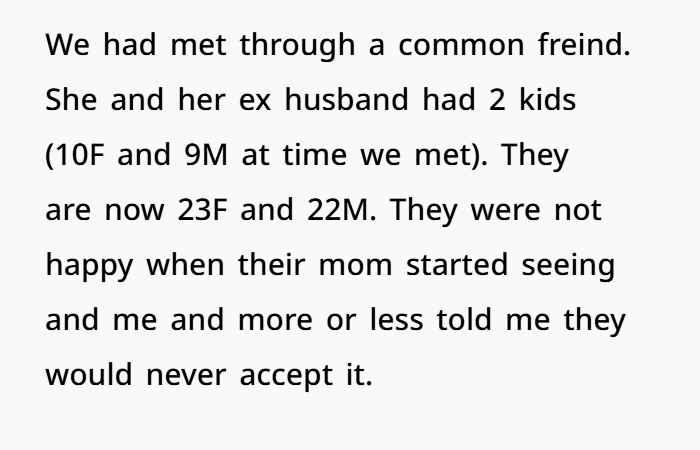
When he married their mother, the children made their feelings clear from the beginning.
They didn’t want him to replace their biological father or take on a parental role in their lives.
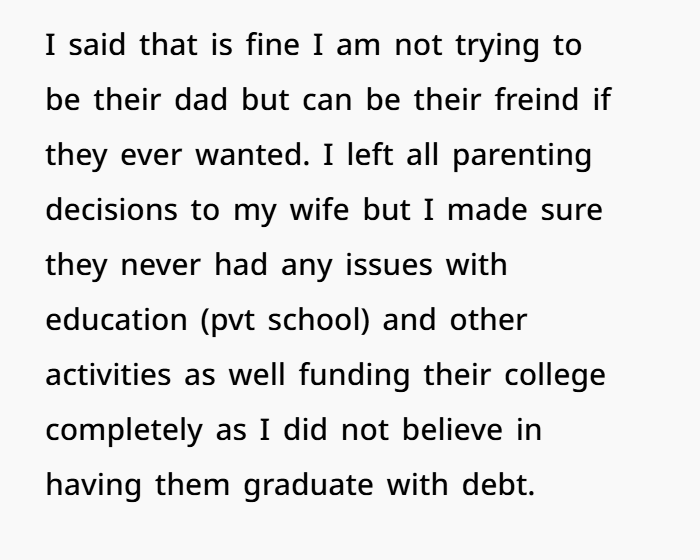
Rather than forcing a relationship, he respected their wishes and gave them space.
But that didn’t mean he stopped supporting them.
Over the years, he helped pay for their education, school activities, and college expenses.
He wanted them to have good opportunities, even if they never saw him as a father figure.
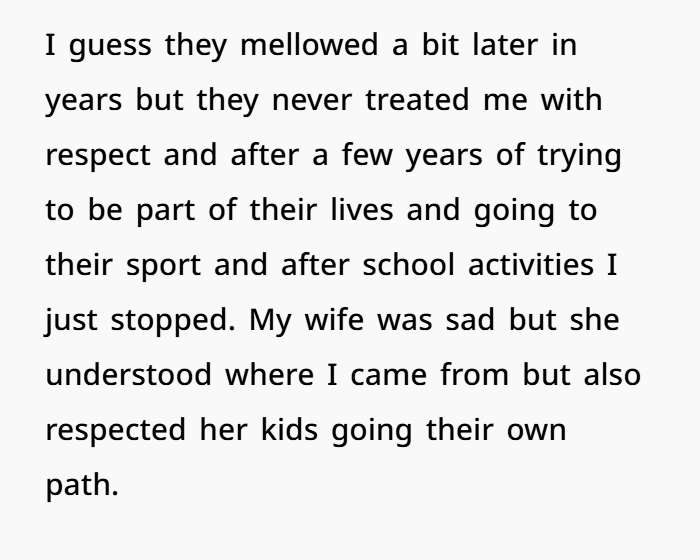
Despite his efforts, the relationship remained distant.
The man eventually accepted that he and his stepchildren might never share a close family bond.
He continued living his life, focusing on his marriage and work.
After years of building a successful business, he eventually sold it and began planning his retirement.
With his finances in good shape, he looked forward to enjoying more time with his wife.
But a family conversation soon brought old feelings to the surface.
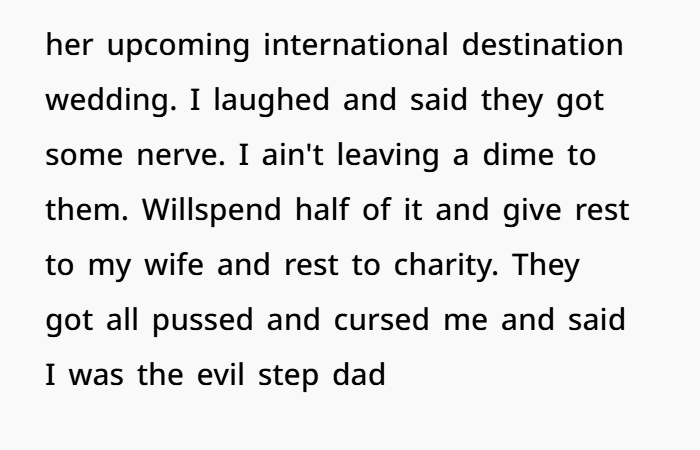
A discussion about money, future expenses, and inheritance turned into a heated argument.
What began as a conversation about finances quickly became personal.
The stepchildren had their own expectations about financial support, while the man felt his past efforts weren’t being fully respected.
Advertisement – Continue Reading Below
The disagreement grew, and harsh words were exchanged.
By the end of the conversation, everyone was upset.
For the stepfather, the argument brought back years of feeling kept at a distance despite helping the family financially.
He had respected the children’s decision not to treat him as a father, but he also believed that choice should affect what they expected from him.
The stepchildren, meanwhile, had their own views about family support and future finances.
The disagreement left the family facing an uncomfortable question.
Should someone be expected to provide financial support to relatives who have never wanted a close relationship with them?
Some people believe that helping family members should come from love and personal choice, not pressure.
Others feel that being part of a family creates certain duties, even when relationships are difficult.
Money can make these differences harder to ignore.
In blended families, relationships often take time to develop. Stepparents and stepchildren may have different ideas about what their roles should be.
Those differences don’t always lead to problems, especially when everyone respects each other’s boundaries.
But trouble can begin when expectations about money and family roles don’t match.
In this case, the man believed he had done his part by helping with education and other expenses.
Now that he was preparing for retirement, he wanted more control over how he spent his money.
The situation shows why families should discuss financial expectations before resentment builds.
Inheritance and financial help are sensitive topics, and no one should assume they are entitled to another person’s money.
At the same time, difficult conversations are easier when people listen without turning past disagreements into personal attacks.
The man spent years supporting his stepchildren while respecting their wish to keep their distance.
Now, he is questioning whether he should continue offering support when the relationship has never grown closer.
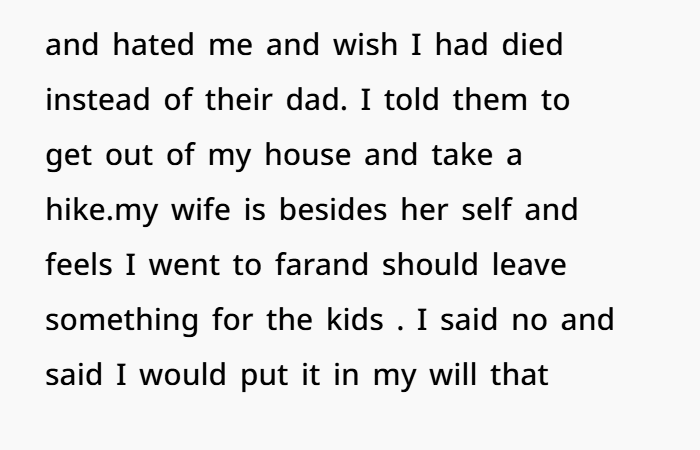
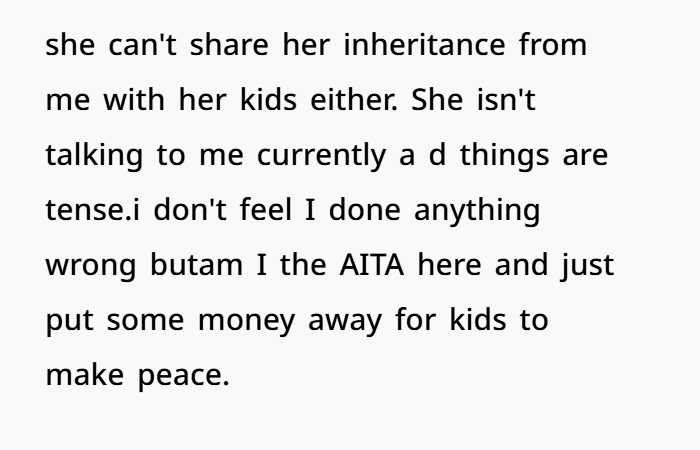
When the poster married his current wife, she was a widow, and even after 13 years, her two kids don’t accept or respect him



Family Relationships, Inheritance, and Money Expectations
This story is about much more than money. It involves years of hurt feelings, family ties, financial support, and expectations that were never openly discussed.
When inheritance and future money plans become part of family talks, old disagreements can quickly turn personal.
When Financial Help Doesn’t Build Close Family Bonds
One of the hardest parts of being in a blended family is feeling valued for your money but not accepted as a person.
In this case, the stepfather respected his stepchildren’s wishes. He never tried to take their biological father’s place.
Even so, he spent years helping them financially. He paid toward their education, activities, and college expenses.
That kind of support takes a lot of money and effort.
But giving so much without feeling close to the people you’re helping can lead to hurt and frustration.
Strong family bonds need more than financial support. They also depend on trust, respect, honest conversations, and appreciation.
For the stepfather, the argument seemed to bring back years of feeling overlooked despite everything he had done.
Inheritance Is a Personal Choice
Many people hope to inherit money or property from their relatives.
However, deciding who receives an inheritance is usually a personal matter handled through estate planning.
People can use wills, trusts, and other legal plans to decide what happens to their money and property after they die.
These choices can become harder in blended families.
Several things may affect who receives an inheritance, including:
- Wills
- Trusts
- Adoption status
- Estate planning documents
- Local inheritance laws
Because of these factors, what family members expect may not always match what the law allows.
Talking openly about money and future plans can help families avoid confusion and arguments.
Why Both Sides May Feel Hurt
Arguments about money often involve feelings that have built up over many years.
The stepchildren may feel rejected or disappointed by their stepfather’s inheritance decisions.
Meanwhile, the stepfather may feel hurt because he spent years supporting them without building a close relationship.
Both sides may be reacting to past experiences rather than just the current disagreement.
Blended families often face challenges involving loyalty, past relationships, and changing family roles.
These feelings don’t always disappear when children grow into adults.
Trying to understand each other’s point of view won’t erase the past, but it may make future conversations easier.
Setting Financial Boundaries
The stepfather can make decisions about his own money and property through proper legal planning.
However, those choices may also affect his marriage and other family relationships.
Some people choose to leave money directly to their children or relatives.
Others use trusts to decide how their assets will be shared.
Some prefer to let their spouse make certain decisions.
There isn’t one approach that works for every family.
What matters is choosing a plan that fits personal values, financial needs, and future goals.
The Wife Is Caught in the Middle
The wife may find herself torn between her husband and her children.
She knows how much her husband has done to support the family.
At the same time, she loves her children and wants them to have a secure future.
Many parents struggle when they feel they must choose between supporting their spouse and standing by their children.
That’s why open and honest conversations are so important.
Couples may find it helpful to talk about:
- Their family values
- Plans for retirement
- Wishes about inheritance
- Long-term financial goals
- What they want to leave behind
These conversations may feel uncomfortable, but discussing them early can prevent bigger problems later.
Final Thoughts
It’s understandable why the stepfather feels hurt after years of financial support without much emotional closeness.
Helping with education, college costs, and other needs was a meaningful contribution to his stepchildren’s lives.
Wanting respect and appreciation for those efforts is a natural feeling.
At the same time, inheritance is a personal decision that deserves careful thought.
This disagreement isn’t only about who gets money.
It’s also about family relationships, emotional needs, personal choices, and how people want to be remembered.
Setting boundaries doesn’t always mean someone is acting unfairly. Sometimes, people need limits to protect themselves after years of disappointment.
In the end, honest conversations, careful financial planning, and mutual respect can help families handle these difficult issues.
The stepfather’s support gave his stepchildren opportunities over the years. What they choose to do with those opportunities is now their responsibility.
Online Readers Felt the Stepkids Were Acting Entitled, Caring More About His Money Than Appreciating Everything He Had Already Done for Them