She Dated Other Guys Before We Became Official — But Hid the Truth From Me
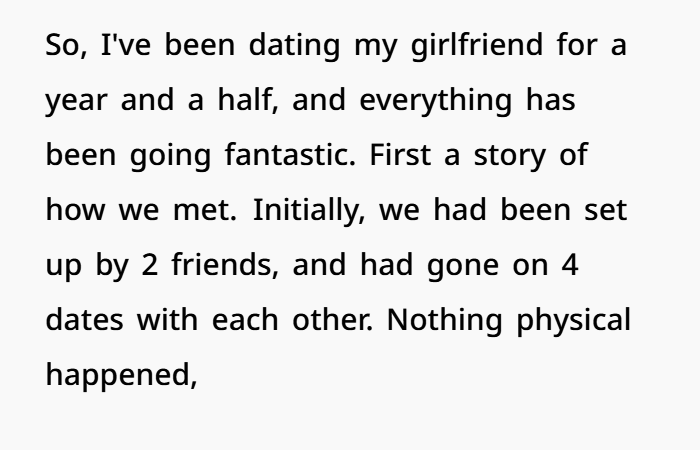
You met through mutual friends and went on four dates together. Things seemed to be going well, and you enjoyed spending time with her. Nothing physical happened, but you made it clear that you liked her.
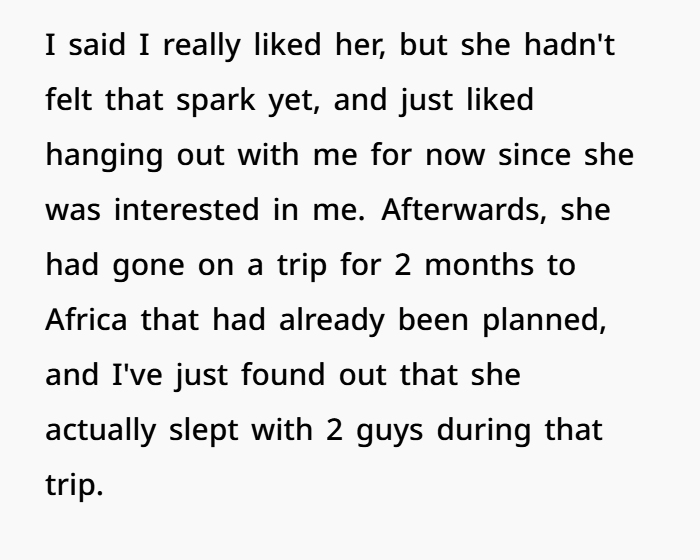
She told you she wasn’t feeling a strong romantic spark yet. Still, she wanted to keep seeing you and find out where things might go.
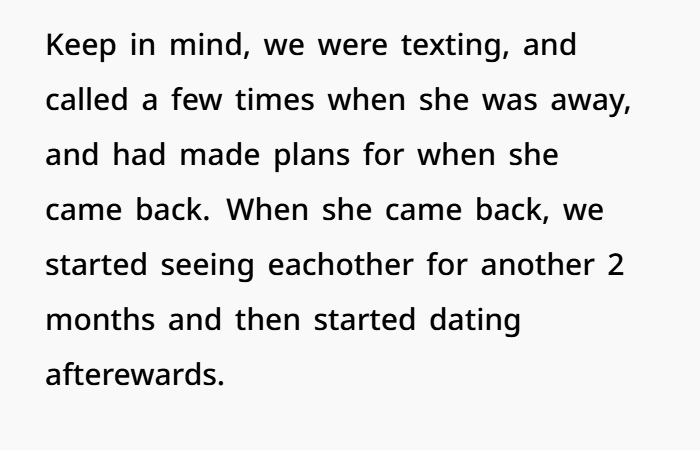
Not long after, she left for a two-month trip to Africa that she had already planned. Even with the distance, you stayed in touch through calls and messages. You also talked about things you wanted to do together once she returned.
From your side, it felt like the two of you were slowly building something.
But there was something you didn’t know.
While she was away, she slept with two other men. At the time, you weren’t officially a couple, so there hadn’t been a clear promise to be exclusive.
After she came home, you started spending more time together. About two months later, you agreed to make the relationship official.
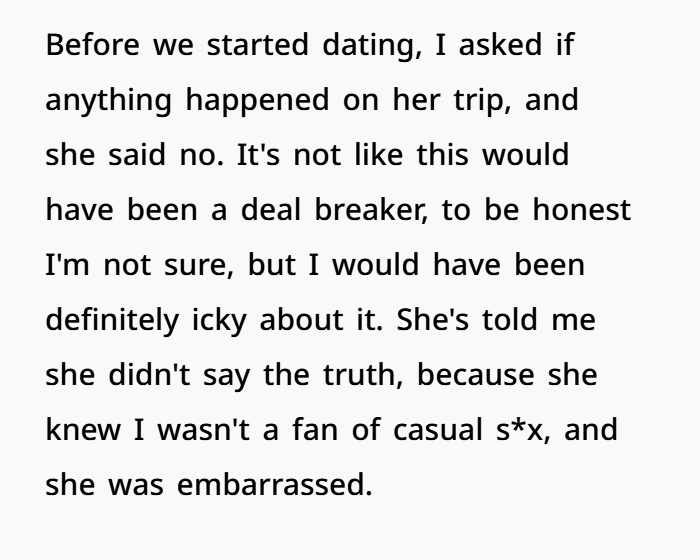
But before taking that step, you had asked her whether anything had happened with anyone during her trip.
She told you nothing had happened.
That’s where things became painful for you.
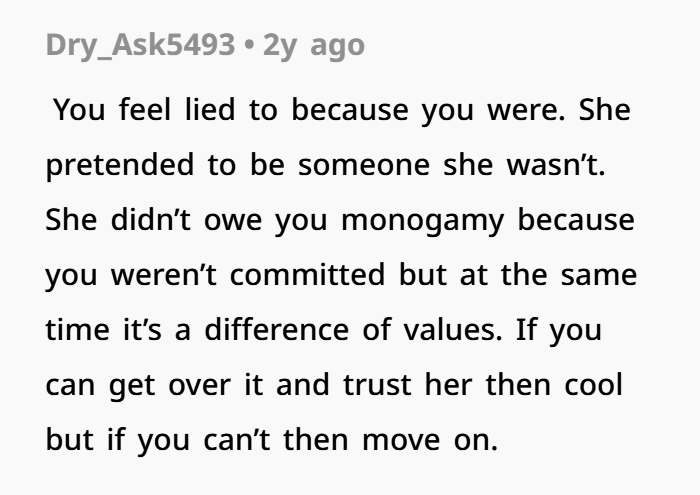
It wasn’t just about her being with other men before you became a couple. It was the fact that you had asked her directly, and she hadn’t told you the truth.
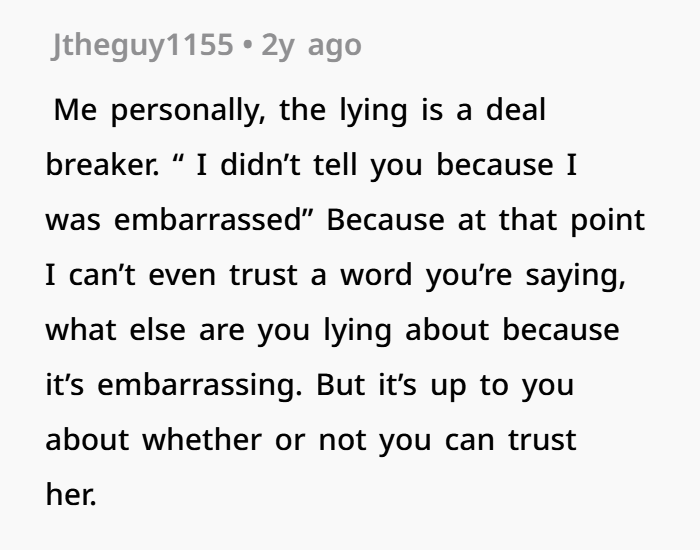
When the truth finally came out, she explained that she had felt embarrassed. She also knew how you felt about casual sex and worried about how you might react.
Now, a year and a half into your relationship, you’re struggling with what you’ve learned.
By your account, things have been good between you. She hasn’t cheated, and you haven’t noticed any other signs that she’s been dishonest.
But knowing she lied about something that mattered to you has changed how you look at the start of your relationship.
You may feel like you made the choice to be with her without knowing the full story. And that can be hard to accept, even when the relationship itself has been happy.
Advertisement – Continue Reading Below
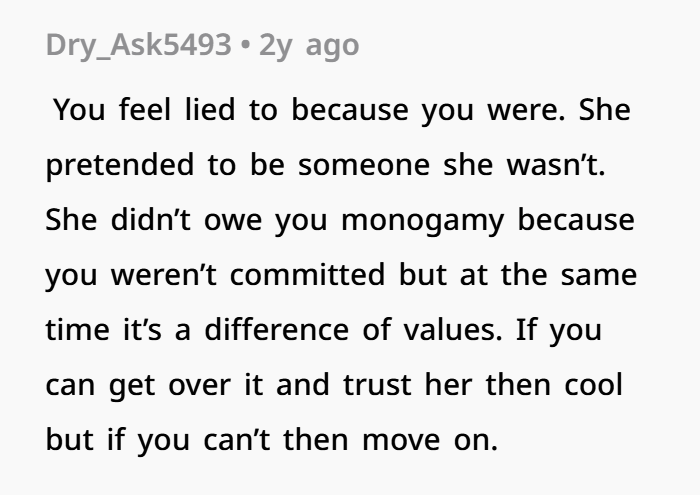
At the same time, you know she was single when those encounters happened. She hadn’t agreed to be exclusive with you, and she was free to make her own choices.
That’s what makes the situation so difficult.
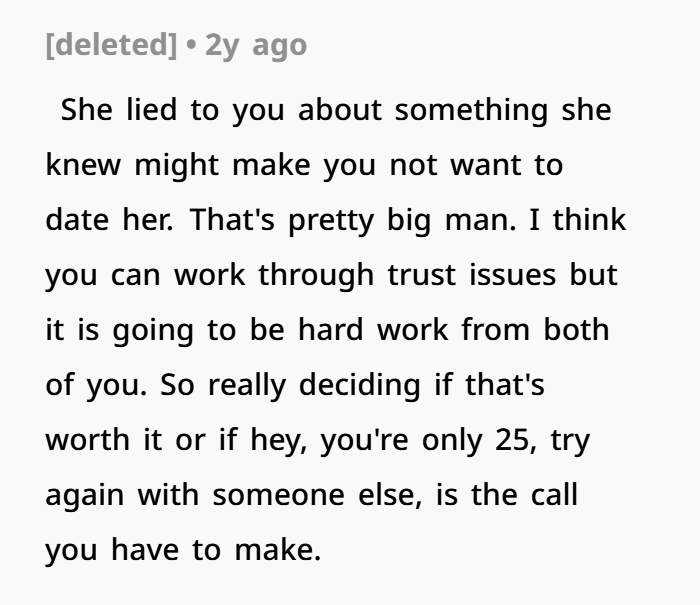
Her past choices and her decision to lie are two different things. You can accept that she had the right to see other people while still feeling hurt that she wasn’t honest when you asked.
You also don’t want to lose a relationship that has brought you happiness for the past year and a half.
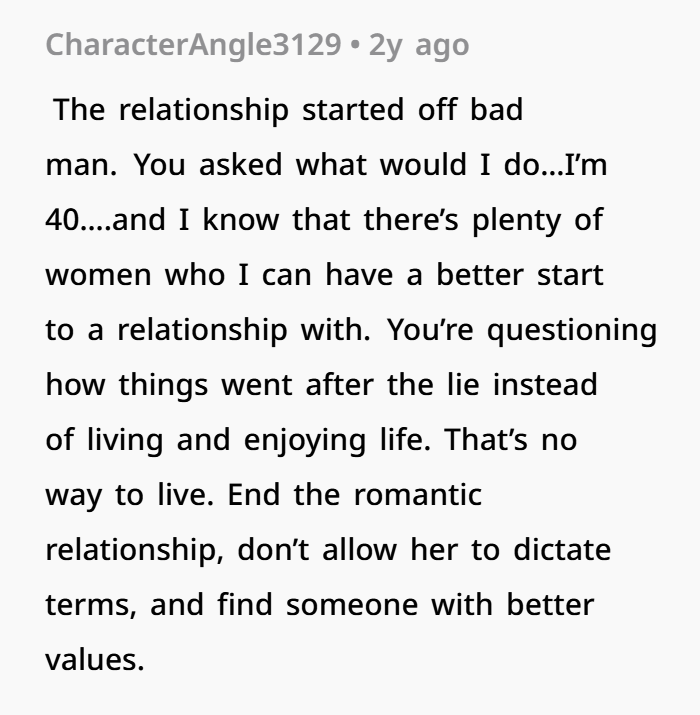
The real question now is whether you can move past the lie without letting it damage what you’ve built together.
That may take more than one conversation. You’ll need to understand why she hid the truth, and she’ll need to understand why it hurt you.
You both deserve a chance to speak openly without turning the discussion into blame or shame.
In the end, what happened before you became official can’t be changed. But how you handle the truth now can shape what happens next.
The choice comes down to whether you can rebuild that sense of trust and feel comfortable moving forward together.
Add a stronger opening hookClarify when the truth came out
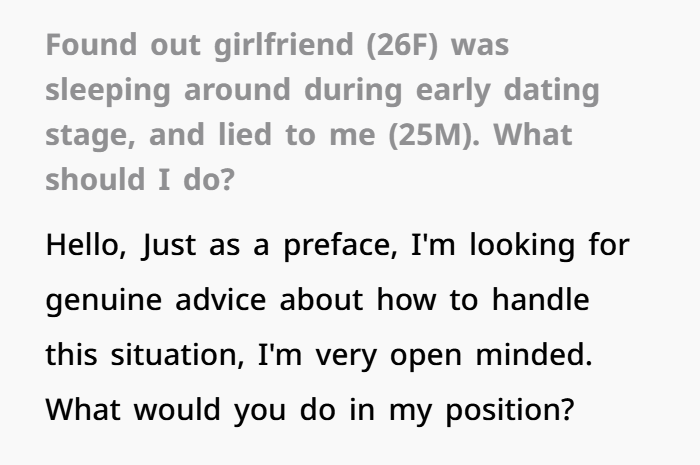

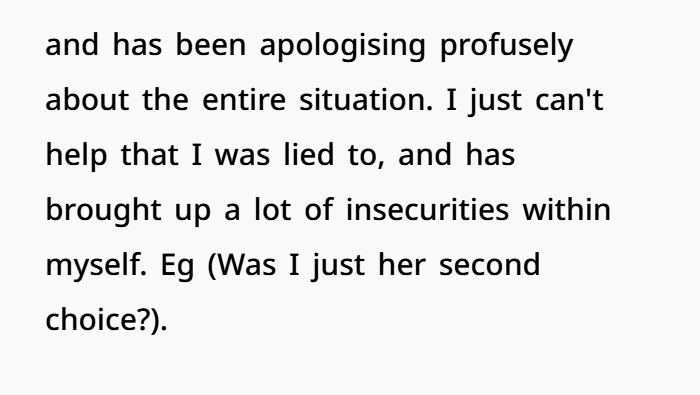
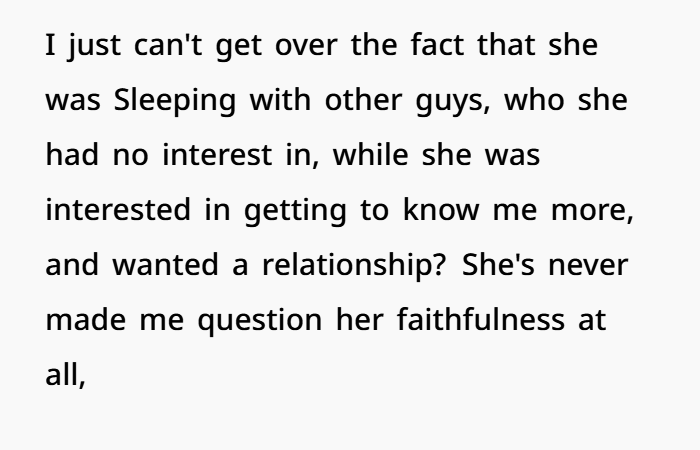
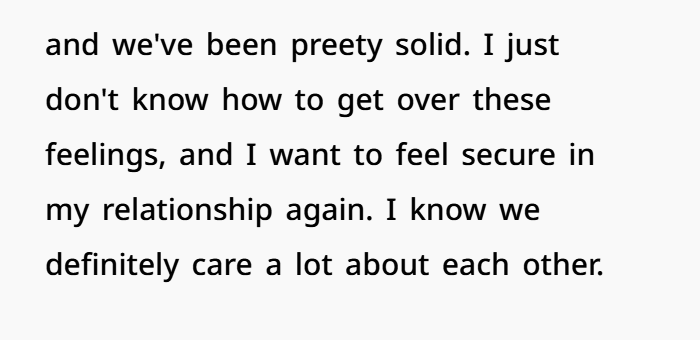

This situation is about more than who she was with before you became a couple. The real problem is trust, honesty, and how safe you feel with someone you love.
When two people first start dating, things aren’t always clear. One person might already have strong feelings, while the other is still deciding what they want.
Until both people agree to be exclusive, they may still consider themselves single.
That doesn’t mean nobody gets hurt.
Sometimes, one person takes the connection more seriously than the other. When they later find out their feelings weren’t shared in the same way, it can be painful.
In your case, you were interested in her from the beginning. You went on dates, stayed in touch during her trip, and looked forward to seeing her again.
But she was still figuring out her feelings.
She hadn’t promised to date only you, so being with other men during her trip wasn’t breaking an agreement between you.
The real issue began when you asked her about it and she told you something that wasn’t true.
That’s what makes this situation harder to move past.
Trust is one of the things that holds a relationship together. When your partner lies about something important, it can make you question things you once felt sure about.
Even if the lie concerns something that happened before the relationship became official, finding out later can still hurt.
You might start wondering whether you were just one of several options. Maybe you question whether she liked you as much as you liked her.
You may even catch yourself thinking about what else she could have kept from you.
These thoughts can be exhausting, especially when the relationship has otherwise been going well.
Some people experience something called retroactive jealousy. It’s when thoughts about a partner’s past romantic or sexual experiences cause worry, jealousy, or distress.
You might replay events in your mind, compare yourself to people from their past, or wonder whether you were good enough.
But feeling hurt by a lie doesn’t always mean you’re dealing with retroactive jealousy.
Sometimes, the pain comes from knowing that you asked a direct question and didn’t receive an honest answer.
And that’s an important difference.
Your girlfriend was free to make her own choices before you agreed to be exclusive. But when you asked about her trip, she chose to hide what had happened.
That decision affected your trust.
So why would someone lie about something like this?
There can be several reasons.
Some people fear being judged for their past. Others worry that telling the truth will lead to an argument or cause someone they care about to leave.
Your girlfriend said she felt embarrassed and knew how you viewed casual sex.
She may have worried that being honest would change your opinion of her.
But even if fear played a part, it doesn’t erase the harm caused by the lie.
When someone hides the truth to avoid rejection, they also take away the other person’s chance to make a choice with all the facts.
You might have reacted differently if she had told you everything before you became official.
Maybe you would have accepted it. Maybe you would have decided that your values were too different.
Either way, you deserved an honest answer to the question you asked.
Still, one lie doesn’t tell you everything about a person’s character.
People sometimes make poor choices because they’re scared, ashamed, or unsure how to handle a difficult conversation.
What matters now is whether she understands why her choice hurt you and whether she’s willing to rebuild the trust that was lost.
From what you’ve shared, your relationship has been stable for the past year and a half.
You haven’t seen signs of cheating, and you haven’t had other reasons to question her honesty.
She has also apologized and tried to reassure you.
Those things matter.
An apology can’t undo the past, but it can be a starting point. Real trust grows when someone’s actions match their words over time.
Another part of this situation may be the feeling that you weren’t her first choice.
That can be especially painful when you remember how interested you were in her from the beginning.
You may look back at those early dates and wonder whether you were building something meaningful while she was still seeing other people.
But early dating doesn’t always move at the same pace for both people.
She told you she wasn’t feeling a strong spark yet. That may have been difficult to hear, but it also showed that she was still unsure about her feelings.
During that stage, she hadn’t made a promise to you.
Being with other people doesn’t prove that she valued you less or saw you as a backup plan.
What you do know is that she later chose to enter a committed relationship with you.
And by your account, she has stayed loyal since then.
That doesn’t make her lie acceptable, but it gives you something else to consider when deciding what happens next.
It’s also worth thinking about how things might have gone if she’d been honest from the start.
You may have felt hurt, but you would have had the chance to decide whether you wanted to continue dating.
Instead, you learned the truth much later, after spending a year and a half building a relationship.
That’s why the discovery can feel so upsetting.
It may seem like part of your relationship began with information you didn’t have.
But now that you know, you have a choice to make.
You could decide that the lie crossed a boundary you can’t accept.
For some people, honesty about past relationships is deeply important. If you feel that this has changed how you see your partner, you don’t have to pretend otherwise.
Another option is to stay together while trying to push the feelings away.
But ignoring the problem may not help.
If you keep thinking about what happened without talking through your feelings, the hurt could turn into resentment.
You might start bringing up the past during arguments or questioning things that never bothered you before.
That wouldn’t be fair to either of you.
The third option is to work on rebuilding trust.
This doesn’t mean you have to forget what happened or act like it never mattered.
It means having an open conversation about why she lied, how it affected you, and what you both need to feel secure moving forward.
Try to focus on understanding each other rather than proving who was right.
You can explain why the lie hurt without judging her for having a past.
She can take responsibility for being dishonest without feeling that she has to apologize for every choice she made while single.
Both things can be true.
She had the right to date other people before committing to you, and you have the right to feel hurt that she wasn’t honest when you asked.
If you decide to stay together, rebuilding trust will take patience.
A sincere apology is a good start, but it also helps when both partners can talk openly without becoming defensive.
You may need time to feel comfortable again.
She may need to accept that reassurance won’t fix everything overnight.
And you may need to decide whether you’re willing to stop judging the relationship through the lens of what happened before it began.
If these conversations keep turning into arguments, talking with a couples counselor could help you both understand the problem.
There’s also something important to remember about trust.
Rebuilding it doesn’t mean checking every detail of someone’s past or asking the same questions over and over.
That can leave both people feeling trapped.
Instead, focus on whether your partner is honest, caring, and reliable in the relationship you have today.
You’ve said that things have been good between you for the past year and a half.
That history shouldn’t be ignored.
At the same time, you shouldn’t dismiss your own feelings just because the lie happened before you became official.
Both the good parts of your relationship and the hurt you’re feeling deserve attention.
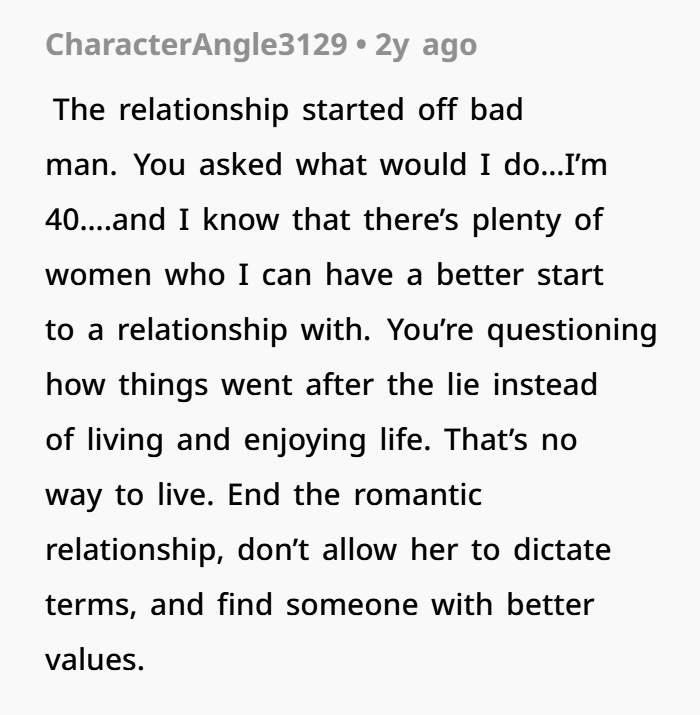
The hardest question isn’t whether she was wrong to lie. She should have been honest when you asked.
The harder question is whether you can accept what happened and still feel happy with her.
If you choose to forgive her, it should be because you believe trust can grow again, not because you’re afraid of losing the relationship.
And if you decide you can’t move past it, that doesn’t mean either of you has to be a bad person.
Sometimes, two people have different values or expectations that are hard to bring together.
In the end, her past can’t be changed, and neither can the fact that she lied about it.
What you can decide is how much that mistake should affect your future.
A strong relationship needs honesty, but it also needs understanding and room for people to learn from their mistakes.
Only you can decide whether the trust you’ve built over the past year and a half is strong enough to repair what this discovery has damaged.
Make the advice more conciseReduce repeated points about trust
Comments That Say It All