I Married Him, But His Mother Always Came First — The Moment I Had Enough
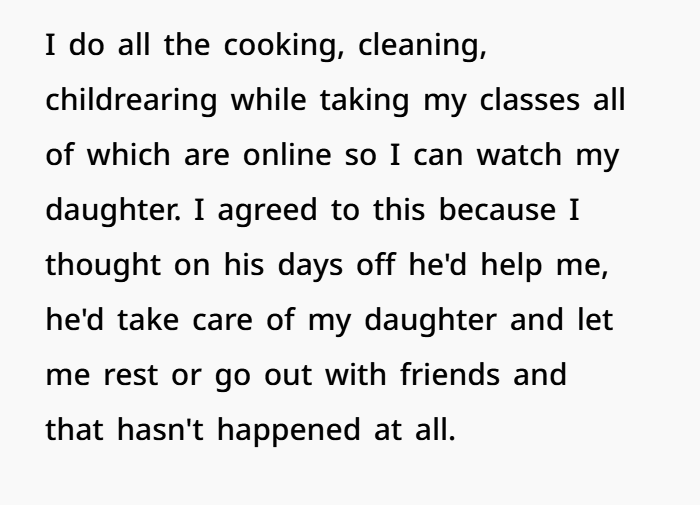
A 23-year-old woman shared online that she was getting ready to leave her husband after years of feeling drained and alone. She had put her college plans on hold to care for their young daughter. At the same time, she was trying to keep up with online classes, cooking, cleaning, and all the daily tasks at home.
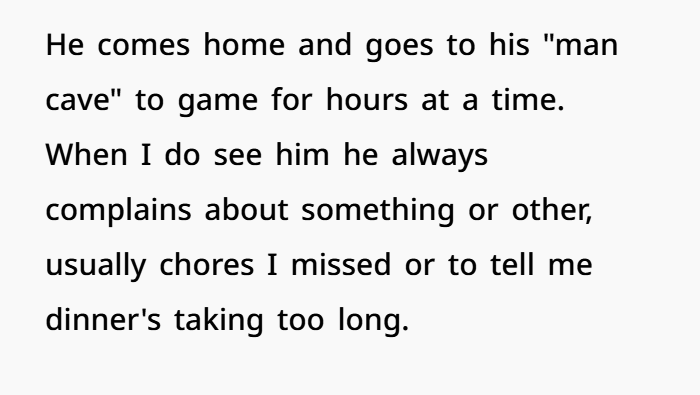
But what hurt her most was feeling like she had to handle everything herself. She said her husband would come home from work and spend hours playing video games. Meanwhile, she was left caring for their child and taking care of the house. As time went on, she grew tired of asking for help and feeling like her needs didn’t matter.
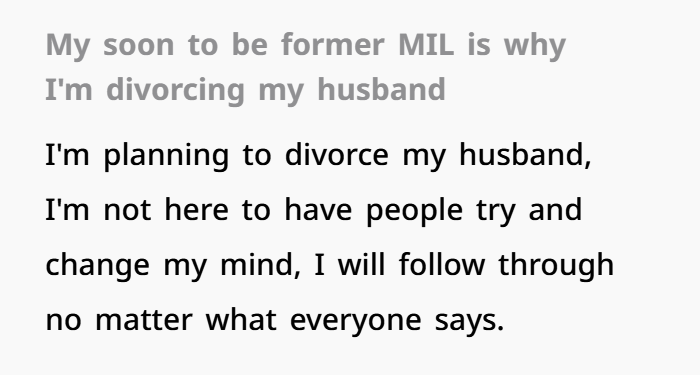
The problems didn’t stop there. Her mother-in-law also played a big part in the tension. Whenever the couple argued, her husband would tell his mother about it. Instead of letting them work things out, his mother would contact her and criticize her decisions. This made the woman feel even more alone in her own marriage.
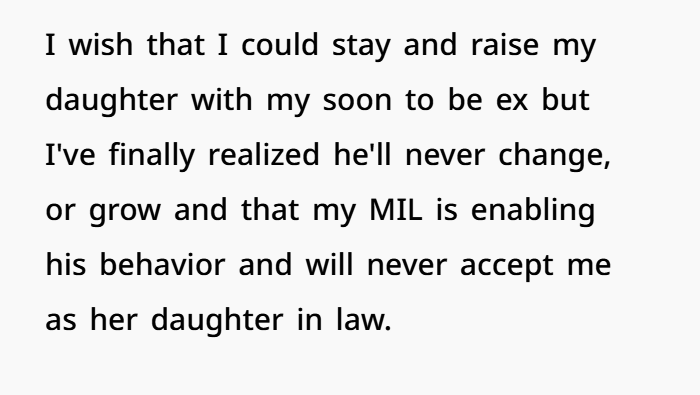
After years of feeling unsupported and dealing with constant family drama, she decided she couldn’t keep living that way. She quietly began saving money and arranged to stay with her brother. She also turned to her sister-in-law, who worked as a lawyer, to understand her rights and learn about divorce and child custody.
For her, leaving wasn’t a sudden choice. It came after years of feeling unheard, carrying too much on her own, and watching her marriage become a source of stress rather than support.










This woman’s story caught people’s attention because it touched on something many couples face. Marriage problems don’t always stay between two people. Sometimes, family members get involved, and things become even harder when clear boundaries are missing.
For this young mother, her mother-in-law was a big part of the problem.
She recalled that when she first met her future mother-in-law, the woman told her she would never be good enough for her son. Looking back, that moment seemed like an early warning of what was to come.
Many readers felt this was a sign of trouble. Parents can love and support their grown children without trying to control their marriages. But some find it hard to accept that their children now have families and lives of their own.
According to the woman, her mother-in-law never seemed willing to respect that line.
But her husband’s behavior made things even worse.
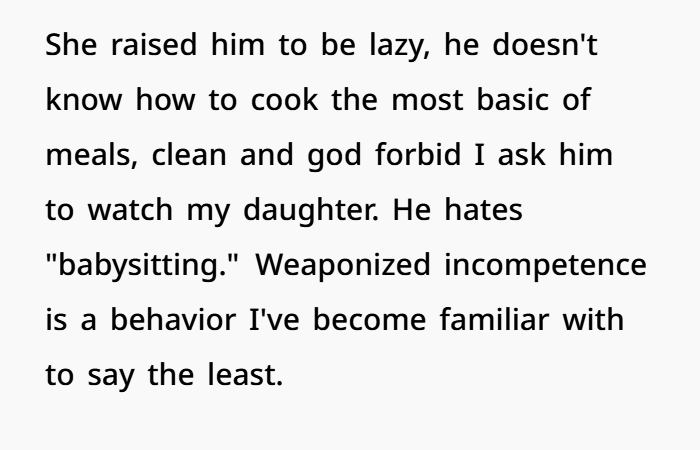
She said he rarely helped around the house or took an active role in raising their daughter. Cooking, cleaning, and childcare were mostly left to her. She even claimed he called looking after his own child “babysitting.”
That comment upset many readers. They felt a father shouldn’t see caring for his child as a favor to his wife. It’s part of being a parent.
And for this woman, the problem went far beyond washing dishes or changing diapers.
She was trying to raise a young child, keep the house running, prepare meals, and finish her college courses online. Every day brought another long list of things she needed to do.
Meanwhile, she felt her husband wasn’t doing his fair share.
Advertisement – Continue Reading Below
Over time, carrying so much alone began to wear her down.
A marriage works better when both people share the load. Keeping a home running takes more than cooking dinner or cleaning the floors. Someone also has to plan meals, remember appointments, manage schedules, and make sure nothing gets forgotten.
These small tasks may not seem like much on their own. But together, they can become exhausting.
The woman felt that most of this work fell on her shoulders. What made it harder was that she didn’t feel valued for doing it.
Instead of getting help or hearing a simple thank you, she said she often faced criticism.
When someone spends years feeling ignored, even small problems can start to feel much bigger. Hurt feelings build up, and the bond between partners can slowly weaken.
Her husband’s love of video games was another issue that caught readers’ attention.
There’s nothing wrong with enjoying games after a long day. Everyone needs time to relax and do something they enjoy.
But hobbies can cause problems when they take time away from family duties.
According to the woman, her husband would return from work and spend hours gaming while she continued caring for their daughter and handling the housework.
She wasn’t upset simply because he liked playing games. She was frustrated because she felt he had time to relax while her work never seemed to end.
That kind of imbalance can leave one partner feeling more like a single parent than part of a team.
Another part of her story stood out when she finally reached out to her family.
She spoke with her brother and sister-in-law about what had been happening. To her surprise, they told her they had been worried about her marriage for some time.
This struck a chord with many readers.
Sometimes, people close to us notice problems we’ve learned to live with. When you’re dealing with the same issues every day, it’s easy to start thinking they’re normal.
But someone looking from the outside may see how much those problems are affecting you.
Her family’s concern gave her another reason to think about what she wanted for herself and her daughter.
Still, one of the biggest sources of tension was her husband’s close involvement with his mother.
The woman said that whenever she and her husband argued, he would share the details with his mom.
Instead of helping them settle their differences, his mother would then contact her and criticize her.
This left the young woman feeling like she wasn’t just dealing with one person during an argument. She was also expected to defend herself against her mother-in-law.
Talking to family about problems isn’t always wrong. Sometimes, advice from someone you trust can help.
But there’s a difference between asking for support and bringing another person into every disagreement.
When private arguments become family matters, it can be harder for a couple to work through their issues.
The woman felt her husband wasn’t protecting their marriage from this outside pressure.
She also believed he relied too much on his mother instead of making choices with his wife.
For her, it wasn’t about asking him to stop loving or respecting his mom. She wanted him to act as an equal partner and take his role as a husband and father seriously.
As the problems continued, she began losing hope that things would change.
Many people stay in difficult marriages because they remember the good times. They may believe things will improve if they keep trying or give their partner another chance.
The woman had wanted her daughter to grow up with both parents living together.
But she eventually began questioning whether staying in an unhappy home was the best choice for either of them.
She felt she had spent too long waiting for things to get better.
Rather than making a rushed decision, she started preparing for what might come next.
She continued working toward her education, saved money, and made plans to stay with her brother. Her sister-in-law, who was a lawyer, also helped her learn about divorce, custody, and money matters.
These steps gave her a clearer idea of her options.
Many readers supported her choice to plan ahead rather than leave without knowing where she would go or how she would care for her daughter.
Others focused on how young she was and how much she had already taken on.
At just 23, she was raising a child, trying to finish college, and dealing with a marriage she felt had become one-sided.
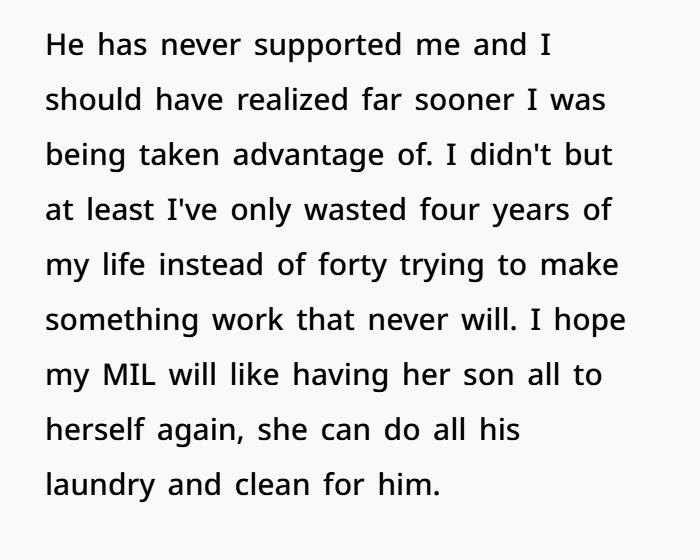
For her, the decision to leave wasn’t just about her mother-in-law’s behavior. It was the result of years of feeling alone, unheard, and unsupported.
Her story shows how several problems can build on each other until a relationship reaches a breaking point.
A parent who crosses boundaries can create tension. A partner who avoids family duties can add more stress. And when a couple struggles to talk openly, those issues may become even harder to fix.
In the end, readers saw more than a disagreement between a wife and her mother-in-law.
They saw a young woman who felt she was carrying her marriage and family on her own.
Marriage doesn’t mean both people must do the same tasks every day. But it does mean both partners need to care about each other’s needs and share the work of building a life together.
For this woman, the hardest part may have been accepting that she couldn’t make those changes by herself.
Once she reached that point, she began making plans for a future where she hoped to find more peace, support, and stability for herself and her daughter.
Add a stronger opening hookReduce repeated points about imbalance
Readers’ Comments Speak Out