Mom Causes Family Drama After Reporting Her Ex to the IRS for Claiming Their Child Without Permission
A single mom thought she and her ex had worked out a fair deal when it came to taxes. But things took a turn when she found out he owed $6,000 in child support. What seemed like a simple agreement soon became a serious family dispute.
OP had agreed to let her ex claim their oldest child on his taxes. He had the child for four nights each month and was supposed to pay child support. But when he fell behind on payments, OP decided to claim both children herself.
Her ex wasn’t happy about that decision. He argued that OP earned more money than he did, so she didn’t need the extra tax benefit. OP, however, felt he shouldn’t get the benefit while failing to keep up with his support payments.
The problem grew when OP tried to file her taxes and learned that her son had already been claimed. Her return was rejected, leaving her to deal with the issue.
Months later, OP finally received her tax refund. Meanwhile, her ex faced wage garnishment tied to the dispute. The fallout didn’t stop there, as he also refused to speak with her.
Now, OP is left wondering whether standing up for herself was worth the family drama that followed.
Single Mom Lets Her Ex Claim Their Oldest Child on Taxes Because He Has Four Overnight Visits a Month and Pays Child Support
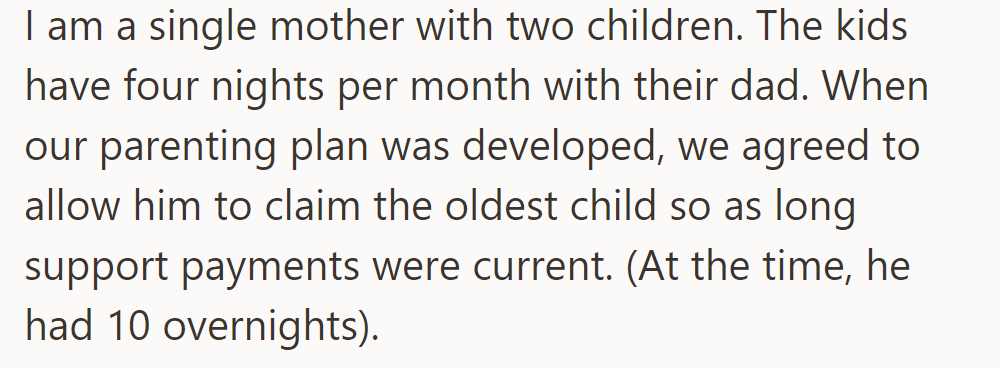
Mom Tries to Claim Both Kids After Ex Falls $6,000 Behind on Child Support, but He Says She Earns Too Much to Need the Tax Break
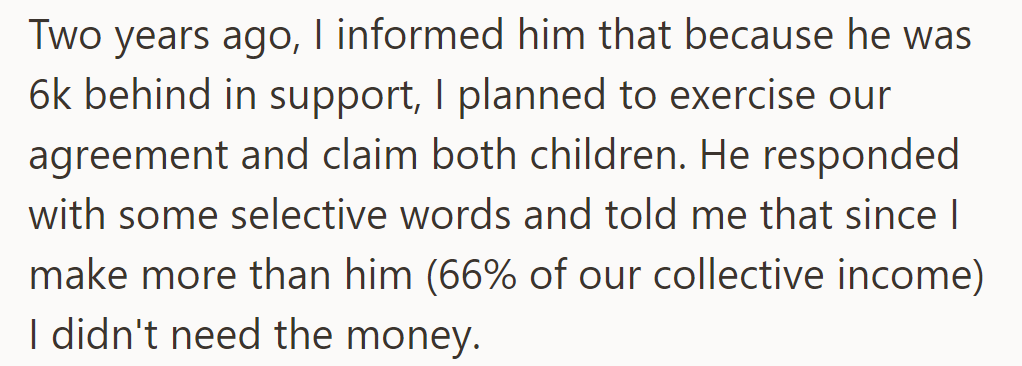
Money problems can make co-parenting much harder, especially when both parents have agreed to share certain costs and tax benefits.
For OP, finding out that her ex owed $6,000 in child support changed everything. She had trusted him to keep up with his payments, but he had fallen far behind.
When she discovered that he had already claimed their son on his taxes, she decided to report the issue to the IRS. What started as a disagreement over money soon turned into a much bigger family conflict.
The situation also showed how a lack of trust and poor communication can make co-parenting difficult. Both parents had different views about what was fair, and neither seemed willing to back down.
Mom’s Tax Return Gets Rejected After Ex Claims Their Son, but She Gets Her Refund Nine Months Later as His Wages Are Garnished
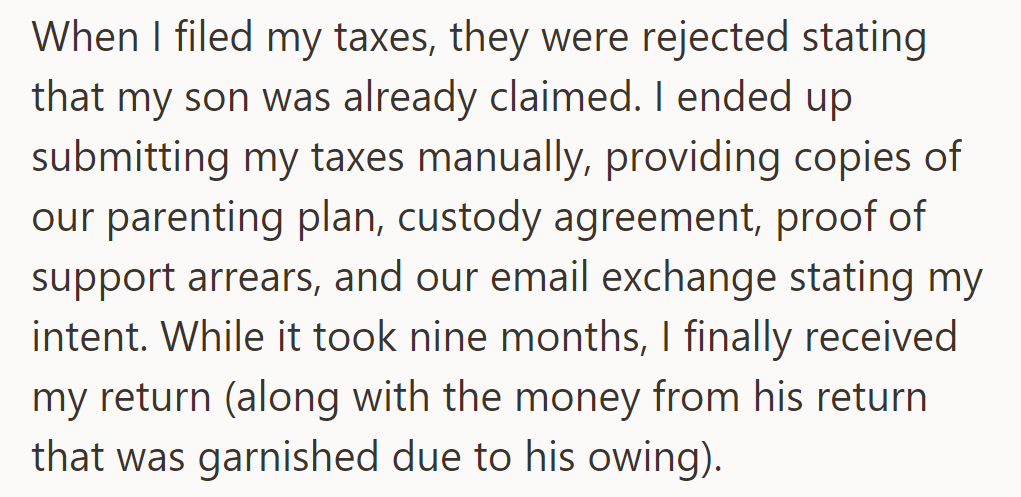
Ex Owes $6,000 and Claims Their Child on His Taxes Without Permission, but Stops Speaking to Mom After She Reports It
Scroll down to see what people had to say…
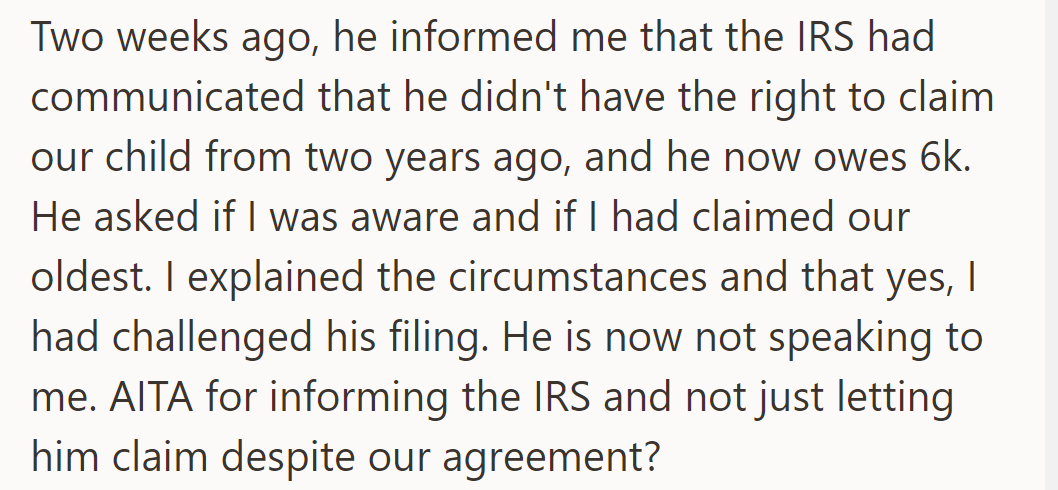
At first, OP’s agreement to let her ex claim their oldest child on his taxes seemed fair. But when he fell $6,000 behind on child support, she began to question whether he should still get that benefit.
Money problems can put a lot of strain on families, especially when one person feels the other isn’t keeping their word. In OP’s case, the unpaid support made an already difficult co-parenting relationship even more tense.
“She Didn’t Let Him Take Advantage of Her. End of Story.”
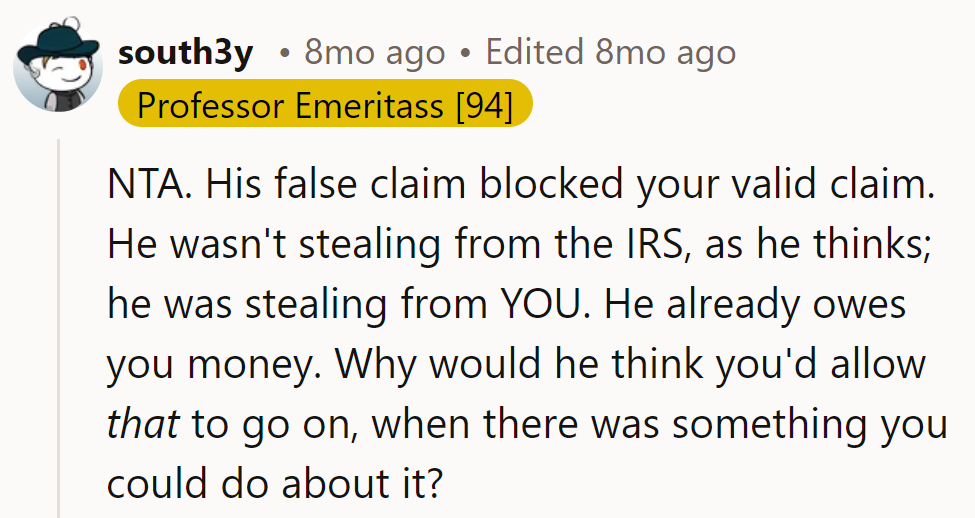
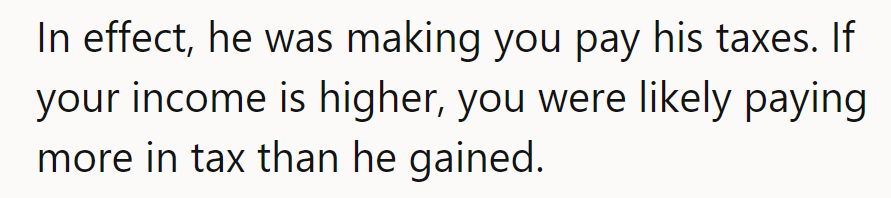
“He Tried to Dodge His Duties, but She Wasn’t Having It. Talk About a Taxing Situation!”
When parents work together after separating, it can make life easier for their children. Kids often feel more secure when both parents get along and handle problems calmly.
But when money or legal issues lead to arguments, children can feel caught in the middle. Seeing their parents fight may leave them feeling worried, upset, or stressed.
Family counseling or mediation can help parents talk through their problems with someone who doesn’t take sides. This gives them a chance to settle disagreements and focus on what’s best for their children.
Advertisement – Continue Reading Below
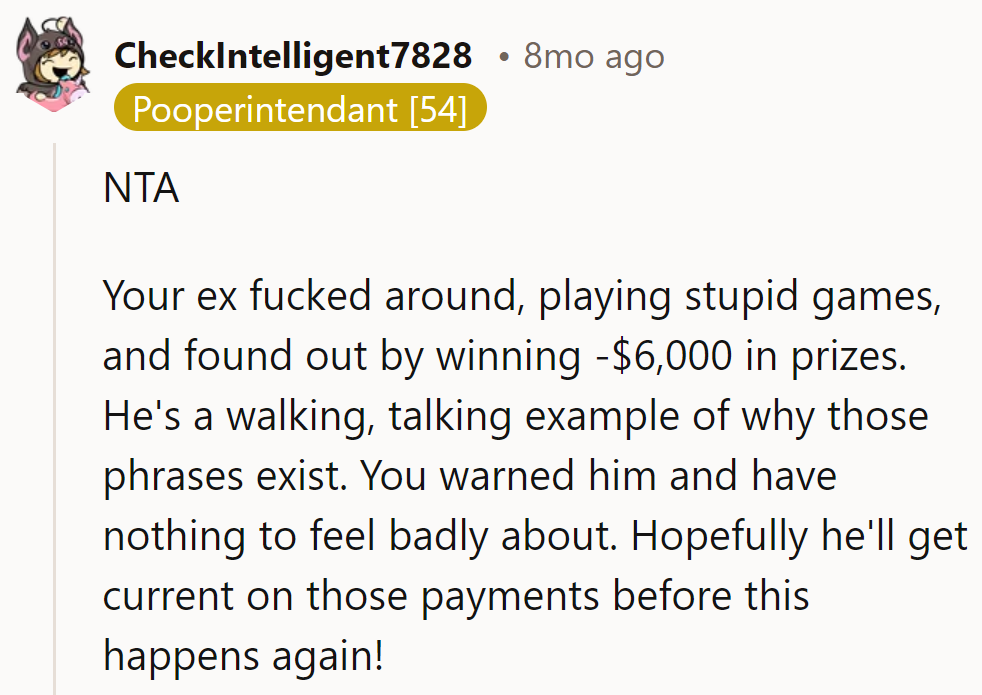
“He Took the Risk and Lost $6,000. You Can’t Play Games With Taxes and Expect to Get Away With It.”
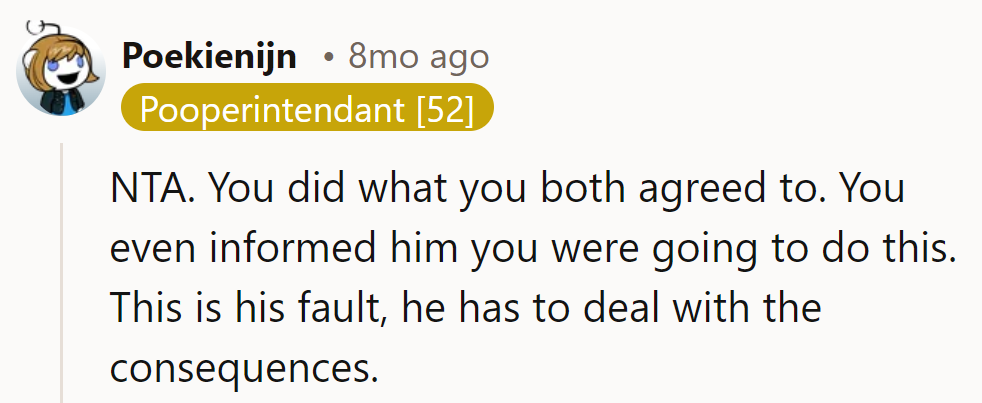
“She Played by the Rules and Warned Him. He Made His Choice, So Now He Has to Deal With It.”.
When OP tried to claim both children on her taxes, she ran into another problem. Her return was rejected because her ex had already claimed their son. What started as a disagreement over unpaid child support soon became a bigger issue involving the IRS.
Money problems between parents can also affect their children. Even when kids aren’t directly involved, they may notice the stress and arguments at home. How parents deal with these problems can shape the way their children handle disagreements later in life.
Being honest, working together, and talking through problems can help parents avoid unnecessary fights. It also shows children that disagreements can be handled without making things worse.
“Has He Learned From His Money Mistakes, or Will He Keep Making Them? The Kids Should Come First.”

“She Claimed What Was Rightfully Hers. It’s Not Her Fault He Tried to Break the Rules.”

Simple Ways to Handle Family Disagreements
Talking openly as a family can help parents work through problems before they grow. Regular talks give everyone a chance to share their concerns, agree on rules, and avoid confusion.
When parents can’t settle an issue on their own, a neutral third person can help. A mediator can listen to both sides and guide them toward a fair solution without adding more tension.
“He Tried to Claim the Child First, but She Fought Back. Now He’s Giving Her the Silent Treatment.”
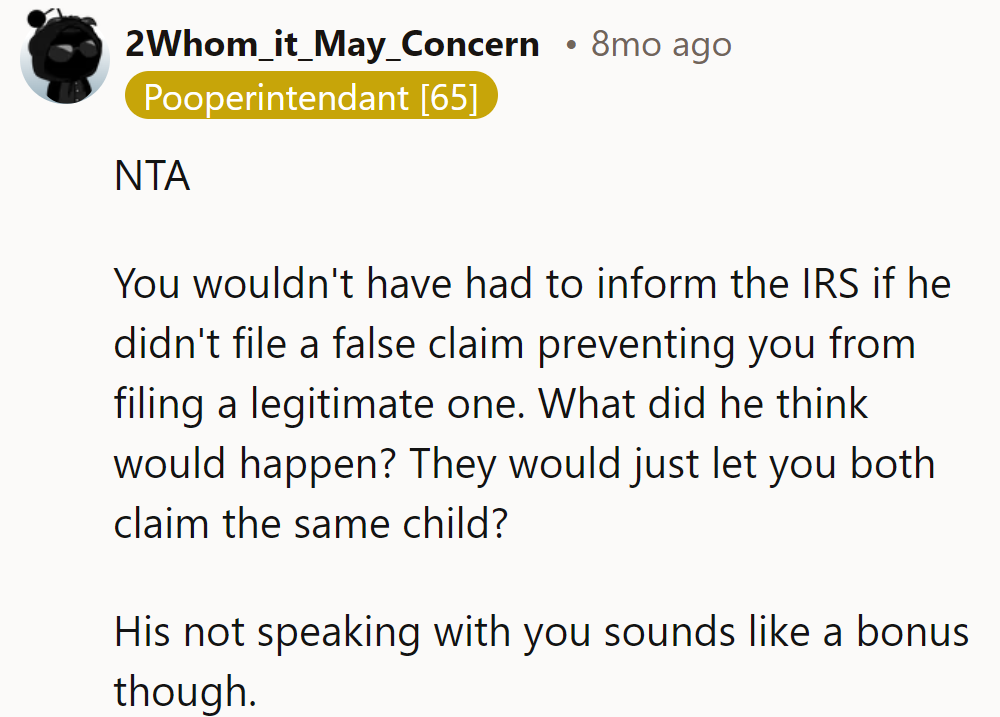
“Does He Think His Child Support Debt Will Just Go Away, or Is He Avoiding His Duties?”
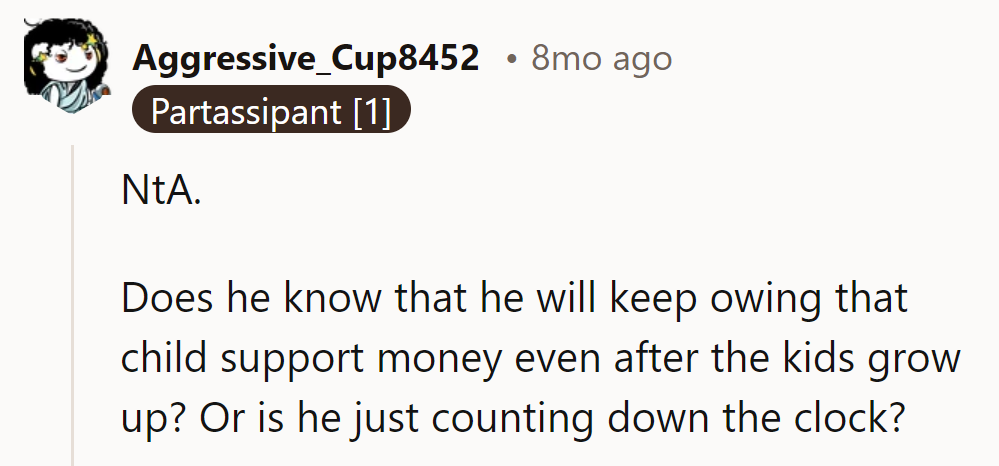
Nine months later, the money was finally taken from the father’s wages. His claim that OP earned enough and didn’t need the tax benefit made no difference to the outcome.
This story shows why keeping promises and being honest about money matters, especially when children are involved. When one parent fails to meet their duties, it can damage trust and create even more problems.
For OP, the dispute was about more than a tax refund. Her ex had fallen $6,000 behind on child support, and she wasn’t willing to ignore it.
What do you think? Was OP right to report her ex to the IRS, or should they have handled things differently? Share your thoughts in the comments, and pass this story along.
“He Took a Chance, Lost the Fight, and Got a $6,000 Lesson He Won’t Forget.”

“Being 39 or 41 Doesn’t Make Child Support Debt Go Away. You Still Have to Pay What You Owe.”

“He Wants the Tax Break but Keeps Dodging His Duties Like He’s Avoiding an IRS Audit.”

“He Knew the Rules and Was Warned, but Still Made the Wrong Choice. Now He Has to Deal With the Results.”
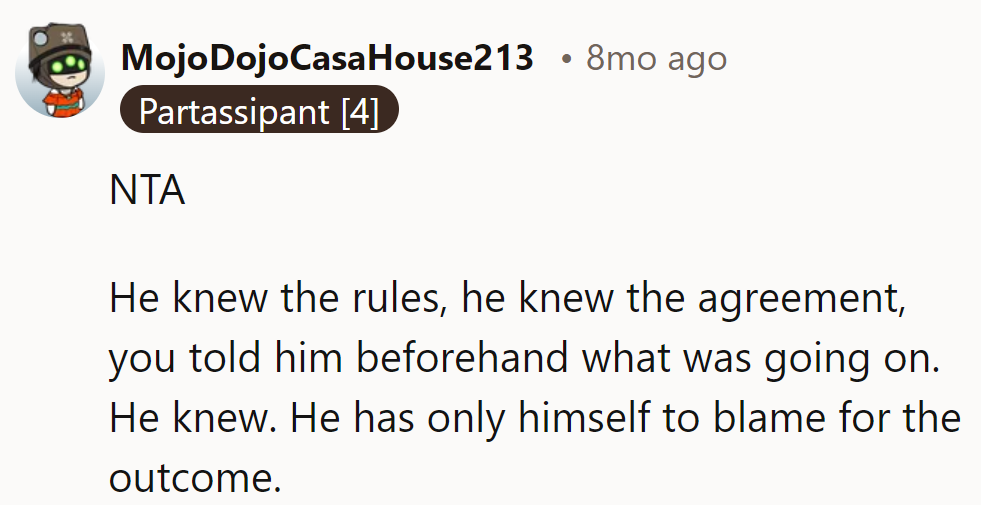
“He Didn’t Pay Child Support, So Why Should He Get the Tax Break? His Choices Led to This.”
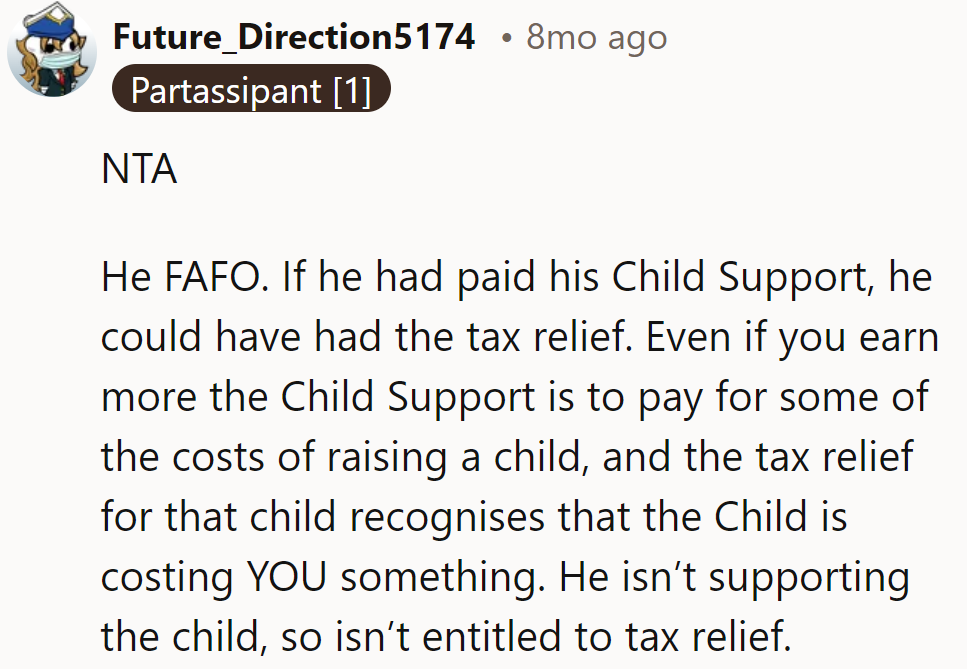
“They Had a Real Agreement, Not Just Something She Mentioned in Passing.”

“It’s Hard to Feel Sorry for Someone Who Won’t Pay Child Support. Their Choices Have Consequences.”

“He Was Warned but Chose Not to Listen. Now He Has to Face the Consequences.”
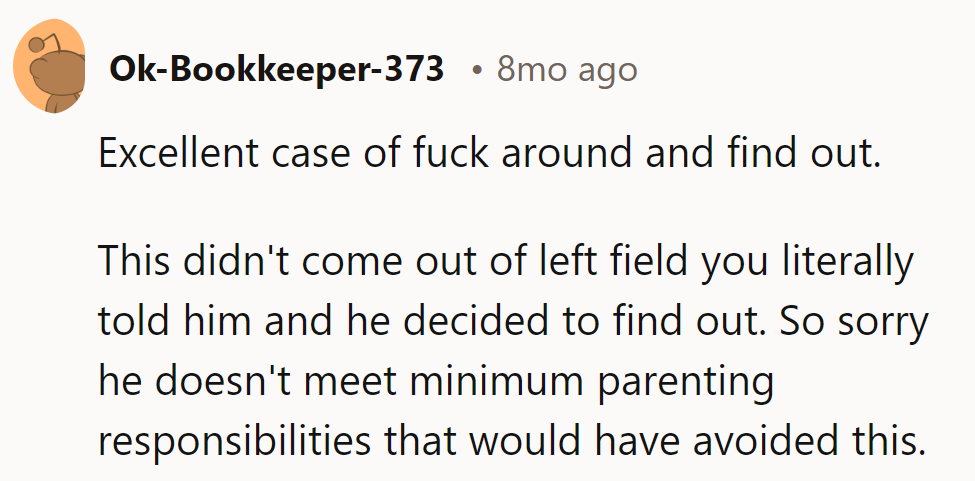
“He Can’t Use Her Higher Income as an Excuse to Break the Rules. He Still Has to Meet His Duties.”

What made the situation even more surprising was how OP’s ex reacted after being held responsible for claiming their child. Instead of trying to work things out, he stopped speaking to her. It became clear that their disagreement had grown beyond a simple tax issue.
The story shows how money problems can damage trust between parents. OP’s ex had fallen $6,000 behind on child support, and the tax dispute only made their relationship more difficult.
Talking openly about unpaid support and tax agreements might have helped them avoid such a serious conflict. When parents stop talking, even small problems can become harder to fix.
In the end, OP’s ex may have chosen to give her the silent treatment, but that doesn’t make his financial duties disappear. He can stop talking to OP, but he still has to deal with the $6,000 he owes.