I Opened My Home to My Family, but They Began Making Their Own Rules
A simple act of helping family members turned into a stressful conflict when a short visit became a disagreement about boundaries and expectations.
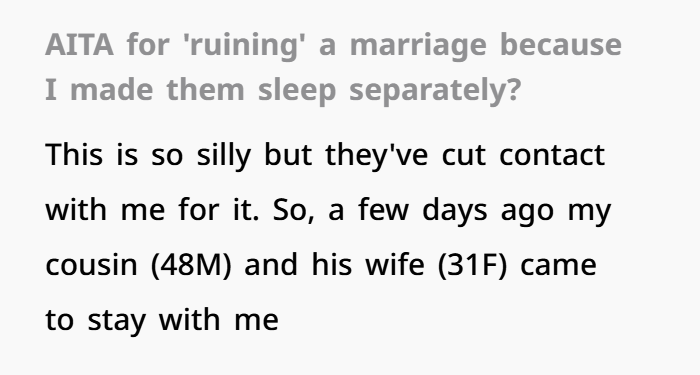
The situation started when the OP allowed a cousin, his wife, and their young child to stay at their home after their air conditioner stopped working during a period of extreme heat. The stay was meant to be temporary, and the OP wanted to support family members during a difficult time.
Although they were relatives, the two families were not very close. Since space was limited and the OP’s fiancé was away for a short period, they arranged sleeping spaces as best as possible. The child had a separate room, the couple shared another room, and the OP adjusted their own space to make everyone comfortable.
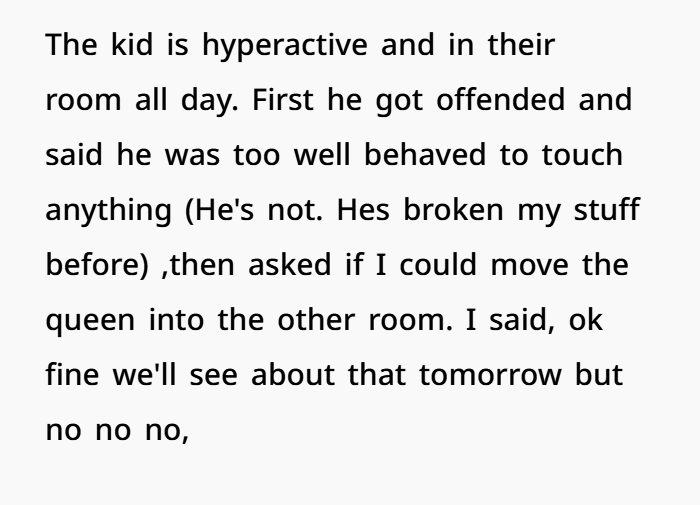
At first, everything appeared to be going well. However, tension started when the cousin became unhappy with the sleeping arrangement. He wanted to share a room with his wife and began asking for changes around the house.
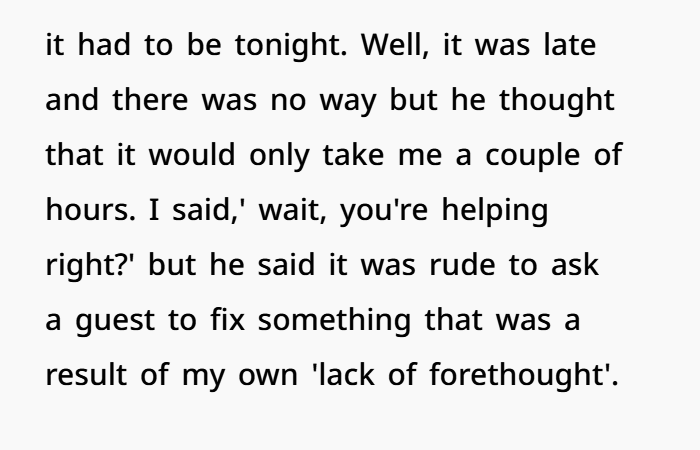
What began as a simple request soon turned into repeated demands. He wanted rooms changed, furniture moved late at night, and immediate adjustments made to fit his preferences.
The OP started feeling stressed because an attempt to help family had become a situation where they felt pressured in their own home.
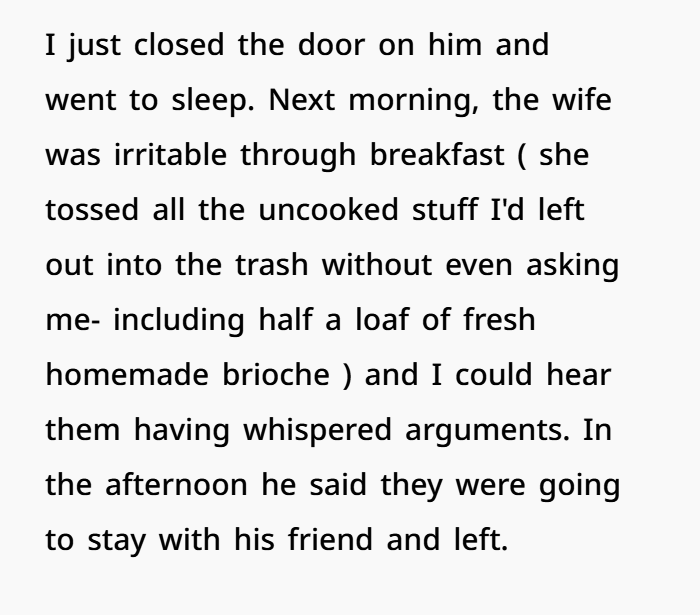
When the OP tried to set limits, the atmosphere became uncomfortable. Communication broke down, and the guests eventually left upset.
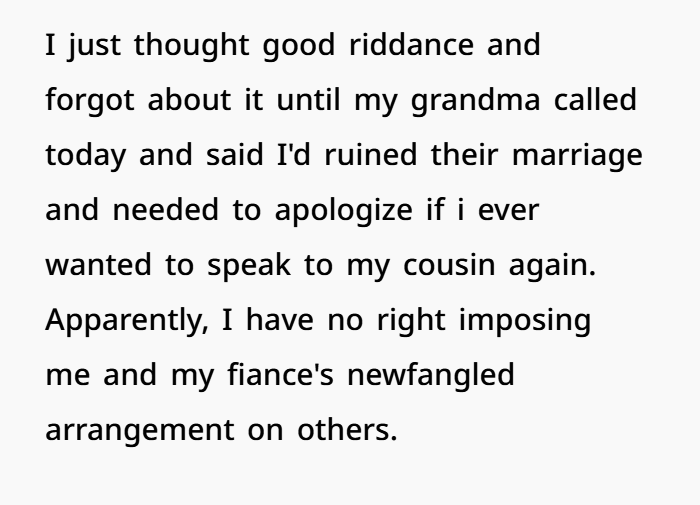
After they left, the disagreement continued. Some relatives blamed the OP and claimed they had caused problems in the cousin’s marriage, even though the conflict was mainly about temporary living arrangements and household boundaries.
The situation left the OP dealing with family tension and questioning how to balance helping loved ones while still protecting personal space and comfort.
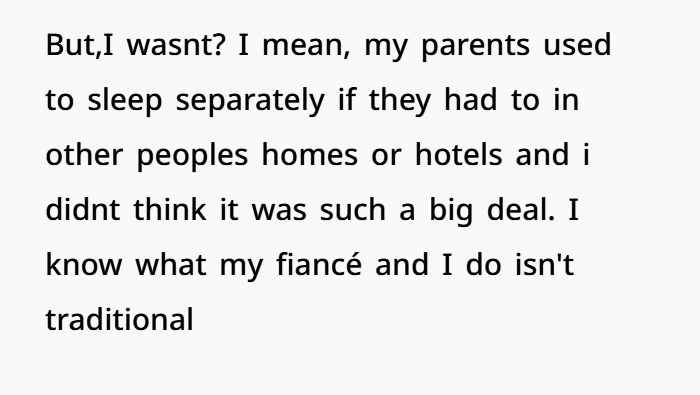
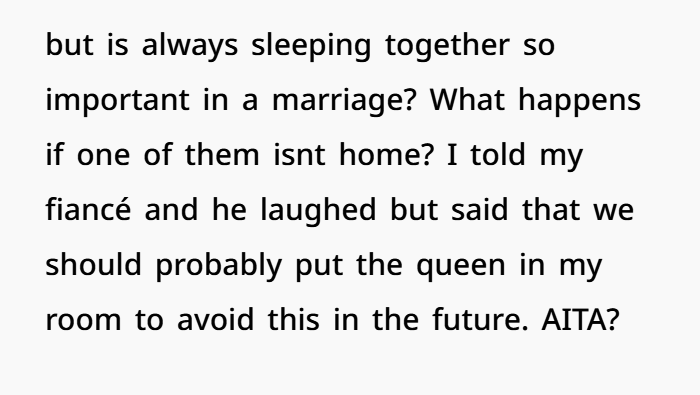
This situation may look like a simple disagreement about sleeping arrangements. However, it involves deeper issues such as family expectations, respect, communication, and personal boundaries.
When relatives or friends stay in someone’s home, both sides have responsibilities. The host should try to be helpful, while guests should respect the space, effort, and limits of the person offering help.
Clear communication can prevent small problems from turning into bigger conflicts.
Being a Helpful Host and a Respectful Guest
Hosting family often requires patience and flexibility.
A good host usually tries to:
- Make guests comfortable
- Adjust their own routine
- Offer support during difficult times
In this situation, the host had already made an effort. He opened his home, changed his own sleeping setup, and made room for extra guests with little notice.
Helping others is generous, but it should not mean ignoring the host’s own comfort and boundaries.
Advertisement – Continue Reading Below
Guests also have a role. They should appreciate the effort made for them and understand that temporary situations may not be perfect.
When Requests Turn Into Demands
The conflict started when the guest became unhappy with the sleeping arrangement.
Instead of accepting a temporary solution, he pushed for changes and expected the host to rearrange the home to match his preference.
In a shared space, everyone’s needs matter. Problems often begin when one person expects their comfort to come before everyone else’s.
A request can become stressful when it turns into pressure or demands.
Temporary Sleeping Arrangements and Relationships
The disagreement focused on the couple sleeping separately for a short time.
For many couples, sleeping apart temporarily is not unusual. It can happen because of travel, health issues, different schedules, or practical situations.
A short-term arrangement does not automatically reflect a problem in a relationship.
The strong reaction may have been connected to personal beliefs, emotions, or other stress that existed before the situation happened.
Stress and Conflict in Relationships
The argument between the couple suggests there may have been frustration beyond the sleeping arrangement.
Sometimes people react strongly to a small event because it connects to other worries or unresolved feelings.
The sleeping situation may have been the reason the disagreement started, but the emotions behind it could have come from deeper relationship concerns.
Expressing Frustration Through Actions
The reaction of throwing away food appears to show emotional frustration.
When people feel upset, they may sometimes express their feelings through actions instead of direct conversation.
However, calm and honest communication usually helps solve disagreements more effectively.
Talking about concerns openly can prevent small issues from creating bigger problems.
Different Views About Marriage and Boundaries
Some people believe married couples should always sleep together because they see it as a sign of closeness and connection.
Others believe temporary changes are normal when circumstances require flexibility.
Different couples and families may have different beliefs about relationships. What matters most is mutual understanding, respect, and communication.
Differences in Relationship Styles
The couple’s age difference may also influence how they approach problems.
Age differences do not automatically create relationship issues. Many couples with different ages have strong and healthy relationships.
However, people with different life experiences may have different communication styles, expectations, and ways of handling disagreements.
The Practical Side of the Conflict
Moving furniture, especially late at night, can be difficult and stressful.
A large change to the home requires time, effort, and planning. Expecting the host to handle this immediately during a short visit may create unnecessary pressure.
A better approach would have been to discuss possible solutions calmly and choose an option that worked for everyone.
Family Blame and Misunderstanding
After the disagreement, other family members blamed the host for causing problems in the couple’s marriage.
Family conflicts often become more complicated when people focus on finding someone to blame.
In this case, the issue involved several factors:
- Different expectations
- Poor communication
- Personal boundaries
- Emotional reactions
It was not caused by one single decision.
The Importance of Healthy Boundaries
This situation shows why boundaries are important, even with family.
The host did not refuse to help. He welcomed relatives into his home and made changes to support them.
He simply reached a point where he needed to protect his own space, time, and comfort.
Healthy boundaries help maintain:
- Respect between family members
- Better communication
- Fair treatment
- Stronger relationships
Final Thoughts
This situation is not really about a bed or a room.
It is about respect, family expectations, communication, and personal limits.
Helping family members is valuable, but support should not come at the cost of ignoring someone’s own boundaries.
Strong relationships depend on understanding, flexibility, and respect from everyone involved.
The Reactions Are In
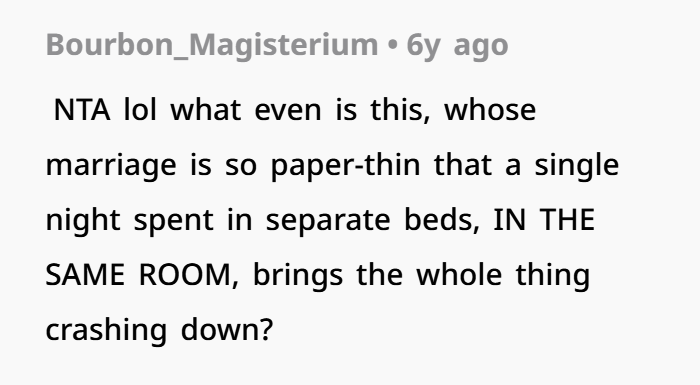
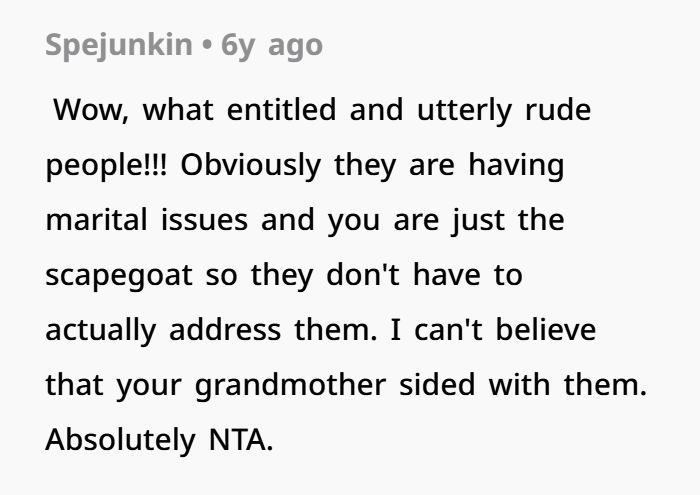
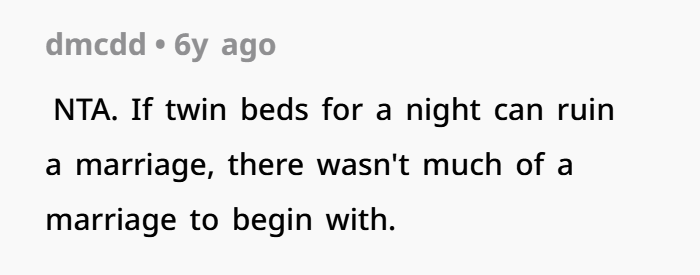
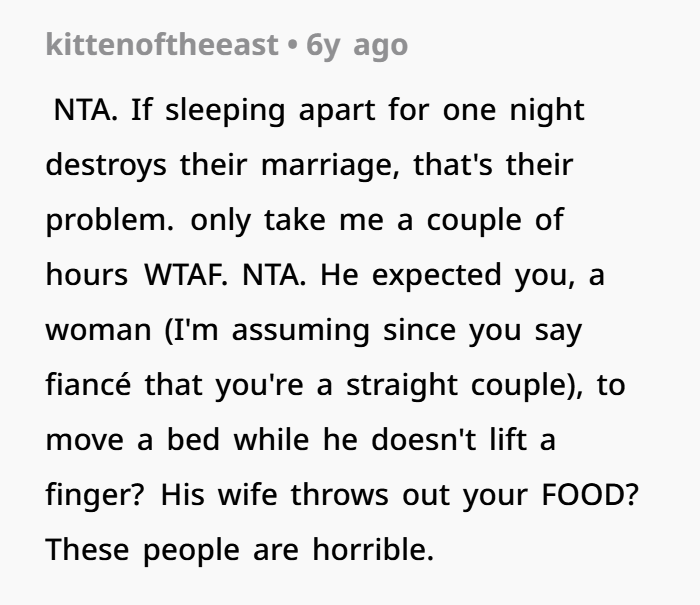
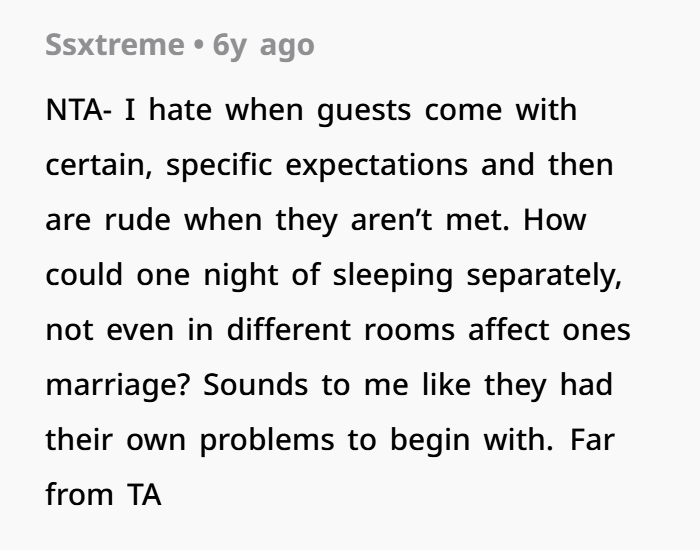
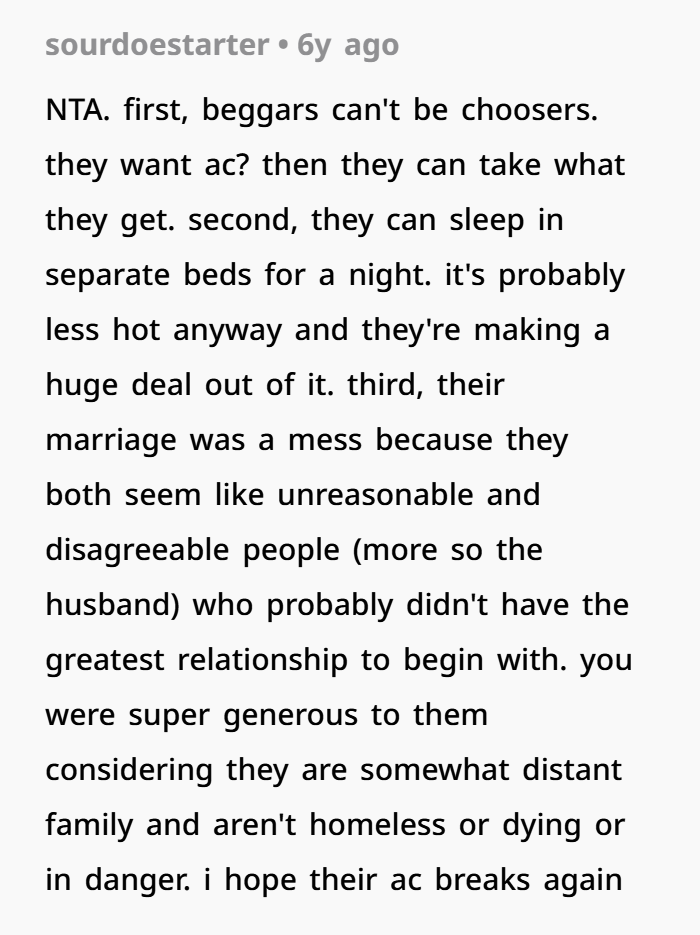
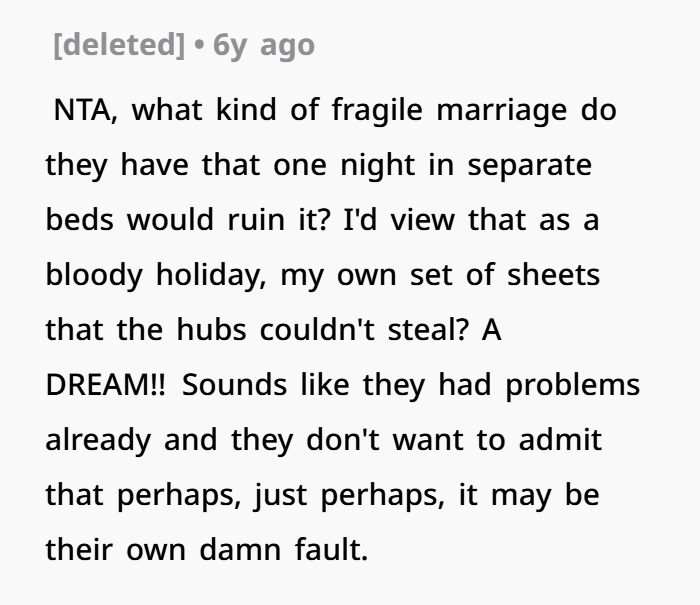
This situation suggests that the host’s actions were understandable.
You opened your home, tried to support your family, and made reasonable arrangements based on the space and circumstances available. You were willing to help, but you also had the right to maintain limits in your own home.
The conflict appears to involve more than just a sleeping arrangement. It involved different expectations, communication issues, and how each person responded to a stressful situation.
A difficult moment does not always create a problem. Sometimes it brings existing tensions, misunderstandings, or unresolved issues to the surface.