AITA for Refusing to Help My Dad’s Affair Partner Through Her High-Risk Pregnancy?
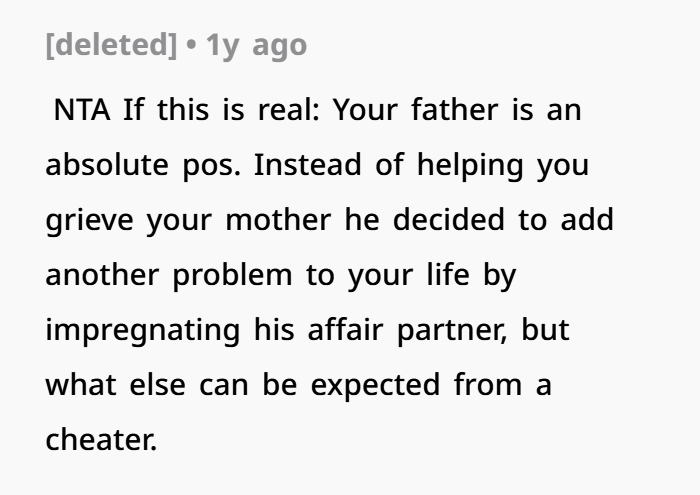
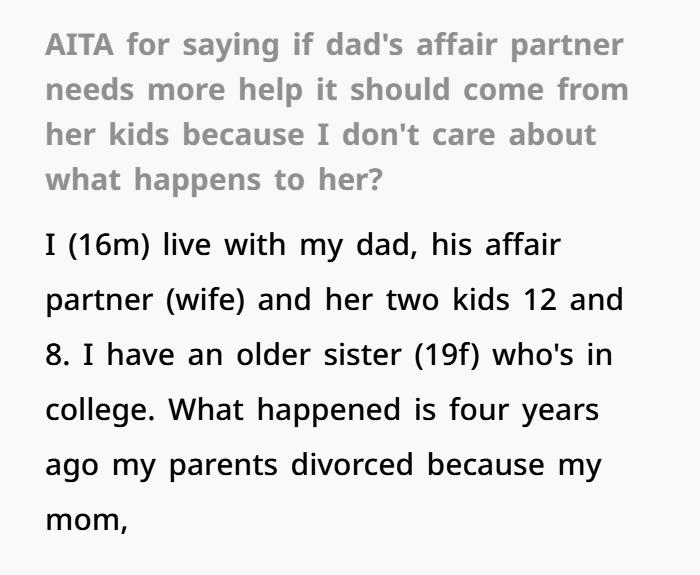
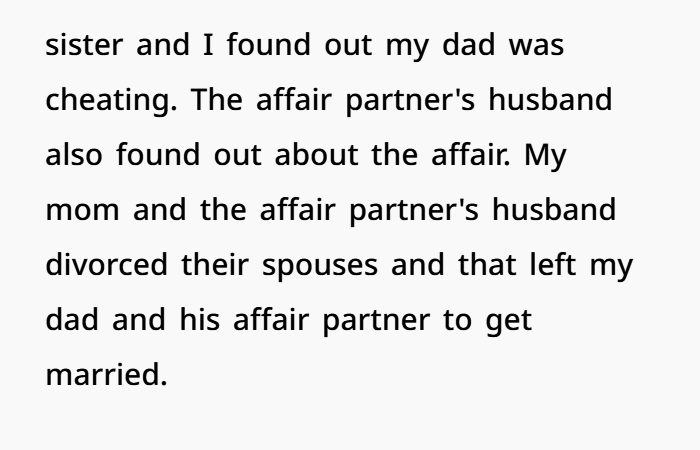
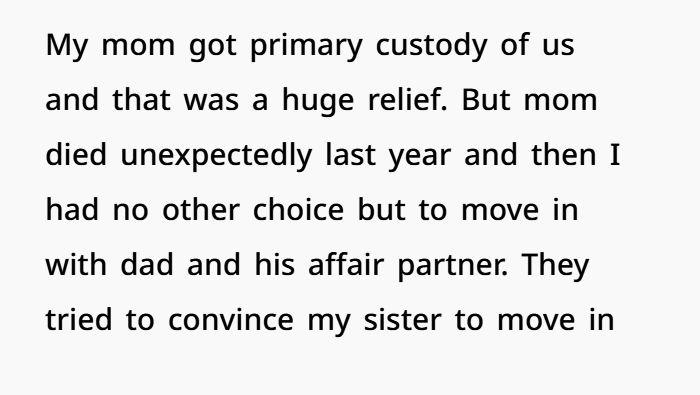
A 16-year-old boy finds himself caught in a painful family situation. His parents divorced years ago after his father had an affair. The split changed his life, and he chose to live with his mother. Just as he was getting used to his new life, his mother passed away unexpectedly.
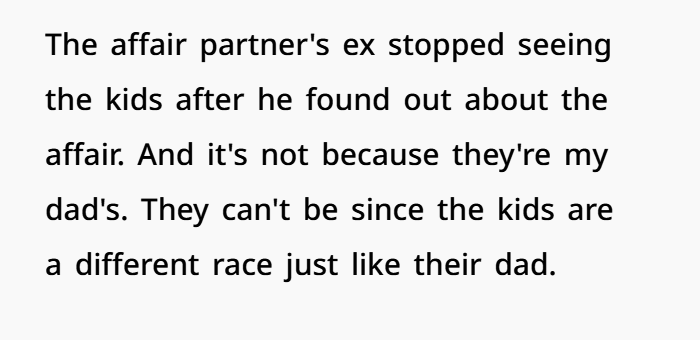
With no other place to stay, he moved in with his father and his new wife. His stepmother was the same woman his father had an affair with. Living under the same roof was difficult for him. He still carried the pain of his parents’ divorce and struggled to trust either of them.
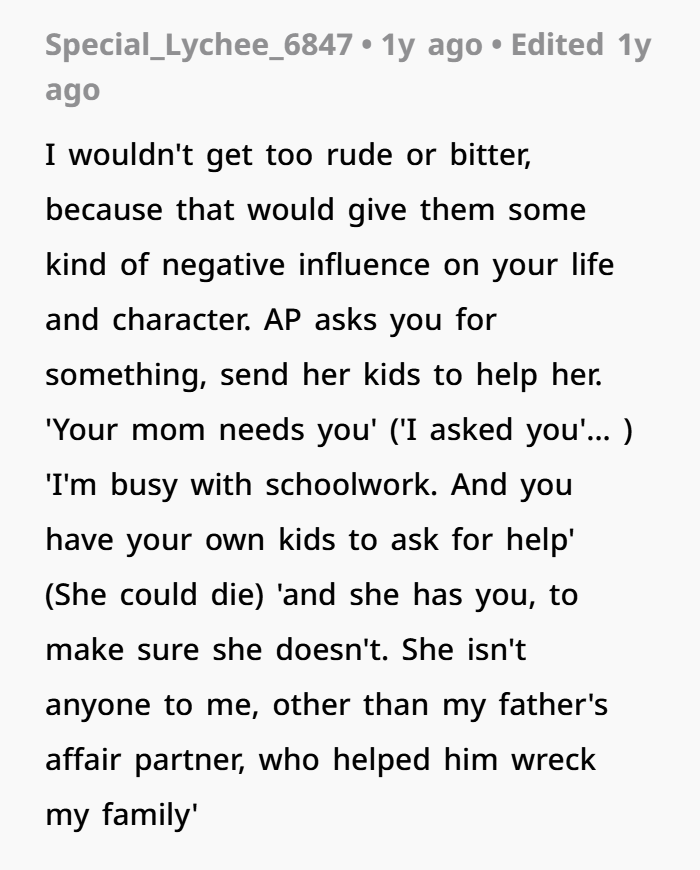
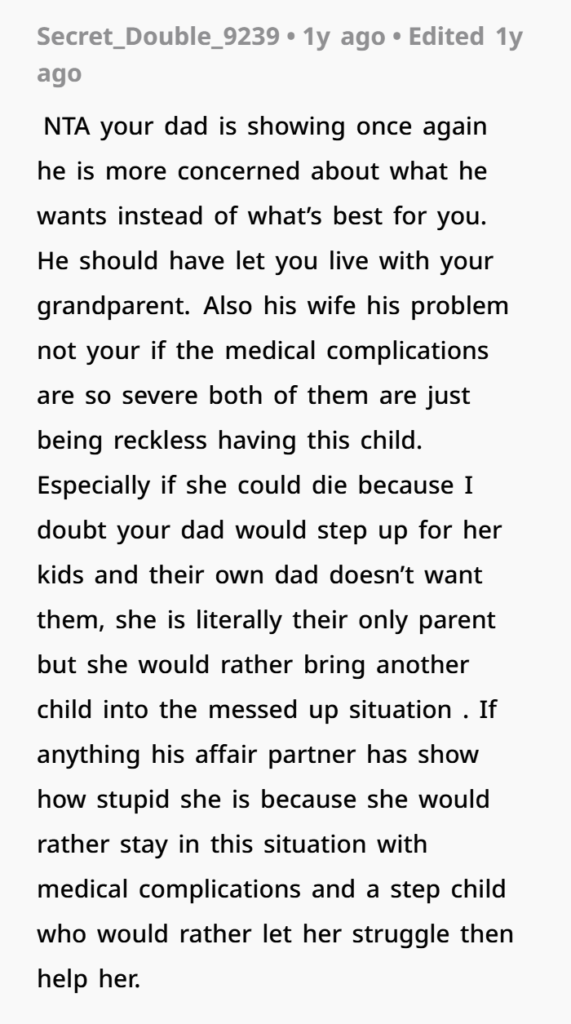
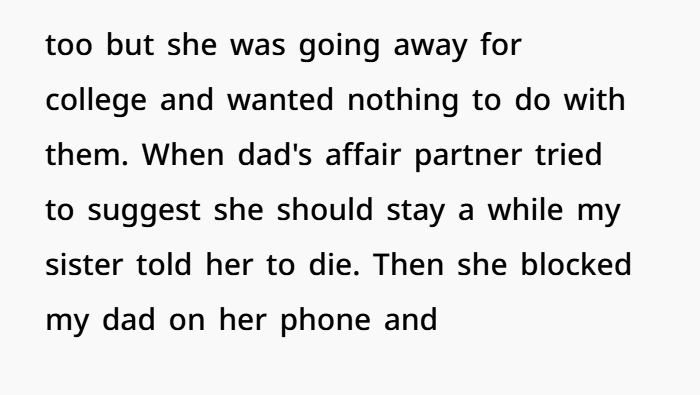
Things became even more tense when his stepmother developed health problems during her pregnancy. His father expected him to help around the house and support her through this difficult time. But the teenager didn’t feel it was his duty to care for someone tied to so much pain in his life. He refused to take on that role and made it clear that he wanted to keep his distance.
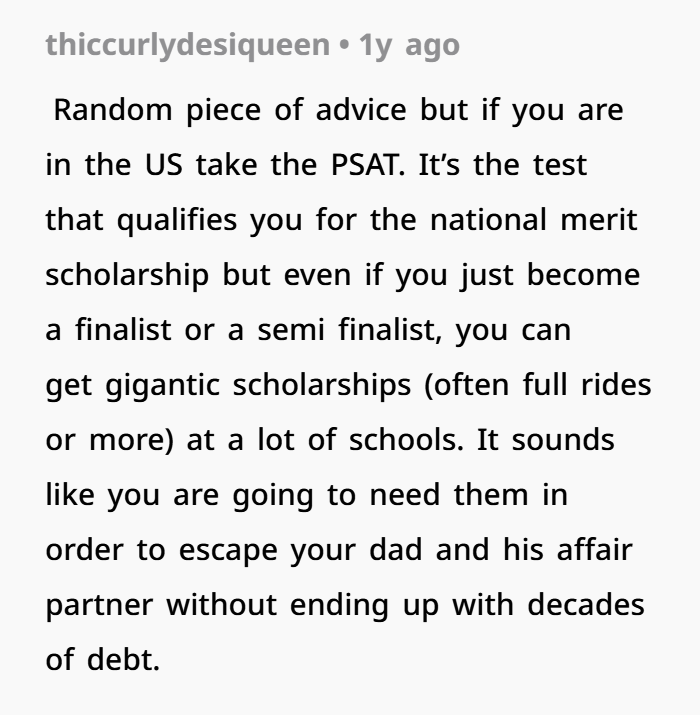
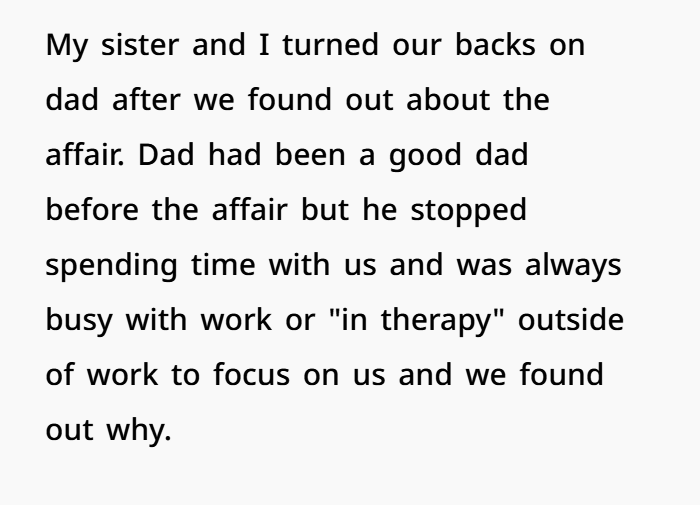
His older sister had already cut ties with the family. He planned to follow her lead once he turned 18. As the arguments grew, the gap between him and his father became even wider. Neither side seemed able to understand the other’s feelings.
The story raises a difficult question: Should a teenager be expected to support his father’s affair partner during a high-risk pregnancy, despite the pain their past has caused him? It also shows how grief, broken trust, and old wounds can tear a family apart.


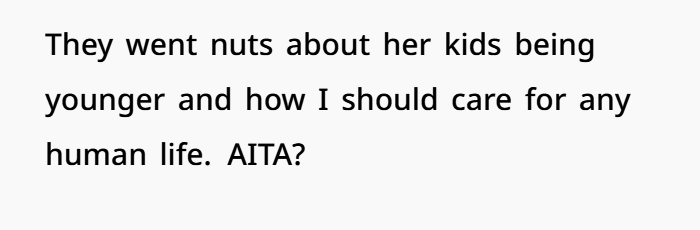
This family conflict goes far beyond a teenager refusing to help his stepmother. It involves years of pain, broken trust, and the loss of someone he loved deeply. His father’s affair ended his parents’ marriage and changed the family he once knew. Then, when his mother passed away, he lost the person who had been his main source of comfort.
Moving in with his father and the woman involved in the affair only made things harder. He was now living with two people he still blamed for his family’s breakup. Being expected to treat them like a close family was not easy, especially while dealing with his mother’s death.
His anger and sadness make sense given everything he has been through. Losing a parent at a young age can leave lasting emotional scars. Having to adjust to a home where he already feels unwanted or out of place adds even more stress.
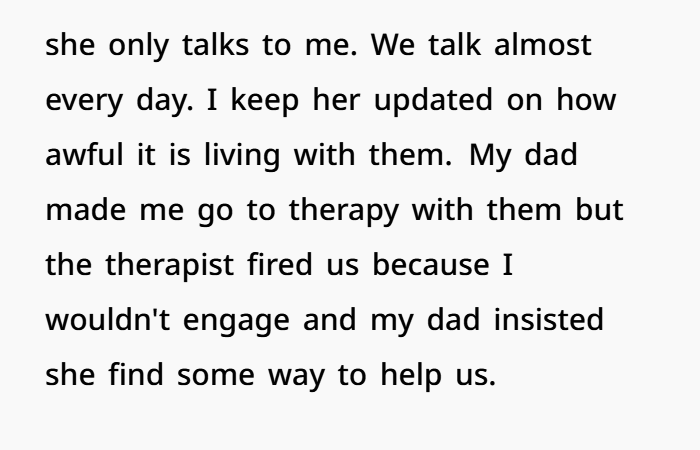
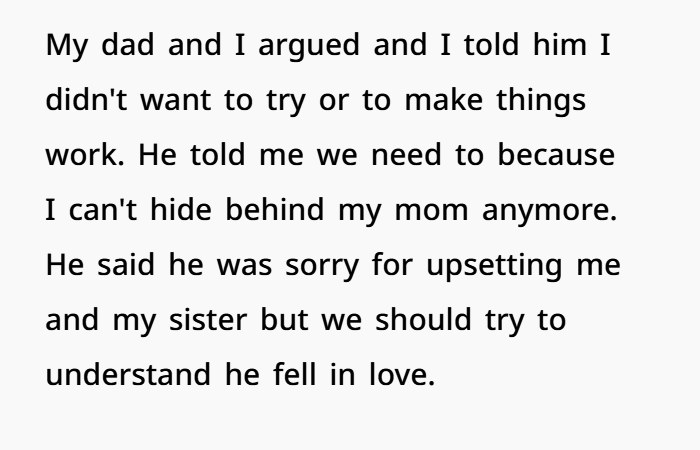
His father may want everyone to get along and move past what happened. Suggesting therapy and asking the family to work together could be his way of trying to make things better. But rebuilding trust isn’t something that can be forced. His son needs time, space, and a chance to work through his feelings without pressure.
Things became more tense when his father’s wife faced serious health risks during her pregnancy. His father expected him to step up and help around the house. Helping family members during hard times is common, but this was not a normal family situation.
The teenager had never formed a close bond with his stepmother. To him, she was still the woman involved in breaking up his parents’ marriage. Being asked to care for her felt like another burden he had never agreed to carry.
He has every right to set limits on what he is willing to do. Still, how he shares those limits can make a difference. Calmly explaining that he isn’t comfortable taking on extra duties may prevent some arguments. Harsh words, even when spoken out of pain, can make an already tense home harder to live in.
The ongoing conflict can also affect others in the household. Constant arguments and emotional distance create stress for everyone. Younger family members may struggle to understand why there is so much tension between the people around them.
None of this takes away from what the teenager has suffered. His feelings come from real loss and years of disappointment. He should not have to pretend that everything is fine just to make his father happy. At the same time, finding ways to express his anger without constant fights could help protect his peace of mind.
As he gets older, he will have more freedom to decide what kind of relationship he wants with his father and stepmother. Until then, having clear boundaries, getting support for his grief, and speaking openly when he feels ready may help him cope.
In the end, this isn’t just an argument about household chores or helping a pregnant woman. It’s about a boy who lost his family as he knew it, then lost his mother too. Now, he is being asked to support someone he connects with that pain.
Advertisement – Continue Reading Below
The biggest question is whether his father can respect his son’s feelings without expecting him to forget the past. Healing may be possible, but it will take patience, respect, and effort from the adults as well.
Add a clearer opening hookReduce repeated emotional points
Top Comments From Readers