My Cousin Expected Us to Watch Her Four Kids on Our Luxury Vacation Just Because We Don’t Have Children
A couple who had chosen not to have children thought they were heading to a normal family anniversary dinner. They had no idea the evening would turn into a family argument over their upcoming vacation.
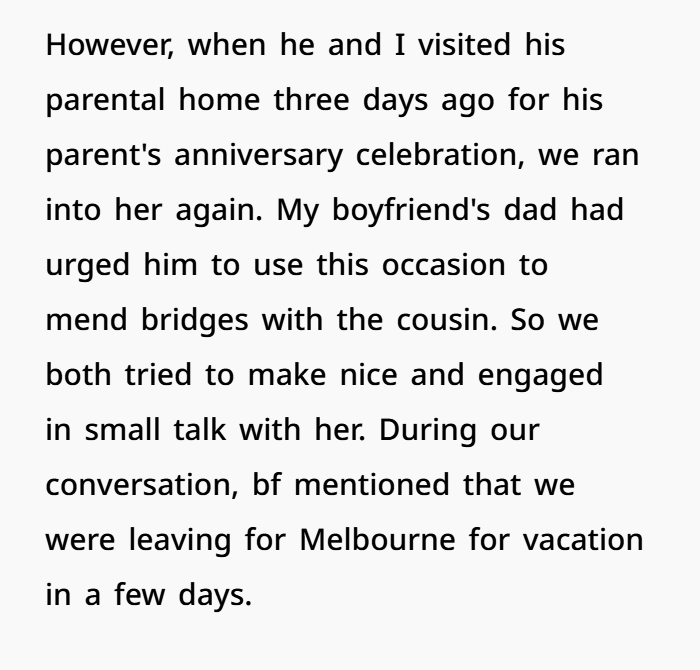
During dinner, they mentioned their plans for a luxury trip to Melbourne, Australia. They had saved up for the getaway and were looking forward to spending time together. But when one of their cousins heard about the trip, things took an unexpected turn.
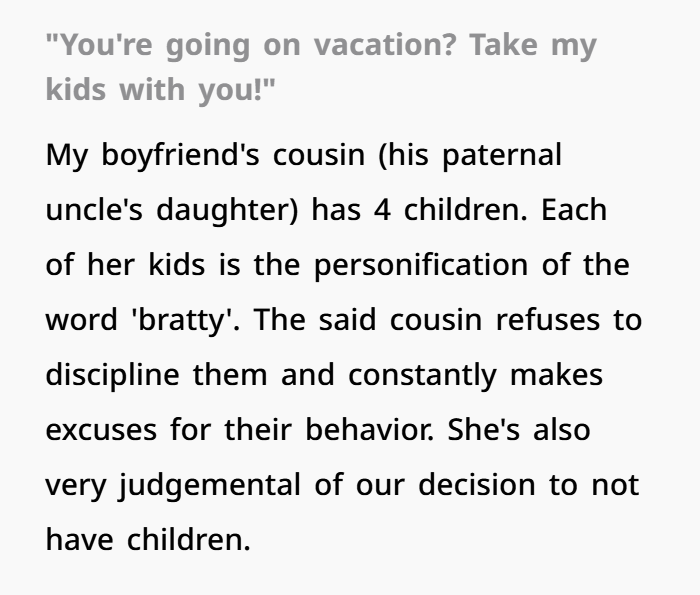
The cousin had four children and had often made rude comments about the couple’s choice not to have kids. She seemed to think their lives were somehow less meaningful because they weren’t raising a family. Yet when she heard about their expensive vacation, she suddenly became very interested.
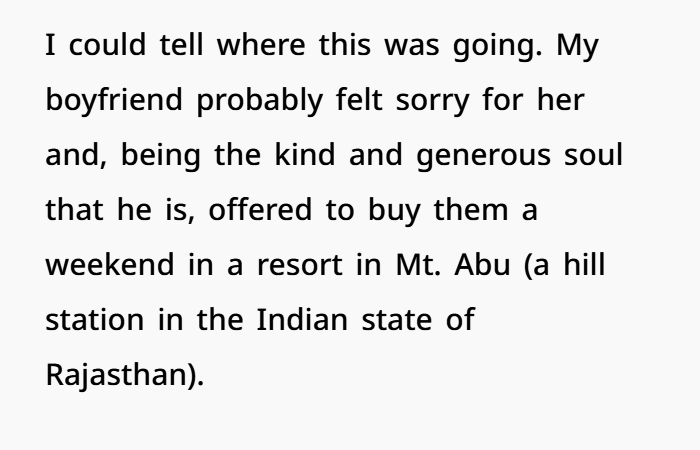
Trying to be kind, the boyfriend offered to pay for a relaxing weekend away for the cousin and her husband. It was a generous offer meant to give the parents some time together without the usual stress of caring for four kids.
But the cousin had something much bigger in mind.
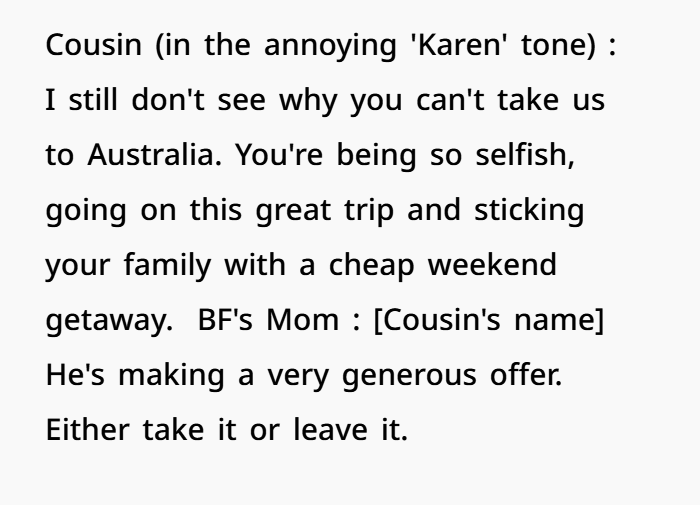
Instead of accepting the weekend getaway, she asked the couple to take all four of her children to Melbourne. Her plan was simple: while the couple looked after her kids overseas, she and her husband could enjoy a vacation without them.
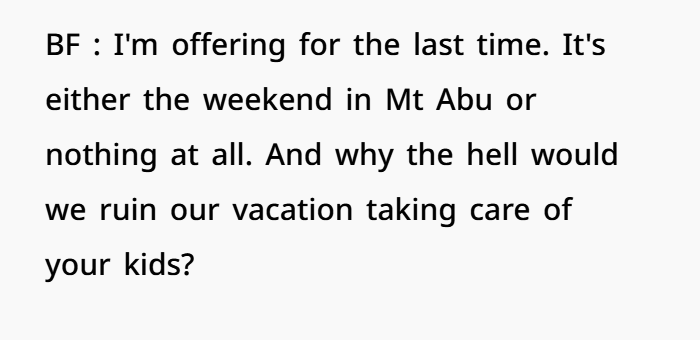
The couple couldn’t believe what they were hearing. They had planned a peaceful trip for themselves, not an international babysitting job. Taking four children to another country would mean dealing with flights, meals, safety, and constant care. It was far more than they were willing to take on.
They told her no, but she refused to accept their answer.
Rather than respecting their decision, the cousin kept pushing. She tried making them feel guilty and acted as though they were being selfish. In her mind, because they didn’t have children of their own, they should have no problem looking after hers.
The couple stood firm. They had every right to enjoy the vacation they had planned and paid for.
But the cousin wasn’t finished.
In a move that shocked them, she arrived at their apartment with all four children. Their bags were packed, and they were ready to travel. She had brought them over without getting the couple’s agreement, seemingly hoping they would feel too guilty to refuse once the kids were standing there.
Instead of getting the free childcare she wanted, her actions caused an even bigger argument. What started as a happy family dinner had now turned into a dispute that spread through the family.
Soon, relatives were talking about what happened. The cousin’s demand and her refusal to take no for an answer had turned a simple vacation plan into a family drama nobody had expected.













When most people think about a vacation, they picture relaxing, exploring new places, and taking a break from everyday stress. But sometimes, other people see those plans as a chance to get something for themselves.
That’s exactly what happened in this family dispute. A couple had planned a luxury trip to Melbourne, hoping to enjoy some time together. But their cousin saw the vacation as a chance to get free childcare for her four children.
Advertisement – Continue Reading Below
The problem wasn’t that she asked for help. It was that she expected the couple to change their entire trip to suit her needs. Even more surprising, she seemed to believe they had no good reason to refuse.
There was already tension between them before the vacation came up. The cousin had often criticized the couple for choosing not to have children. She made comments that suggested their lives were somehow less meaningful because they weren’t parents.
Yet when she heard about their travel plans, her attitude changed. Suddenly, the freedom she had criticized became something she wanted to use for herself.
Couples who choose not to have kids often deal with questions about their decisions. Some relatives may wonder why they don’t want children or suggest they’ll regret it later. Others might assume that having fewer family duties means they have endless free time and money.
But choosing a different lifestyle doesn’t mean someone has to give up their freedom for others.
Raising children takes time, patience, money, and a great deal of effort. Parents may sometimes wish they had more time to relax or travel. Those feelings are understandable, but they don’t make other people responsible for giving them a break.
The biggest problem here was the cousin’s sense that she was owed something. She wasn’t facing an emergency or asking for help during a crisis. She simply wanted someone else to look after her children while she enjoyed a vacation with her husband.
That makes her request very different from asking a relative to watch the kids for a few hours.
The boyfriend had even tried to do something nice for her. He offered to pay for a weekend getaway so she and her husband could relax. It was a thoughtful gesture that would have given them time away from their daily routine.
But instead of being pleased with the offer, the cousin wanted something bigger.
She looked at the couple’s trip to Australia and decided her children should go with them. Meanwhile, she and her husband would get to enjoy their own time away without worrying about childcare.
What she seemed to ignore was how much work that would involve.
Taking four children overseas isn’t the same as bringing a few extra bags on a flight. Someone has to watch them, keep them safe, arrange meals, handle travel plans, and make sure their needs are met throughout the trip.
The couple would have spent much of their vacation looking after children instead of enjoying the plans they had made for themselves.
The cousin also argued that the couple had enough money to afford it. But having money doesn’t mean someone is required to spend it on other people’s wishes.
They had worked for their savings and made plans based on what they wanted to do. Their choice not to have children didn’t mean their time or money was less valuable.
Family members often help each other, and there’s nothing wrong with asking for support. But there’s a difference between offering help freely and being pressured into doing something you never agreed to.
When the couple refused, the cousin didn’t respect their answer. Instead, she tried to make them feel guilty.
She claimed they didn’t spend enough time with her children and suggested that their freedom meant they should be willing to help more. But spending time with relatives is not the same as taking full care of four kids during an overseas vacation.
The cousin’s actions became even harder to defend when she arrived at their apartment with all four children packed for the trip.
At that point, she wasn’t simply asking anymore. She appeared to be trying to force the couple into saying yes by putting them in an awkward position.
She may have hoped they would feel too uncomfortable turning the children away once they were standing at the door with their bags.
But the boyfriend didn’t give in.
He made it clear that the children would not be joining them in Melbourne. He also took back his offer to pay for the weekend getaway after the cousin continued pushing for more.
That decision showed how far the situation had gone. What began as a kind offer had turned into an argument because one person refused to accept a simple no.
Family disputes like this often happen when people confuse kindness with duty. Someone may offer help once, only to find that others begin expecting the same favor again and again.
Over time, those expectations can create resentment, especially when one person’s needs always seem to come before everyone else’s.
This story also raises a point about how some parents view their children’s place in the family. Loving your children and wanting the best for them is natural. But that doesn’t mean every relative must put those children ahead of their own plans.
A cousin, sibling, or friend can care about children without wanting to take on the duties of a parent.
The couple’s decision to remain childfree was their own. It didn’t make them selfish, and it didn’t mean they owed anyone free babysitting, expensive trips, or extra time.
The cousin was free to ask for help, just as the couple was free to refuse.
What made the situation so frustrating was her refusal to accept that answer. She continued pushing even after the couple had explained that they wanted to enjoy their vacation alone.
In the end, this wasn’t really about giving the children a chance to travel or helping the family grow closer. It was about a mother expecting others to take over her duties so she could enjoy a break.
The couple had planned and paid for a trip they were excited about. They weren’t wrong to want that time for themselves.
The lesson is simple: family ties don’t give anyone the right to control another person’s time, money, or choices. Helping relatives can be a wonderful thing, but it should never come from guilt or pressure.
Sometimes, saying no is the only way to make sure a reasonable boundary is respected.
See The Comments Below