Boundaries or Resentment? Why I Said No to Hosting My Husband’s Son
This family conflict began years before the latest disagreement. At its center were betrayal, broken trust, and a marriage that took years to rebuild.
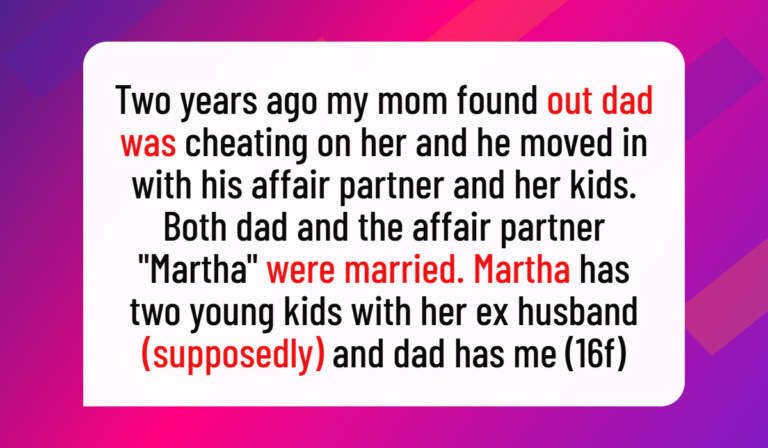
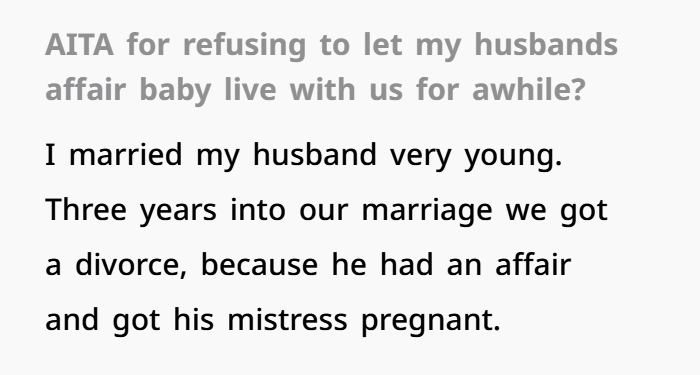
The woman married young and had a child with her husband. Their marriage later fell apart after he had an affair. That relationship resulted in another child.
The betrayal deeply hurt her and eventually ended their marriage.
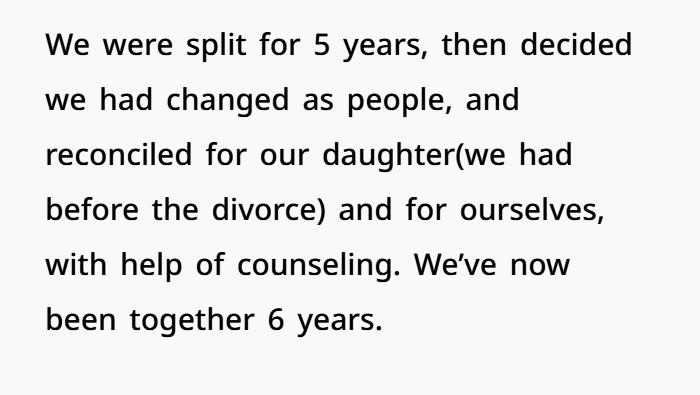
For five years, the couple lived separate lives. During that time, both focused on moving forward and working through the past.
Years later, they found their way back to each other.
Rebuilding the relationship was not easy. They worked on trust, talked through old problems, and attended marriage counseling. In time, they decided to reunite.
For the next six years, their home life became more stable. They focused on raising their family and building a healthier marriage.
But one request brought old feelings back to the surface.
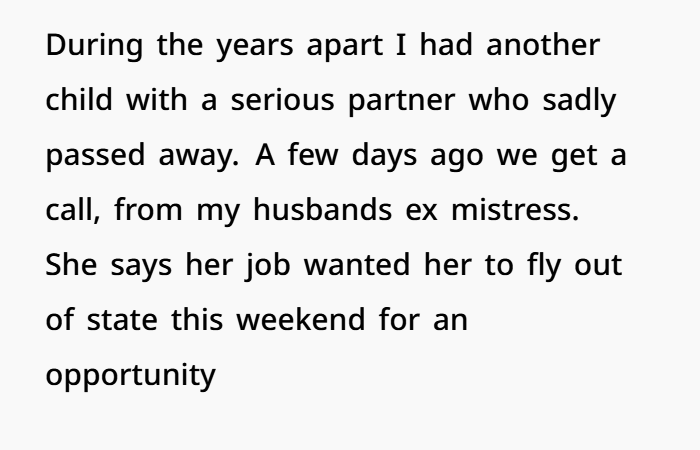
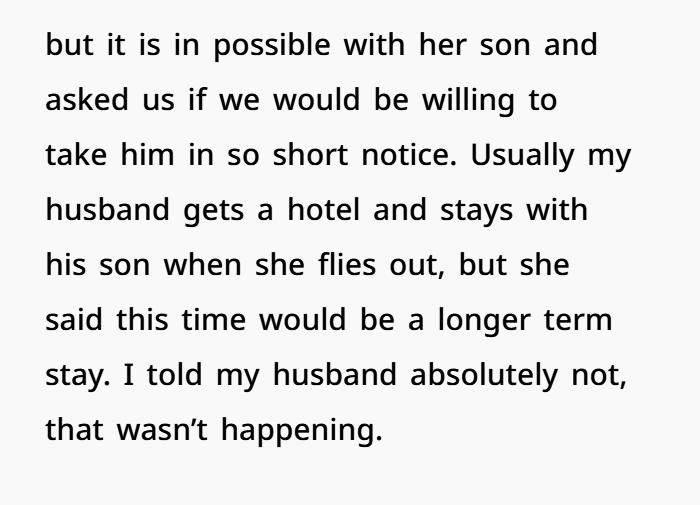
The mother of her husband’s other son needed to travel for work. She asked if the boy could stay with them for an extended period.
The woman was uncomfortable with the idea.
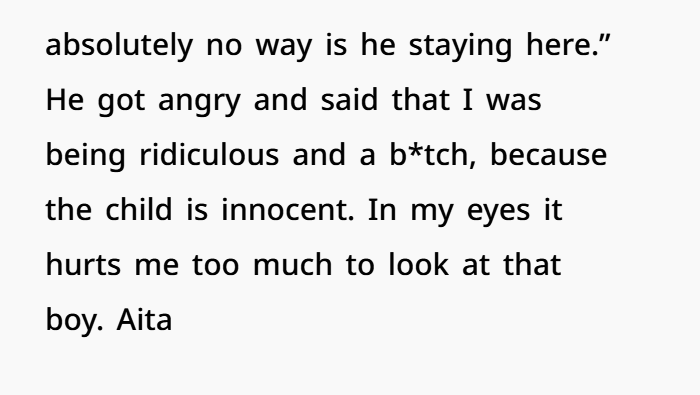
For her, this was not simply a request to help care for a child. His presence in their home was tied to one of the most painful periods of her life.
She had spent years trying to heal from the affair. Now, she felt that agreeing to the request would bring those memories into her home each day.
Her husband viewed the situation from another angle.
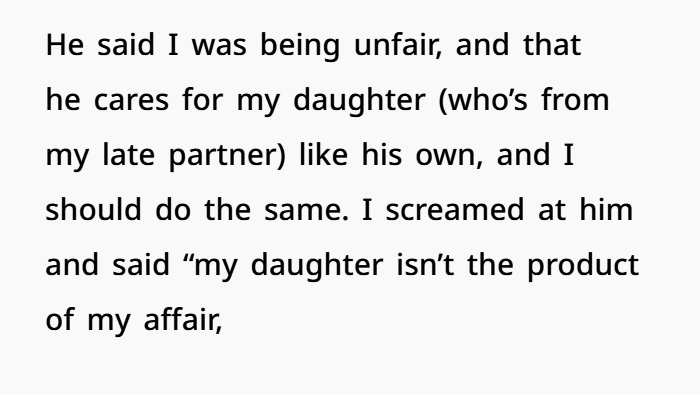
The boy was his son, regardless of how he had been born. As a father, he believed he had a duty to care for him and be part of his life.
That difference quickly became a source of tension.
She wanted to protect the boundaries that helped her heal. He wanted to meet his duties as a parent.
Advertisement – Continue Reading Below
Neither issue was simple.
Their disagreement soon raised larger questions about blended families and life after betrayal. How far does forgiveness go? Can someone forgive a partner while still struggling with reminders of the past?
It also raised an important question about children caught in adult conflicts.
The boy had no role in the affair or the pain it caused. Yet his place in the family became linked to decisions made before he could have any say.
For the couple, the conflict showed that rebuilding trust does not always erase old wounds.
Years may pass, relationships may improve, and families may move forward. But certain events can still bring difficult feelings back.
Their situation became a test of how they handled those feelings together.
It was no longer only about the past. It was about parenting, boundaries, trust, and what their rebuilt marriage could handle in the present.

This conflict is about far more than finding someone to care for a child.
It brings together old pain, family duties, trust, and the hard work of rebuilding a marriage.
The couple had already spent years repairing their relationship. Counseling helped them address many of the problems that followed the affair.
Still, healing does not always mean painful memories disappear.
For the wife, having her husband’s son stay in their home felt deeply personal. The request brought her back to a painful time in her marriage.
She had worked hard to move beyond that period. Having such a close reminder inside her home made those old feelings harder to ignore.
Her husband saw the request in a very different way.
To him, this was about being a father. His son needed somewhere to stay, and he felt responsible for helping him.
That difference sits at the center of their disagreement.
She sees the situation through the pain of what happened years ago. He sees his son and the duties he has as a parent.
There is also another person at the center of this conflict: the child.
He did not choose how he came into the family. He had no part in the affair or the damage it caused.
That makes the situation even harder.
The wife’s painful memories are real. At the same time, the child should not have to carry the weight of choices made by adults.
The couple now faces the difficult task of addressing both concerns.
Clear communication could help them understand what each person actually needs. The wife may need limits that help her feel safe in her own home. Her husband needs room to maintain a healthy relationship with his son.
Those needs may not fit together easily.
The disagreement may also show that parts of the past still need attention. A marriage can improve greatly while some wounds remain sensitive.
Certain events can bring those feelings back years later.
Returning to counseling could give the couple a calmer place to discuss the issue. It may help them separate the current problem from the pain of the affair.
They could also explore other arrangements.
A shorter stay might feel more manageable. Her husband could take on most of the care during the visit. Another suitable place to stay could also be considered if everyone involved agrees.
The goal would be to find a plan that supports the child without ignoring the wife’s concerns.
Blended families often require difficult talks about roles, limits, and responsibility. Those talks become even harder when the family was formed after betrayal.
In the end, this conflict is not simply about whether a child can stay in the house.
It is about whether the couple can face an old wound without allowing it to control their present.
That will require both partners to listen carefully, speak openly, and remember that the child did not create the conflict between them.
The Comments Are In