My Wife’s Boss Crossed a Line, and I Asked Her to Leave Her Job—AITA?
This story follows a young married couple facing a difficult situation involving workplace boundaries, trust, and expectations in their relationship.
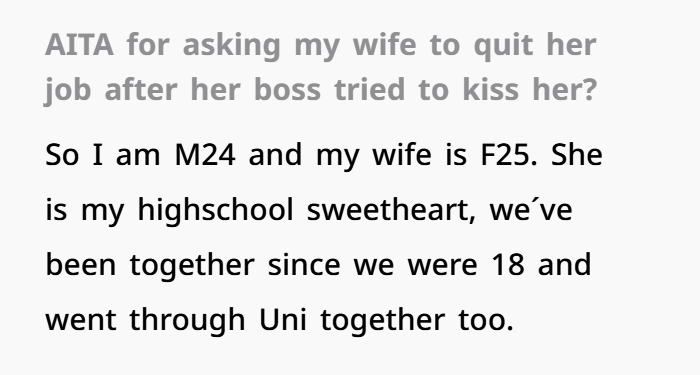
The husband, 24, and his wife, 25, had been together since high school and recently got married. Their relationship was built on years of shared experiences, trust, and support.
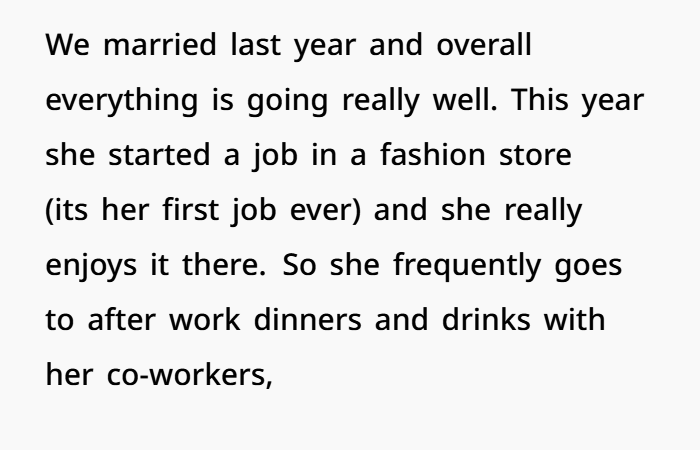
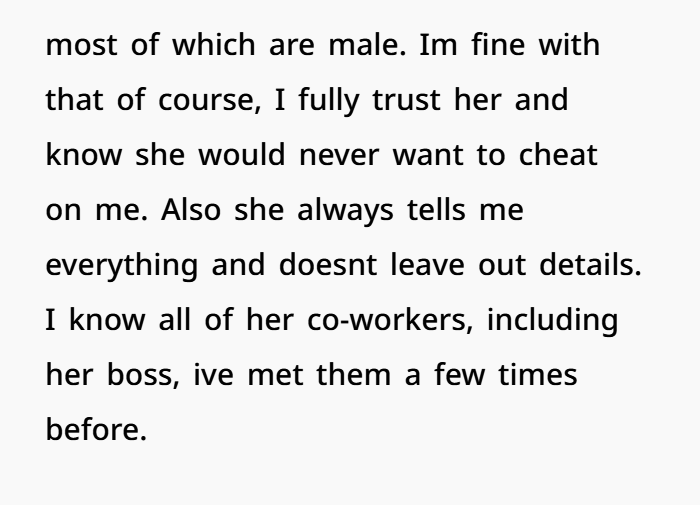
The wife had recently started her first job at a fashion retail store. She enjoyed the work because it gave her independence, new friendships, and a routine she appreciated.
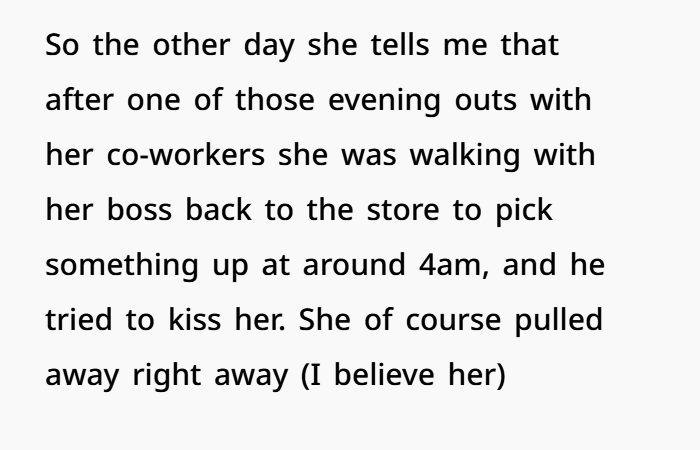
Things changed after a work outing with her coworkers. After drinking, she and her boss returned to the store around 4 a.m. to pick something up. During that time, her boss tried to kiss her.
She immediately rejected him and went home to tell her husband what happened.
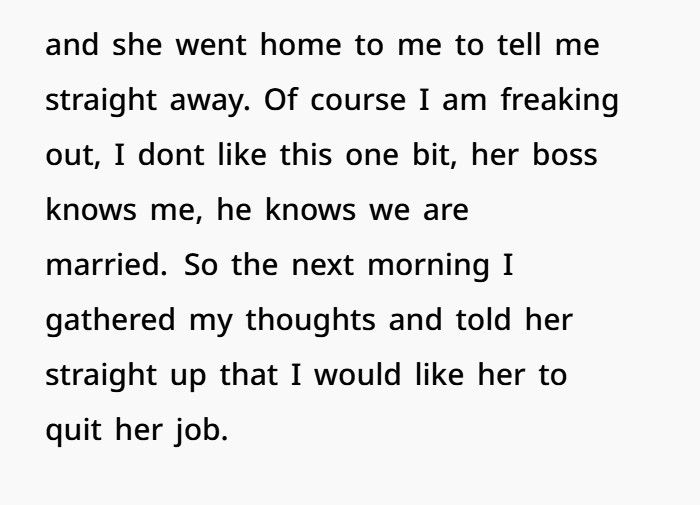
Her honesty brought the situation into the open, but her husband struggled with the idea of her continuing to work for someone who had crossed a serious boundary. The next day, he asked her to leave the job.
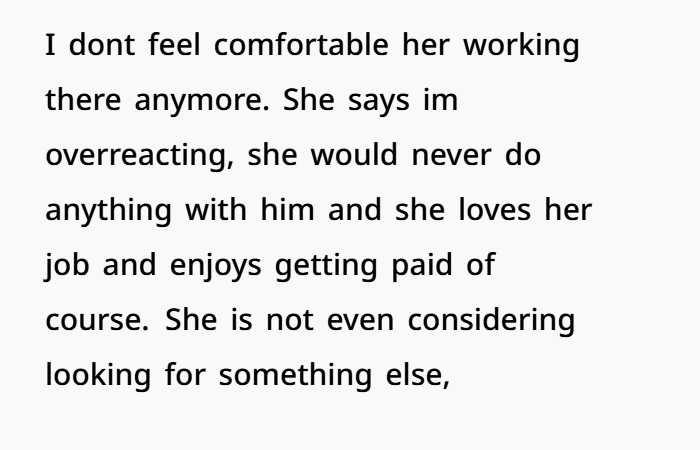
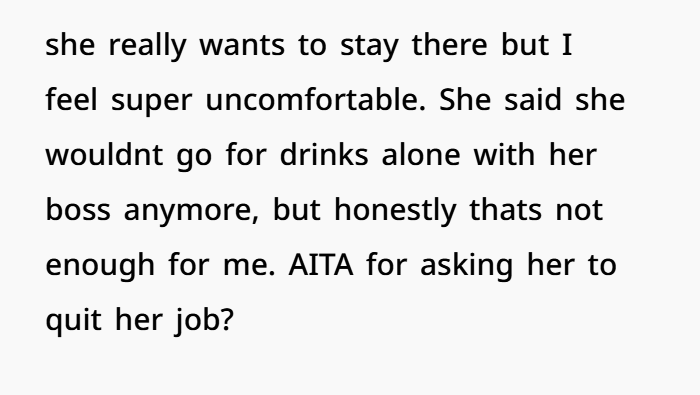
She refused because she enjoyed her work and believed the situation could be managed by creating clearer boundaries, such as avoiding being alone with her boss. She felt that her boss was responsible for his actions and that she should not have to give up a job she valued because of his behavior.
The disagreement created tension between them. They now had to work through questions about trust, workplace safety, personal choices, and emotional boundaries.
At its core, the conflict was not only about the job. It was about how each person viewed support, independence, safety, and respect within their marriage.
Situations like this involve more than a simple disagreement between partners. They often include emotions, workplace issues, trust concerns, and personal boundaries.
This is why similar situations are often discussed in relationship forums, workplace safety conversations, and legal discussions.
Workplace Boundaries and Harassment Concerns
The first issue is workplace behavior. When a manager tries to kiss an employee without consent, it may be considered inappropriate workplace conduct and, in many places, could fall under harassment laws or company policies.
The situation can become more serious because of the power difference between a supervisor and an employee. A worker may feel uncomfortable, pressured, or worried about possible consequences after rejecting the behavior.
Workplace harassment can take different forms. Some cases involve a person using their position of authority to seek personal attention. Others involve actions that create an unsafe or uncomfortable work environment.
The seriousness of a situation depends on the details, company rules, and local laws.
Many employees hesitate to report workplace misconduct because they fear losing their job, facing retaliation, or being treated differently afterward. This can be especially difficult in smaller workplaces where support options may be limited.
Advertisement – Continue Reading Below
The Relationship Conflict
The relationship side of the situation is also complicated.
The husband’s reaction may come from feelings of anger, concern, and protectiveness. Seeing someone cross a boundary with his wife can create fear and frustration.
However, the disagreement becomes more complex because his solution was asking his wife to leave her job.
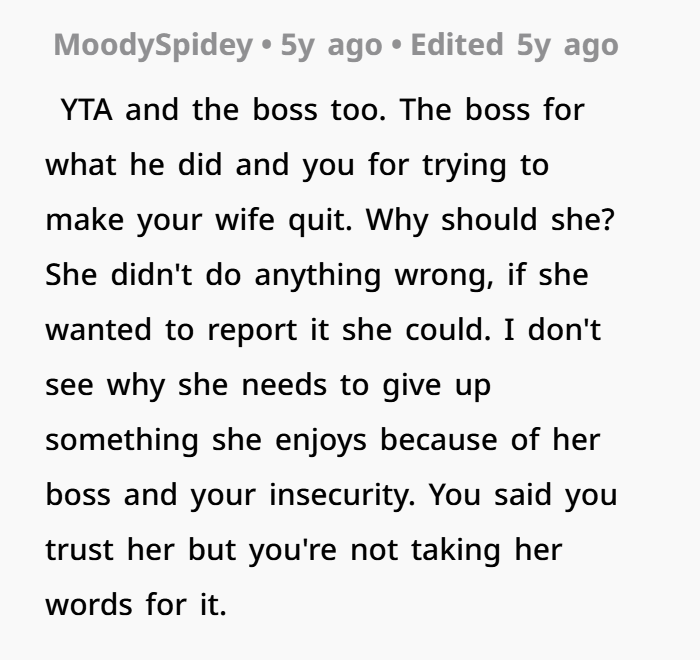
Some people may view this as an attempt to keep her away from an unsafe environment. Others may feel that leaving the job puts the responsibility on her instead of the person who crossed the boundary.
This creates a conflict between safety and independence.
Both concerns can exist at the same time. A partner can care about safety while the other person can still want control over their own career choices.
Balancing Trust and Independence
Healthy relationships usually need both:
- Emotional trust and security
- Personal freedom and independence
When one partner makes major decisions for the other, it can create resentment. At the same time, ignoring a partner’s fears can also damage trust.
Many couples face situations where one person wants to avoid risk while the other wants to protect their independence.
The goal is finding a balance where both partners feel respected and heard.
The Importance of the Job
The wife’s job was her first professional experience, which can make it especially meaningful.
A first job can provide more than income. It can help someone build confidence, gain skills, and develop independence.
Leaving a job after a difficult experience may feel like losing an important personal step forward.
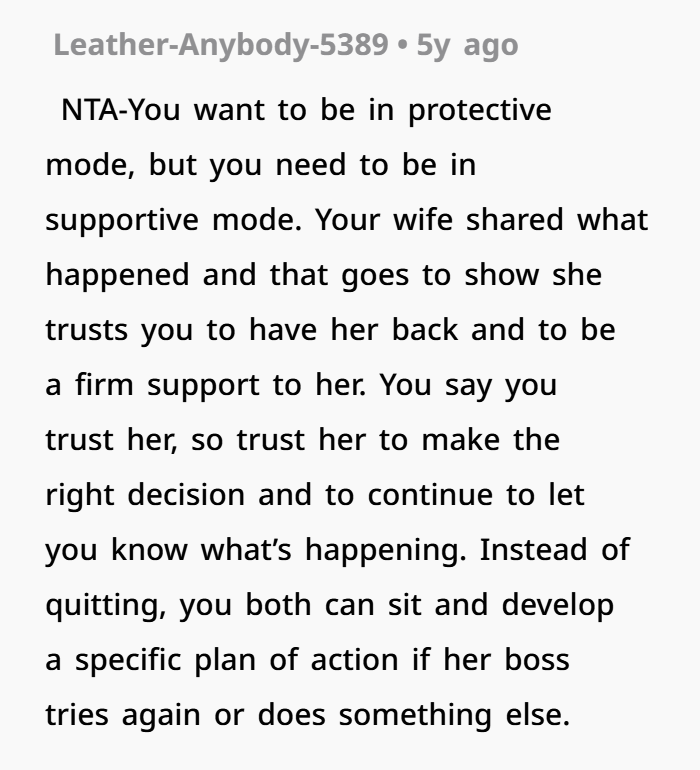
Instead of immediately quitting, there may be other options to consider.
Possible Ways to Handle the Situation
Reporting the behavior
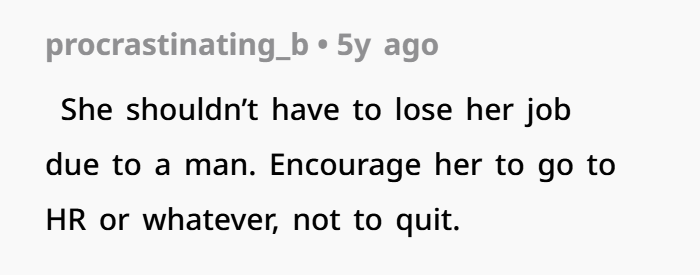
Many workplaces have systems for reporting harassment or inappropriate conduct. Reporting can create a record and may help address the problem.
Creating clear boundaries
The employee can keep communication professional and avoid situations where they are alone with the supervisor.
Requesting workplace changes
Depending on the workplace, an employee may be able to request different schedules, teams, or arrangements to reduce contact with the person involved.
Talking openly as a couple
Honest conversations or couples counseling may help both partners explain their concerns and find a solution without blame.
Looking at Both Perspectives
An important part of this situation is understanding the difference between intention and impact.
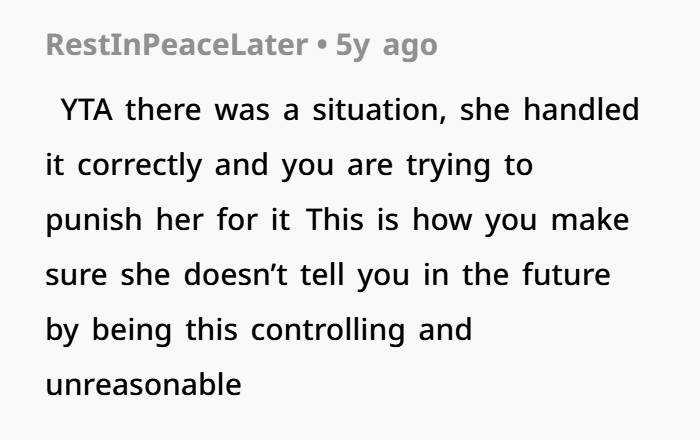
The husband may believe he is protecting his wife, but his request may feel controlling to her.
The wife may want to keep her independence, but her decision to stay may increase her husband’s worries about her safety.
Both feelings can exist at the same time.
The larger workplace issue is that employees are often expected to change their lives after someone else crosses a boundary. Many people believe responsibility should remain with the person who acted inappropriately.
At the same time, relationships involve emotions as well as facts. The husband’s concerns may come from knowing that someone at her workplace ignored an important boundary.
Final Thoughts
This situation is not only about who is right or wrong. It is about how couples handle trust, safety, independence, and respect.
Strong relationships often require open communication, clear boundaries, and a shared plan that considers both partners’ needs.
Finding a solution means addressing the workplace issue while also protecting the trust and connection within the marriage. both the relationship and the wife’s career.
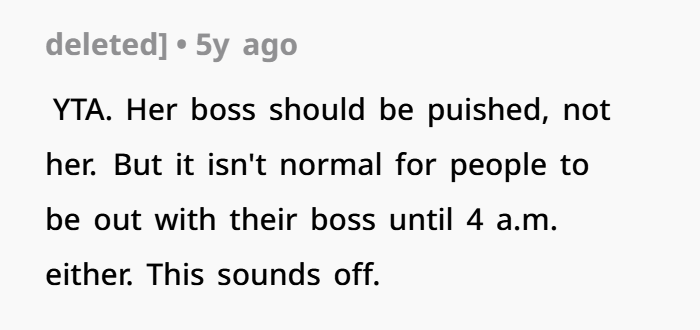
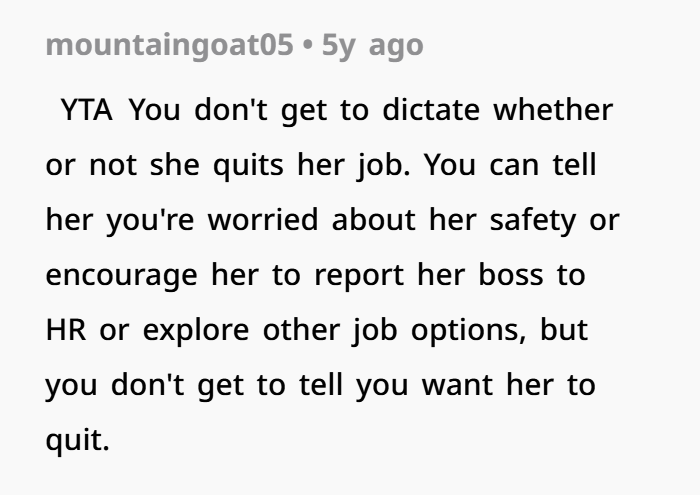
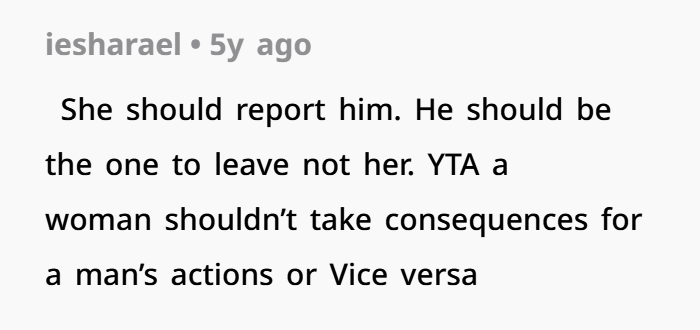
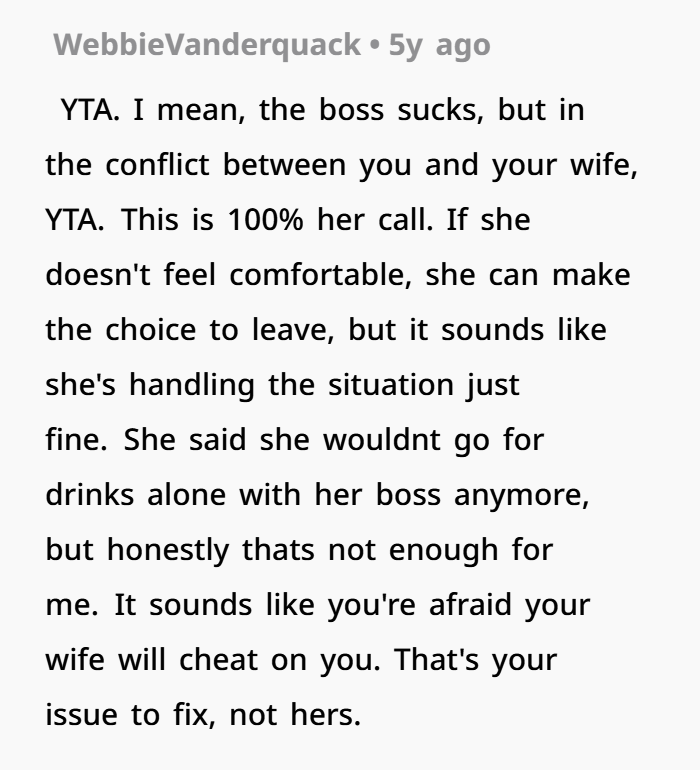
Top Comments From Readers