My In-Laws Threatened to Call CPS Over My Home, and Now Our Family Is Torn Apart
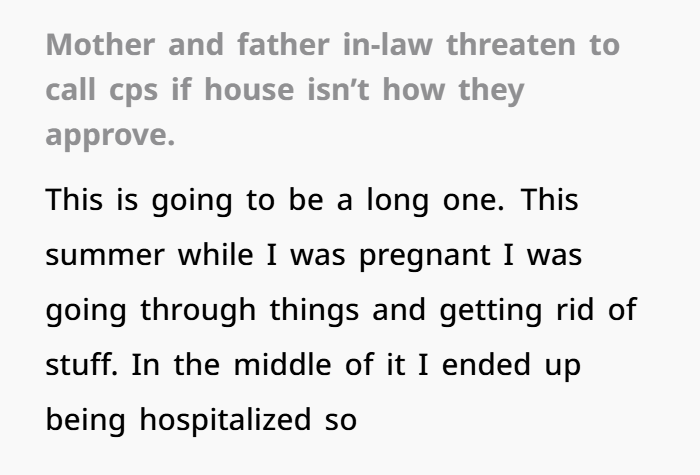
It all started during pregnancy, while the family was getting their home ready for their baby.
They were sorting through belongings, packing boxes, and setting aside things to donate. The house looked messy, but only because they were in the middle of a big cleanup. It wasn’t unsafe or neglected.
Then an unexpected medical emergency sent the parent to the hospital. When they returned home, they learned their mother-in-law was upset about the boxes and donation bins. She thought the house looked unhealthy and worried about how it was being kept.
To keep things from getting worse, the family quickly cleared away the clutter.
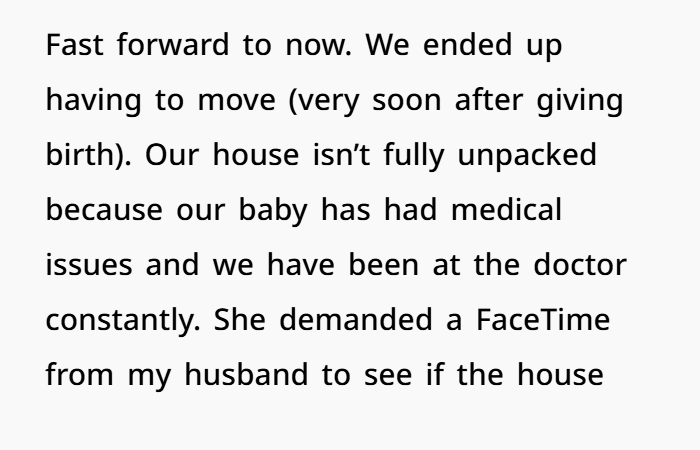
After the baby arrived, they moved into a new house. But instead of having time to settle in, they faced another challenge. Their newborn had health problems that meant frequent doctor visits, specialist care, and piles of insurance paperwork.
Between caring for their baby and handling medical needs, unpacking every box wasn’t their top concern.
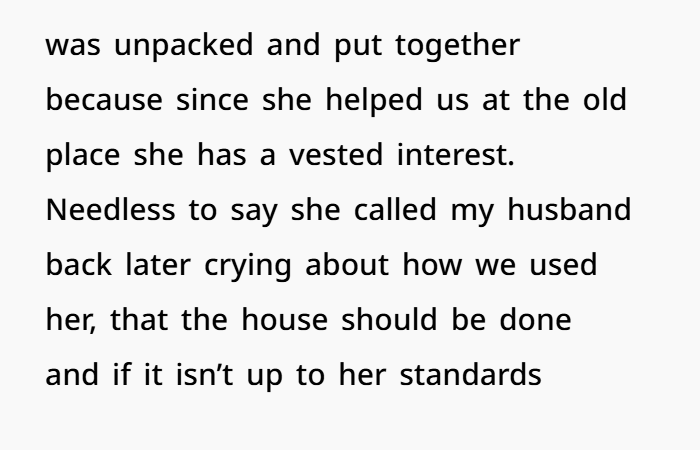
Some time later, the mother-in-law asked for a video tour of the new house. She wanted to see how they were settling in. But after watching the tour, she raised more concerns about the state of their home.
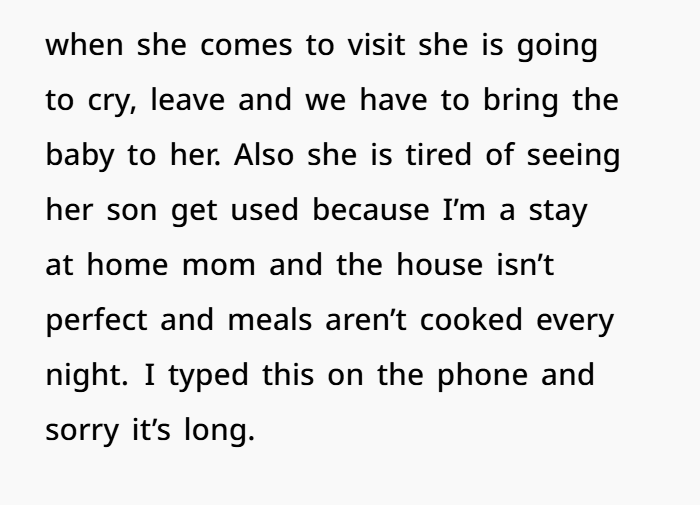
She also complained that she didn’t feel valued by the family. On top of that, she questioned their finances because one parent had chosen to stay home with the baby.
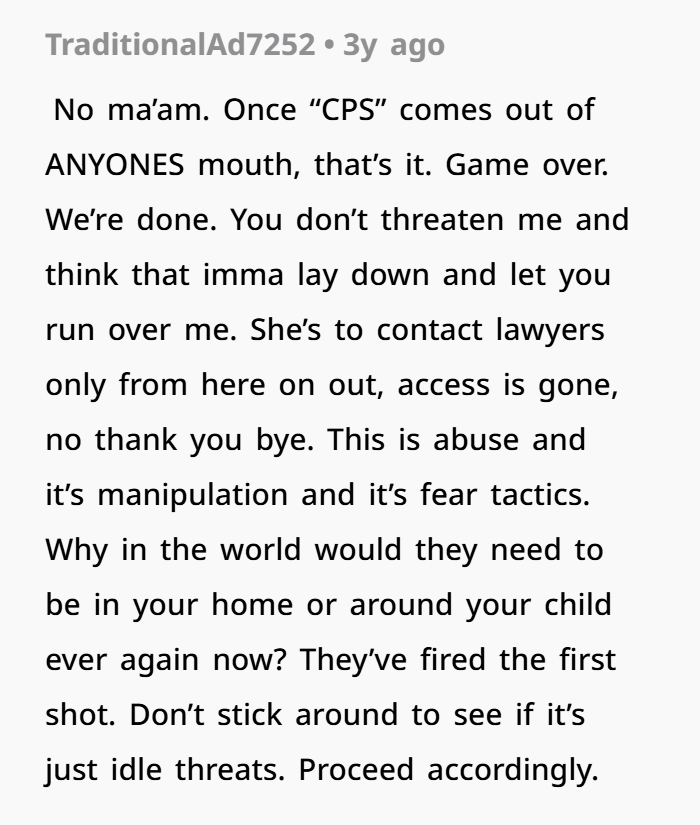
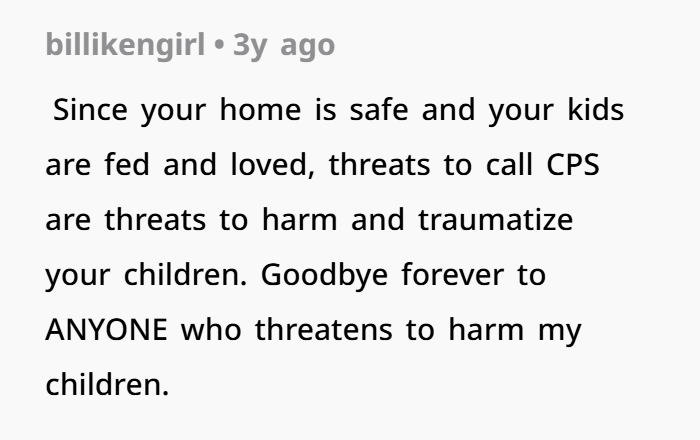
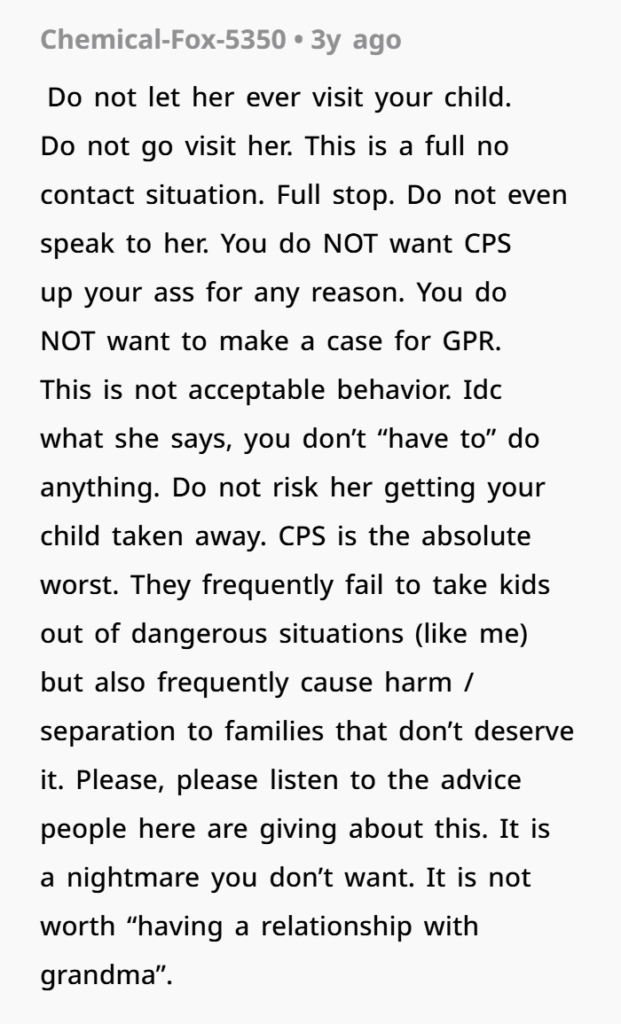
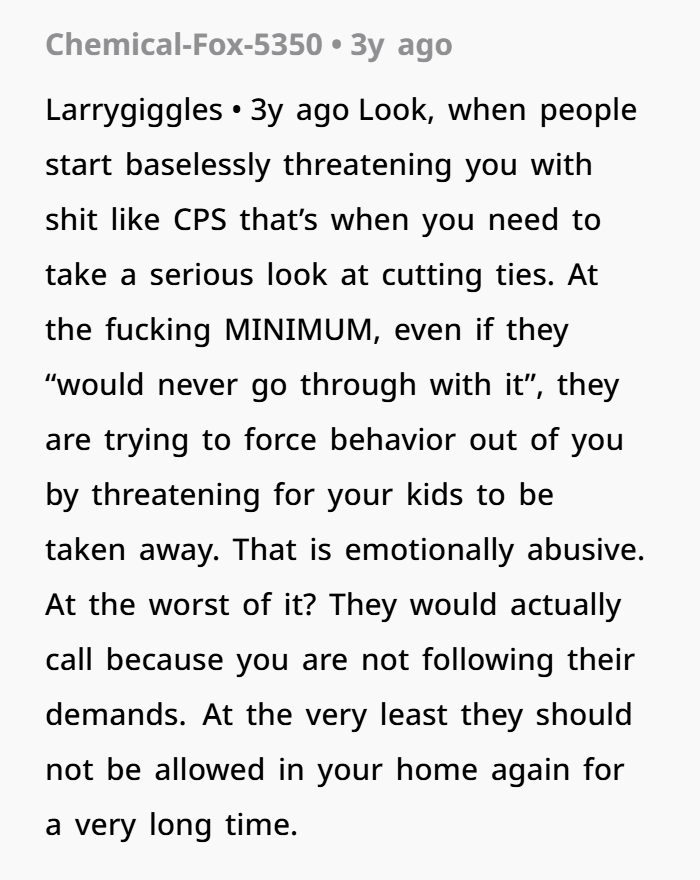
What made everything harder was the earlier threat to involve Child Protective Services (CPS). That threat had already shaken the parents’ trust in their in-laws.
Now, even a few unpacked boxes or unfinished chores felt like reasons they might face more judgment.
The family was trying to care for a newborn with health needs while adjusting to a new home. Instead of feeling supported, they felt watched and judged.
What began as a disagreement over household clutter had grown into a much deeper family conflict. It raised painful questions about trust, respect, money, parenting choices, and how much say grandparents should have in their adult children’s lives.
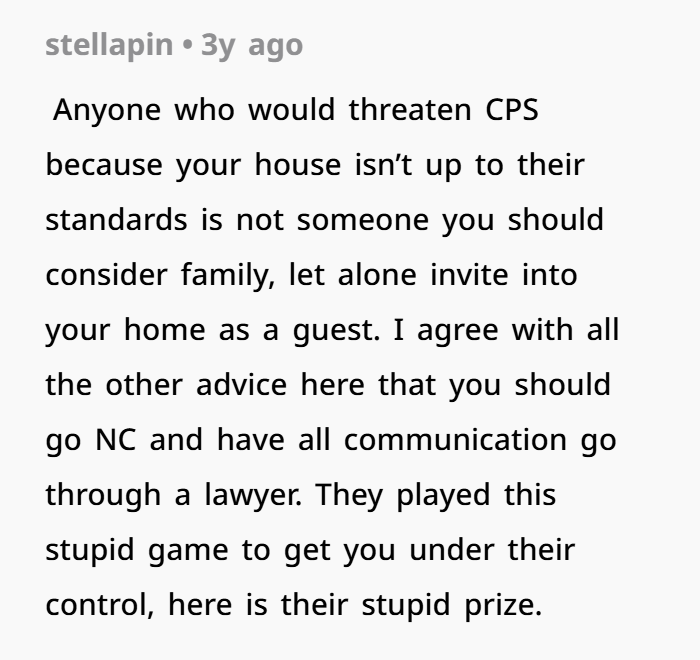
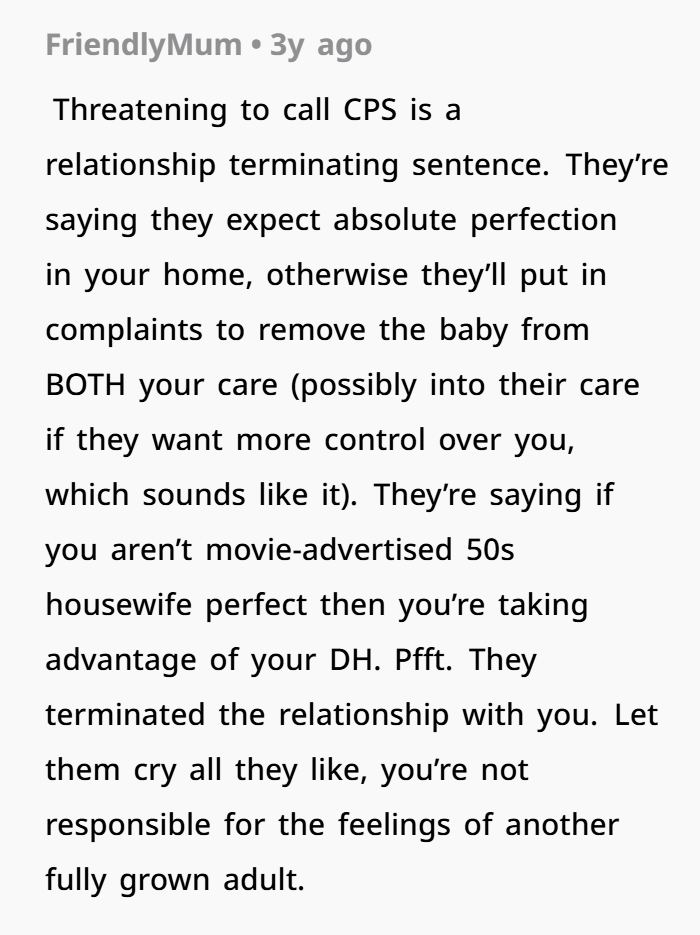
The couple wondered whether the in-laws were right or straight-up manipulative
Hearing someone threaten to call Child Protective Services (CPS) can frighten any parent. The thought of facing an investigation or losing custody is enough to cause serious stress.
But CPS is meant to protect children from harm. Its job isn’t to make sure every home looks spotless.
CPS usually gets involved when someone reports concerns about abuse, neglect, unsafe living conditions, or a child’s basic needs not being met. This can include a lack of food, medical care, or a safe place to live.
Having a few unpacked boxes after moving is not the same as putting a child at risk.
Advertisement – Continue Reading Below
It’s understandable why parents facing these threats might look into CPS investigations, parental rights, custody laws, and legal help. They want to know what could happen and how to protect their family.
In most cases, a temporary mess alone isn’t enough to prove child neglect.
There’s also a big difference between hoarding and sorting through household items.
Hoarding disorder is a mental health condition that can make it very hard for someone to part with possessions. It may lead to severe clutter that affects daily life.
Packing boxes, setting aside donations, and slowly unpacking after a move don’t automatically point to hoarding.
If someone contacts CPS, the agency generally reviews the report before deciding what to do next. Not every complaint leads to a formal investigation.
If a caseworker visits a home, they may check whether the child’s basic needs are being met. Common areas of concern include:
- A safe place for the child to sleep
- Enough food in the home
- Working water, heating, and electricity
- Clear paths and safe living spaces
- Access to needed medical care
The main concern is safety, not whether every room is neat.
A family can have moving boxes in the hallway and still provide a safe, caring home. What matters is whether the clutter creates a real danger.
This is especially important for families going through major changes.
Moving into a new house takes time. Bringing home a newborn adds even more work. When a baby also needs medical care, everyday chores can fall behind.
That doesn’t mean the parents aren’t doing their jobs.
Child custody is another concern that often comes up when CPS is mentioned.
Custody laws vary by location, but courts generally focus on the child’s best interests and safety. A disagreement over cleaning habits doesn’t automatically give someone grounds to take custody away from a parent.
A serious change in custody usually requires more than one relative’s opinion about housekeeping.
Still, the threat itself can cause lasting harm.
When grandparents repeatedly question a parent’s choices, inspect their home, or threaten to report them, trust can quickly break down.
Parents may begin to feel as though every small mistake will be used against them.
Instead of enjoying time with their baby, they may worry about what relatives will say next.
This is where family boundaries become important.
Grandparents can share concerns and offer help. They can also speak up when they believe a child faces a real danger.
But being a grandparent doesn’t mean having control over another family’s home, money, or daily choices.
Adult children have the right to make their own household decisions, within the law.
The timing of this conflict makes it even harder.
Caring for a newborn is already demanding. Parents often spend their days handling:
- Sleepless nights and feeding schedules
- Diaper changes and daily childcare
- Doctor visits and health concerns
- Laundry, meals, and cleaning
- Bills, paperwork, and other household needs
When a baby has ongoing health problems, the workload grows.
Parents may need to arrange specialist visits, deal with insurance claims, follow treatment plans, and keep track of medical records.
Those tasks take time, even when they aren’t visible to others.
The criticism of the stay-at-home parent also raises an important issue.
Staying home with a baby doesn’t mean someone isn’t working.
Feeding, bathing, comforting, and caring for a child can fill an entire day. Add cooking, cleaning, shopping, and scheduling, and there’s often little time left.
That work may not come with a paycheck, but it still helps the family.
A couple may decide that having one parent stay home makes sense for their child’s needs and their finances.
Relatives don’t have to agree with that choice. But questioning someone’s value simply because they aren’t earning a wage can be hurtful.
For parents worried about a possible CPS report, keeping the home safe and staying organized can offer some peace of mind.
A few useful steps include:
- Keeping the child’s medical records in one place
- Saving important health and insurance papers
- Checking smoke alarms and other safety devices
- Keeping exits and walkways free of hazards
- Storing medicines and dangerous items out of children’s reach
- Making sure the baby has a safe sleeping space
Some families also take photos while moving or fixing up their homes. These can help show how the home changed over time.
These steps aren’t about making a house look perfect for relatives. They’re about keeping children safe and having useful records if questions arise.
Parents should also understand that CPS rules and custody laws can differ by state.
If a report is made, speaking with a local family lawyer can help them learn their rights and what to expect.
Grandparents generally don’t gain control over a child’s custody or a parent’s household just because they disagree with family choices. Any legal rights they may have depend on local law and the facts of the case.
Beyond the legal concerns, there’s still the question of how the family can move forward.
Clear, calm communication may help when both sides are willing to listen.
A parent might say:
“We know you care about our baby, but our child is safe and getting the care they need. We need you to respect our choices and stop making threats about our home.”
That message sets a boundary without turning the discussion into another argument.
Of course, setting a boundary doesn’t mean every relative will accept it.
If the threats continue, parents may choose to limit home visits, stop sharing private details, or take some space from the relationship.
Those choices depend on the family’s needs and whether trust can be rebuilt.
What makes this story upsetting is that the parents were already dealing with so much.
They had gone through a medical emergency, welcomed a newborn, moved homes, and faced their baby’s health problems.
They needed patience and support while they settled into their new life.
Instead, they found themselves defending their housekeeping, finances, and parenting choices.
There’s a difference between raising a real safety concern and using the threat of CPS during a family disagreement.
A child living in unsafe conditions deserves help. But a home with unpacked boxes isn’t automatically unsafe.
Families need time to adjust after a move, especially when caring for a baby with medical needs.
At the heart of this situation is a simple question: Is the child safe, loved, fed, and receiving proper care?
If those needs are being met, a few unfinished household tasks don’t tell the full story.
A home doesn’t have to look perfect to be a good place for a child to grow up.
And sometimes, the support new parents need most isn’t another opinion about their house. It’s someone willing to understand what they’re going through.
The in-laws had a pattern of overstepping boundaries: “What they do isn’t okay”