She Called Me Immoral, So I Exposed Her Secret Affair
This story is about two close friends whose friendship ended after a painful falling-out.
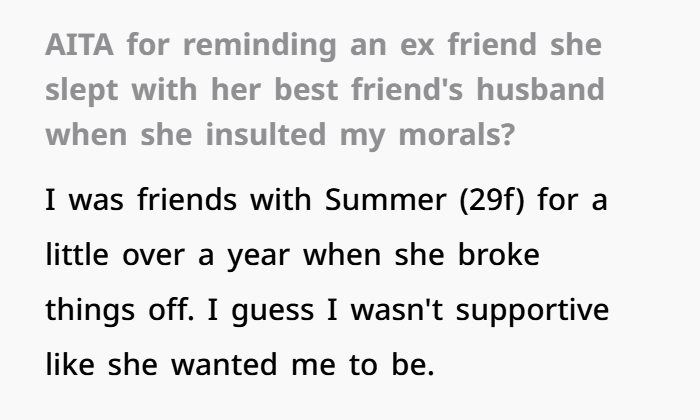
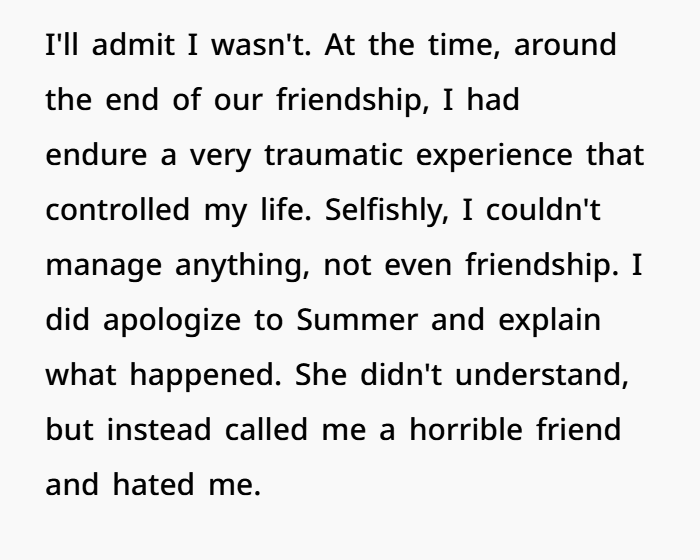
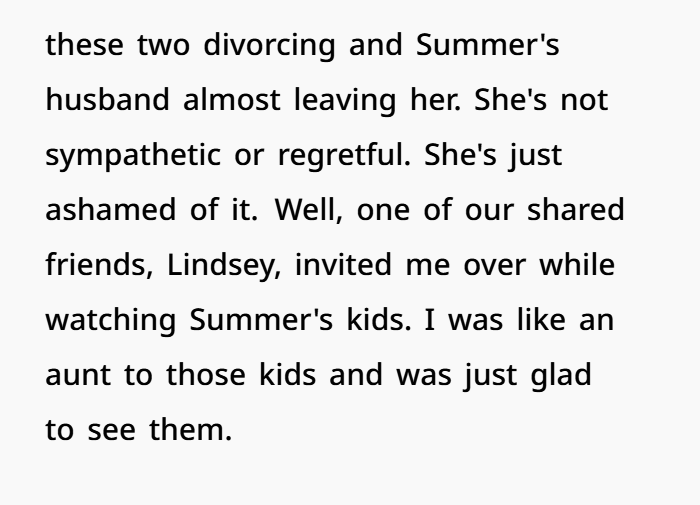
The narrator and Summer had been friends for about a year. During that time, the narrator went through a tough personal struggle. It took a toll on her emotions and made it hard to be there for Summer.
Later, she tried to explain what happened and apologized for not being a better friend. But Summer refused to accept her apology. She called the narrator a bad friend and cut ties with her.
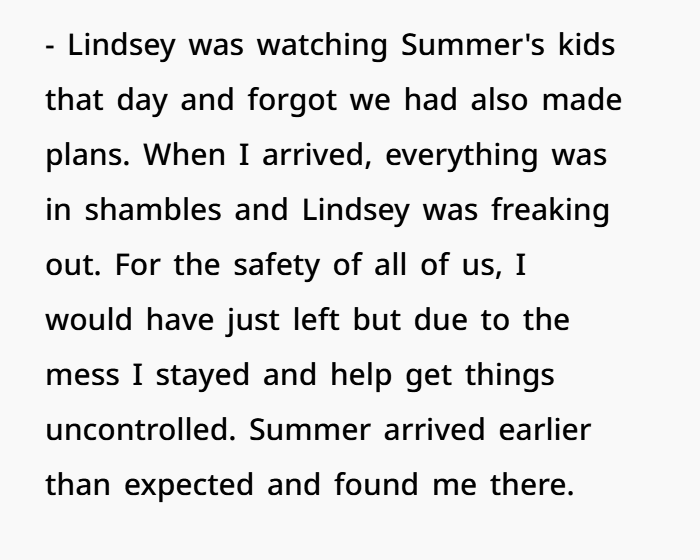
The narrator thought their friendship was over for good. But things took an ugly turn when they met again at a mutual friend’s house.
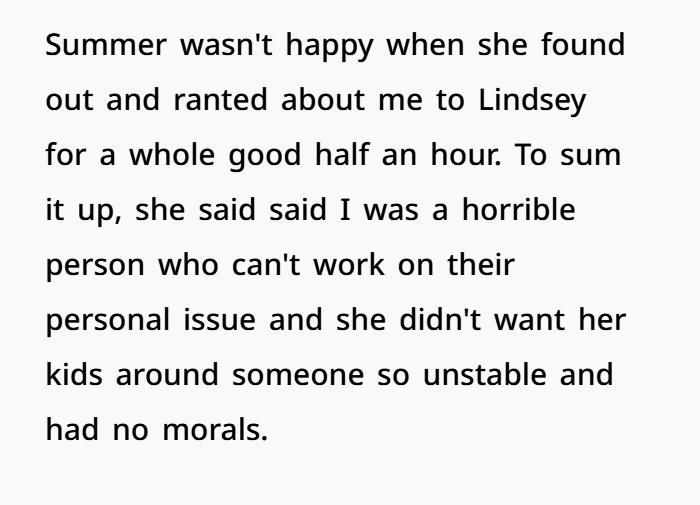
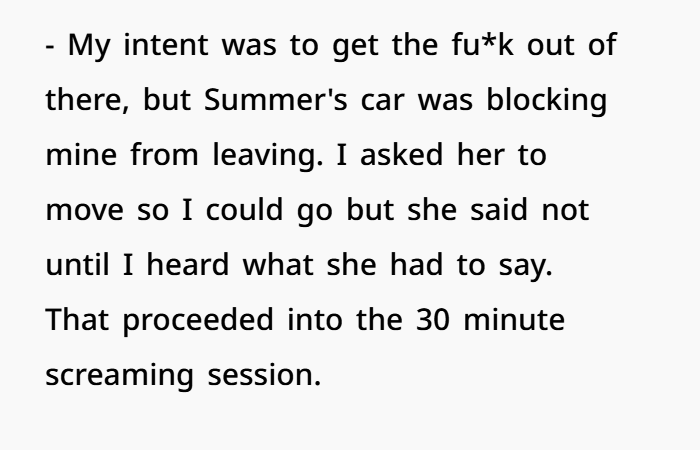
At first, it seemed like a normal gathering. Then Summer began attacking the narrator in front of everyone. For nearly 30 minutes, she criticized her choices, her behavior, and even her character.
The narrator tried to put up with it, but she eventually reached her limit.
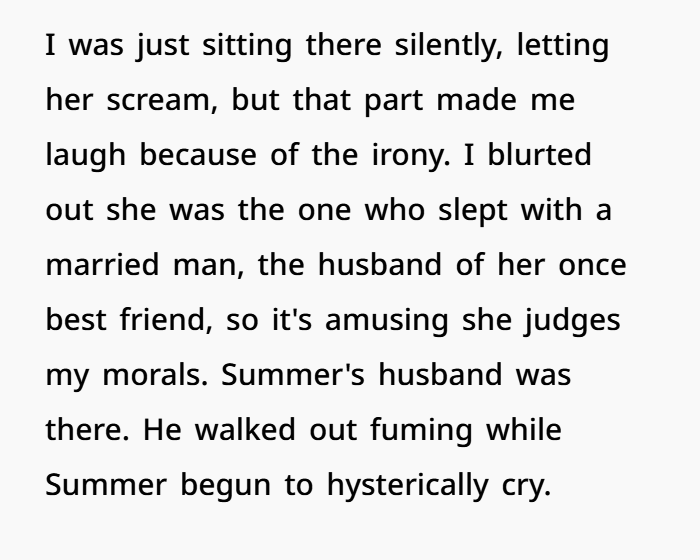
She fired back by bringing up something from Summer’s past that had caused serious trouble in her personal life.
Some people in their friend group already knew about the incident. Still, nobody expected the narrator to bring it up during the argument.
The room fell silent.
Summer became upset, and her husband walked away from the conversation.
What began as a tense meeting between two former friends had turned into something much worse. Old secrets, broken trust, and painful memories were now out in the open.
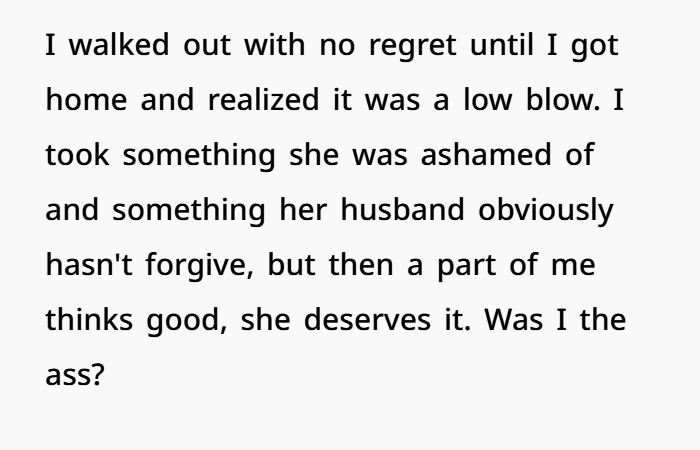
Afterward, the narrator began to question her own actions.
Had she simply stood up for herself after being attacked for half an hour? Or had she gone too far by using Summer’s past against her?
The incident left her wondering where the line falls between defending yourself and hurting someone out of anger.
And it raised one difficult question: When someone publicly attacks your character, does that give you the right to expose their secrets?

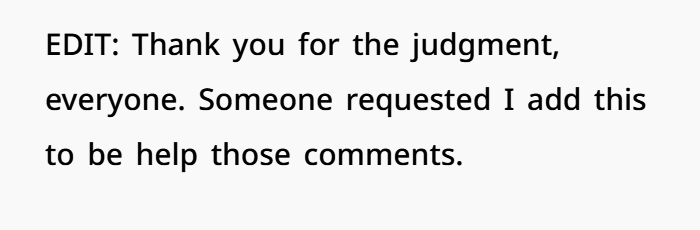

When Friendship Turns Bitter: Hurt Feelings, Broken Trust, and Moving On
Not every fight has a clear winner or loser. Sometimes, two people hurt each other without meaning to. Other times, anger builds until someone says something they cannot take back.
Advertisement – Continue Reading Below
That is what makes this story so difficult.
Two former friends found themselves in a bitter argument. Both felt hurt, and neither wanted to back down. What began as a personal disagreement soon affected the people around them.
The real question is whether defending yourself gives you the right to bring up someone’s painful past.
Why Personal Attacks Hurt So Much
Nobody likes having their character questioned, especially in front of other people.
Being called selfish, dishonest, or immoral can hurt more than a normal disagreement. It feels like someone is judging who you are, not just what you did.
That kind of attack can make anyone angry.
In this case, Summer’s harsh words pushed the narrator to her breaking point. After listening to nearly half an hour of criticism, she decided she had heard enough.
But her response made an already tense situation much worse.
How Personal Struggles Can Affect Friendships
The narrator had been dealing with a painful time in her life. Her emotional struggles made it harder to stay close to the people around her.
When someone is going through a rough patch, even simple tasks can feel draining. Keeping up with friends may become difficult, even when those friendships still matter.
But there is another side to this.
A friend who feels ignored may start to believe they no longer matter. They might feel abandoned without knowing what the other person is facing.
That seems to have played a part in this friendship.
The narrator knew she had not been there for Summer as much as she wanted. She tried to explain herself and said she was sorry.
Summer, however, was still hurt and chose to end their friendship.
Neither person’s feelings simply disappeared when they stopped talking.
When Friends Stop Listening to Each Other
One of the biggest problems in this story was how the two women handled their hurt feelings.
Summer believed the narrator had failed her as a friend. The narrator felt Summer had ignored the struggles she was facing.
Instead of finding common ground, they grew further apart.
Sometimes, an apology cannot repair a friendship. The hurt may run too deep, or one person may no longer want to try.
That does not always mean either person is cruel.
But when people hold on to anger, it can come out at the worst possible time.
And that is exactly what happened when these former friends met again.
The Argument That Went Too Far
The gathering at their mutual friend’s home should have been a normal social visit.
Instead, Summer confronted the narrator.
She criticized her behavior, questioned her choices, and made harsh comments about her character. According to the narrator, this continued for almost 30 minutes.
At some point, the narrator stopped holding back.
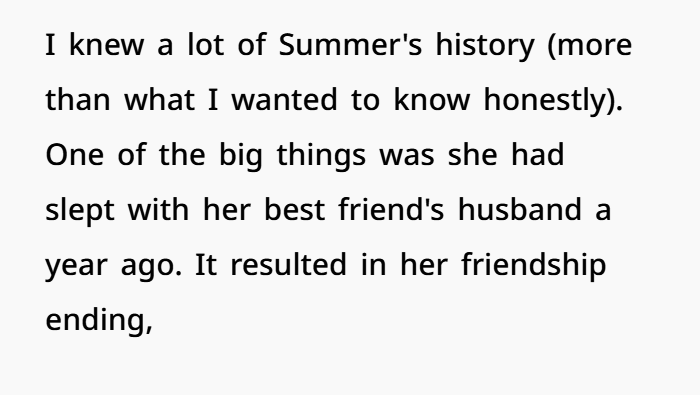
She brought up a past incident involving Summer’s affair, turning Summer’s judgment back on her.
The comment hit hard.
People in the room went quiet. Summer became emotional, and her husband walked away.
Suddenly, the argument was no longer just about their failed friendship.
It had brought a painful part of Summer’s past into a room full of people.
Why Bringing Up the Past Can Make Things Worse
When people argue, they do not always stick to the problem in front of them.
Old mistakes, private secrets, and past disagreements often become part of the fight.
It can feel tempting to remind someone of their own mistakes when they are judging yours.
The narrator may have felt that Summer had no right to question her morals while carrying her own painful history.
From that point of view, her response may have seemed fair.
But there is a difference between pointing out unfair behavior and using someone’s past to hurt them.
Even when a statement is true, the timing and purpose behind it matter.
Bringing up Summer’s affair did not solve the original disagreement. Instead, it gave both women another reason to feel hurt.
How One Argument Can Hurt Other People
One detail makes this story even more painful: Summer’s husband was present.
The argument involved two former friends, but its effects reached beyond them.
Although some people already knew about the affair, hearing it raised in public was still upsetting.
Summer’s husband leaving the conversation showed how deeply the moment affected the gathering. His exact feelings, however, remain unknown.
This is one reason public arguments can be so damaging.
People may feel embarrassed, exposed, or forced to take sides. Friends who came together for a pleasant evening can end up caught in someone else’s conflict.
And even after the argument ends, the tension may remain.
Why the Narrator Felt Guilty Afterwards
Once the anger faded, the narrator began thinking about what she had said.
She knew Summer had attacked her first. She also knew her own response had caused pain.
That left her with a difficult question.
Was she wrong to defend herself, or had Summer pushed her too far?
It is possible to understand why someone reacts in anger without agreeing with everything they say.
The narrator had every right to defend herself against personal attacks.
But defending yourself does not always require bringing up another person’s worst mistakes.
Feeling guilty afterward does not prove she was entirely wrong. It may simply mean she wished the argument had ended another way.
What Could Help Them Move Forward?
Not every broken friendship needs to be repaired.
Sometimes, the healthiest choice is to accept what happened and move on. Still, there are lessons both people could take from this experience.
1. Apologize Without Taking All the Blame
The narrator could admit that bringing up Summer’s affair in public was hurtful.
That would not mean Summer’s earlier comments were acceptable.
Both things can be true.
Someone can regret their own words while still believing they were treated unfairly.
A sincere apology should focus on what the person did wrong, not on winning the argument.
2. Know When to Walk Away
Not every insult deserves a response.
When someone keeps attacking your character, leaving the conversation can be more helpful than fighting back.
Walking away does not mean accepting their claims.
It means choosing not to let the argument become even more hurtful.
The narrator could have told Summer she would not continue the conversation and left the room.
That may have prevented the situation from getting worse.
3. Set Clear Boundaries
Some friendships end because the people involved can no longer treat each other with respect.
That can be painful, especially when they once shared a close bond.
But staying connected is not always the best choice.
The narrator and Summer may be better off keeping their distance.
If they meet through mutual friends, they can remain polite without trying to rebuild their old friendship.
4. Learn From the Experience
Painful arguments can teach people a lot about how they react under pressure.
The narrator may learn to speak up sooner instead of waiting until her anger becomes too much.
Summer may also need to think about how she expresses disappointment and whether public criticism helps anyone.
Neither person can change what happened.
But both can choose how they handle future disagreements.
Was the Narrator Wrong for Speaking Up?
This is where opinions may differ.
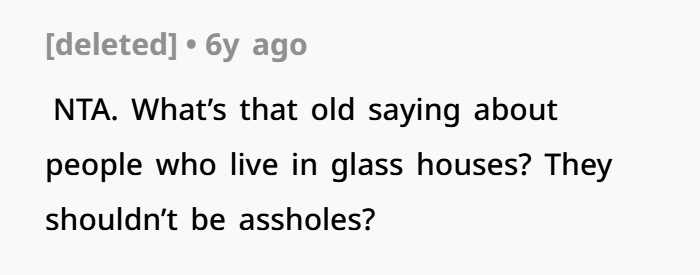
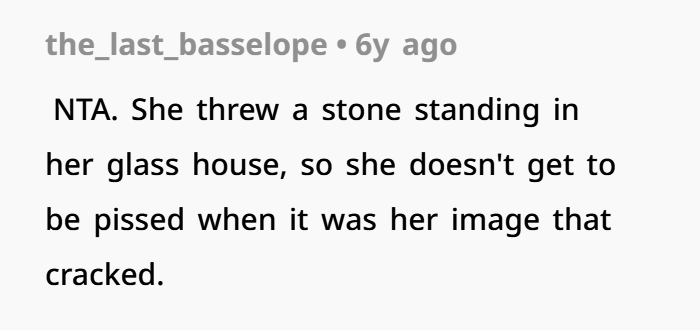
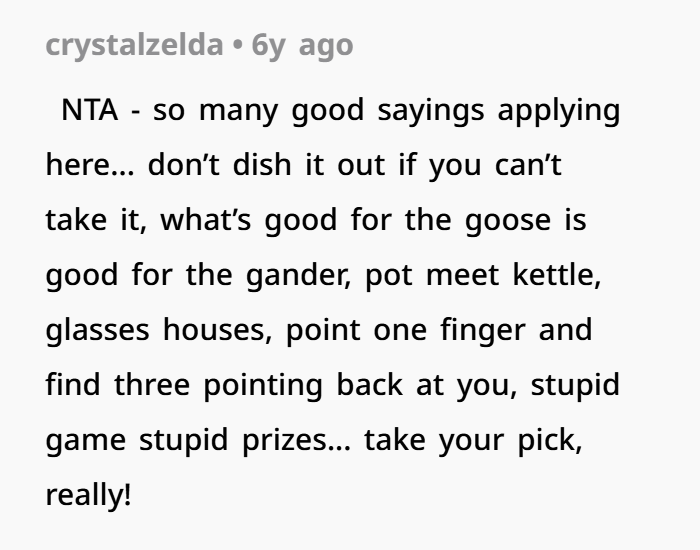
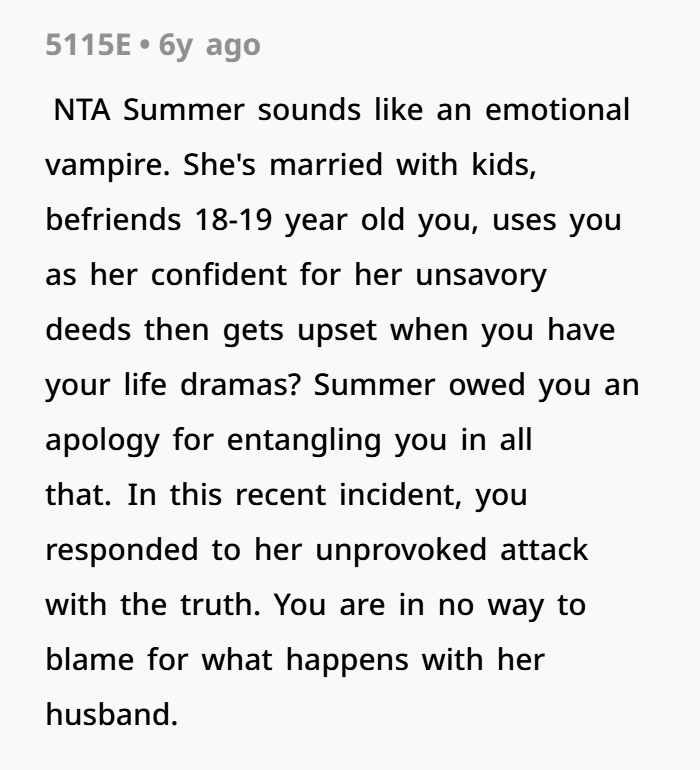
Some people will feel Summer deserved the response. After all, she spent nearly half an hour judging someone else’s character.
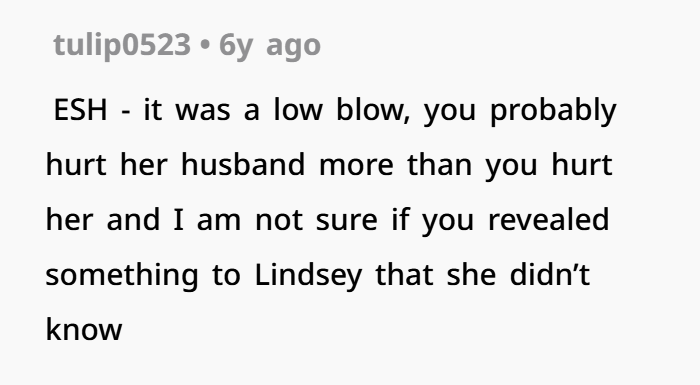
Others will believe the narrator crossed a line by bringing up a painful part of Summer’s marriage.
Both views have reasons behind them.
Summer’s behavior was hurtful, but that does not mean every response was fair.
At the same time, the narrator’s reaction did not happen without cause. She had been pushed into an upsetting situation and reacted in anger.
The real issue is not whether she had the right to speak up.
She did.
The harder question is whether she could have defended herself without causing more harm.
The Bigger Lesson About Friendship and Respect
Friendships can fall apart for many reasons.
Sometimes, people grow apart. Sometimes, they fail to understand what the other person needs. And sometimes, hurt feelings turn into anger that neither person knows how to handle.
This story shows how quickly an old disagreement can become a public fight.
Summer felt let down by someone she once trusted. The narrator felt unfairly judged during a difficult time in her life.
Neither woman handled their final confrontation well.
The narrator could not control Summer’s words, but she could control her own response. Summer also had a choice about whether to confront her former friend in public.
In the end, both were left dealing with the effects of that argument.
The lesson is simple: You can stand up for yourself without using someone’s past as a weapon.
And sometimes, the best way to end a painful friendship is to stop fighting for the last word.
Because winning an argument does not always mean walking away feeling better.
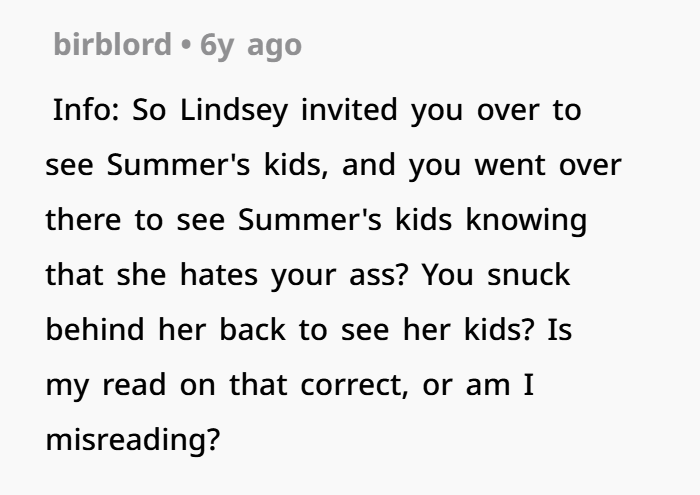
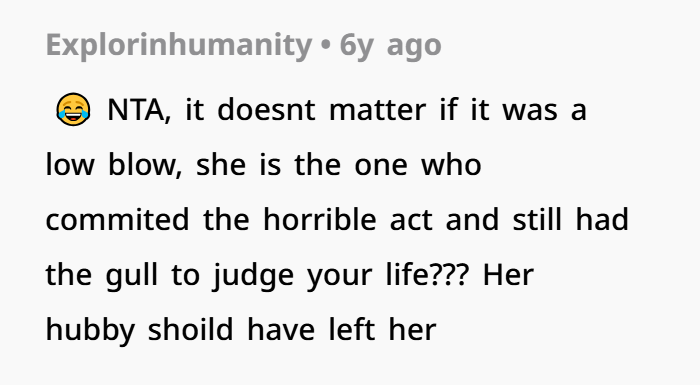
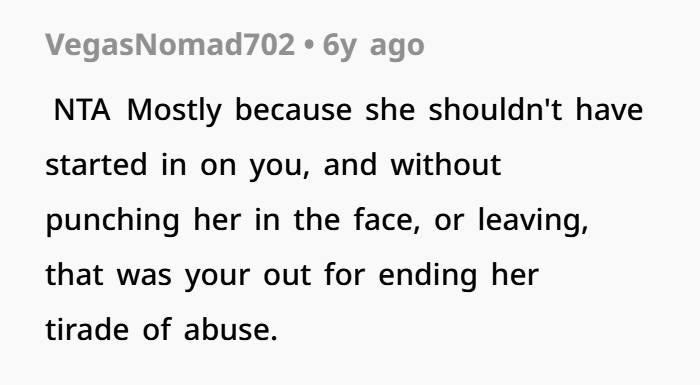
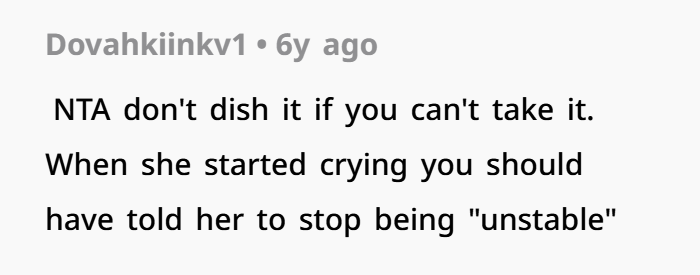
Readers’ Comments Speak Out