AITA for Breaking a Promise to My Stepchildren and Choosing to Walk Away?
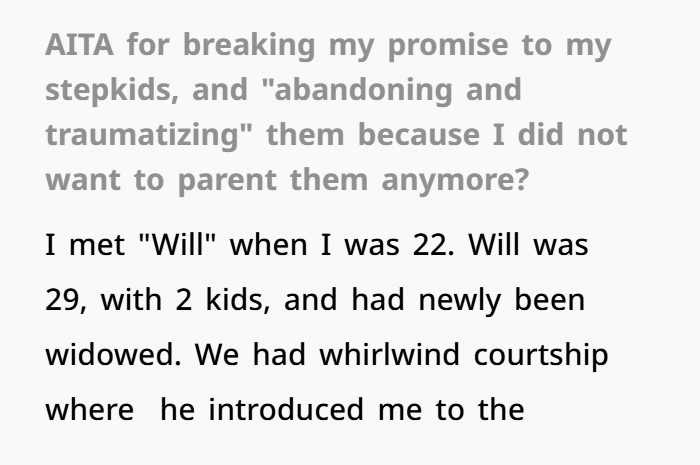
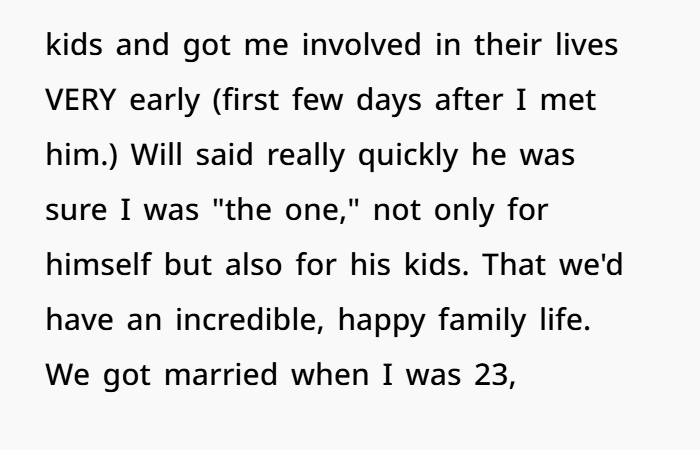
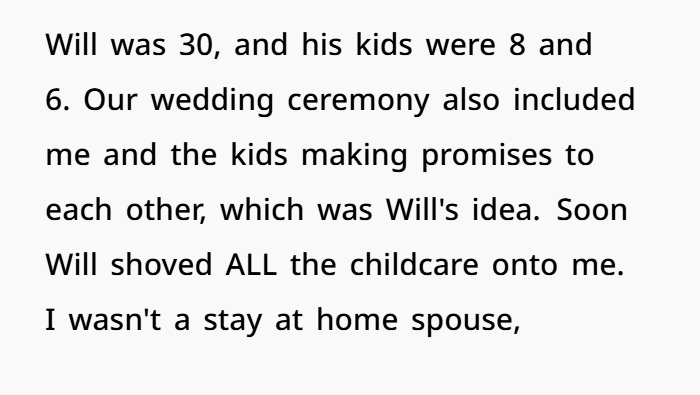
A woman married a man who had two young children from a past relationship. From the start, she was expected to help raise them and become part of their family.
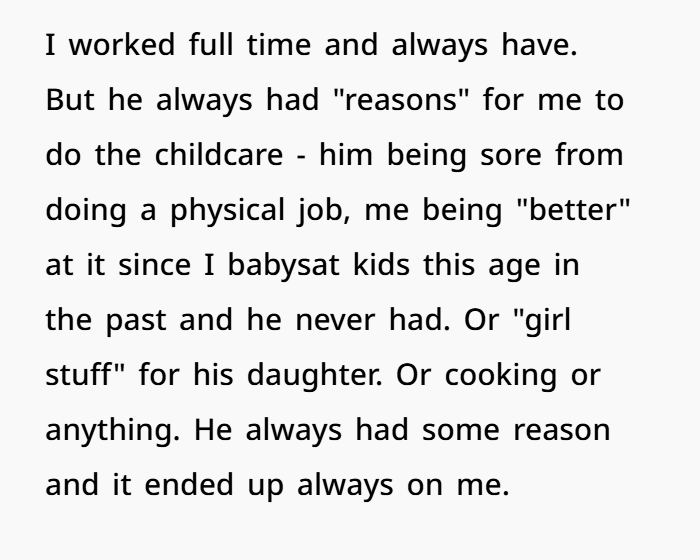
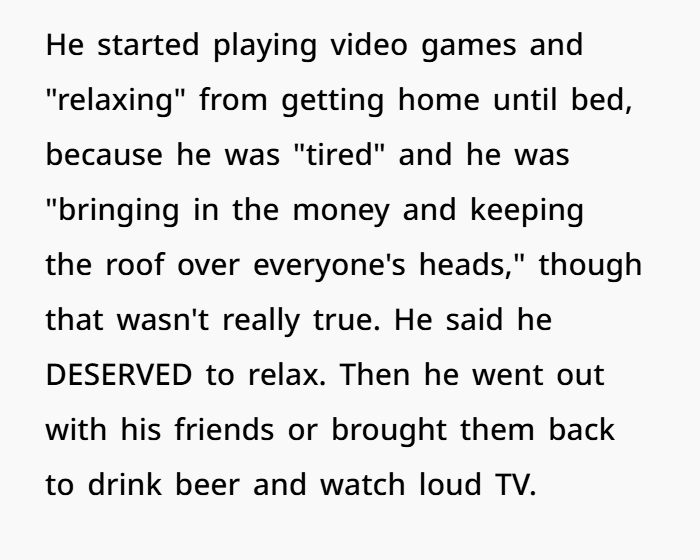
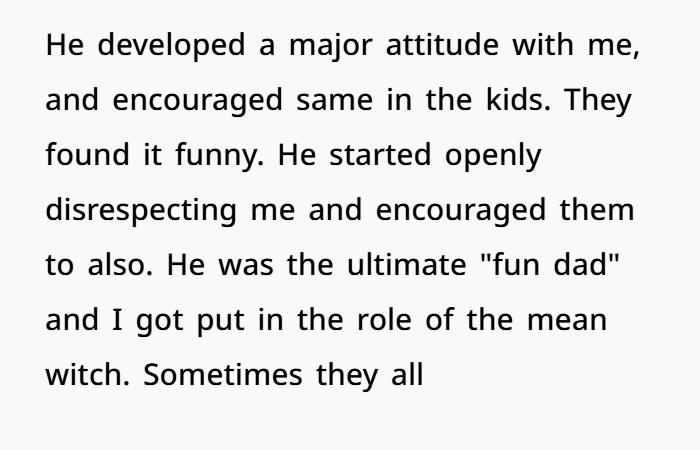
She had a job outside the home, but she still took on much of the children’s daily care. She also tried to support them through their emotional struggles. As the years passed, the pressure began to wear her down.
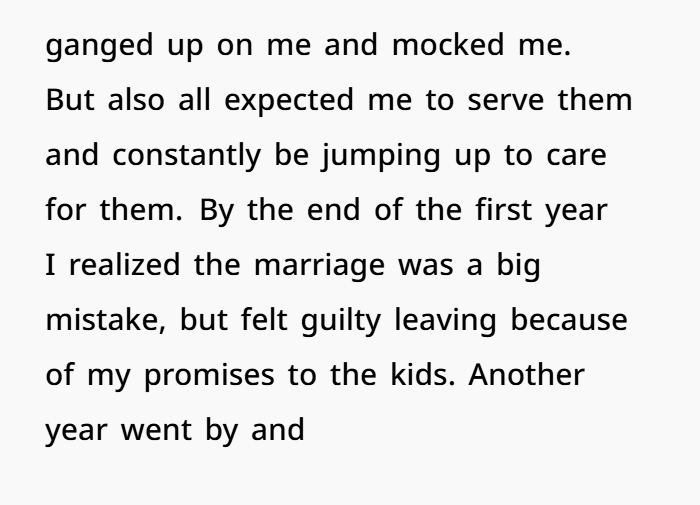
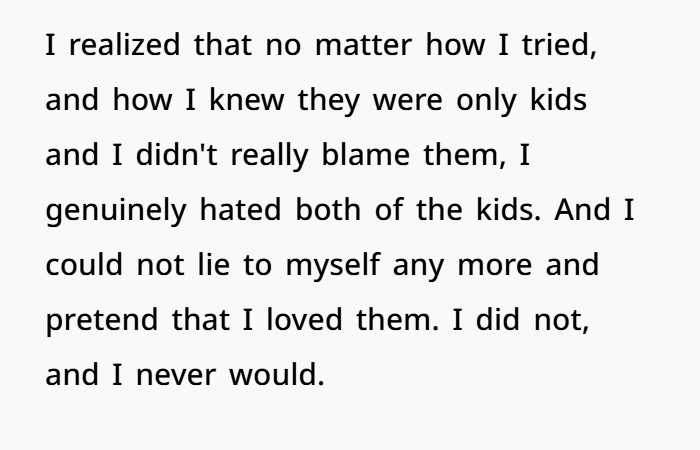
She hoped she would grow to love the children as her own. But that close bond never formed. Instead, she felt drained, unhappy, and trapped by duties she struggled to handle.
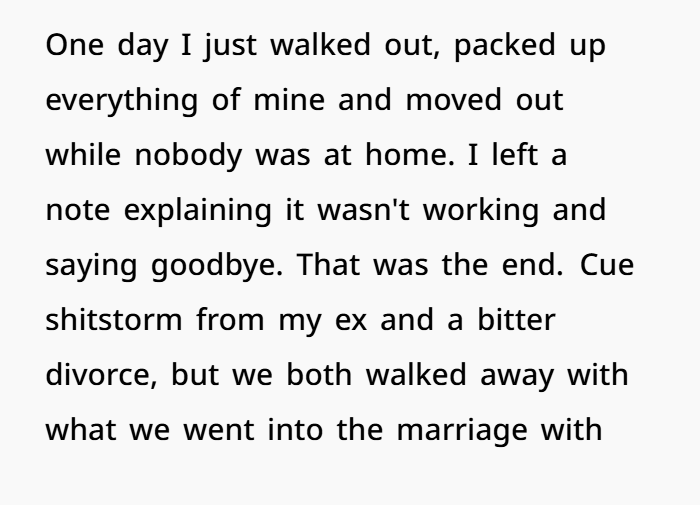
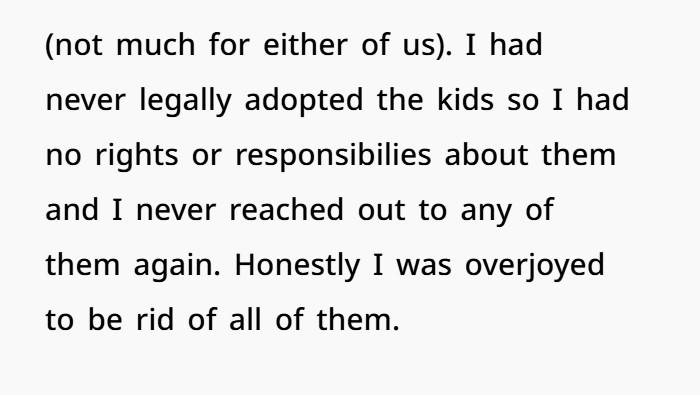
Eventually, she reached her breaking point. She decided to end the marriage and leave the family behind. She wrote a letter explaining her choice and cut off contact with the children.
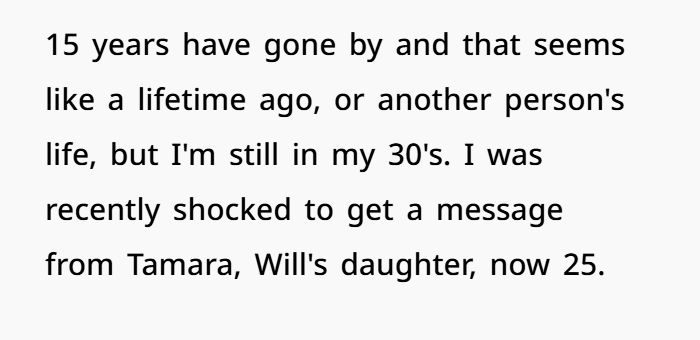
For 15 years, she heard nothing from them. Then, one of her former stepchildren reached out as an adult.
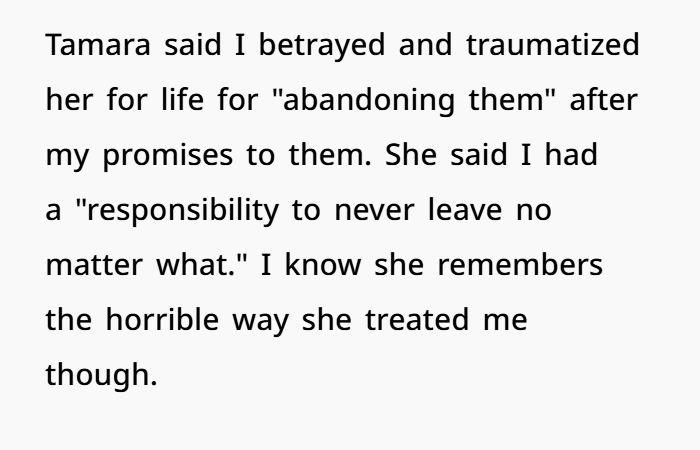
The message was painful. They accused her of abandoning them and said her departure had hurt them for years. To them, she had made a promise to be part of their lives, then walked away.
Their words forced her to face a past she thought she had left behind.
Now, she wonders if leaving was selfish. Was she wrong to break her promise to two children who trusted her? Or did she have the right to leave a family role she could no longer handle?
And when staying comes at the cost of their own happiness, is walking away ever the right choice?
A woman shared that her former stepchild confronted her, accusing her of abandoning them 15 years ago
Stepfamily Promises, Burnout, and What Really Happens in Real Life
1. Why Promises in Stepfamilies Can Be Hard to Keep
When two people marry and bring children into the relationship, they hope to build a happy family. They often make promises with the best intentions.
But life in a blended family isn’t always as easy as it first seems.
A stepparent may start by helping with small tasks. Before long, they might be cooking meals, helping with homework, managing school schedules, and caring for the children every day.
What began as a shared effort can slowly turn into one person’s full-time duty.
The problem often starts when couples don’t talk about what each person should do. One partner may expect more help than the other can give.
Over time, even a promise made out of love can start to feel like a heavy burden.
This doesn’t mean the promise was dishonest. It means the person making it may not have known how much would be asked of them.
Advertisement – Continue Reading Below
2. When Parenting Duties Become Too Much
Raising children takes patience, time, and energy. It becomes even harder when one person feels responsible for almost everything.
In this woman’s case, she worked outside the home while also helping raise her husband’s children. As time passed, she felt more and more worn out.
Her experience shows how easily a stepparent can become overwhelmed.
Some of the duties that can add to this stress include:
- Working a full-time job while caring for children
- Handling schoolwork, meals, and daily routines
- Keeping up with cleaning and other household chores
- Dealing with children’s behavior and discipline
- Giving emotional support while getting little in return
When these tasks fall mainly on one person, frustration can build.
At first, they may try to push through it. They might tell themselves that things will get better or that they simply need to work harder.
But when nothing changes, they may begin to feel trapped.
This kind of stress can affect both the marriage and the bond with the children.
A blended family needs teamwork. Both partners should talk openly about their roles and share the work fairly.
Getting help from a family counselor can also make a difference, especially before problems grow too large.
3. You Can’t Force Yourself to Love Someone
One of the hardest truths about blended families is that love doesn’t always develop as people expect.
A stepparent may enter a marriage hoping to love their partner’s children as their own.
Sometimes that bond grows quickly. Other times, it takes years. And in some families, the deep connection everyone hoped for never happens.
That doesn’t always mean someone has failed.
People build close bonds in different ways, and feelings cannot be forced.
In this case, the woman expected to grow closer to her stepchildren. Instead, she found herself feeling distant as her duties increased.
She may have cared about their well-being without feeling the strong parental love she had hoped for.
Trying to hide those feelings can create even more problems.
A person may begin to feel guilty for not loving the children enough. They might become frustrated with themselves or start pulling away from the family.
Still, there is an important difference between not feeling like a parent and treating a child without care.
Children need kindness, respect, and a sense of safety, even when the adults around them are struggling.
The goal shouldn’t be to force love. It should be to build a family where everyone knows what to expect and feels respected.
4. What Happens to Children When a Stepparent Leaves?
Adults may see divorce as the end of a marriage. Children often experience it in a very different way.
For a child, a stepparent might be someone who helps with homework, attends school events, prepares meals, or comforts them after a bad day.
Over time, that person can become an important part of their life.
So when the stepparent suddenly leaves, the loss can feel much bigger than adults expect.
Children may experience:
- Confusion: They may not understand why someone they trusted has gone.
- Rejection: They might believe they did something wrong.
- Sadness: They may miss the routines and moments they shared.
- Anger: They may feel hurt by a promise that was broken.
- Fear: They may worry that other people they love will leave too.
These feelings can stay with someone for years, especially when they never receive a clear explanation.
In this story, one of the stepchildren reached out 15 years later. That alone shows the departure remained an important part of their life.
The woman may have felt that leaving was her only way out. But the children may have seen it as losing someone who had promised to stay.
Both experiences deserve to be heard.
When a marriage ends, adults should consider how to help children cope. When safe and possible, clear talks and a planned goodbye may ease some of the pain.
Children also need support from the adults who remain in their lives.
5. Legal Duties and Emotional Bonds Aren’t the Same
There is a difference between being legally responsible for a child and being someone that child depends on.
In many places, stepparents do not have the same legal duties as biological or adoptive parents. The rules vary by location and family circumstances.
But emotional bonds don’t depend on legal papers.
A child may see a stepparent as a mother or father because of the time they spent together.
They remember who cared for them when they were sick, helped them through hard days, and showed up when they needed someone.
That connection can be real even without adoption.
This is what makes situations like this so painful.
The woman had the right to decide whether she wanted to remain married. She could also recognize that the family role was more than she could handle.
But the children had their own feelings about losing her.
Leaving a marriage and ending a bond with children are two different choices. One doesn’t always have to mean the other.
At the same time, staying in contact isn’t always safe, healthy, or possible.
There is no single answer that fits every blended family.
What matters is understanding that adult choices can have lasting effects on children, even when those choices are made for valid reasons.
6. How Families Can Heal After a Painful Separation
When a blended family breaks apart, the pain doesn’t always end with the divorce.
Some people move forward quickly. Others carry unanswered questions for years.
Healing can take time, and it doesn’t always mean bringing the family back together.
Here are a few ways people can begin to move forward.
1. Recognize that everyone may have been hurt
The woman may have felt exhausted and unhappy. The children may have felt r.
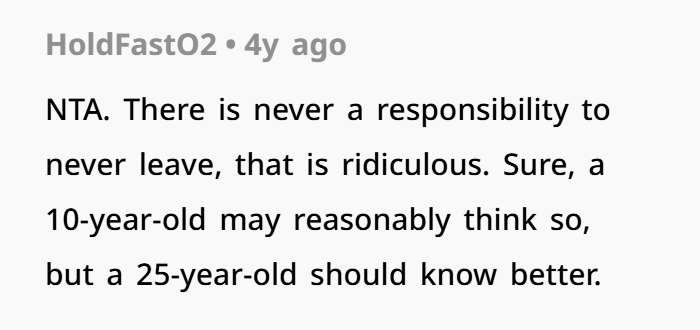
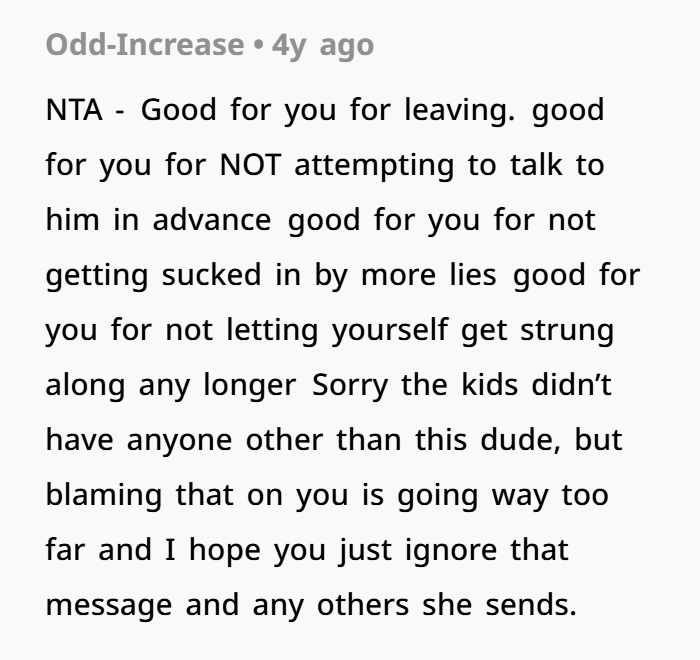
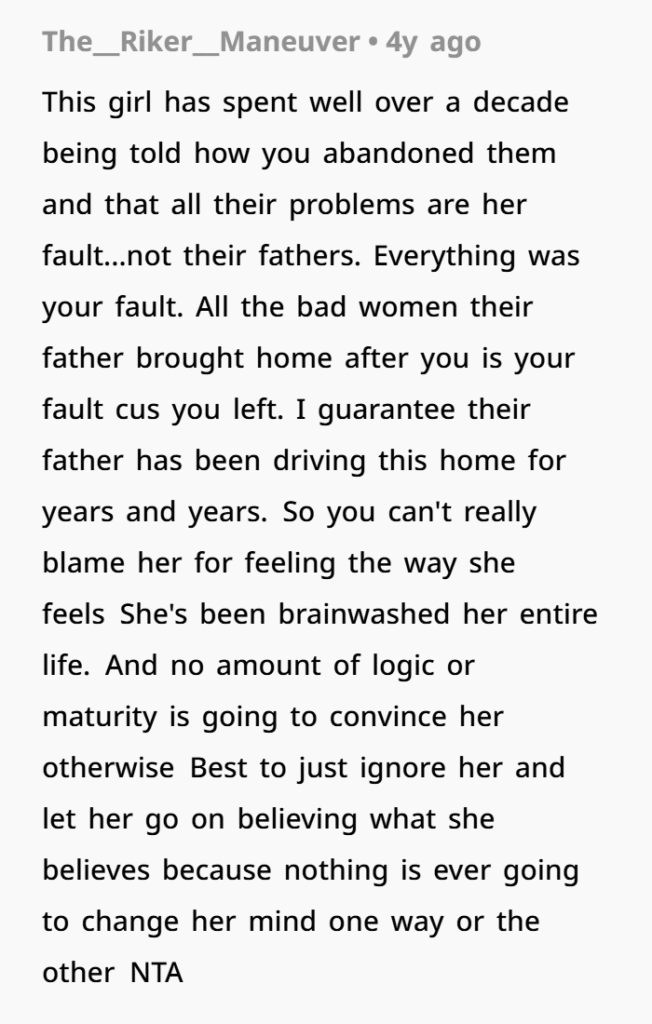
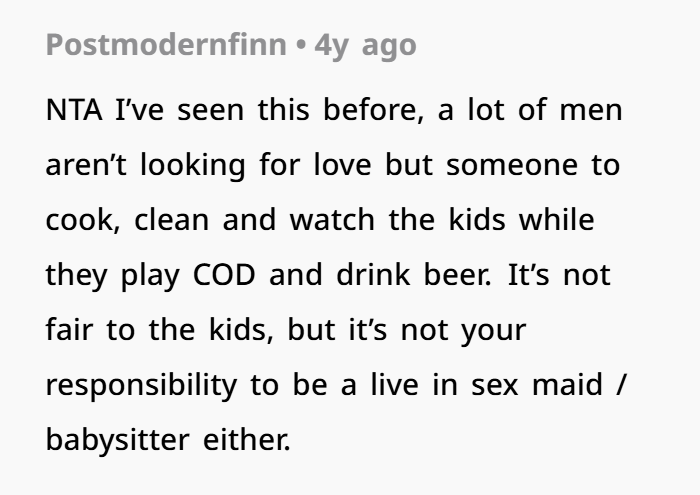
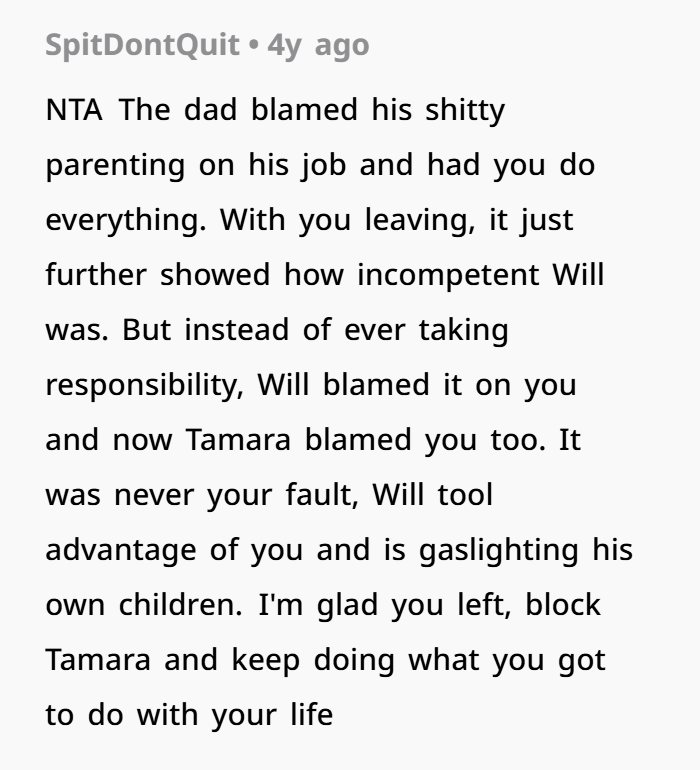
Many People Defended the Woman, Saying She Wasn’t Responsible for Her Ex-Husband’s Children
Final Thoughts
Family problems like this rarely have easy answers. Every blended family is different, and what works for one may not work for another.
The woman had her own reasons for leaving. She felt overwhelmed by duties she could no longer handle. Wanting to protect her own well-being was understandable.
But her decision also hurt the children. They had grown to trust her, and losing her so suddenly may have left wounds that lasted for years.
Both sides of the story matter.
This situation shows why couples need to talk openly before taking on parenting roles. They should agree on their duties, respect each other’s limits, and make sure no one feels left to handle everything alone.
It also reminds us that children can form deep bonds with stepparents, even when those feelings aren’t shared in the same way.
Sometimes, leaving is the right choice for an adult. But how they leave can make a big difference to the children involved.
In the end, the question isn’t just whether she was wrong to walk away. It’s whether she could have protected her own peace without leaving the children feeling abandoned.
What do you think? Was she right to leave, or did she owe her stepchildren a better goodbye?