Employee’s Unusual Workplace Strategy Sparks Debate After Manager’s Maternity Leave
A surprising office story about an employee’s approach to getting a better career opportunity through a closer relationship with a manager. It explores workplace culture, professional growth, career development, and the importance of healthy work relationships.
The story raises questions about office politics, career advancement, workplace relationships, and how employees sometimes try to navigate difficult professional situations. It also touches on sensitive topics around pregnancy and maternity leave, which are protected areas in many workplaces.

The employee had been working at the company for four years. During that time, they developed a poor relationship with their female manager, describing her as difficult to work with and frustrated by what they saw as a lack of leadership.
According to the employee’s account, the biggest problem happened during a previous project. They claimed they completed most of the work while the manager received much of the recognition.
When a major US-based project opportunity appeared, the employee immediately became concerned. They believed their manager’s senior position could give her an advantage if an onsite role became available.
This fear pushed the employee to create a plan.
Building a New Workplace Connection
The employee noticed that the manager often talked about missing her young son, who had recently started school and was becoming more independent.
Instead of keeping their distance, the employee started building a closer relationship. They began complimenting the manager’s parenting, praising her family, and showing interest in conversations about her child.
The employee admitted that some parts of these conversations were exaggerated. They even claimed they changed small personal details about their own family story to create a stronger connection.
Slowly, the professional relationship changed. A manager and employee who once struggled to work together began acting more like friends.
The Pregnancy Conversation
As months passed, the employee said the manager started talking about wanting another child. The employee and some coworkers encouraged her to follow what she wanted and praised her ability as a mother.
Eventually, the manager announced that she was pregnant.
The employee and coworkers celebrated the news privately because they believed the situation would create an opening for the international assignment.
After the manager went on maternity leave, the employee said they were able to focus fully on the project. Later, when an onsite position became available, the employee received the opportunity to move to the United States.
Workplace Politics and Career Competition
The story highlights a common reality in many workplaces: employees often try to understand office dynamics, build professional relationships, and find ways to stand out.
Career growth is not always based only on skills. Networking, visibility, communication, and relationships with managers can also influence opportunities.
Advertisement – Continue Reading Below
However, workplace experts often separate healthy networking from manipulation. Building trust with colleagues can help careers, but using personal situations to influence professional outcomes can create ethical concerns.
Pregnancy, Maternity Leave, and Workplace Rights
The story also involves an important workplace issue: pregnancy and maternity leave.
In many countries, pregnancy-related protections exist to prevent workers from losing opportunities because they are expecting a child. In the United States, laws such as the Pregnant Workers Fairness Act require covered employers to provide reasonable accommodations for pregnancy-related limitations.
The EEOC pregnancy discrimination information page explains that pregnancy discrimination can involve unfair treatment in areas such as job assignments, promotions, pay, and other employment decisions.
That means employers are expected to judge employees based on their work, not assumptions about pregnancy or family responsibilities.
The Bigger Conversation
The employee’s story is unusual because it mixes workplace ambition with personal relationships. Some readers may see it as a clever career move, while others may question whether encouraging someone’s personal decision for professional benefit crosses a line.
Either way, the story shows how complicated office relationships can become. Behind every promotion, project assignment, or career opportunity, there are often human emotions, workplace pressures, and personal choices involved.
For employees trying to move forward in their careers, the situation is also a reminder that strong performance, professional networking, and clear communication often play a major role in finding new opportunities.
See the comments to know what people said




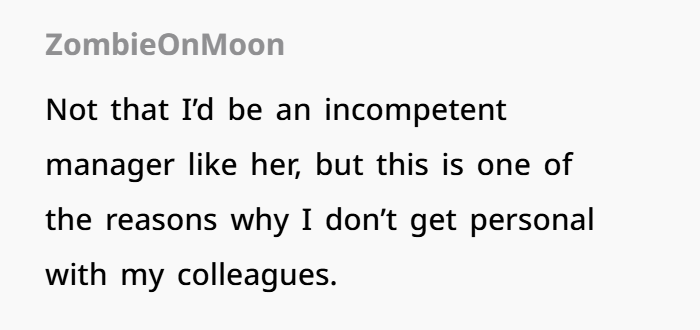
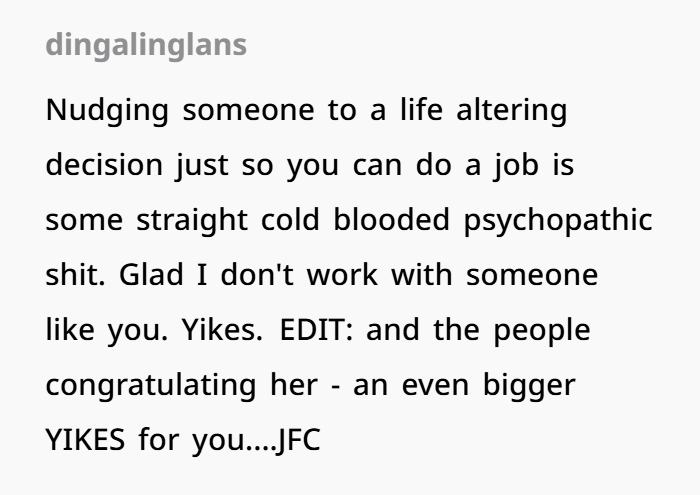
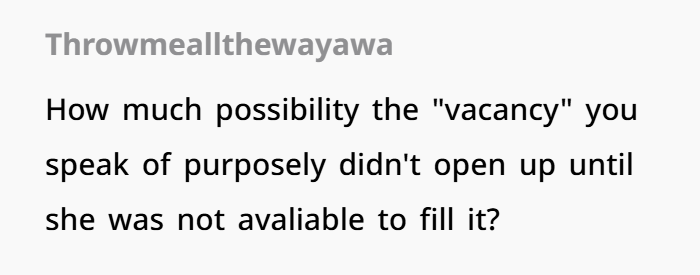
This unusual workplace story shows how far some employees may go when they feel their career opportunities are at risk. The employee believed they had to find a different way to secure a major project role, so they focused on building a closer relationship with their manager.
While the strategy worked from a career perspective, it also raises questions about workplace ethics, trust, and the limits of personal influence in professional settings. A strong career is usually built through skills, teamwork, communication, and genuine professional relationships.
The story also highlights the importance of fair workplace practices, especially when personal situations like pregnancy and maternity leave are involved. Career opportunities should be based on a person’s abilities and contributions, not on someone else’s family choices.
In the end, the situation became a reminder that office relationships can be complicated. Ambition can push people to make bold moves, but long-term success often depends on respect, honesty, and maintaining healthy professional connections.