AITA for Going No Contact With My Family After My Brother Came Out?
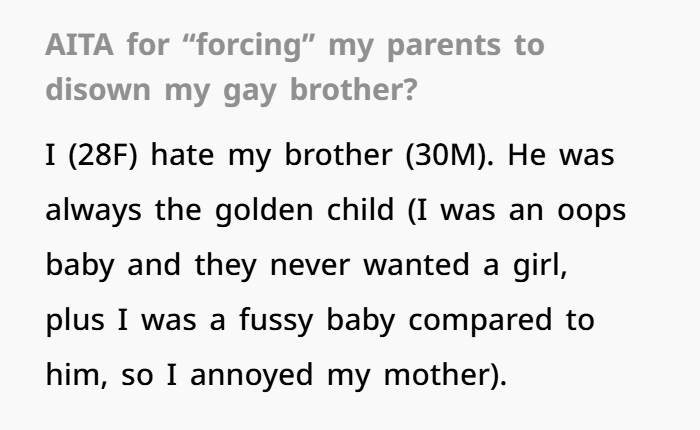
A 28-year-old woman shared her story about growing up in a family where she often felt ignored and unwanted.
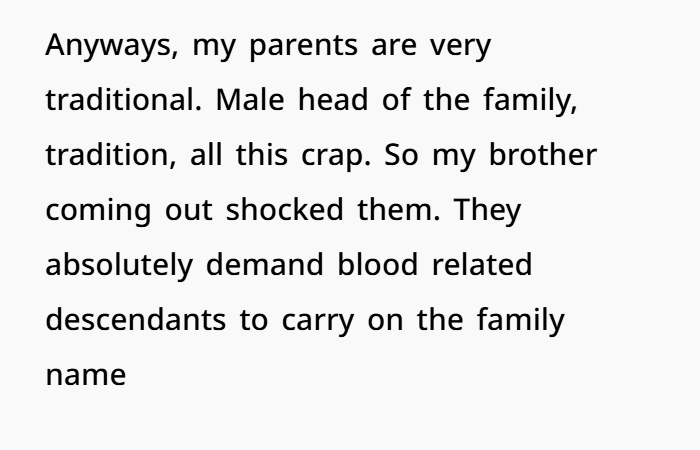
Her older brother, Mark, was always seen as the “golden child.” Their parents praised him and treated him like the perfect son. She felt like the opposite. She believed she was the child they never truly wanted and spent much of her childhood feeling like a burden.
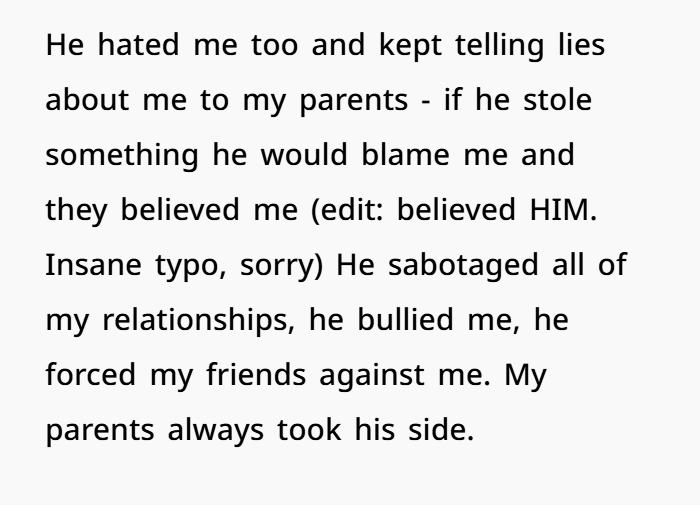
The way their parents treated them affected their bond from a young age. She felt Mark was rarely held responsible for his actions, while she was often blamed when problems came up.
She said Mark was unkind to her throughout their childhood. According to her, he would take her things, blame her for issues, and create situations that made their parents think she was at fault. She also felt he hurt her friendships and left her feeling alone.
As they got older, their relationship became distant and filled with resentment. She no longer viewed Mark as a caring brother but as someone who had caused her years of emotional pain.
The favoritism and conflict within the family shaped how she saw them as an adult. Over time, she felt disconnected from the people who were supposed to support her.
For her, the pain was not only about family favoritism. She felt she had spent years dealing with bullying and mistreatment from the brother who was always treated as the favorite.
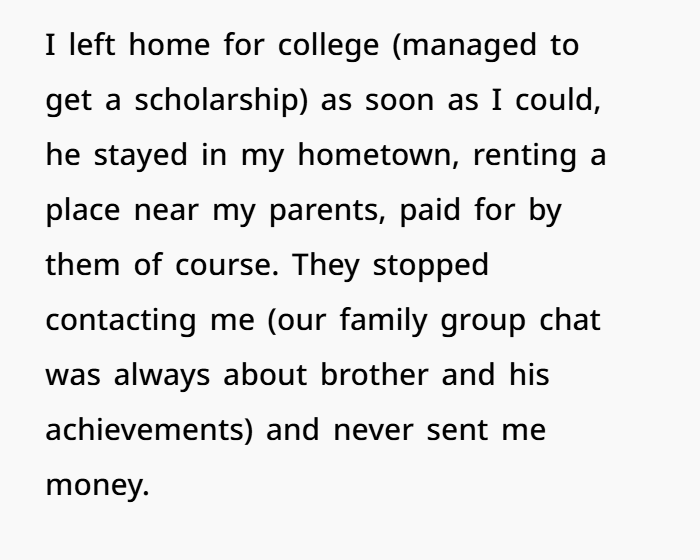
When she left for college, she hoped the distance would help heal her relationship with her family. However, things stayed the same.
Her parents remained close to Mark and continued celebrating his achievements, while she felt overlooked. She said she received little emotional or financial support and had to figure things out on her own.
As she worked to build her own future, she felt that Mark was still their main focus. This only increased the emotional gap between them.
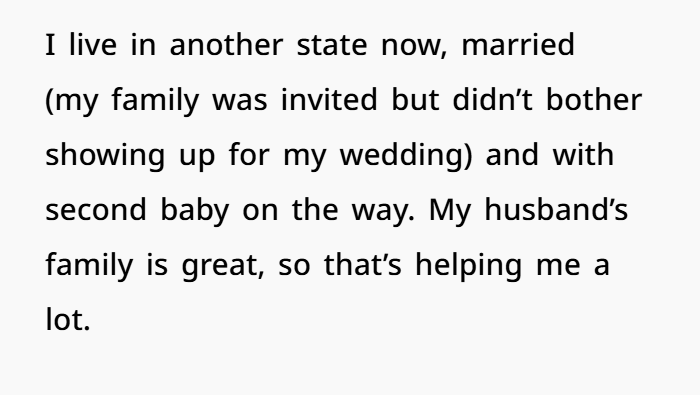
Years later, she created a life away from her family. She got married, moved to another state, and was expecting her second child. Although she had built a happy home, the pain from her childhood and her family struggles still affected her.
The Turning Point:
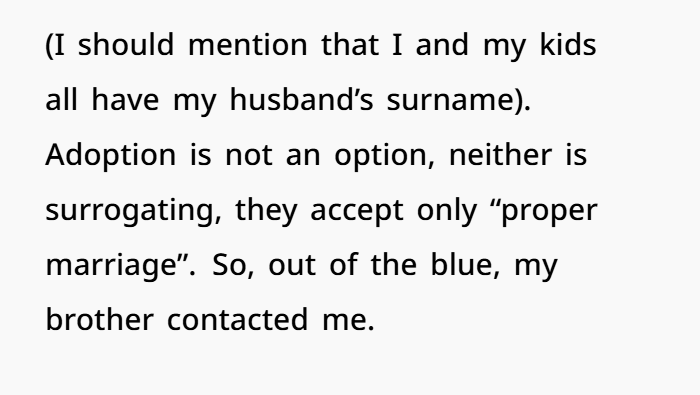
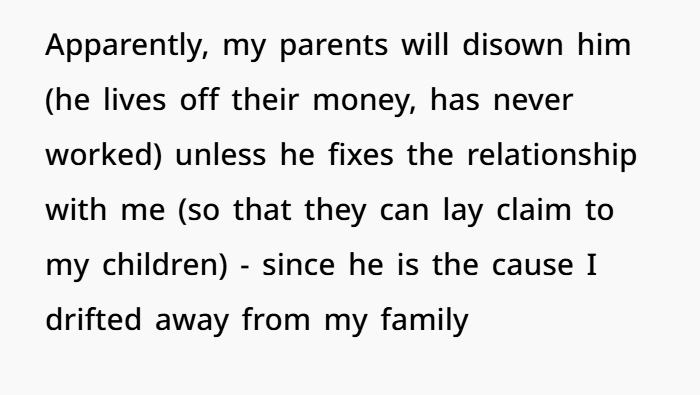
Years later, Mark reached out with unexpected news. He had come out as gay, and their parents were having a hard time accepting it. They told him they would cut ties with him unless he repaired his relationship with his sister.
She felt their reason for reconnecting was not only about fixing the past. She believed they also wanted a relationship with her children and a connection to the next generation of the family. This made her question whether their intentions were genuine.
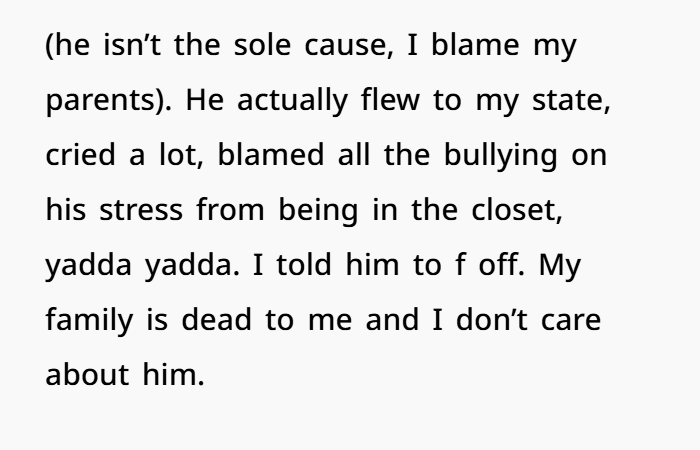
Mark visited her and tried to explain his actions. He became emotional, apologized for some of the things he had done, and shared that hiding his identity had affected his behavior.
However, she found it difficult to accept his apology. She felt he never fully acknowledged the pain he caused during their childhood. To her, an explanation did not remove the damage that had already been done.
She was also upset that her parents only seemed interested in rebuilding the family after Mark no longer matched their expectations. After years of feeling ignored and hurt, she was not ready to forgive or reconnect.
In the end, she chose to keep the distance she had created. She told Mark she did not want to restart their relationship and did not want to return to the same family pattern that had caused her pain.
Advertisement – Continue Reading Below
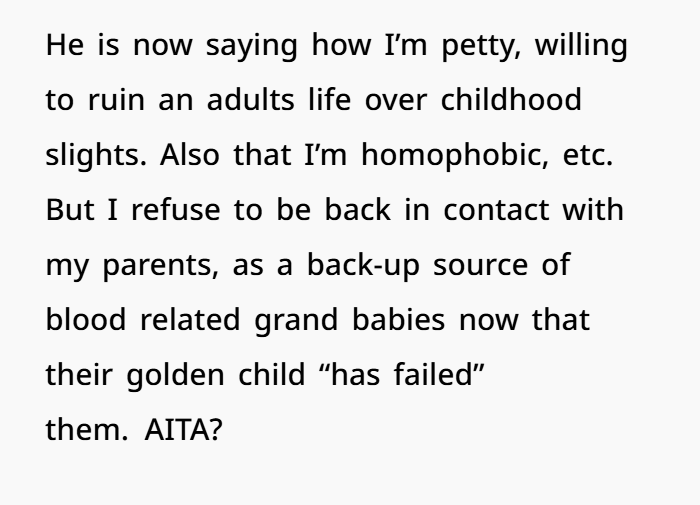
Mark believes she is being unfair and refusing to forgive him for things that happened years ago. He accused her of hurting him by staying away and suggested that her decision was connected to his coming out.
However, she believes the issue is not his identity. She says her decision is based on years of hurt, broken trust, and the way her family treated her.
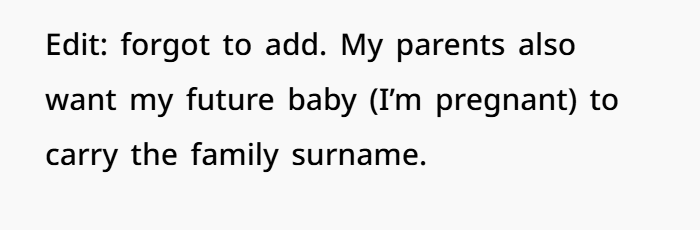
She feels her parents are more focused on staying connected to her children than understanding the damage caused in the past. This makes her question whether they truly want to repair the relationship.
After years of feeling rejected and mistreated, she does not want to return to the same situation. She believes keeping boundaries is necessary for her own peace and for her children.
Now, she is left wondering if she is wrong for refusing to reconnect. Is she being unfair by holding onto the past, or is she justified in protecting herself from people who caused her lasting pain?
The situation brings up difficult questions about forgiveness, accountability, family pressure, and whether damaged relationships can truly be repaired.
The Comments and Reflection:
Many people believe families should always try to make things right, but this situation is more complicated.
She believes the history behind the conflict matters. For years, she felt unsupported by her parents and hurt by Mark’s actions. Now that they want to reconnect, she feels they are asking her to move forward without fully accepting the harm they caused.
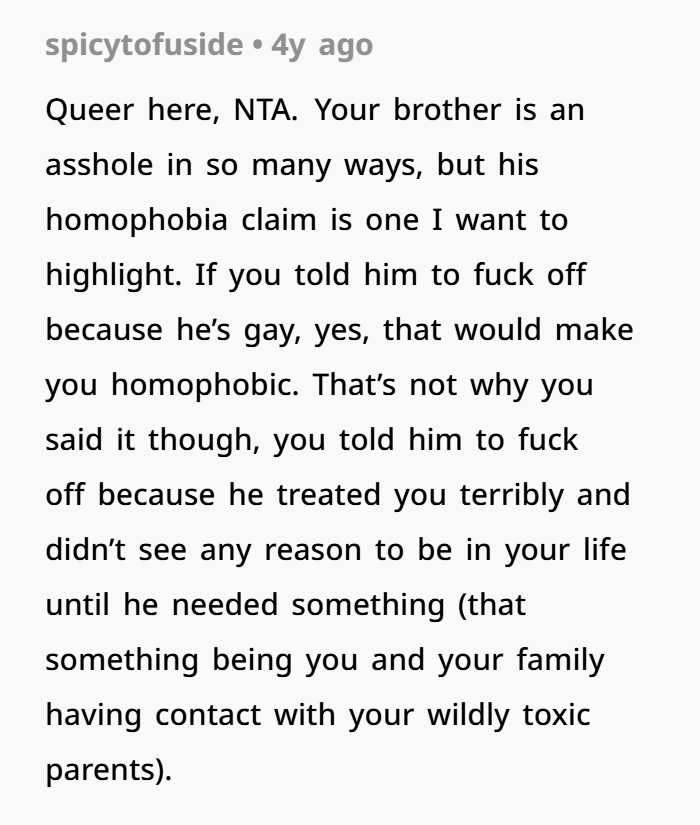
She says her decision is not about Mark being gay. Her concern is the years of favoritism, conflict, and emotional pain that damaged their relationship.
She feels her family is asking her to fix a situation she did not create. She questions why she should be responsible for rebuilding a bond when she was not supported when she needed them most.
She also feels hurt that Mark did not stand up for her in the past. Now that he needs support, she feels pressured to forgive without seeing enough accountability.
The accusations that she does not support him because he came out have made things more difficult. She believes her choice is about past treatment and lost trust, not his identity.
For her, setting boundaries is a way to protect herself from relationships that caused years of pain. The conflict is about trust and accountability, not acceptance.
In the end, she believes she is making the right choice for herself and her children. She wants them to grow up in a healthy environment without being pulled into old family conflicts.
If her family cannot respect her boundaries and understand her reasons, she believes staying apart may be the best option for everyone.
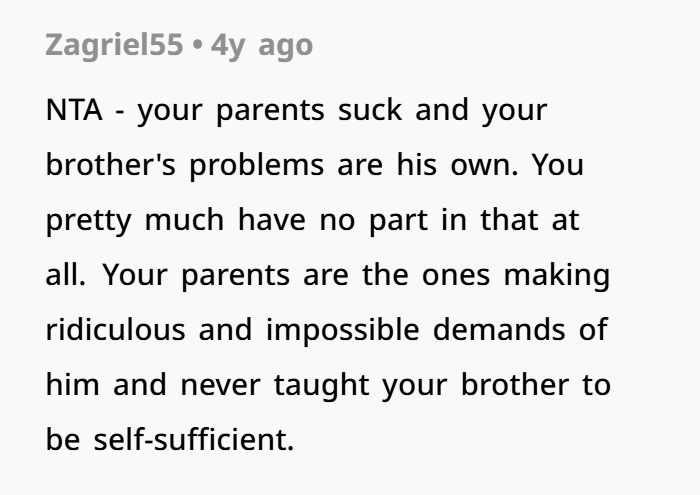
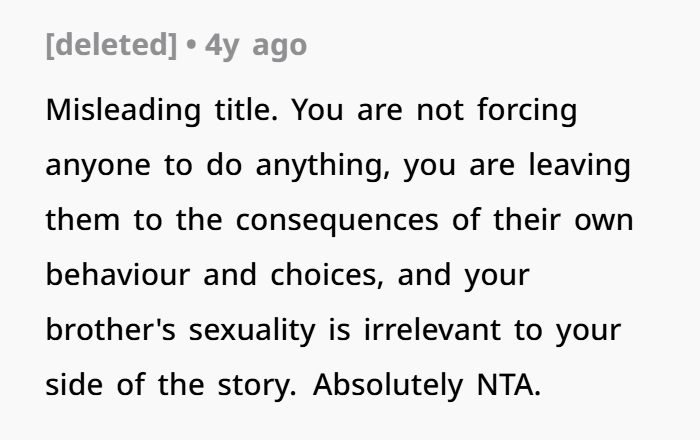
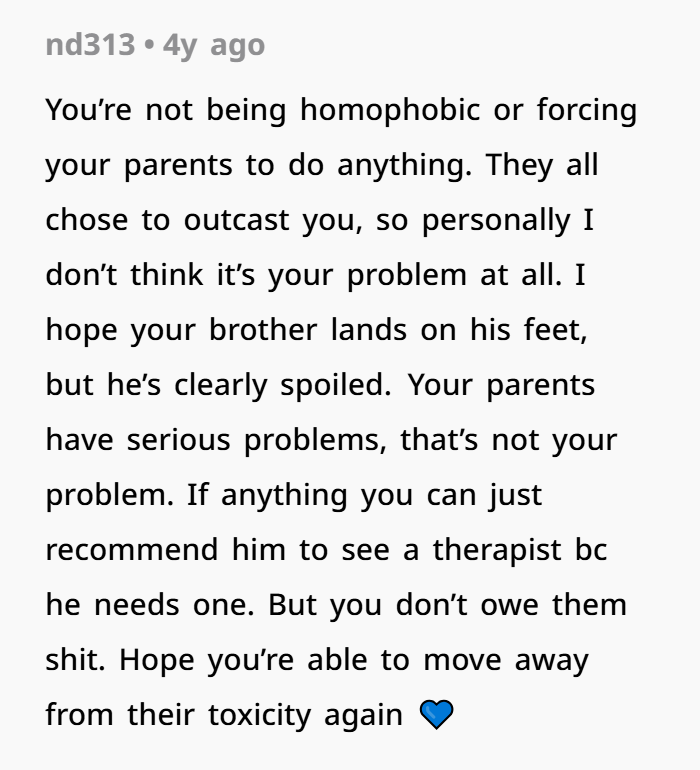
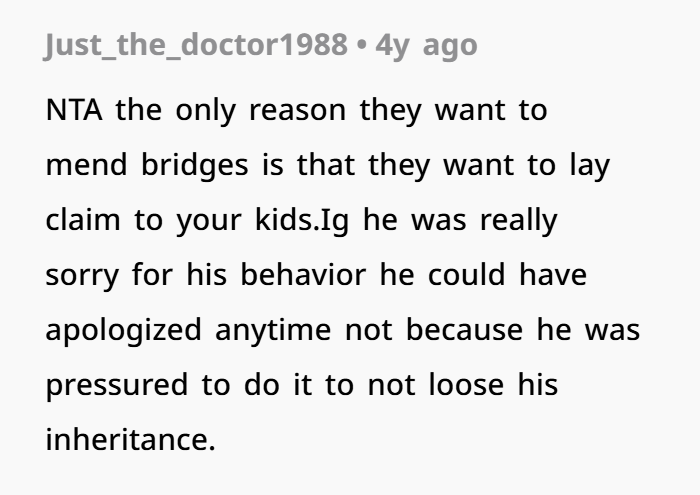
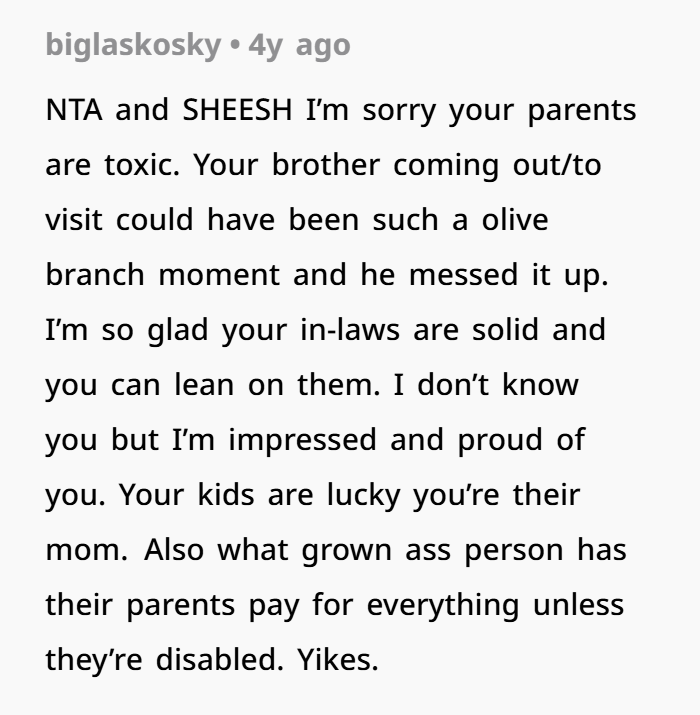
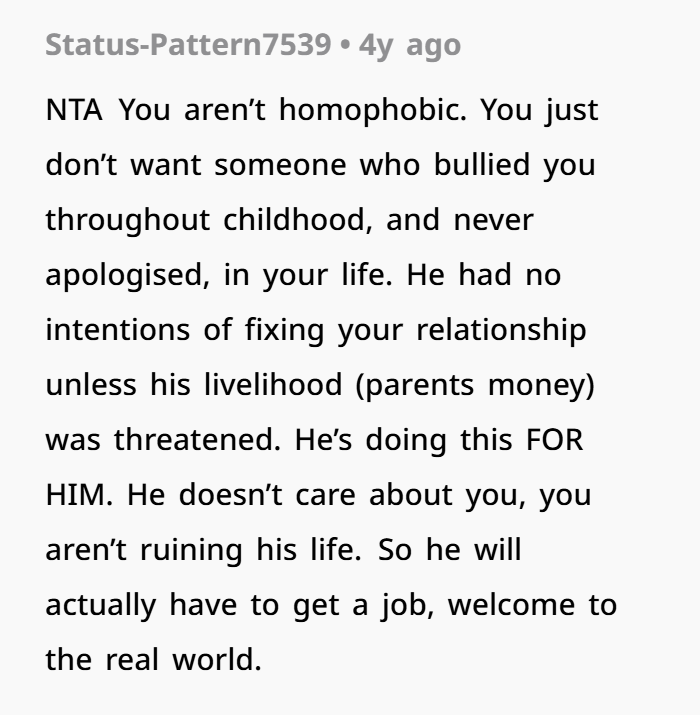
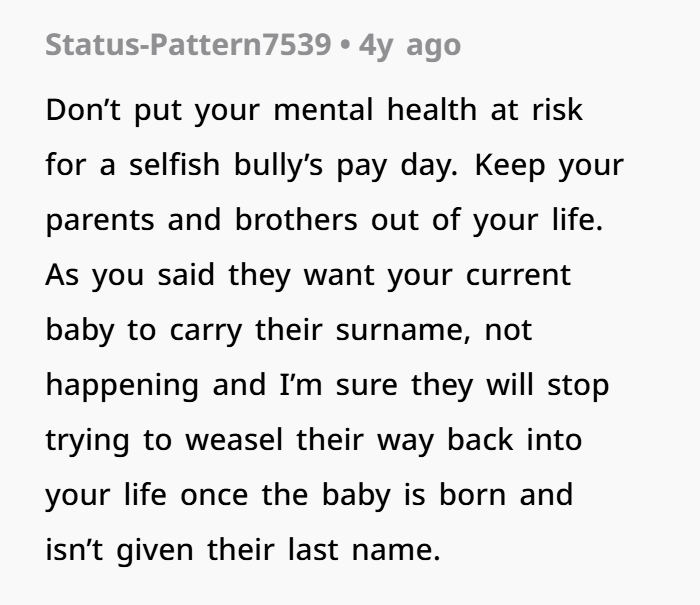
Many readers in the comments supported her decision. They argued that the main issue was not Mark’s identity but the years of favoritism, hurt, and unresolved family problems that came before.

After everything that happened, the question remains: is she wrong for choosing not to reconnect with her family?
From her point of view, this choice is not about revenge or holding onto anger. She sees it as a way to protect herself after years of feeling ignored, blamed, and hurt. She believes forgiveness requires honesty, responsibility, and meaningful change.
At the same time, repairing family relationships is rarely simple. Some people believe there is value in giving others a chance to fix past mistakes. Others understand why someone may choose distance after experiencing years of emotional pain.
Setting boundaries does not mean a person lacks care or understanding. It means knowing what feels healthy and safe for them. The real question is whether her family can recognize the harm from the past and make a sincere effort to rebuild trust.