17-Year-Old Girl Says Sister’s Boyfriend Crossed Boundaries After Asking to Sleep With Her
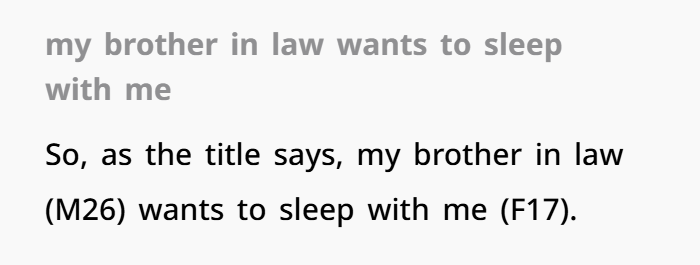
A 17-year-old girl shared her story after an uncomfortable experience with her sister’s 26-year-old boyfriend. She explained that he came to her for emotional support about his relationship problems but later made inappropriate comments.
The situation happened during a family visit after his graduation celebration. Everything seemed fine at first, but the conversation changed when he started asking personal questions about her dating history and older men.
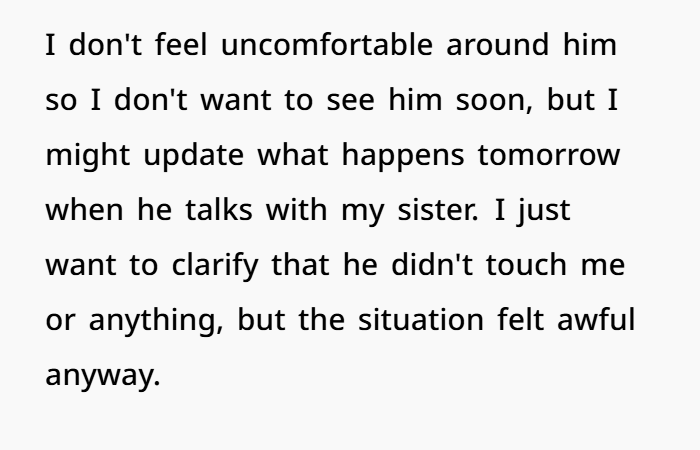
During a private talk later that night, he discussed his relationship struggles and mental health concerns. He held her hand, tried to create an emotional connection, and then told her he wanted to sleep with her. He also asked to kiss her, but she clearly refused.
The girl said the experience made her feel frightened, confused, and uncomfortable. She worried that she had done something wrong, but she later understood that the responsibility was not hers. The situation showed why personal boundaries, consent, and emotional safety are important.
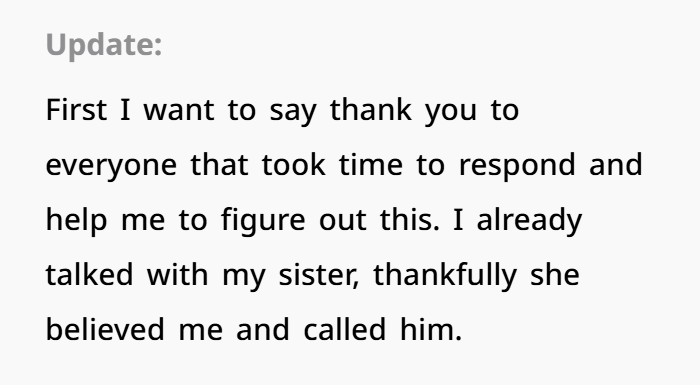
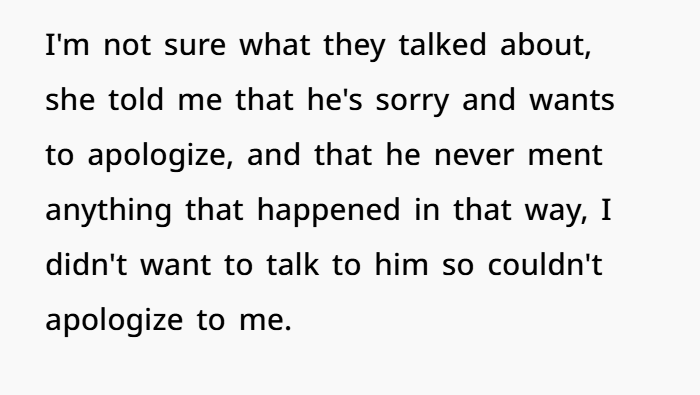
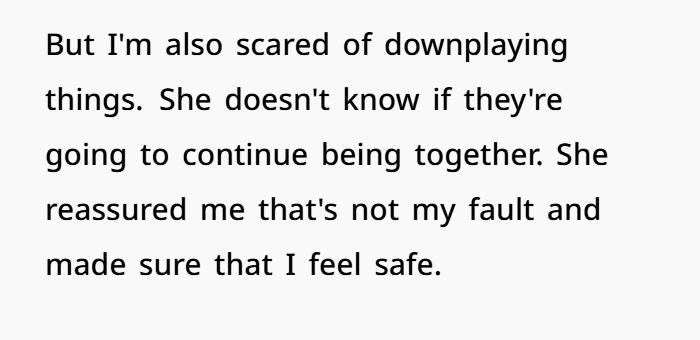
After struggling with whether to speak up, she eventually told her sister. Her sister believed her, contacted her boyfriend, and reassured her that she did not have to meet him if she felt uncomfortable.

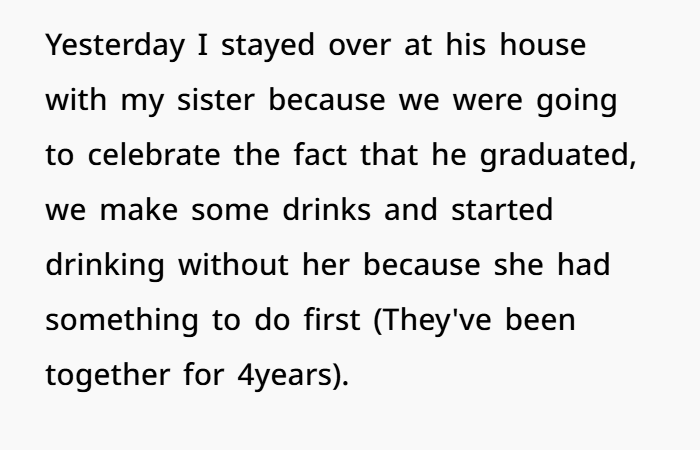
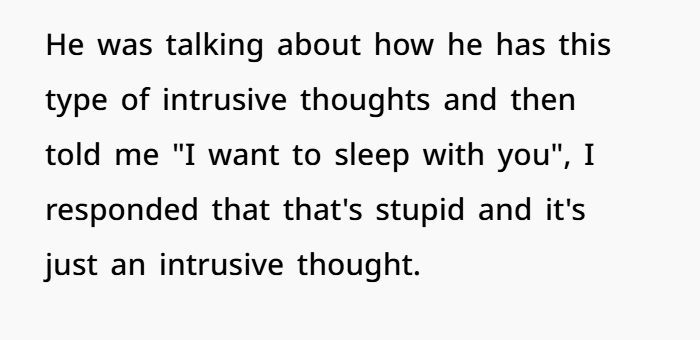
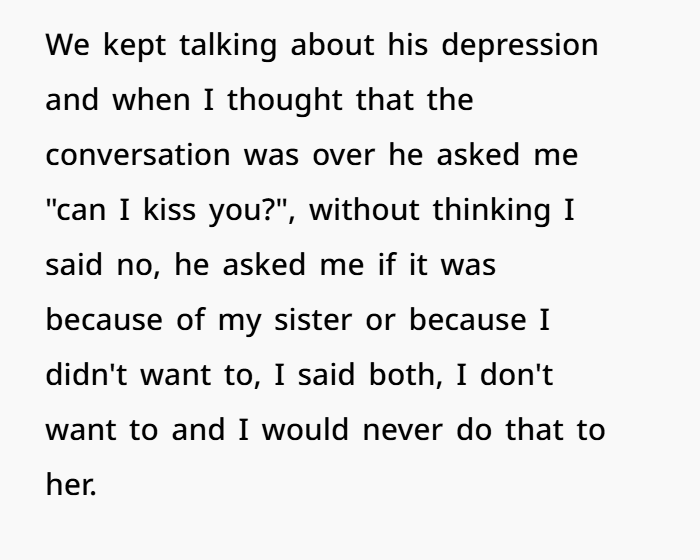
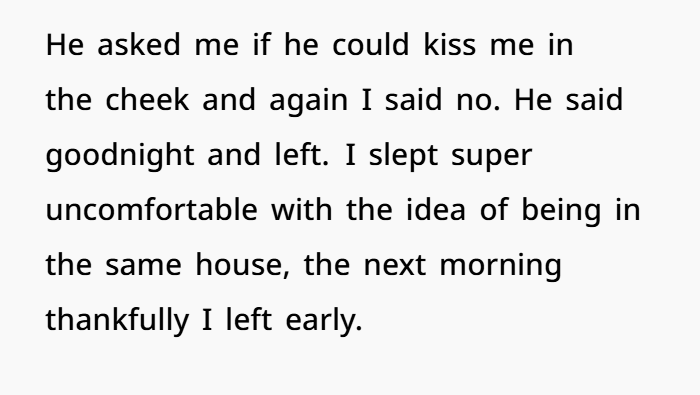
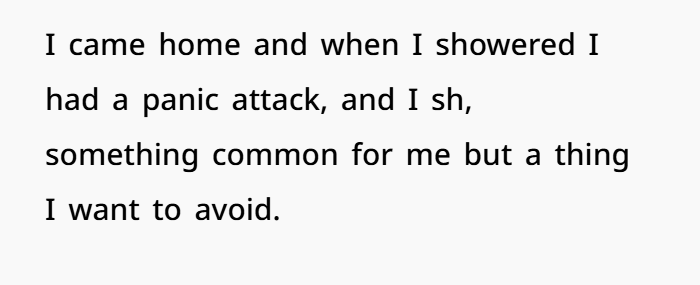
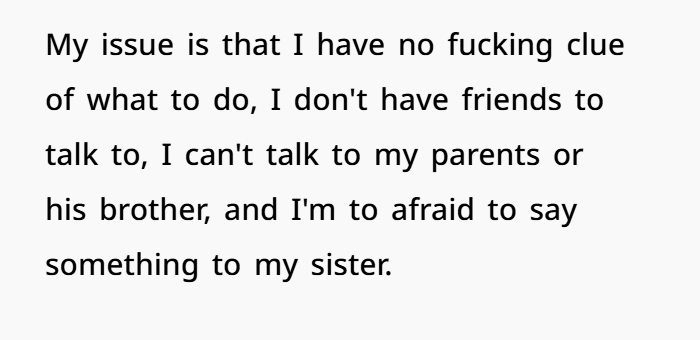

The situation became uncomfortable after the young woman stayed overnight at her sister’s home with her sister’s boyfriend. During the evening, he began asking personal questions that felt unusual, including questions about whether she had been with older men.
At first, she did not think much of it. Many people ignore small warning signs because they do not expect someone close to them to cross a serious boundary.
However, the conversation changed when he later approached her privately. He talked about being unhappy in his relationship and said he wanted to feel understood because both of them struggled with depression.
While sharing personal feelings can sometimes create emotional closeness, adults have a responsibility to maintain clear boundaries with teenagers. According to guidance from organizations that work on child safety, adults should avoid situations where they create secret emotional connections or rely on minors for personal support.
The National Society for the Prevention of Cruelty to Children (NSPCC) explains that grooming can involve building trust, creating emotional connections, and slowly testing boundaries. Not every uncomfortable situation is grooming, but adults placing teenagers in emotionally confusing situations is a serious concern.
During their conversation, the man continued touching her hand even though she did not respond or encourage it. She slowly removed her hand, showing that she was uncomfortable but trying to avoid conflict.
The situation became even more upsetting when he told her, “I want to sleep with you.” She rejected the idea and said it was not appropriate. He later asked if he could kiss her, but she again refused.
A person saying no should always be respected. Consent requires a clear and willing agreement, and pressure or repeated requests after someone refuses can make a situation feel unsafe. The RAINN (Rape, Abuse & Incest National Network) explains that consent must be freely given and that anyone has the right to change their mind or say no.
Why She Felt Confused and Guilty
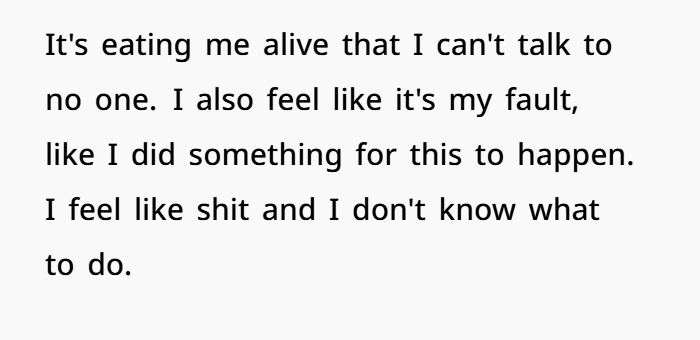
One of the hardest parts of the situation was that the teenager blamed herself. She wondered if she had done something wrong or somehow caused what happened.
This reaction is common after uncomfortable experiences, especially when the other person is someone trusted. People often replay conversations in their heads and ask themselves if they could have prevented it.
But responsibility belongs to the adult who made the choices.
Advertisement – Continue Reading Below
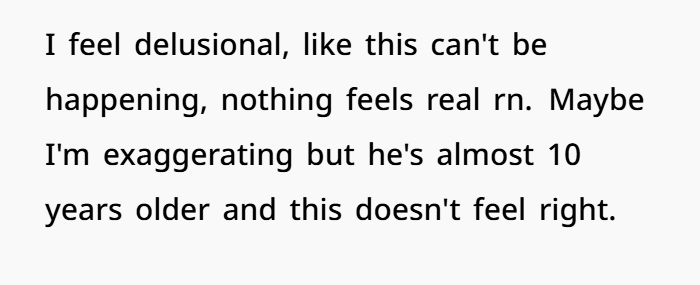
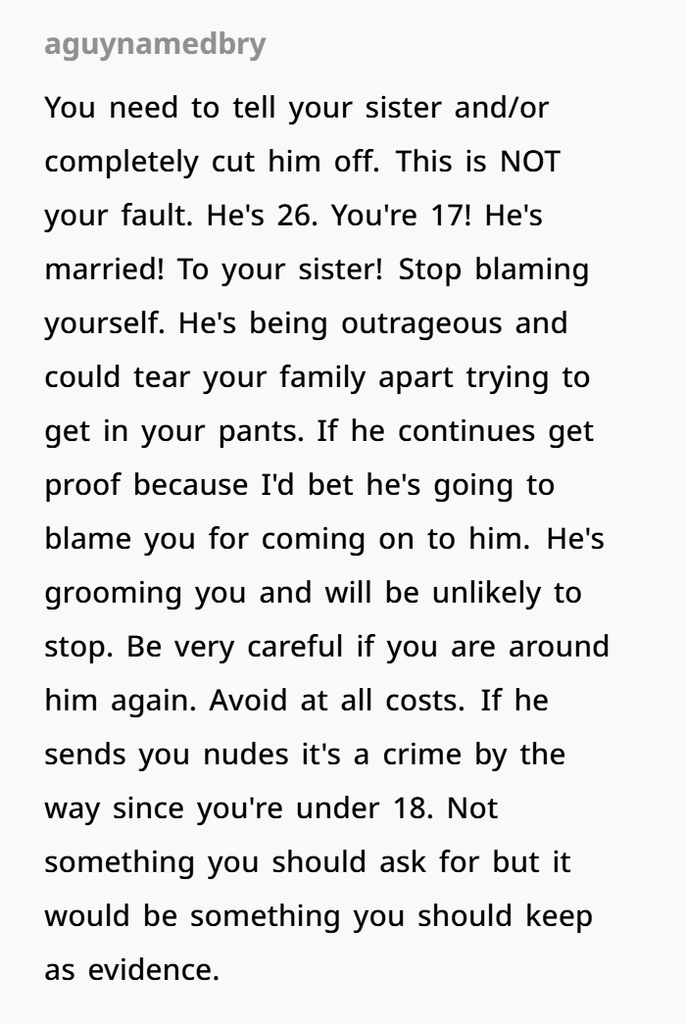
A 26-year-old person understands social boundaries and should know that expressing romantic or sexual interest toward a 17-year-old family member’s sibling is inappropriate and harmful.
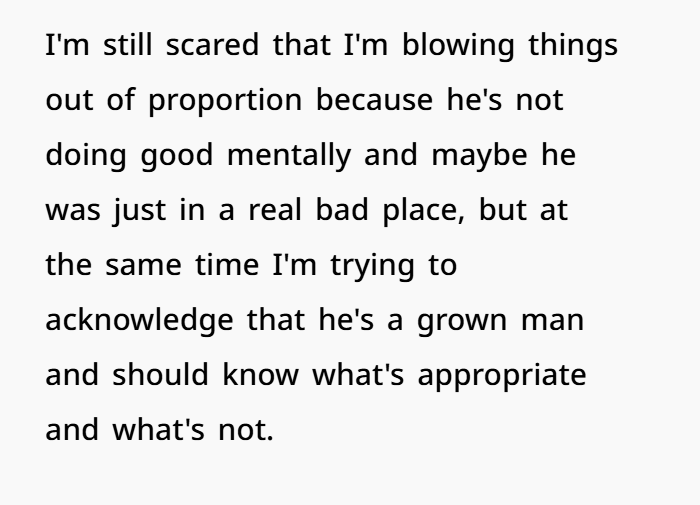
His struggles with depression may explain why he was feeling emotionally unstable, but mental health problems do not excuse crossing someone else’s boundaries. The National Alliance on Mental Illness (NAMI) provides information about mental health challenges and support, but having a mental health issue does not remove a person’s responsibility for their actions.
Telling Her Sister Was a Difficult but Important Step
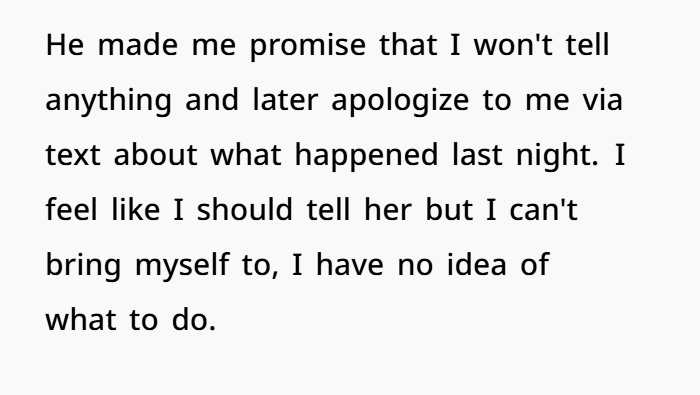
The teenager was afraid to tell her sister because she had been asked to keep the situation secret. She also worried about damaging their relationship.
However, secrets involving uncomfortable behavior from an adult should not be carried alone. After she finally spoke up, her sister believed her and made sure she felt safe.
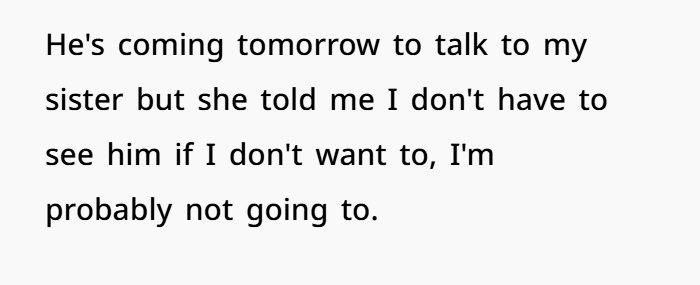
Her sister also told her she did not have to meet him or accept an apology if she did not want to.
That response gave her something important: control over her own safety and choices.
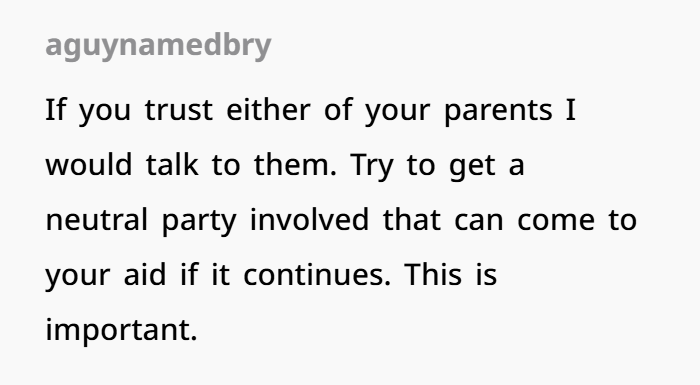
Experts often encourage people who experience uncomfortable or threatening situations to talk with someone they trust instead of keeping everything hidden. Support from family members, counselors, or trusted adults can help reduce fear and confusion.
What This Story Shows About Personal Boundaries
This situation is a reminder that emotional support between adults and teenagers needs clear limits. A teenager should never feel responsible for comforting an adult through relationship problems, especially when that adult begins introducing romantic or sexual comments.
The fact that he apologized later does not erase how frightening the situation felt. An apology can be part of taking responsibility, but the teenager still has the right to protect her own comfort and distance herself.
The most important thing is that she listened to her feelings, recognized that something was wrong, and eventually reached out for support.
When someone feels uncomfortable, pressured, or unsafe, those feelings matter. Boundaries exist for a reason, and saying “no” is always enough.
See the comments to know what people said

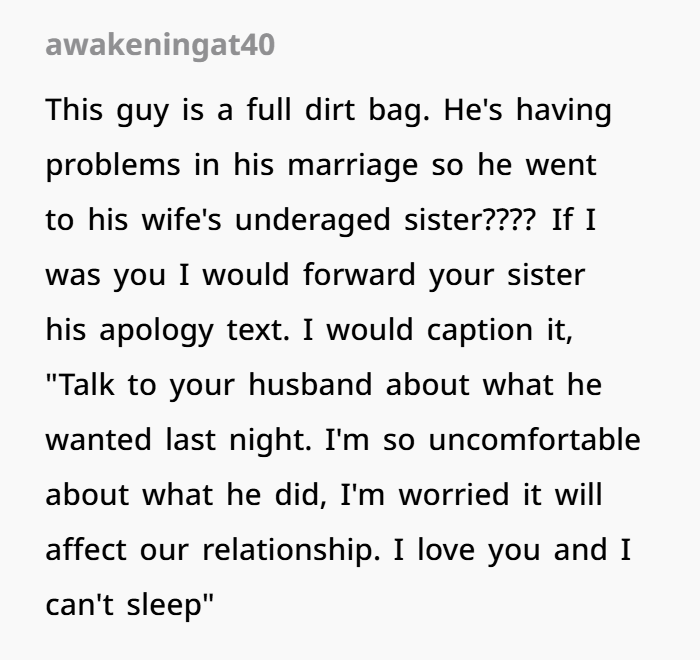
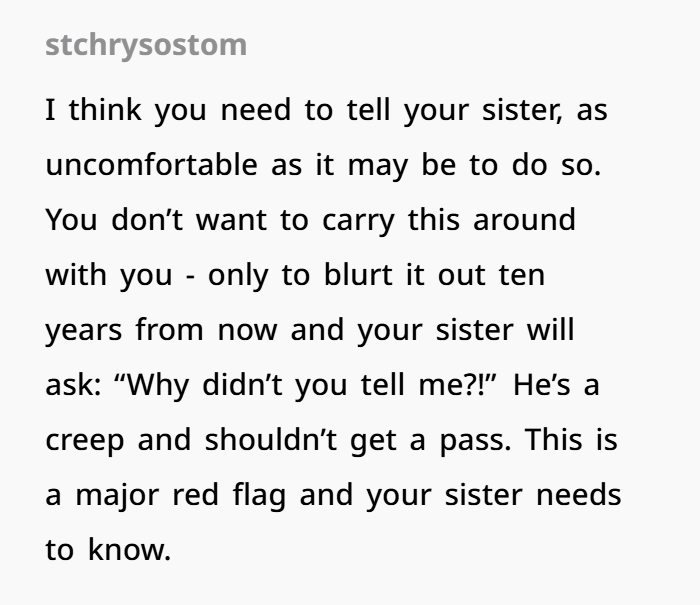

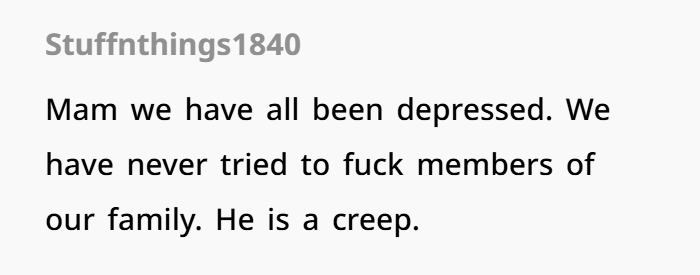
The situation involving the 17-year-old girl and her sister’s 26-year-old boyfriend shows how important personal boundaries and trust are. Even though he did not physically force himself on her, his actions made her feel unsafe, uncomfortable, and emotionally overwhelmed.
Her decision to speak with her sister was a brave step. Keeping something like this hidden can make a person feel alone and confused, but sharing it with someone trusted can bring support and clarity.
This story also highlights that adults must take responsibility for their actions. Personal struggles, relationship problems, or mental health challenges do not justify making a teenager feel pressured or placing them in an inappropriate situation.
The most important lesson is that discomfort should not be ignored. When someone crosses a boundary, the person affected has every right to say no, step away, and ask for help.