Son Who Felt Left Out Growing Up Now Wants an Equal Share of the Family Business
Some families grow close through shared work, daily routines, and traditions passed down over the years. But when one child feels left out, questions about fairness can quickly lead to family tension.
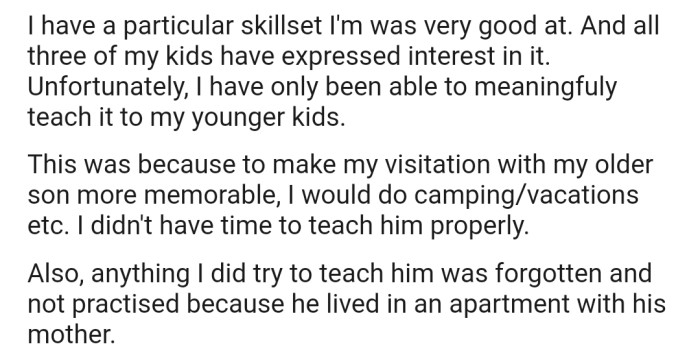
OP is dealing with this issue involving his 24-year-old son from a previous marriage and 21-year-old twins from his current marriage. After his ex-wife moved to another state, his oldest son could only visit during summers and holidays. As a result, OP had fewer chances to teach him the family business. Meanwhile, the younger twins grew up with more time to learn the trade.
Now, the oldest son wants an equal share of the family business. He believes he was “left out” while growing up and missed chances his younger siblings had. His request has caused tension within the family. Still, his feelings are understandable, even if giving him an equal share isn’t an easy choice.
The story in detail

The Original Story: OP Has a 24-Year-Old Son From His First Marriage and 21-Year-Old Twins From His Current Marriage. After His Ex-Wife Moved to Another State, His Oldest Son Could Only Visit During Summers and Holidays.

OP Has Valuable Skills That He Passed Down to His Younger Kids, but the Distance Made It Harder to Teach His Oldest Son.
How the Family Business Created Tension
Family businesses can bring people closer, but they can also cause problems when someone feels left out.
In this situation, the oldest son may believe his younger siblings had an unfair advantage. OP spent more time teaching the twins valuable skills, which helped them build a successful business. Meanwhile, his oldest son only visited during summers and holidays, so he missed many chances to learn.
Watching his siblings succeed with skills he never got to learn may be painful. His demand for an equal share of the business might not be just about money. It could also reflect years of feeling ignored or less important than his younger siblings.
Such feelings can lead to lasting tension between family members. The oldest son may see his siblings’ success as a reminder of what he missed. At the same time, OP may struggle to support all three children while dealing with their different needs and past experiences.
OP’s Younger Children Turned Their Skills Into a Successful Business, While His Oldest Son Remains Stuck in a Lower-Paying Job He Dislikes. Now, OP’s Poor Health Makes It Hard to Teach Him Those Same Skills.
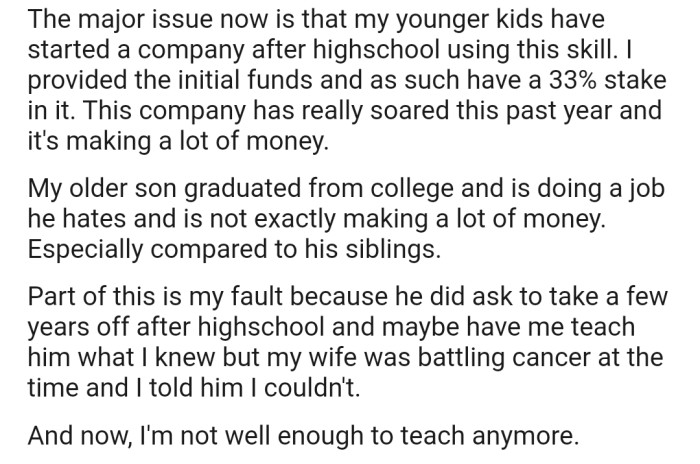
OP’s Oldest Son Wants an Equal Share of the Family Business, but His Younger Siblings Refuse. Feeling Hurt and Bitter, He Has Now Involved His Grandparents, Making the Family Conflict Even Worse.
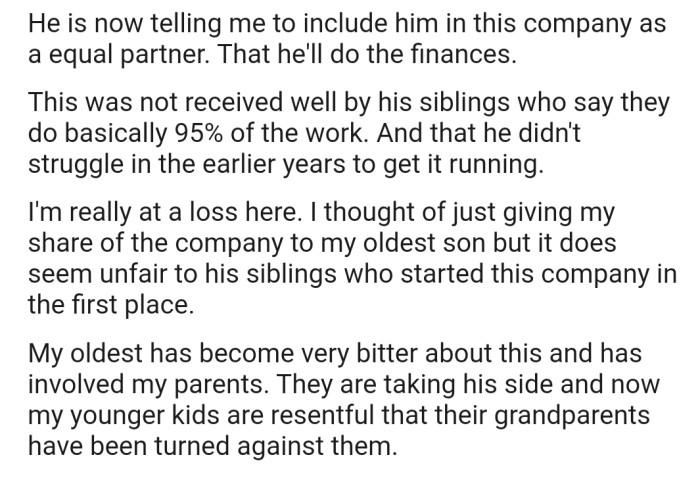
OP’s Oldest Son Feels Pushed Aside and Believes His Father Cares More About His New Family, Leaving Him Hurt and Making the Family Conflict Even Worse.
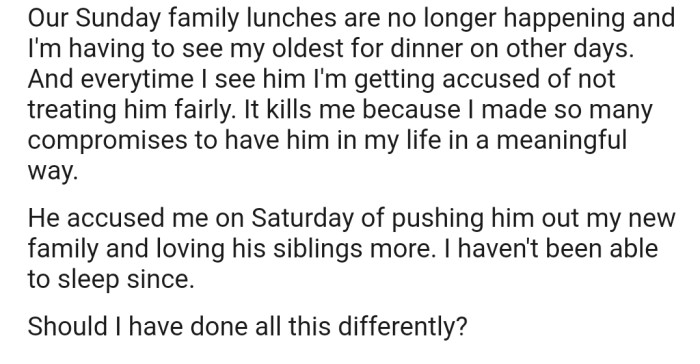
Talking openly about feeling left out can help family members understand each other and begin to repair their relationships.
The oldest son may also feel that he deserves the same chances and support as his younger siblings. He believes his place in the family should mean equal treatment.
When children feel their parents favor one sibling over another, it can hurt their confidence. Those feelings may stay with them for years and lead to anger or resentment.
Recognizing these emotions can help families address old problems and find ways to move forward.
Money and family businesses can make these issues even harder to resolve. Deciding who gets what can lead to arguments, especially when siblings disagree about what is fair.
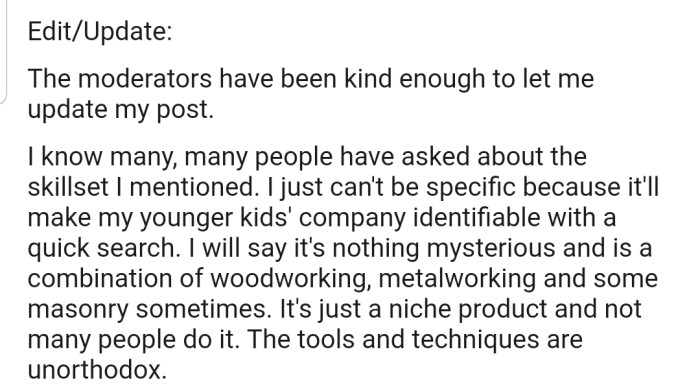
Edit/Update: OP Has Decided Not to Share Details About the Skills Involved in the Family Business.
After Reading the Reddit Community’s Advice, OP Decided to Talk With His Younger Children About the Family Situation.
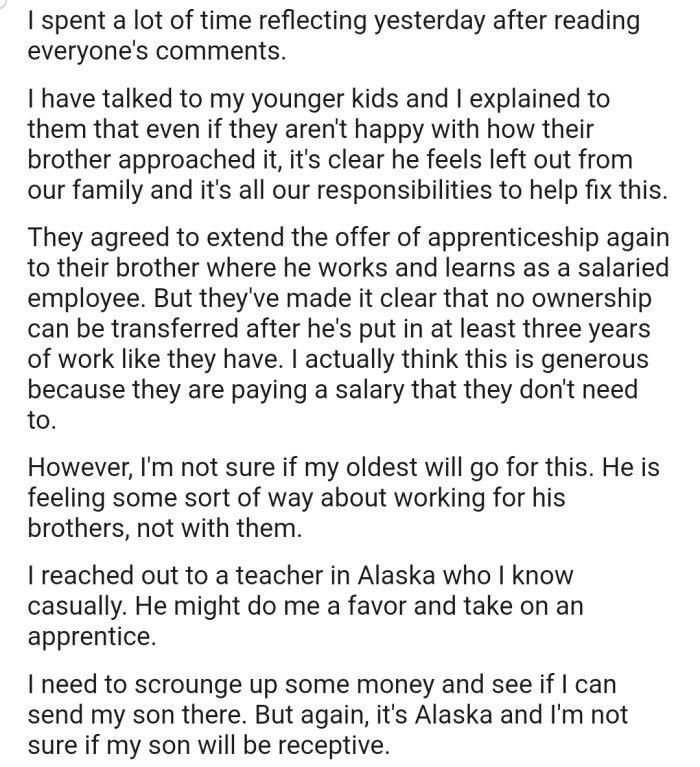
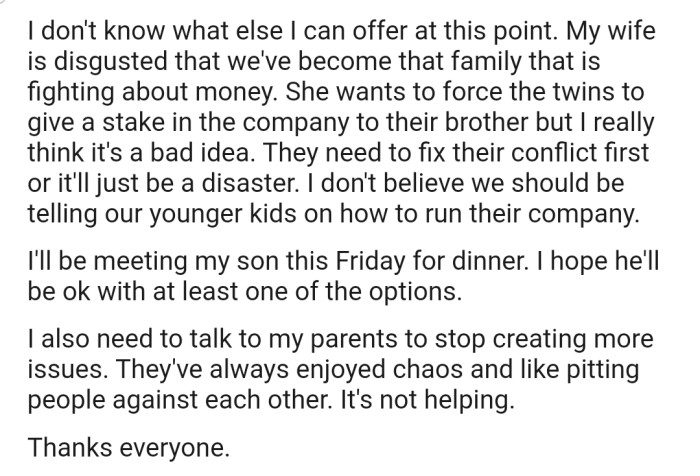
OP’s Wife Is Hurt and Upset to See Money Causing Arguments and Driving Their Family Apart.
The oldest son’s request for an equal share of the business may be about more than money. He may feel hurt because he missed years of learning and working alongside his father.
Family disputes often grow when someone feels ignored or treated unfairly. Talking openly about each person’s role, rights, and hopes for the business could help ease the tension.
Giving everyone a chance to speak and share their feelings may also help. These talks could bring old hurts to light and help the family understand each other’s views.
Family meetings might offer a way to settle past issues and discuss what comes next. They could also help each person explain what they want from both the business and their family ties.
Advertisement – Continue Reading Below
Here’s what Reddit users had to say about the situation:
“Your Oldest Son May Never Feel Fully Satisfied Because What He Truly Wants Might Be Something You Can No Longer Give Him.”

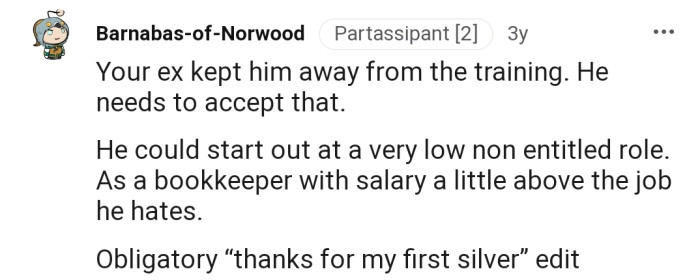
“He Could Join the Family Business in an Entry-Level Role, Like Bookkeeping, and Earn a Little More Than He Does at His Current Job.”
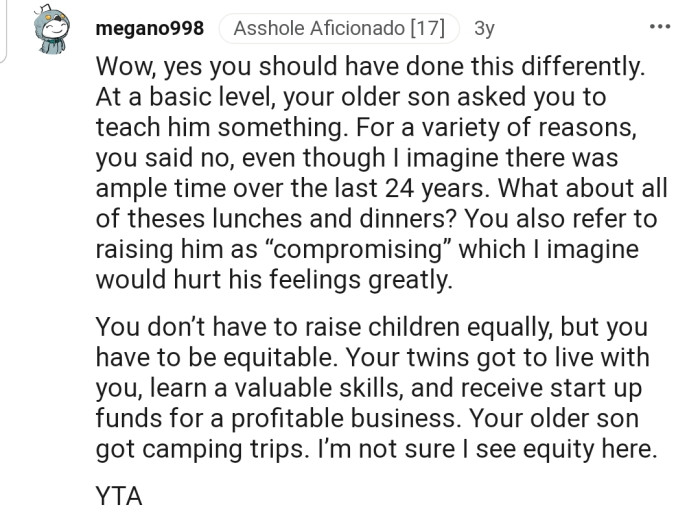
“Your Twins Grew Up With You, Learned Useful Skills, and Got Help Building a Successful Business. Your Oldest Son Only Had Short Visits and Family Trips.”
The main problem began when OP’s oldest son saw the extra time spent with his younger siblings as favoritism. However, the distance between them played a major role in their different childhood experiences. It wasn’t necessarily because OP cared less about him.
Painful memories from childhood can stay with people for years. Those feelings may return as adults, especially when family money or business decisions become involved.
Helping the siblings understand each other’s experiences could ease some of the anger and rebuild trust. The family needs to talk about what happened in the past and how those events still affect them.
Setting aside time for honest talks could give everyone a chance to share their side. If they struggle to settle things on their own, family therapy might help them address old wounds and improve their relationships.
“I Don’t Want to Judge Your Oldest Son Too Harshly, but Expecting an Equal Share of the Business Seems Unfair.”
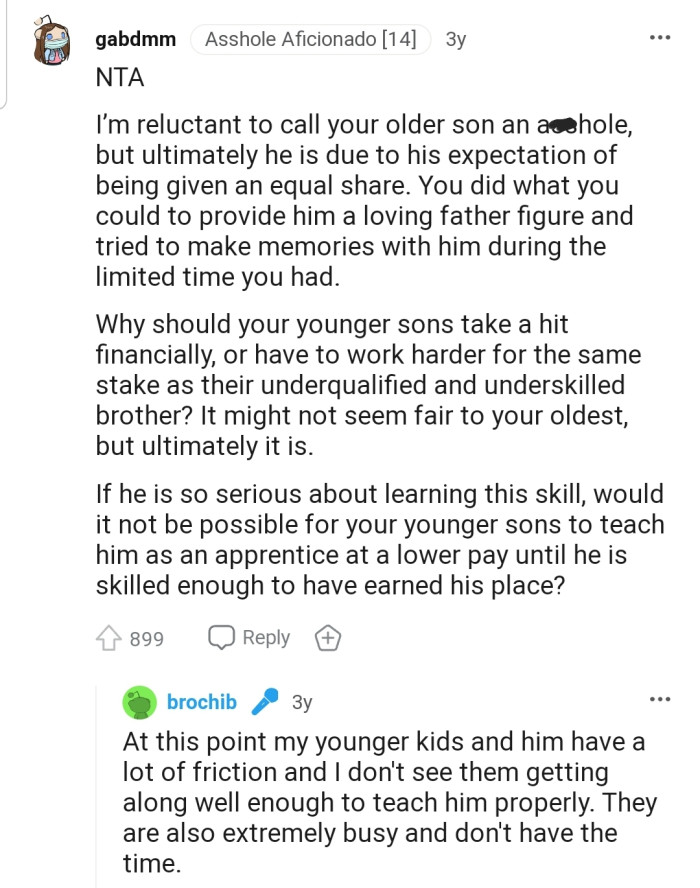
“NTA… You Could Have Taught Your Oldest Son the Skills, but You Chose to Spend Your Time Together on Vacations and Camping Trips Instead.”

The demand for an equal share of the family business has brought years of childhood pain back to the surface. What started as a dispute over money has become a much deeper family issue.
After reading the Reddit comments, OP decided to try to fix things with his oldest son. He spoke with his younger children and asked them to offer their older brother a chance to learn through an apprenticeship.
But the offer hasn’t solved everything. The oldest son finds it hard to accept working under his younger siblings. He wants to be treated as an equal partner, not someone starting from the bottom.
OP is now preparing for an important family dinner. He hopes everyone can talk openly, settle their differences, and find a way to move forward without damaging their family ties.
Understanding Feelings of Entitlement
People may develop a sense of entitlement when they believe others received better treatment or more support. Dealing with these feelings takes patience, honest talks, and a willingness to see both sides.
Allowing each family member to share their thoughts can help ease anger and clear up past misunderstandings. It also helps to set clear rules about who does what and what each person can expect.
For OP’s oldest son, the pain seems to go back to his childhood. After the divorce, he spent less time with his father and missed chances his younger siblings had. Those feelings of being left out are now causing problems within the family business.
Things become even harder when family relationships and money are tied together. Clear agreements about work, ownership, and duties could help prevent more arguments. They may also give everyone a better idea of what is fair.
If the family can’t work things out on their own, speaking with a family counselor or mediator could help. Having someone outside the family guide the talks may make it easier for everyone to feel heard.
This situation shows how childhood experiences can shape relationships long after children grow up. The oldest son’s demand may not be just about owning part of the business. He may also want to make up for lost time and feel as valued as his younger siblings.
Moving forward won’t be easy. Everyone will need to listen, show patience, and accept that they may see the past differently. The family dinner could be a chance to address years of hurt and begin rebuilding trust.
The argument may be about the family business today, but the pain behind it began years before money became an issue.
Before deciding whether the oldest son’s request is fair, it’s worth looking at how other families deal with similar disputes over money, support, and equal treatment.