Boss Expects Employee to Work Overnight After Sending Late-Night Email
An employee arrived at work expecting a normal day but quickly found themselves dealing with an unexpected problem.
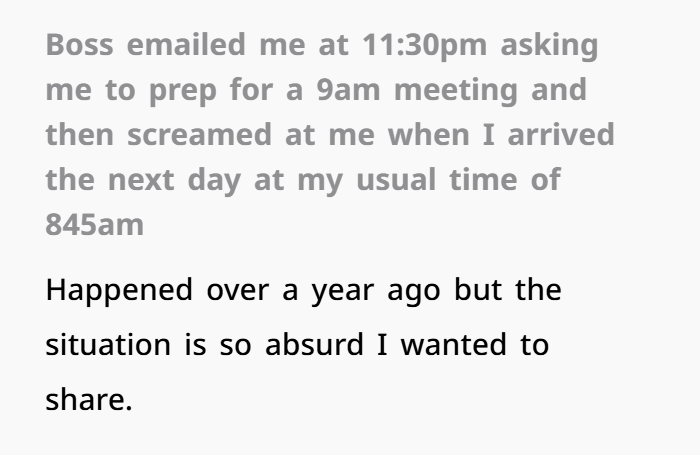
At 11:30 PM the night before, their boss had sent an email asking for a large amount of data and analysis for an early meeting. Since the message arrived outside normal work hours, the employee did not see it that night.
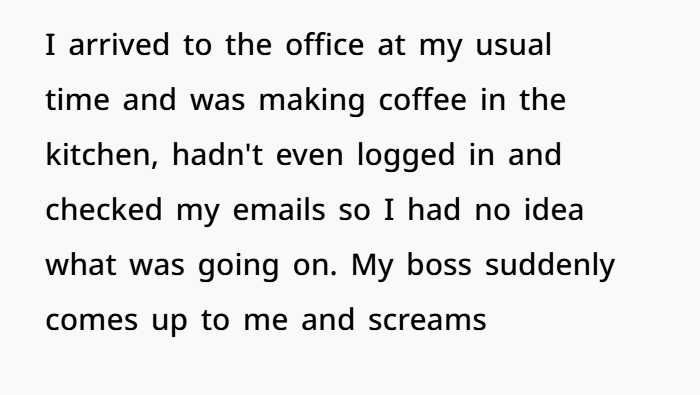
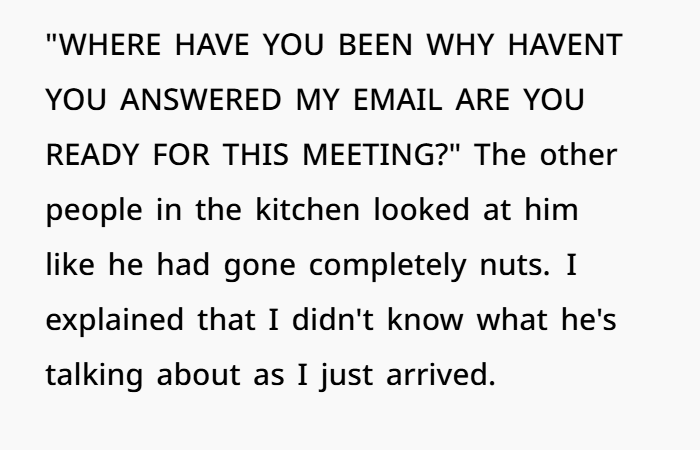
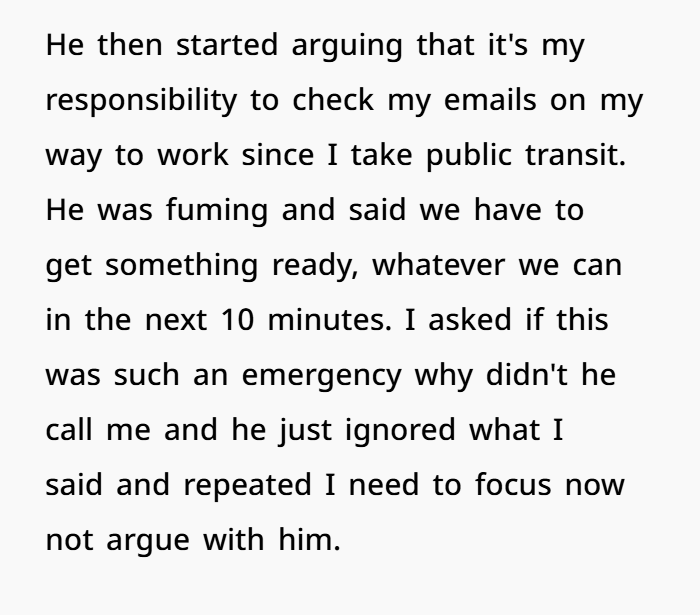
When they arrived at work, the boss was frustrated. He expected the task to already be completed, even though the employee had received almost no time to prepare.
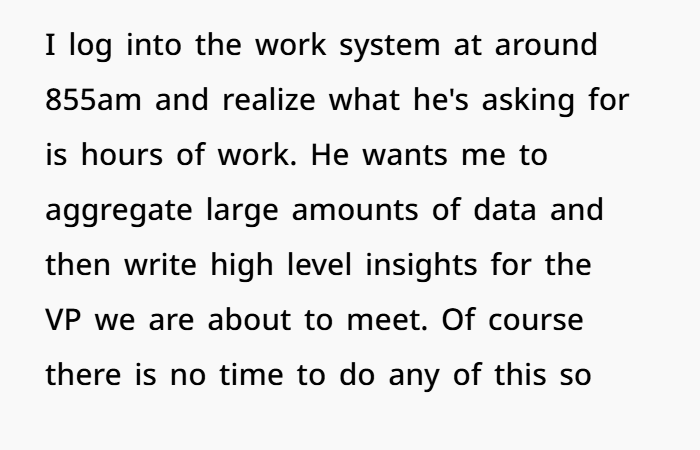
The employee felt stressed and confused. There had been no clear notice that they were expected to work late. Still, they rushed to collect as much information as possible before the meeting.
Then they discovered the situation was not as urgent as it first appeared.
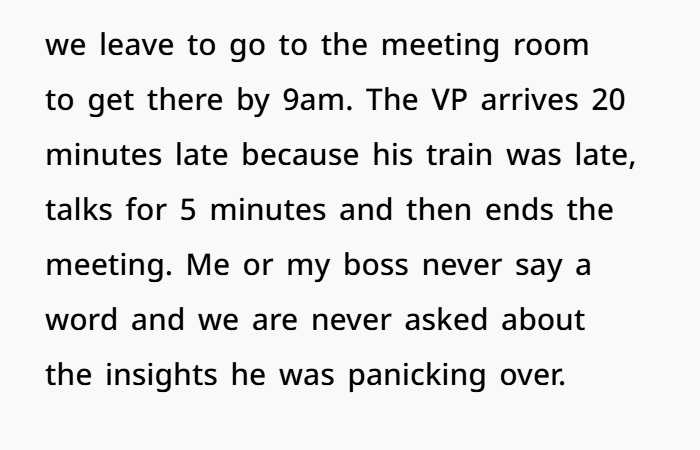
The senior executive arrived later than expected. The meeting was brief, and the requested data had little impact on the discussion.
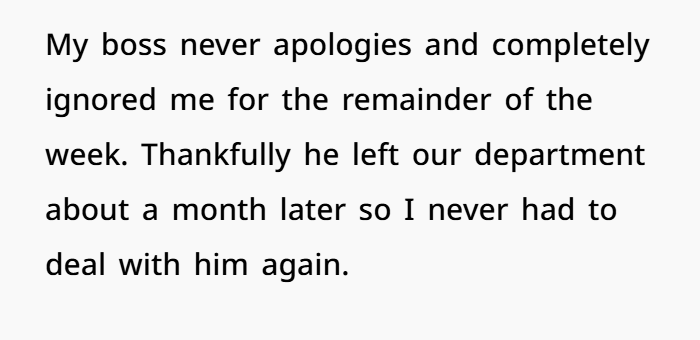
After the meeting, the employee felt frustrated with how everything was handled. A late-night email had turned into a stressful morning without a clear reason. The unrealistic deadline was also never properly addressed.
The story highlights a common workplace issue. Sending an email late at night does not mean an employee will see it right away. It also does not create a reasonable deadline for the next morning.
Good managers set clear expectations and give employees enough time to complete their work. They plan ahead when possible and clearly communicate when something is truly urgent.
Poor planning can create unnecessary stress for others. In this case, a lack of preparation turned a normal workday into a difficult situation.
An employee shared how their boss became upset because they did not check work emails after office hours.
This Story Is About More Than a Difficult Manager
This story is about more than one frustrating work situation. It highlights bigger issues involving leadership, communication, and work-life balance.
Many employees have dealt with managers who treat every task as urgent. Last-minute requests can create stress without improving results. Over time, this pressure can damage trust, motivation, and teamwork.
A healthy workplace needs clear expectations, fair deadlines, and managers who respect employees’ personal time.
Here are some important lessons from this situation.
1. How Poor Planning Creates Workplace Stress
Good managers plan ahead and communicate clearly.
Problems often begin when leaders wait until the last minute to make requests. Sending urgent tasks without enough notice can put unnecessary pressure on employees.
Advertisement – Continue Reading Below
This becomes more frustrating when the rush happens because of poor planning rather than a real emergency.
Common signs of weak management include:
- Unrealistic deadlines
- Poor planning
- Unclear instructions
- Blaming employees for avoidable issues
- Creating unnecessary stress
Strong leadership focuses on preparation and clear communication instead of constant urgency.
2. The Problem With Late-Night Work Messages
Technology has made it easier for work messages to reach employees at any time.
Emails and messages can be helpful when something truly needs immediate attention. However, constant after-hours communication can make it difficult for people to separate work from personal life.
A late-night email does not always mean an employee must respond immediately.
Frequent after-hours messages can lead to:
- More stress
- Poor work-life balance
- Lower job satisfaction
- Mental exhaustion
- Less time to rest
Many tasks can wait until regular working hours. Better planning can reduce unnecessary pressure and help employees maintain healthy boundaries.
3. The Importance of Clear Workplace Rules
Every workplace has different expectations about after-hours communication.
Some companies require employees to respond outside regular hours. Others encourage workers to disconnect after work.
Clear policies help prevent confusion. Employees should understand:
- Company communication rules
- Overtime expectations
- Workplace procedures
- Employee responsibilities
When managers and employees understand the same expectations, conflicts are less likely to happen.
Respectful communication also helps build trust between teams.
4. Why Treating Everything as Urgent Causes Problems
Not every task is an emergency.
When managers treat every request as urgent, employees can become overwhelmed. Constant pressure can make it harder to focus and complete important work.
Instead of planning their work, employees may spend their time reacting to sudden demands.
Long-term effects can include:
- Burnout
- Lower motivation
- Higher employee turnover
- Less productivity
- Increased stress
Good leaders understand priorities. They focus on important tasks instead of making everything feel urgent.
A calm and organized workplace helps employees stay focused and perform better.
5. How Employees Can Protect Their Time
Setting healthy boundaries can help employees manage work pressure.
Employees can take steps to create clearer expectations about their availability.
Communicate Boundaries Clearly
Let managers know your working hours and preferred ways to communicate. Clear boundaries can reduce confusion about after-hours requests.
Keep Important Records
Save important emails and messages about deadlines, instructions, and major tasks.
These records can help explain what was requested and when it was assigned.
Stay Professional During Conflicts
When problems happen, focus on facts instead of personal criticism.
Clear and respectful communication can make it easier to solve workplace issues.
Protect Work-Life Balance
Personal time is important for rest and recovery.
Employees often perform better when they have time away from work. Taking breaks can improve focus and reduce stress.
Understand Your Value
A good workplace respects employees’ time, skills, and effort.
When workers feel supported and valued, they are more likely to stay motivated and contribute positively to the team.orted and respected, they can stay focused and do their best work.
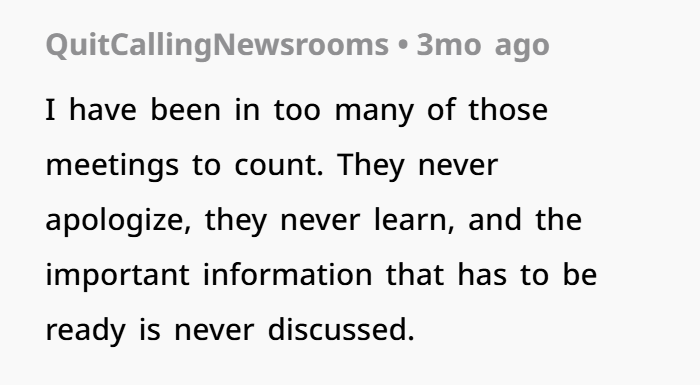
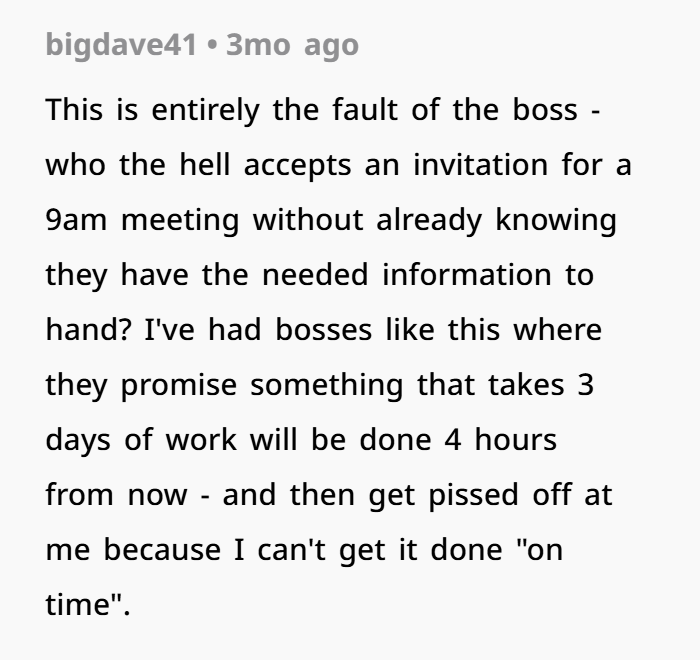
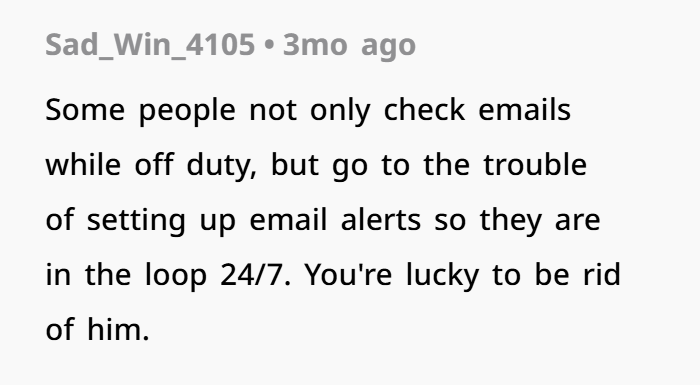
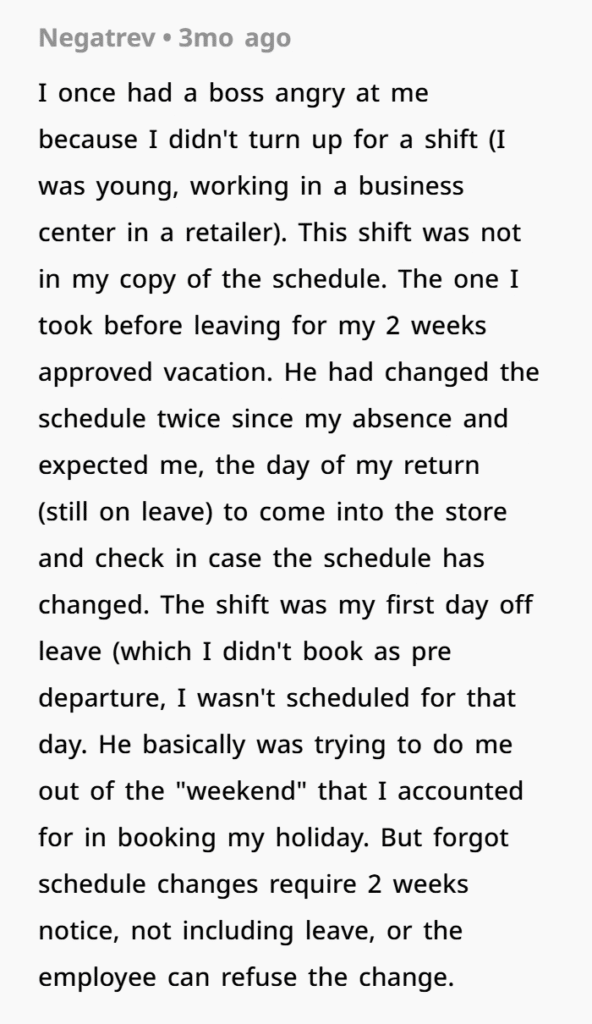
People who commented on what happened didn’t hold back

Final Thoughts
This story may seem unusual, but many employees have experienced similar workplace challenges.
The issue is not only about one manager or one late-night email. It reflects how leadership and workplace culture can affect an employee’s daily life.
Good managers plan ahead, set clear deadlines, and respect their team’s time. They do not turn poor planning into someone else’s problem.
Healthy workplaces also allow employees to rest outside working hours. Clear expectations, fair treatment, and mutual respect help create stronger teams.
Good leadership is not about keeping people under constant pressure. It is about giving employees the support, guidance, and tools they need to succeed.
Companies that respect their employees are more likely to build loyal and productive teams. Over time, good management and respect benefit everyone.