AITA for Saying “Bruh” When My Sister Announced Her Seventh Pregnancy at Family Dinner?
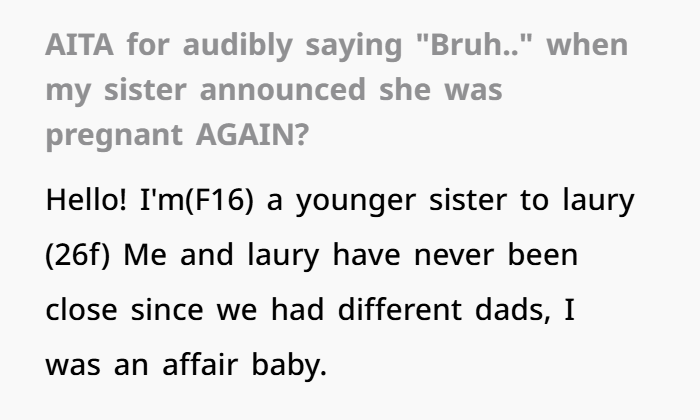
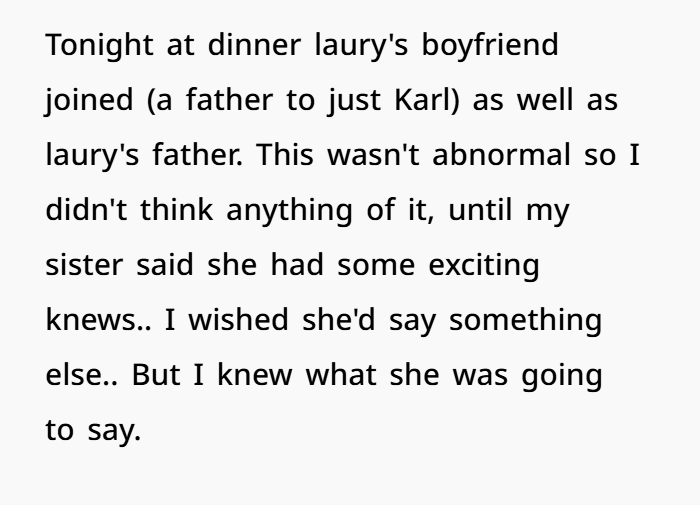
A 16-year-old girl found herself in the middle of a family argument after her older half-sister shared some big news at dinner. She was pregnant again, this time with her seventh child.
For some families, a new baby brings nothing but excitement. But in this case, the news brought up feelings that had been building for years.
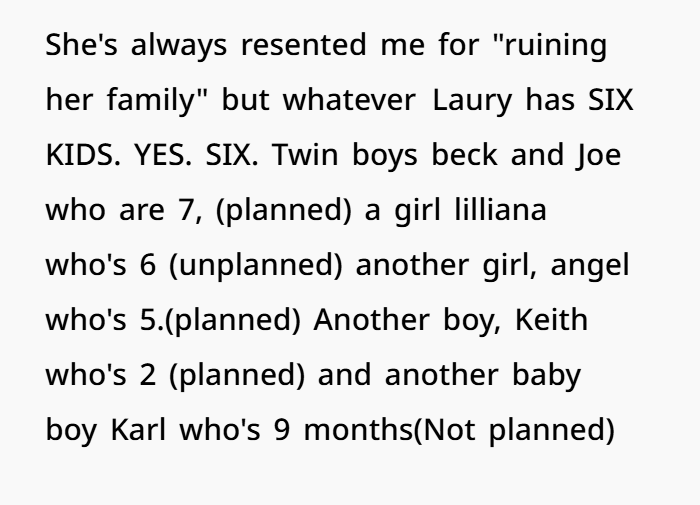
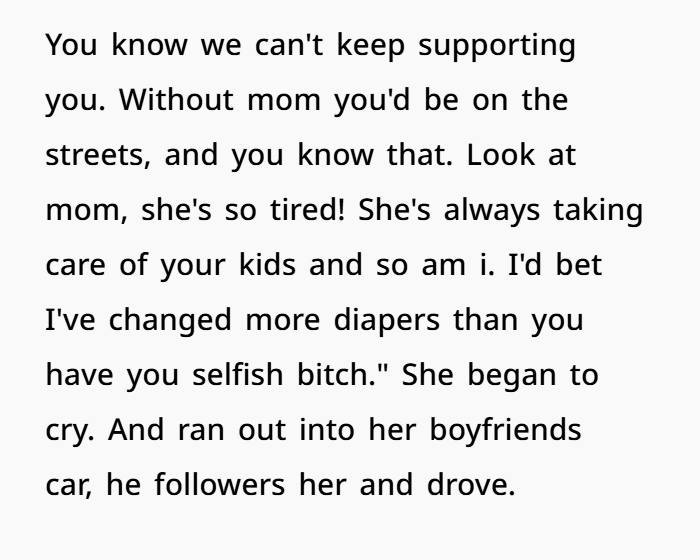
The family was already dealing with a lot. Raising children takes time, money, and effort. With six kids already in the picture, some relatives were worried about how another baby would affect everyone.
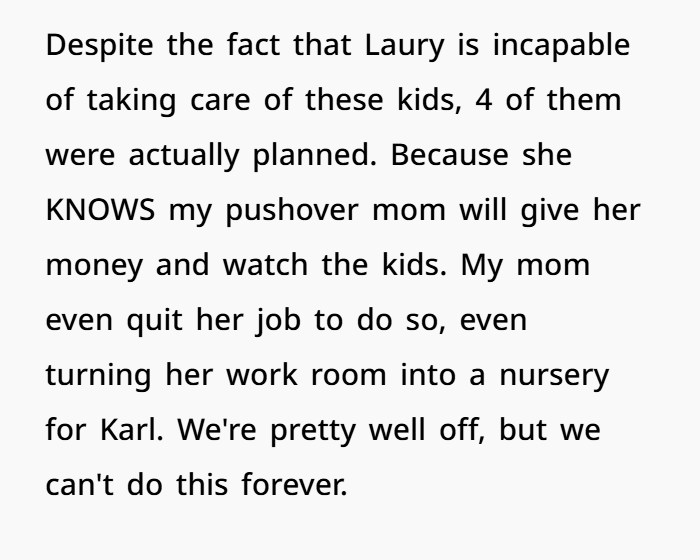
There were also concerns about who would help care for the children and how the family would manage the added costs.
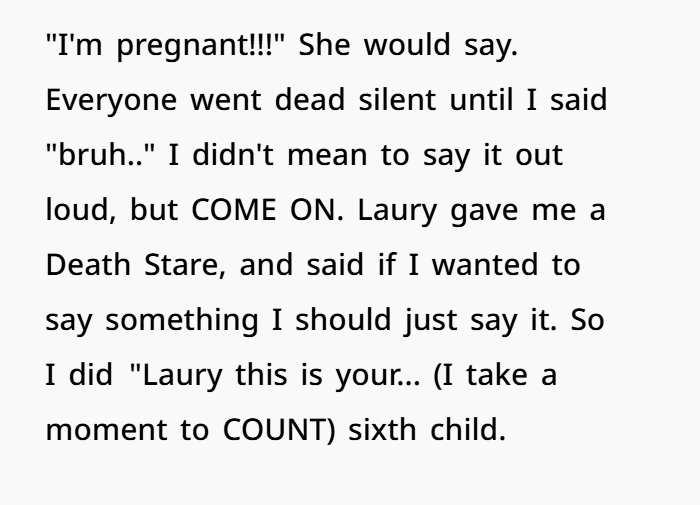
So when the sister announced her pregnancy, the teenager didn’t respond with the excitement everyone might have expected.
Instead, she said one word.
“Bruh.”
It was a quick reaction, but it was enough to change the mood at the table.
Some family members saw her comment as rude and hurtful. After all, her sister had just shared news that was important to her.
But from the teenager’s point of view, her reaction wasn’t just about the pregnancy itself.
It came from years of watching her family deal with stress and added duties. She felt that the adults weren’t taking some serious problems into account.
And while her choice of words may not have been the best, her feelings didn’t come out of nowhere.
The real issue seems to be about what family members should expect from one another.
Having children is a personal choice. But when relatives are often asked to help with money, babysitting, or daily chores, that choice can affect more than just the parents.
That’s where things can get messy.
Family members may want to help because they love each other. But that doesn’t mean everyone has the time, money, or energy to keep taking on more.
Advertisement – Continue Reading Below
The teenager may have felt that nobody was listening to those concerns.
At the same time, her sister may have been hurt because she expected a warm response to her news. Hearing “bruh” in front of the family could easily feel like being judged.
Both reactions are easy to understand.
Still, there’s a difference between having concerns and choosing how to express them.
The teenager had every right to feel surprised, worried, or even upset. But making a comment during the announcement was likely to cause tension.
A private talk might have been a better way to share those feelings.
That doesn’t mean she should have to pretend everything was fine.
If the family is struggling with childcare, money, or other duties, those issues deserve an honest talk. Ignoring them won’t make them disappear.
The adults also need to understand that a 16-year-old shouldn’t feel responsible for solving problems created by other people’s choices.
She can love her sister and her nieces and nephews without agreeing with every decision her sister makes.
And she should be allowed to set limits on how much help she can give.
The same goes for other relatives.
Helping family can be a wonderful thing, but it works best when people offer support freely. Problems begin when that help becomes something others simply expect.
There’s also the question of how the family talks about these issues.
Pregnancy, parenting, money, and mental health can all be hard subjects to discuss. People may feel judged, hurt, or attacked, even when others are trying to raise fair concerns.
That’s why the way people speak to each other matters.
The teenager’s one-word reaction may have been rude, but it also points to a bigger problem. The family seems to have concerns that haven’t been fully addressed.
Rather than focusing only on what she said, it would help to understand why she reacted that way.
Her sister deserves respect during an important moment in her life. But the rest of the family also deserves a say when they’re expected to take on more work.
In the end, this situation isn’t just about a teenager saying “bruh” at dinner.
It’s about a family trying to deal with choices that affect everyone in different ways.
Final verdict: The teenager’s reaction was understandable, even if her timing wasn’t ideal.
She could have handled the moment with more care, but her concerns shouldn’t be ignored.
A family can celebrate a new baby while still having serious talks about money, childcare, and personal limits.
Supporting someone doesn’t mean agreeing with every choice they make. And being part of a family doesn’t mean giving up the right to say how much help you can offer.
But after finding out that her sister has another child on the way, this teen couldn’t keep her thoughts to herself
Family Stress, Parenting Struggles, and Why Boundaries Matter
This family argument is about much more than one word spoken at dinner. It involves years of stress, childcare duties, money problems, and feelings that have been building for a long time.
At the heart of it all is a simple question: How much should someone be expected to do for their family?
The OP’s older half-sister is expecting her seventh child. While having a big family can bring plenty of joy, it also comes with serious demands.
Children need food, clothes, care, attention, and a safe home. Meeting those needs takes money, time, and a lot of work.
In this case, it seems that much of that work has fallen on other family members.
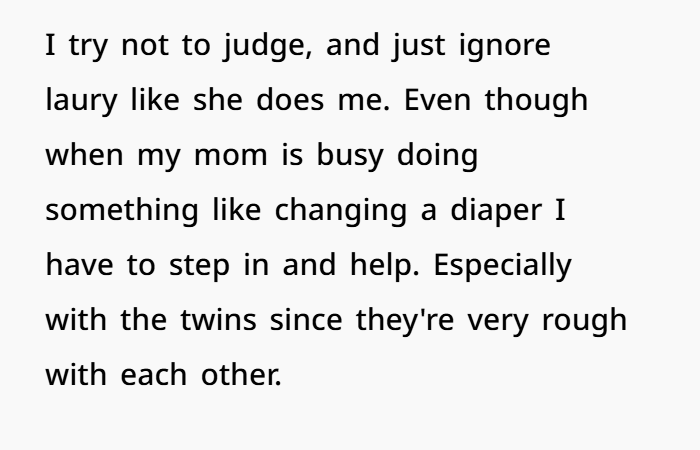
The grandmother has taken on a large share of the childcare. The OP, who is only 16, has also been helping look after the children.
That puts the teenager in a difficult position.
At her age, she should have time to focus on school, spend time with friends, and enjoy being young. Helping with younger relatives is one thing. Feeling like you’re partly responsible for raising them is another.
Over time, that kind of pressure can wear someone down.
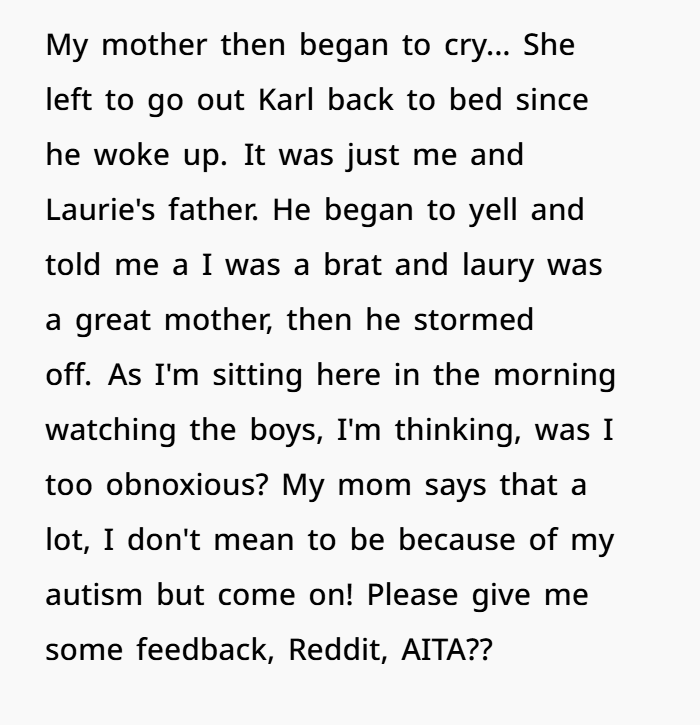
The OP also shared that she is autistic. This adds another layer to how the family might understand her reaction.
Autistic people don’t all express feelings in the same way. Some may respond more directly when they’re shocked, upset, or under stress.
So when the OP heard about another pregnancy and said “bruh,” it may have been a quick response to the news.
That doesn’t mean she was trying to hurt her sister.
She may have simply been caught off guard by the thought of another baby joining an already busy household.
Of course, her sister may still have felt hurt by the comment. But understanding why someone reacted a certain way can help prevent a small moment from becoming a major fight.
The bigger concern is how much the family depends on others for help.
There’s nothing wrong with grandparents, siblings, or relatives helping care for children. Many families rely on each other, and that support can bring people closer.
But problems can start when helping becomes something people are expected to do all the time.
A grandmother may love spending time with her grandchildren. That doesn’t mean she should have to handle most of their daily care.
In the same way, a teenager can love her nieces and nephews without wanting to spend much of her free time babysitting.
Those feelings can exist together.
The OP’s frustration seems to come from watching the family take on more duties without a clear plan for handling them.
And that’s a fair concern.
Having another child affects the parents most, but it can also affect relatives who already provide regular help.
If those relatives are expected to give more time or money, they deserve to have their limits respected.
This doesn’t mean the sister shouldn’t have more children. That’s a choice for her and her partner.
But the people around her should also have a choice about how much support they can give.
That’s where healthy boundaries come in.
A boundary doesn’t have to mean refusing all help or cutting someone out of your life. Sometimes it simply means saying, “I can help on weekends, but I can’t babysit every day.”
It could also mean explaining that schoolwork, rest, and personal plans need to come first.
For the OP, having those limits could make a big difference.
She’s still growing up and learning how to manage her own life. She shouldn’t have to put her needs aside to meet every childcare request.
The grandmother may also need space to decide how much she can manage.
Even when someone loves helping their family, they can become tired or stressed if too much falls on them.
Money is another important part of the problem.
A growing family needs a plan for food, housing, school costs, healthcare, and other daily needs. Without enough funds, parents may end up asking relatives to cover the gaps.
That can put strain on everyone.
Talking about money may feel awkward, but avoiding the subject often makes things harder.
The family would benefit from a clear talk about who handles childcare, how costs will be covered, and what help relatives can offer.
Those talks should happen without making anyone feel guilty for saying no.
The OP’s feelings also deserve attention.
Her reaction at dinner may have seemed small, but it could be a sign of stress that has been building for years.
When someone feels unheard for a long time, even a brief comment can reveal how upset they are.
Rather than focusing only on the word “bruh,” the family should try to understand what’s behind it.
Is the OP worried about having to babysit more often? Is she tired of watching her grandmother take on so much work? Does she feel that her own needs are being pushed aside?
Those are questions worth asking.
And the answers could help the family deal with the real problem.
There are a few practical changes that might make life easier for everyone:
- Set clear childcare limits. The OP and grandmother should be able to decide when they can help.
- Share duties fairly. The children’s parents should take the lead in meeting their needs.
- Make a money plan. A clear budget could help the family prepare for another child.
- Look for other support. Local programs or trusted childcare options may ease some of the pressure.
- Respect the OP’s time. School, friends, rest, and personal interests matter too.
- Talk without blame. Calm family talks could help everyone share their concerns without starting another argument.
None of these steps will fix everything overnight. But they could help reduce stress and make family life more manageable.
The most important thing is that everyone feels heard.
The sister deserves to make her own choices about having children. The grandmother deserves to enjoy her later years without feeling forced to provide constant childcare.
And the OP deserves the chance to be a teenager.
Family love shouldn’t depend on how much someone is willing to give up.
In the end, the dinner argument wasn’t really about the word “bruh.” It was about the fear that another baby would bring even more work for people who already felt stretched thin.
The OP’s frustration makes sense, even if her reaction wasn’t the kindest way to express it.
Her sister may have wanted a happy response, but that doesn’t erase the family’s concerns about childcare and money.
The best way forward is to stop arguing over one comment and start talking about the problems behind it.
Families are stronger when people help because they want to, not because they feel they have no choice.
And sometimes, saying no is exactly what someone needs to protect their own well-being.
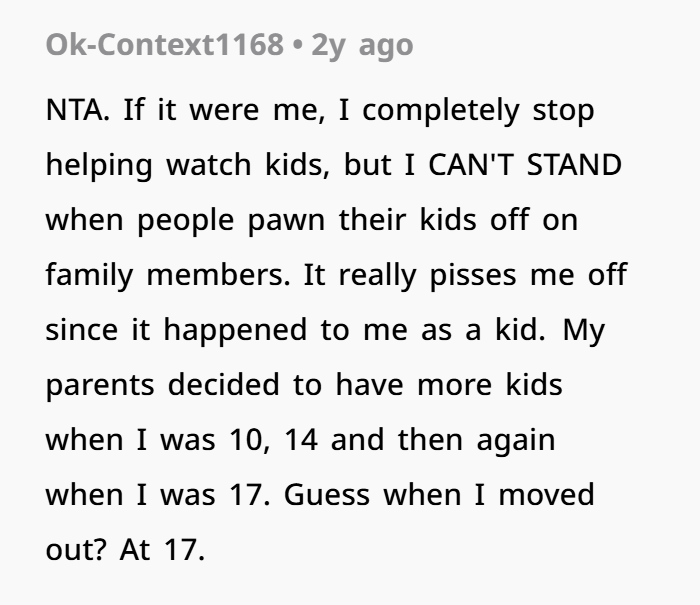
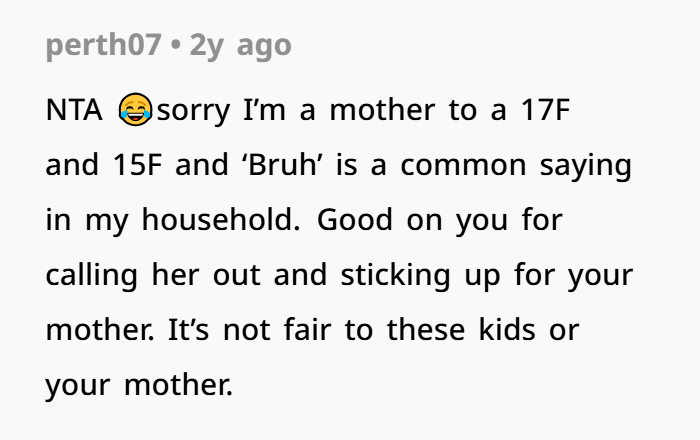
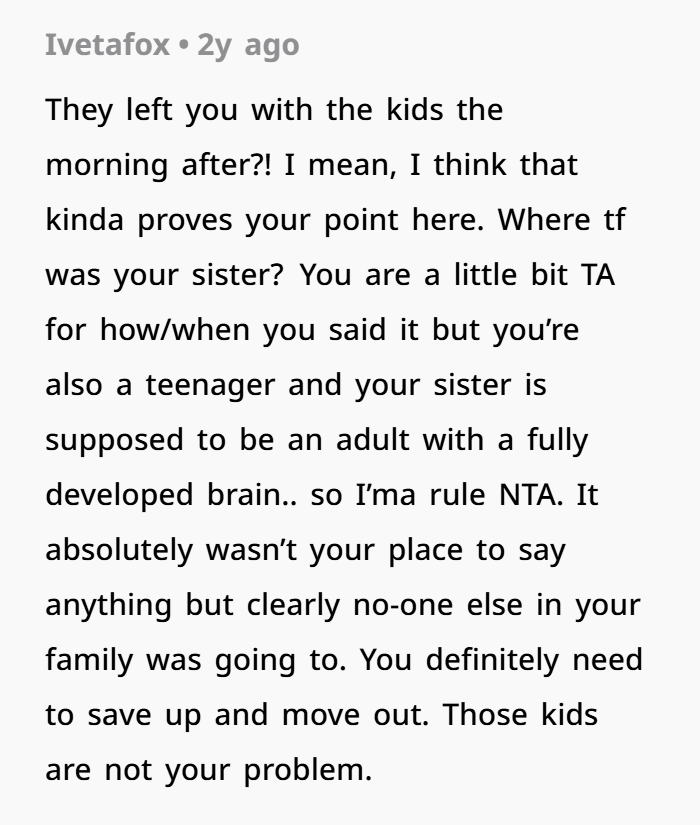
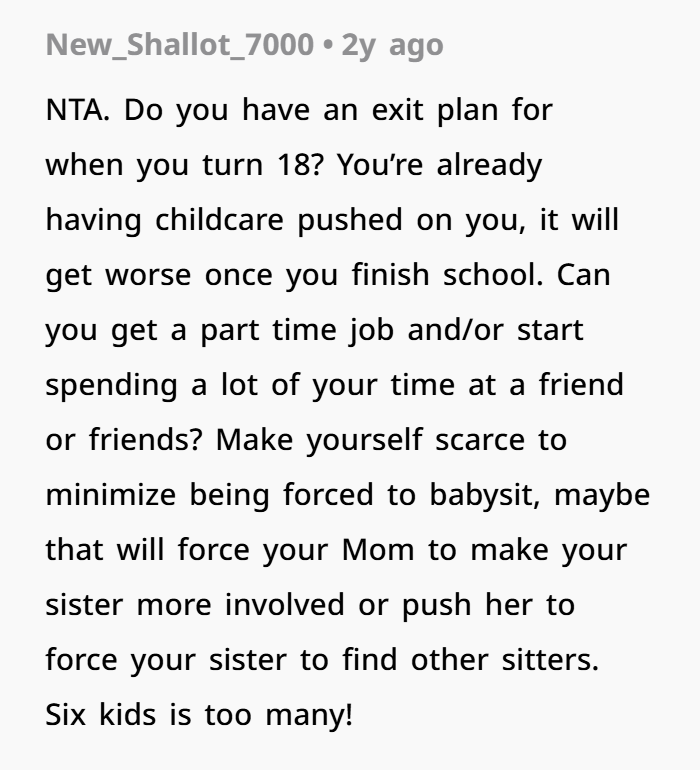
Some readers assured the teen that her response was justified

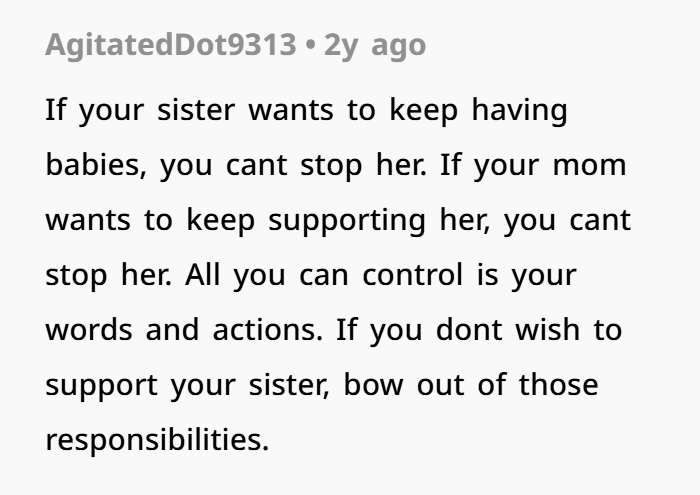
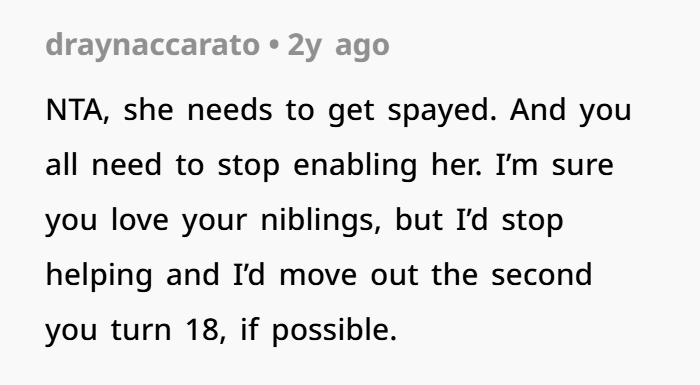
When no one else says the truth, sometimes you just gotta say bruh.