When Washing Dishes Became a Woman’s Job: Challenging Old Family Traditions
Thanksgiving is usually a time for family, good food, and spending time together. But for one woman, a holiday dinner turned into an argument about who should clean up afterward.
She and her husband had visited his sister’s home for Thanksgiving. The woman spent two days helping prepare the holiday meal.
With so much work going into the dinner, she thought everyone should help clean up once they finished eating.
Before the meal, she brought up the idea of sharing the cleanup duties. Her husband agreed, making her believe they were on the same page.
But things didn’t go as expected.
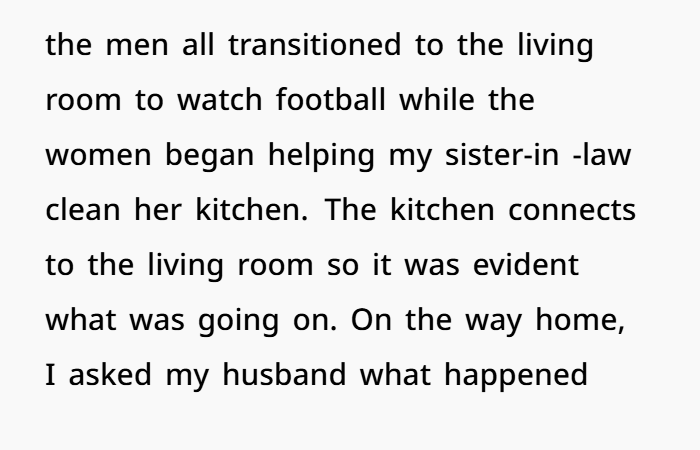
Once dinner was over, the men headed to the living room to watch football. Meanwhile, the women were left in the kitchen to handle the dishes and cleaning.
The woman felt frustrated. She had already spent two days helping with the food, and now the cleanup was falling on the women again.
What upset her most was that her husband had agreed everyone should help.
Instead of joining the cleanup, the men seemed happy to relax while the women continued working.
The situation left her feeling that the family expected women to handle kitchen duties simply because they were women.
Later, on the way home, she decided to talk to her husband about what had happened.
She explained why the situation bothered her and why she thought the work should have been shared.
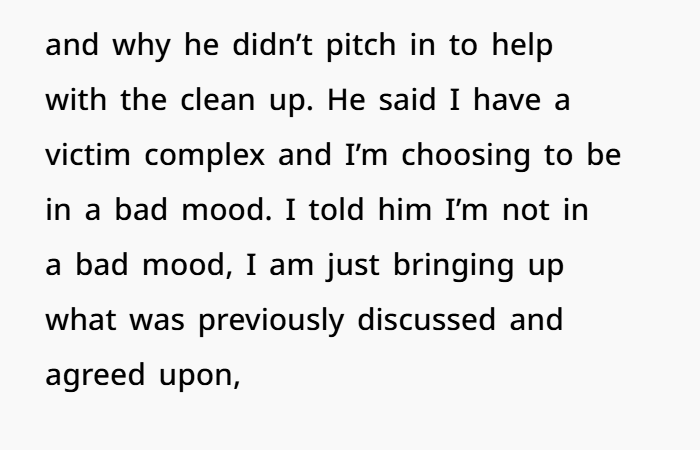
But his response only made things worse.
Rather than listening to her concerns, he dismissed her feelings. He accused her of having a “victim mindset” and suggested she was upset over nothing.
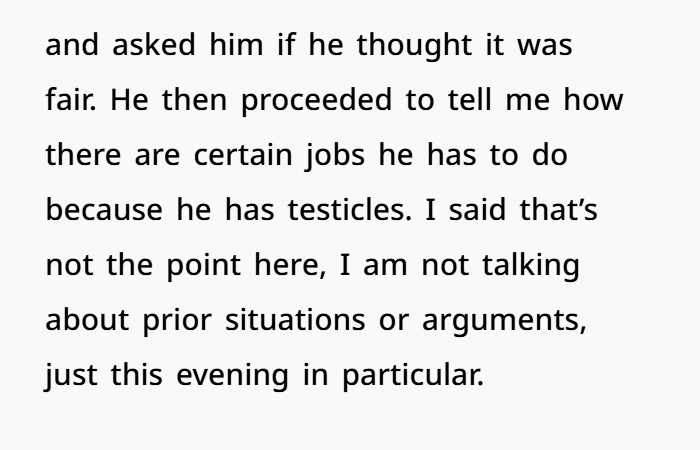
He also made comments that seemed to support the idea that kitchen chores were mainly women’s work.
For his wife, those words were even more hurtful than the cleanup itself.
Advertisement – Continue Reading Below
She wasn’t asking for special treatment. She simply wanted everyone to share the work after enjoying the meal.
Now, she was left wondering whether she had made too much of the situation.
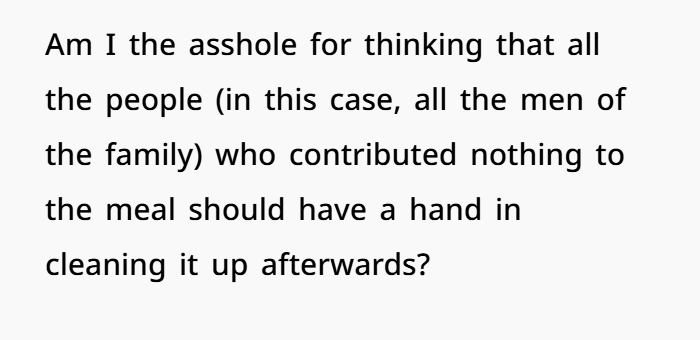
Was she wrong for expecting the men to help clean up? Or was it unfair for the women to do all the work while everyone else relaxed?
What started as a disagreement about dirty dishes soon became a much bigger issue.
It raised questions about family traditions, gender roles, and how couples should share household duties.
It also showed how important it is for partners to listen to each other, even when they don’t agree.
After all, when everyone enjoys the meal, shouldn’t everyone be willing to help clean up?
Add the woman’s final decisionClarify the husband’s exact role
Woman and Husband Agree the Men Should Help Clean Up After Thanksgiving Dinner
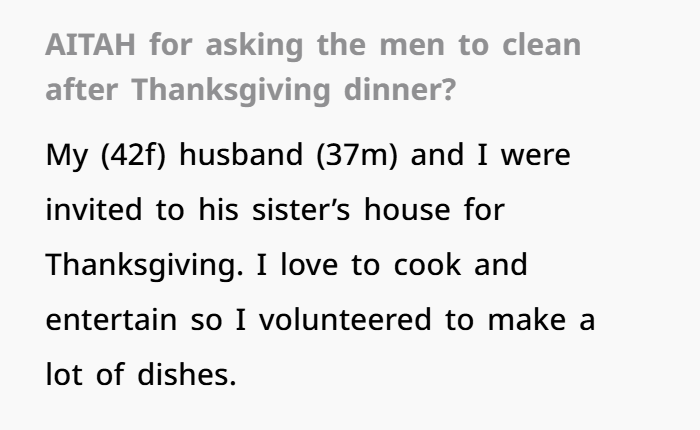
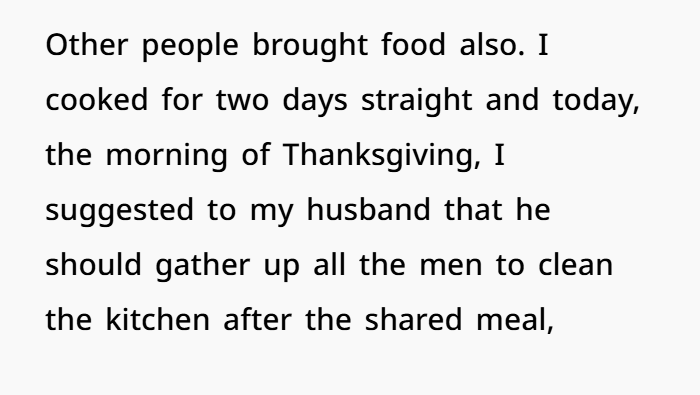
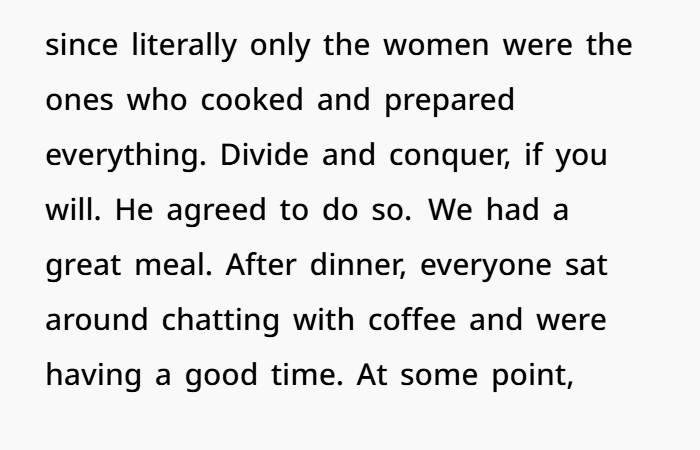
This argument wasn’t just about Thanksgiving dinner or a pile of dirty dishes.
It brought up bigger questions about household chores, family roles, and how couples share work at home.
Many people face similar problems when family members have different ideas about who should handle certain tasks.
For some families, these habits have been passed down for years. But that doesn’t mean everyone agrees with them.
The woman’s frustration wasn’t only about cleaning the kitchen. She also wanted her time and effort to be valued.
After spending two days helping prepare the meal, she expected everyone to do their part.
Her feelings were about fairness, respect, and being treated as an equal member of the family.
 Housework Is Still Not Shared Fairly
 Housework Is Still Not Shared Fairly
Even today, men and women don’t always share household chores equally.
Studies show that women still handle more cooking, cleaning, childcare, and other unpaid work in many families.
This happens in different countries and cultures. In some homes, women take care of most daily chores, even when they also have full-time jobs.
But household work isn’t just about washing dishes or doing laundry.
There’s also something called the “mental load.”
This means keeping track of everything that needs to get done at home.
For example, someone has to remember appointments, plan meals, make shopping lists, and make sure the family has what it needs.
These tasks may not seem like much on their own, but they can become tiring when one person handles them all.
In many families, women carry much of this extra responsibility.
When one partner does most of the planning and household work, it can lead to stress and frustration.
Sharing chores isn’t just about dividing physical tasks. It’s also about making sure both partners take part in planning and managing daily family life.
Why This Is Important for Relationships and Mental Health
 Why This Is Important for Relationships and Mental Health
This disagreement wasn’t just about dirty dishes or cleaning up after dinner.
It was about feeling respected, valued, and treated fairly in a relationship.
When one person does most of the household work, it can become exhausting. Cooking, cleaning, and taking care of daily tasks require time and energy.
If the other partner rarely helps, frustration can slowly build.
Over time, that frustration may turn into resentment, especially when someone feels their hard work goes unnoticed.
Unequal household duties can also lead to more arguments between couples.
When one partner feels unsupported, even small disagreements can become bigger problems.
The stress can affect their mood, peace of mind, and overall well-being.
That’s why sharing household work matters. It’s not just about getting chores done faster.
It’s about showing your partner that their time, effort, and feelings matter.
A healthy relationship works best when both people support each other and take responsibility for their shared home.
Why Your Feelings Were Valid
 Why Your Feelings Were Valid
Her request at Thanksgiving dinner was simple. If everyone enjoyed the meal, everyone should help clean up afterward.
It wasn’t about men versus women. She wanted the family to work together and share the chores fairly.
But when her husband brushed off her concerns and called her “moody,” it only made things worse.
She had spent two days helping prepare the meal. Seeing the men relax while the women handled the cleanup left her feeling frustrated.
What hurt even more was her husband’s response when she tried to explain her feelings.
The problem wasn’t just the dirty dishes. It was also about feeling ignored and having her hard work taken for granted.
Wanting help with household chores isn’t an unreasonable request.
In a healthy relationship, both partners should feel heard, respected, and supported.
Her frustration makes sense because sharing responsibilities is about more than getting work done. It’s also a way of showing care and respect for each other.
Add a stronger closing takeawayMake the opening more engaging
Why This Still Happens in Many Homes
 Why This Still Happens in Many Homes
In many families, old beliefs about men’s and women’s roles are still common.
Some people grow up believing that cooking, cleaning, and taking care of the home are mainly women’s jobs.
These ideas often come from family traditions, cultural beliefs, and the way people were raised.
Even though times have changed, some of these habits remain part of everyday family life.
Sometimes, people don’t even notice that the work isn’t being shared fairly.
One partner may believe they’re doing enough around the house, while the other handles most of the cooking, cleaning, and daily chores.
This can lead to frustration, especially when someone’s hard work goes unnoticed.
That’s why open and honest conversations matter in a marriage.
Couples need to talk about what each person does at home and whether the arrangement feels fair to both of them.
Sharing household duties doesn’t mean every task must be split exactly in half.
It means both partners should feel supported, valued, and respected for the work they do.
Make the paragraphs more engagingAdd a stronger opening hook
What Fairness in House Chores Looks Like
 What Fairness in House Chores Looks Like
A healthy relationship works best when both partners share the effort and support each other.
Household chores shouldn’t automatically fall on one person because of their gender.
Instead, couples can divide the work based on their schedules, energy, and what feels fair to both of them.
For example:
- One person can cook while the other washes the dishes.
- Both partners can clean the kitchen together.
- They can take turns handling chores after meals.
- Each person can choose tasks that fit their time and daily routine.
There’s no single right way to divide household work.
What matters is finding a balance that both people are happy with.
The goal isn’t to count every chore or keep score of who does more.
It’s about making sure neither partner feels overwhelmed or taken for granted.
When couples share responsibilities fairly, they show that they value each other’s time and effort.
Even small actions, like helping with dishes or cleaning up after dinner, can make a big difference.
In the end, teamwork at home isn’t just about keeping things clean. It’s also about building trust, respect, and a stronger relationship.
Add a practical chore-sharing methodMake the opening more engagingrly can improve relationship satisfaction, emotional balance, and family life.
Why Your Reaction Was Understandable
 Why Your Reaction Was Understandable
She wasn’t asking for anything unfair. She simply wanted everyone to help with the cleanup after enjoying Thanksgiving dinner.
After spending two days preparing the meal, expecting others to lend a hand was reasonable.
What upset her most wasn’t just the extra work. It was how her husband brushed off her concerns.
His response may have made her feel that her time, effort, and feelings didn’t matter.
That’s why a simple disagreement about dishes turned into something more upsetting.
Even if the conversation became tense, her main concern was still about fairness and respect.
In a healthy relationship, both partners should feel comfortable speaking up when something bothers them.
Wanting household chores to be shared fairly isn’t asking too much.
It’s about knowing that your partner values your efforts and is willing to work alongside you.
In the end, sharing responsibilities is one small but important way couples can show care, support, and respect for each other.
Why Change Takes Time in Relationships
 Why Change Takes Time in Relationships
Changing old household habits can take time, especially when people have followed the same routines for years.
Many grow up watching their parents handle chores in certain ways. As adults, they may follow those same patterns without giving them much thought.
But just because something has always been done a certain way doesn’t mean it can’t change.
Couples can start by having honest conversations about who does what around the house.
Both partners should understand how much time and effort goes into daily chores.
Finding a fair balance takes patience, teamwork, and a willingness to make changes.
It’s also important to check in with each other from time to time. What works today may need to change as schedules and needs shift.
In the end, sharing household work isn’t about following old traditions. It’s about finding a routine where both partners feel supported, respected, and valued.
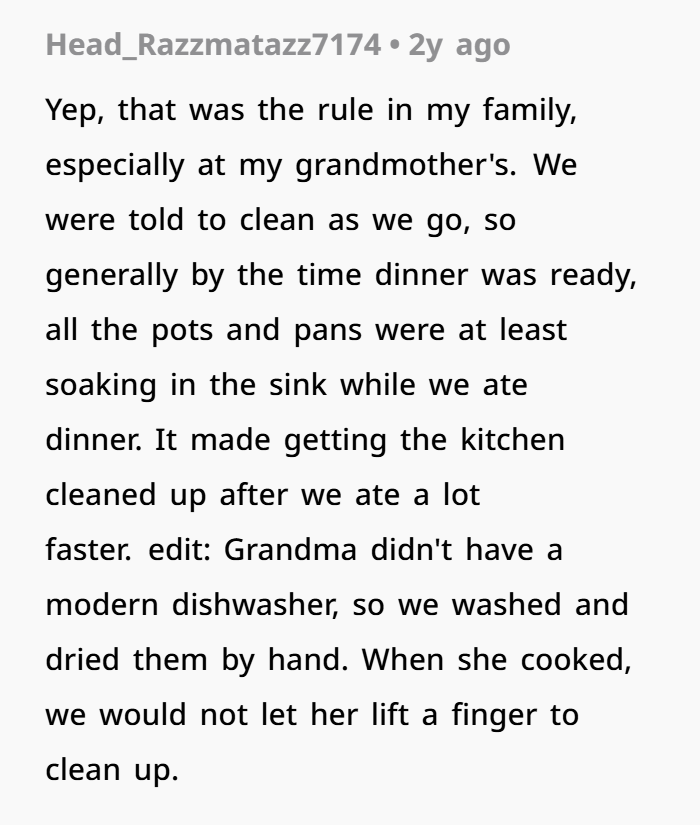
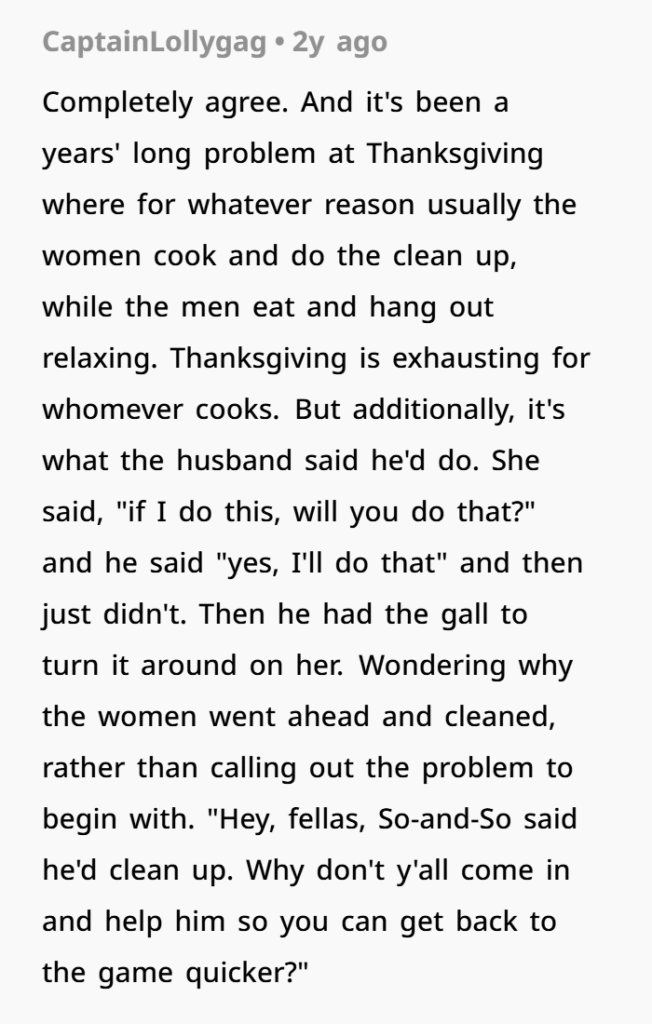
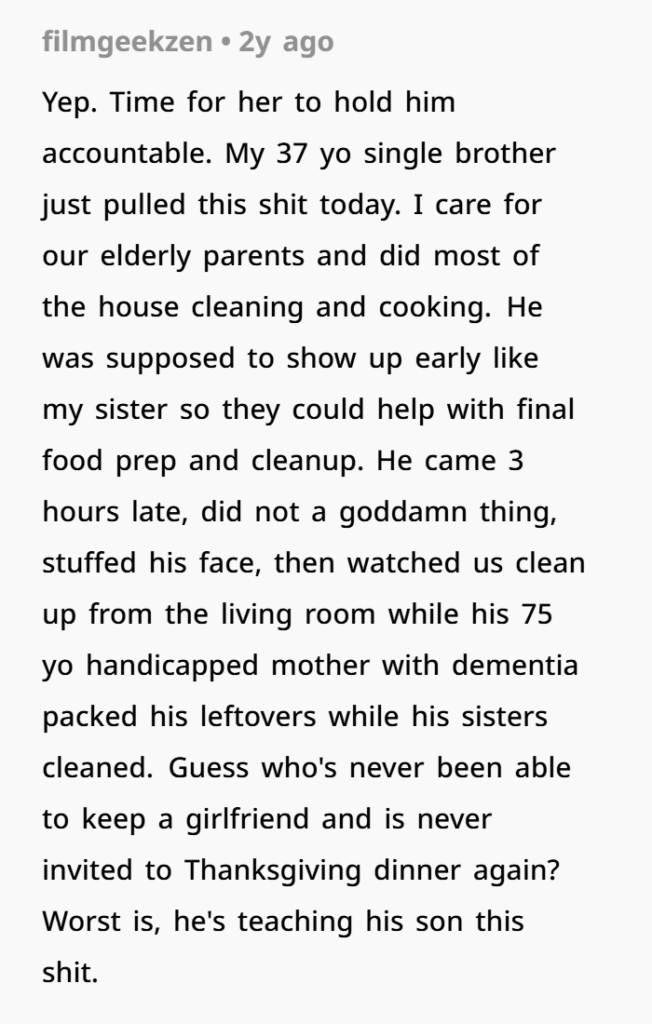
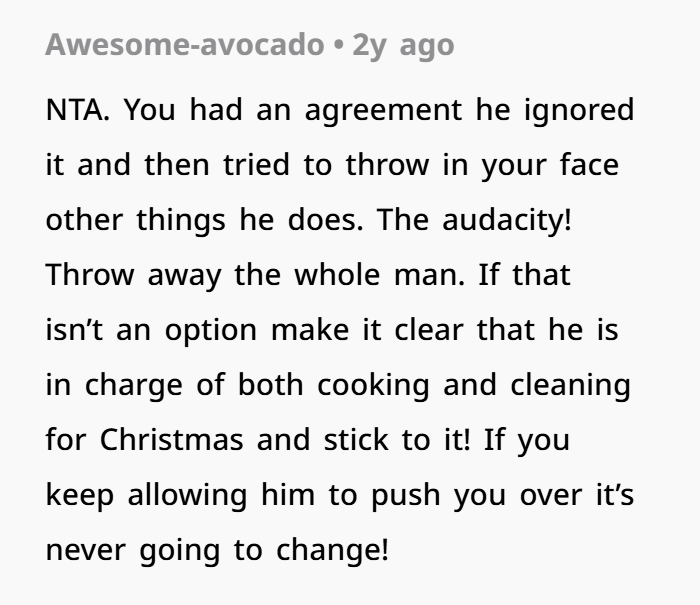
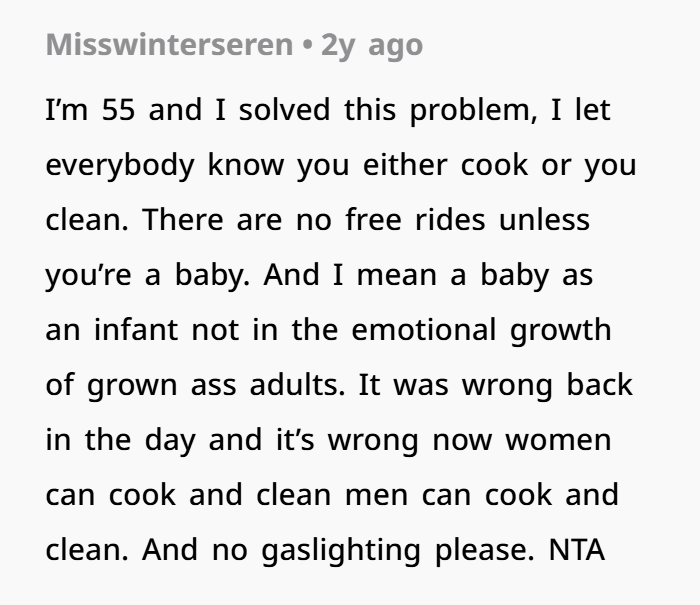
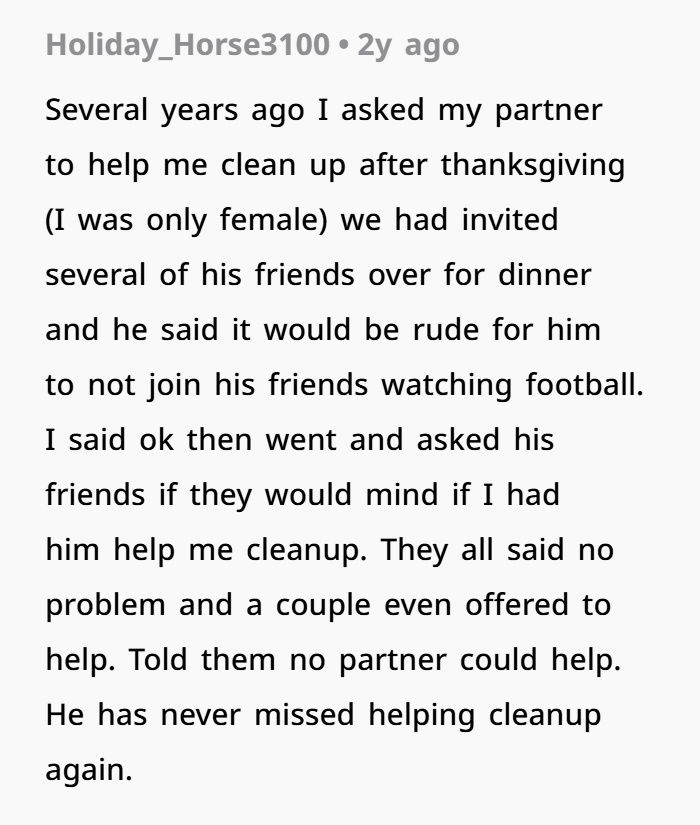
In the comments, readers seemed to agree that the woman was not the jerk in the situation but suggested she should have got the other women in the family to take action too


Final Thoughts
 Final Thoughts
This Thanksgiving argument wasn’t just about dirty dishes or who should clean the kitchen.
It brought up bigger issues, like old gender roles, unfair household duties, and the need for respect between partners.
When one person does most of the work, it can leave them feeling tired, frustrated, and unappreciated.
Sharing chores fairly can help couples avoid these problems and build a stronger relationship.
It’s not about making sure both people do the exact same amount of work every day. It’s about working together and making sure neither person feels taken for granted.
The woman wasn’t wrong for expecting help after spending two days preparing the holiday meal.
She wanted everyone to share the work, especially since they had all enjoyed the dinner.
Her frustration also showed how important it is for couples to listen to each other’s concerns.
In the end, a healthy relationship needs more than love. It also takes teamwork, honest conversations, and respect for each other’s time and effort.
And sometimes, something as simple as helping with the dishes can show your partner how much you care.