I Grew Up With My Parents’ Open Relationship, and It Left Me Feeling Unseen
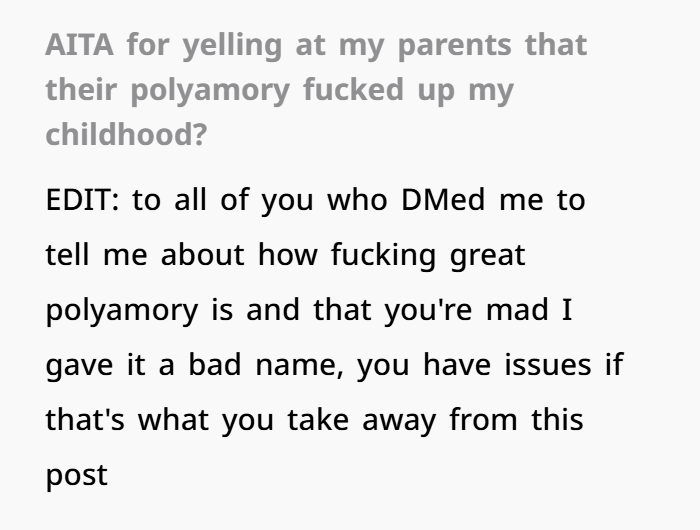
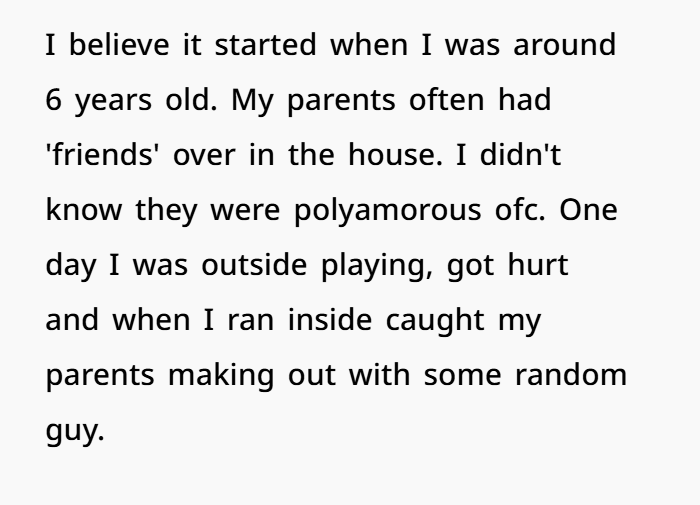
A person shared a difficult childhood experience that only became clear to them as they got older. Their parents practiced polyamory and often had different partners around the house.
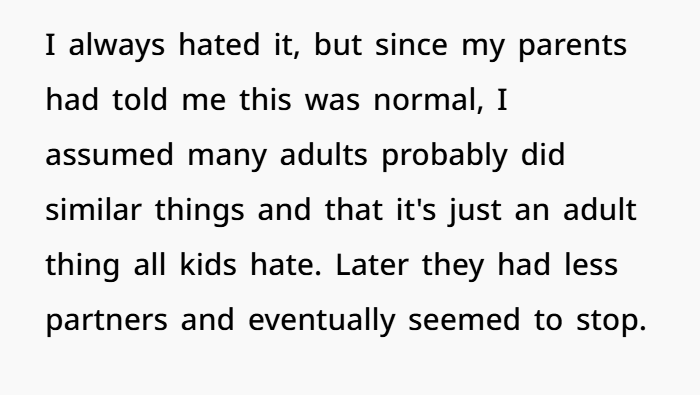
As a child, they believed this was just normal family life. New adults would come and go from their home, but they did not fully understand how it affected them.
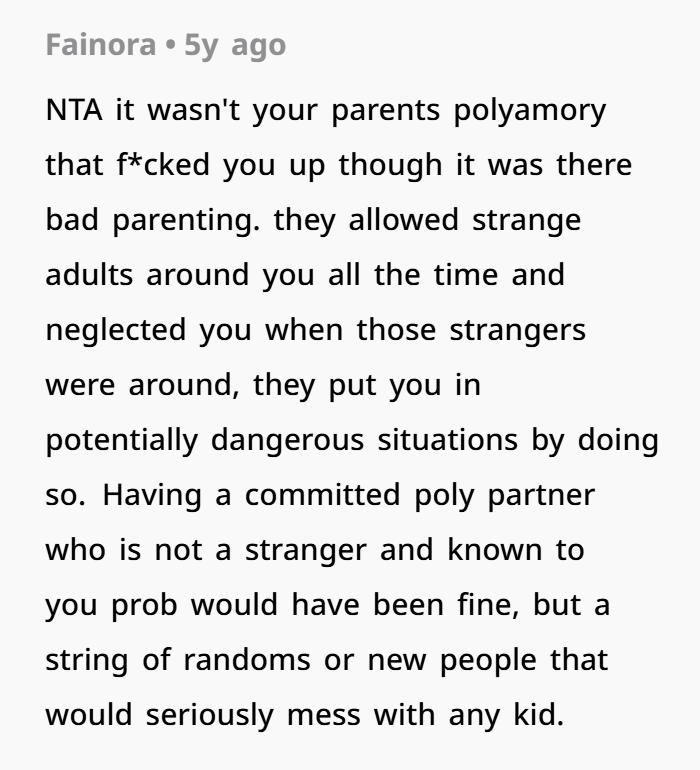
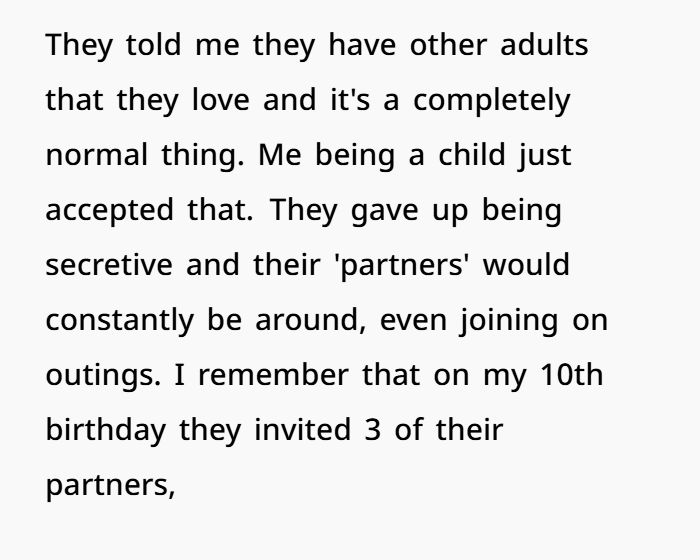
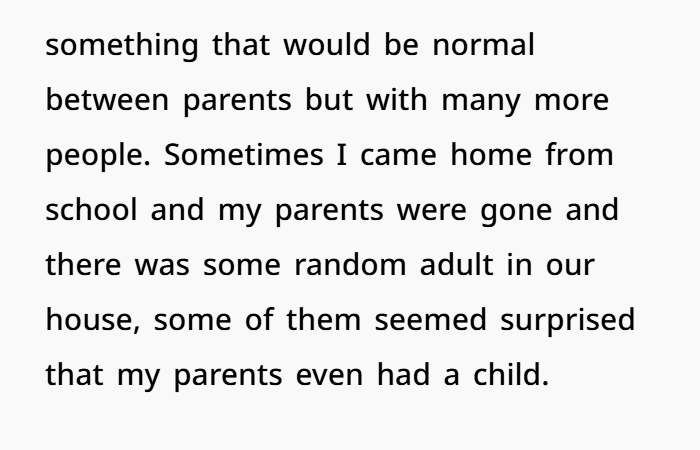
As an adult, they started looking back at their childhood differently. Their home often felt busy, confusing, and unpredictable. Special moments like birthdays, school nights, and family events sometimes included people they barely knew.
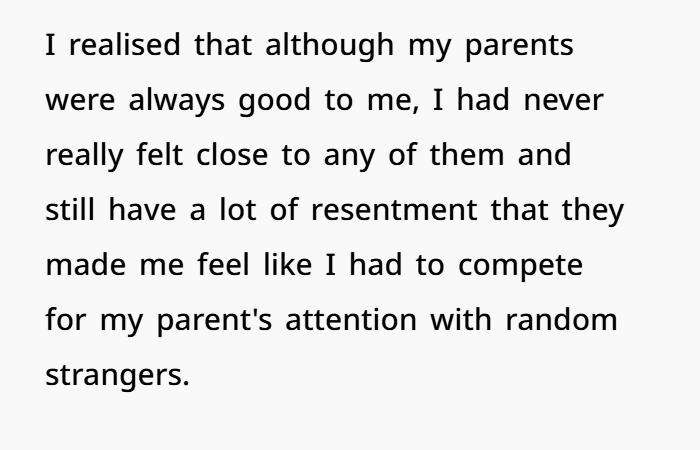
Their parents still loved them and provided for them. However, they often felt forgotten. They felt like they had to share their parents’ attention with many other adults.
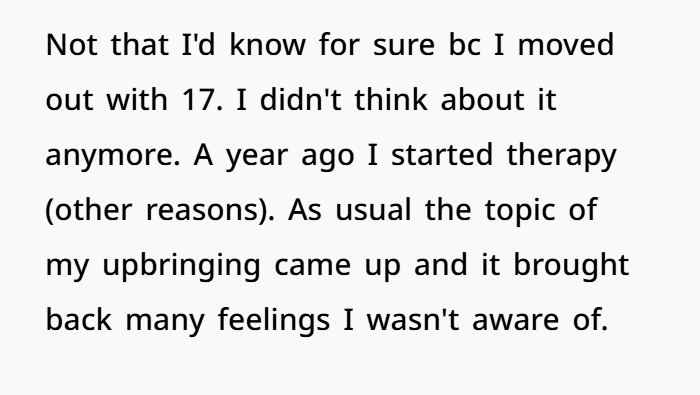
After years of therapy, they began to understand how those experiences shaped them. They realized that many childhood feelings had stayed with them for years.
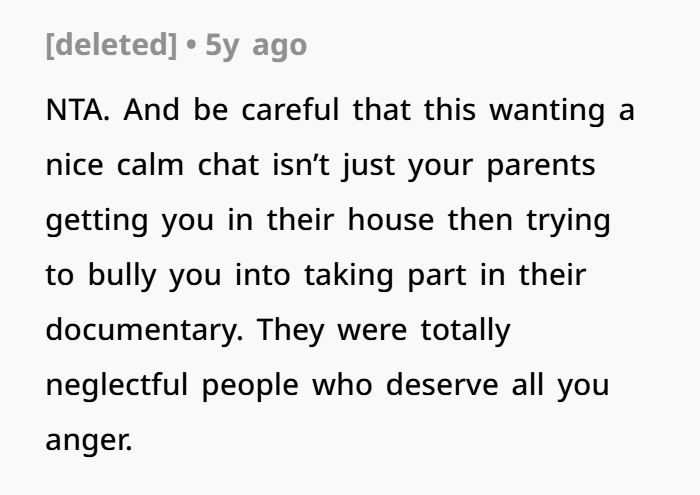
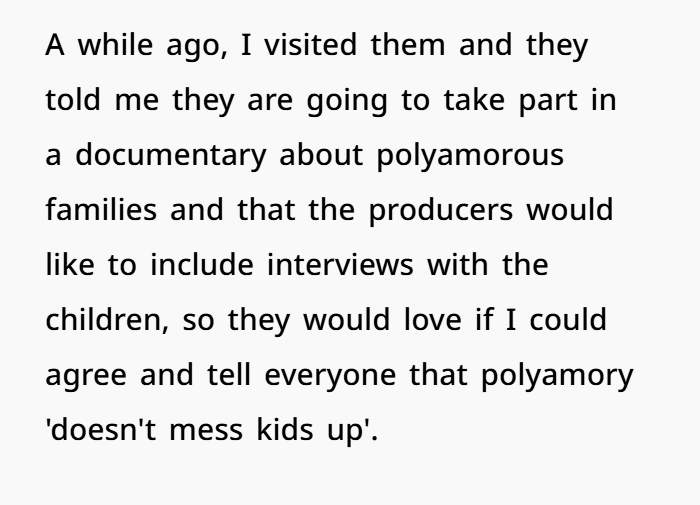
Later, their parents asked them to appear in a documentary about polyamory. They wanted their child to share a positive view of growing up in that environment.
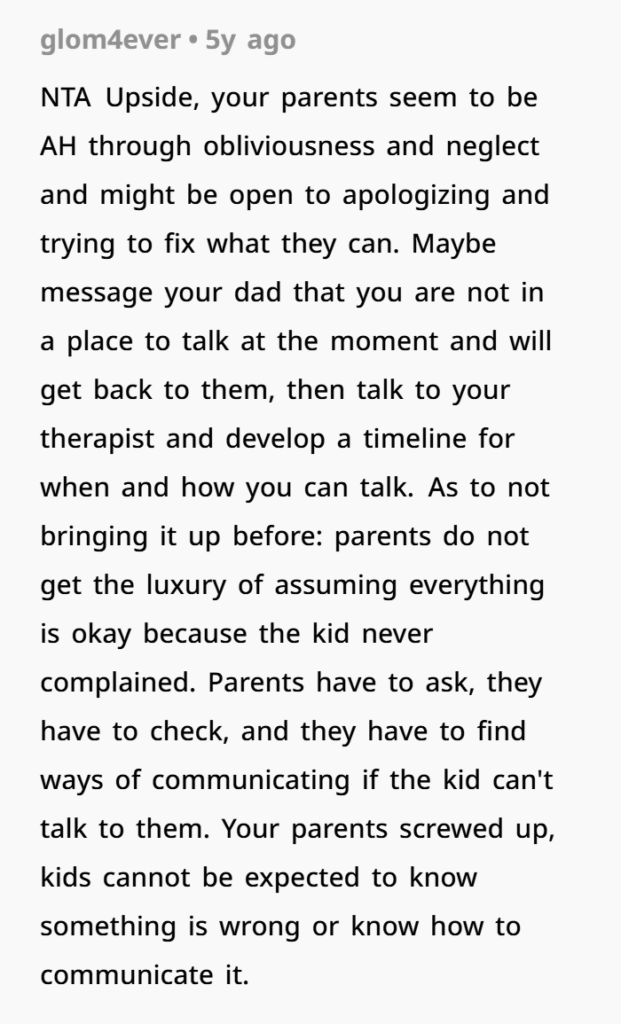
The request brought back many old emotions. Instead of pretending everything was fine, the person decided to be honest with their parents.
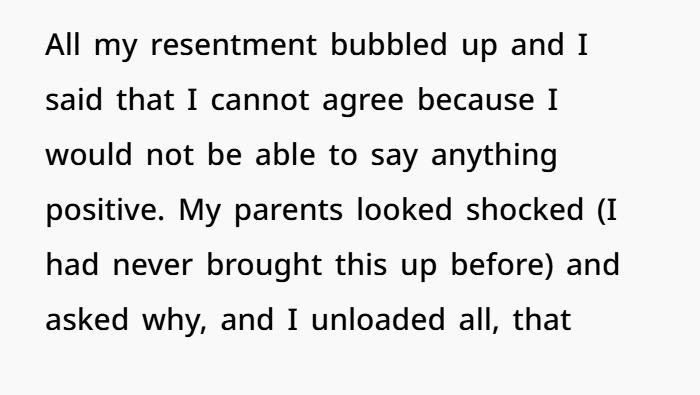
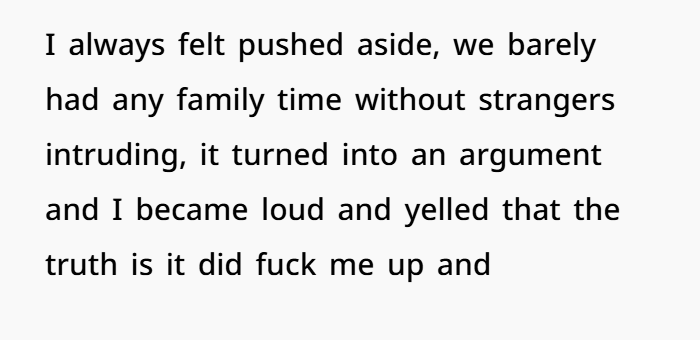
They explained that their childhood had been difficult because of the constant changes at home. They shared that they often felt ignored and uncomfortable with so many new people entering their family life.
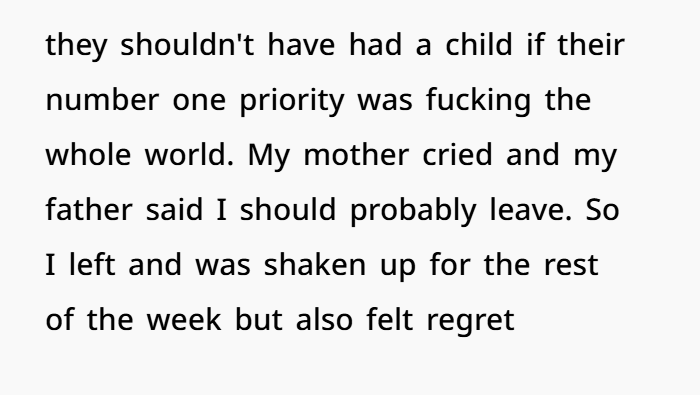
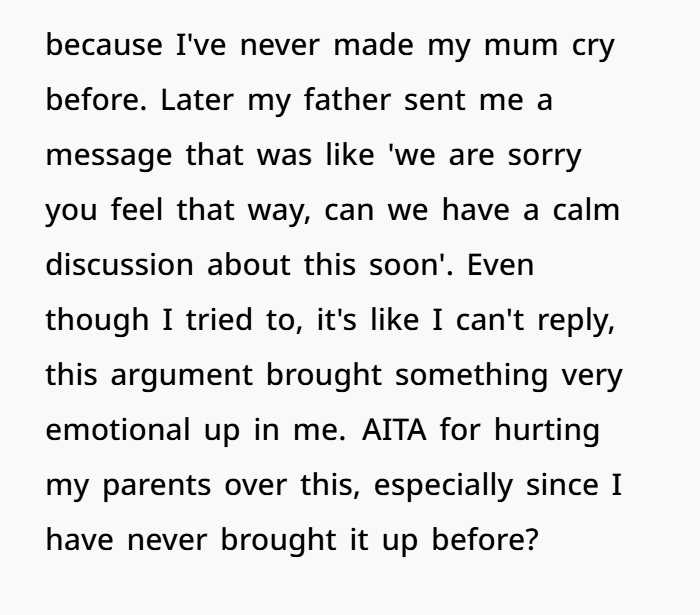
The conversation became emotional. Their parents felt hurt by the criticism, while the person struggled with years of hidden pain.
After the discussion, they had mixed emotions. They felt relieved for finally sharing their truth but also felt guilty about how strongly they reacted.
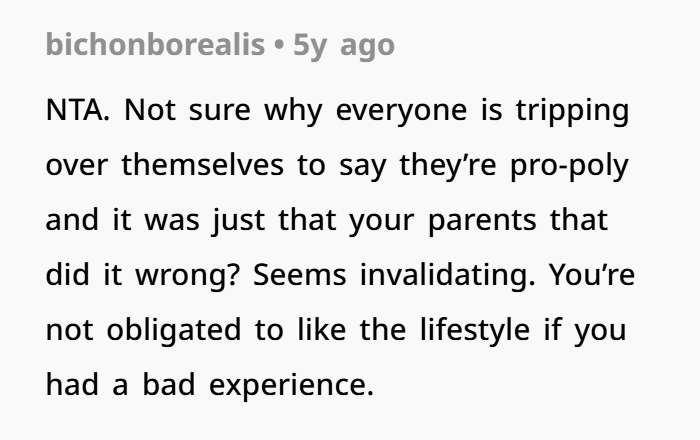
The disagreement was not only about their parents’ relationships. It was about their need to feel safe, valued, and heard while growing up.
Their story shows that parents and children can experience the same home in very different ways. What adults see as normal may still affect a child deeply.
Here, the parents of today’s OP were polyamorous

Growing up in a polyamorous family can feel different for every child. Some children may feel happy and supported, while others may struggle with confusion or feeling ignored. The way parents communicate, provide care, and create a stable home can shape a child’s experience.
 The “Poly Families Can Work” View
 The “Poly Families Can Work” View
Some research suggests that polyamorous families can provide healthy environments when children receive steady care and support from adults.
Sociologist Elisabeth A. Sheff has studied children raised in polyamorous families. Her research suggests that many children in these families can grow up feeling secure, supported, and cared for.
Some children may see their parents’ partners as trusted adults in their lives. These extra caregivers can offer attention, help with daily needs, and emotional support.
Advertisement – Continue Reading Below
Having more adults involved can also allow families to share parenting responsibilities. In some cases, it may provide extra help with childcare and household needs.
Children in these families may also learn that relationships and families can look different from one another. This can help them understand different ways people build families.
However, a family structure alone does not determine a child’s experience. Care, stability, trust, and open communication often have a stronger impact on a child’s well-being.
But It Does Not Work the Same Way for Every Child
 But It Does Not Work the Same Way for Every Child
Research on polyamorous families has some limits. Many studies focus on families that are stable and willing to share their experiences.
Because of this, children who had more difficult experiences may not be fully included. This can make it harder to understand every possible outcome.
Even in positive studies, some children have shared challenges. They may find it difficult to explain their family structure to friends or other people.
Some children use words linked to stepfamilies because they do not have other terms to describe their family. Others may feel that their parents’ partners receive more attention than they do.
These feelings can make a child feel ignored or less valued. The situation may become harder when different partners frequently come in and out of the home.
For children, the number of adults in a family may not matter as much as the care they receive. A healthy home depends on stability, love, trust, and adults who focus on the child’s needs.
Why Some Children’s Struggles Are Not in Studies
 Why Some Children’s Struggles Are Not in Studies
Negative experiences may not always appear clearly in research for several reasons.
Families that are doing well may be more likely to join studies. Families dealing with problems or conflict may be less willing to share their experiences.
Many studies also include small groups of participants. These groups may not show the full range of experiences across all polyamorous families.
Children may also avoid talking about painful memories involving their parents. They may worry about creating tension or hurting people they care about.
A family’s financial situation and support system can also affect research results. Some families in studies may already have strong emotional, social, or financial support.
Because of these limits, current research may not show every child’s experience. Both positive and difficult stories are important when understanding different family structures.
Concerns and Criticism From Experts
 Concerns and Criticism From Experts
Some family therapists say polyamorous parenting can become challenging when family roles and boundaries are unclear.
Problems may happen when adult relationships receive more attention than a child’s emotional needs. In these situations, children may feel ignored, uncertain, or less secure.
Frequent changes in partners can also make home life feel unstable. This can be difficult when children become attached to adults who later leave.
Clear family roles can help children know who they can trust and rely on. Regular routines and caring parenting can also help create a safe and stable environment.
Legal concerns can create extra challenges as well. Many family laws are built around families with one or two legal parents.
These concerns do not mean polyamorous families are always harmful. They show why care, stability, clear boundaries, and attention to children’s needs are important in any family.
Where This Leaves Real Children’s Experiences
 Where This Leaves Real Children’s Experiences
Every child can have a different experience growing up in a polyamorous family. Some may feel loved and supported, while others may feel ignored or emotionally distant.
Challenges can happen when adults are inconsistent or focus more on their relationships than their children’s needs. This may leave children feeling lonely, unsure, or confused about relationships.
Positive research findings do not erase personal experiences that are painful. Both good and difficult experiences matter and should be understood.
No matter the family structure, children need reliable care, attention, emotional support, and a stable home life.
What Healthy Polyamorous Parenting Should Look Like
 What Healthy Polyamorous Parenting Should Look Like
Experts often highlight several ways families can help children feel safe and supported.
A child’s emotional needs should come first. Adult relationships should not regularly take away from the time and care children need.
Parents should explain their family structure in simple, age-appropriate ways. Children should understand who the adults are and what role each person plays in their lives.
Stable routines and dependable care can also help children feel secure. Knowing what to expect at home can give them comfort and confidence.
Adults should think about how their relationship choices may affect children over time. A child’s growth and well-being should be an important part of family decisions.
Children also need a safe space to share their thoughts and feelings. Parents should listen with care, even when those feelings are difficult to accept.
When children receive steady love, attention, and support, they are more likely to feel safe and valued. These needs matter in every kind of family.
Why Your Feelings Are Valid — Even If Research Doesn’t Capture It
 Why Your Feelings Are Valid — Even If Research Doesn’t Capture It