My Fiancé Lent My Brother £15K, but Now My Parents Are Taking His Side
A 26-year-old woman is caught in a painful family dispute involving her fiancé, her brother, and her parents. What should have been an exciting time planning her wedding has turned into a stressful family conflict.
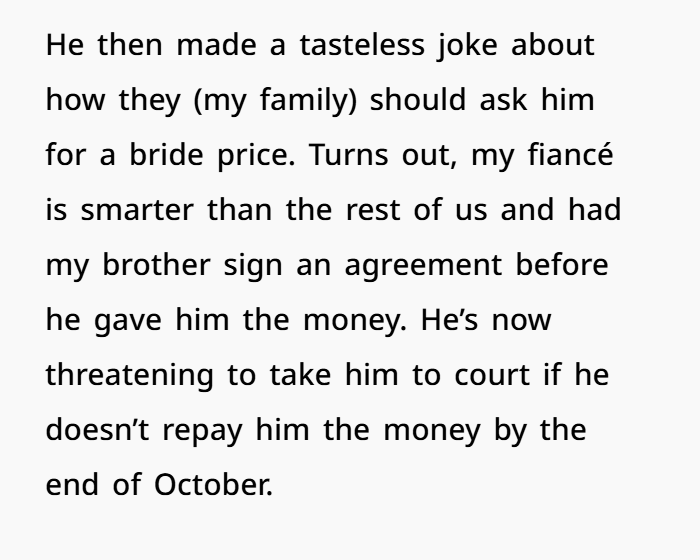
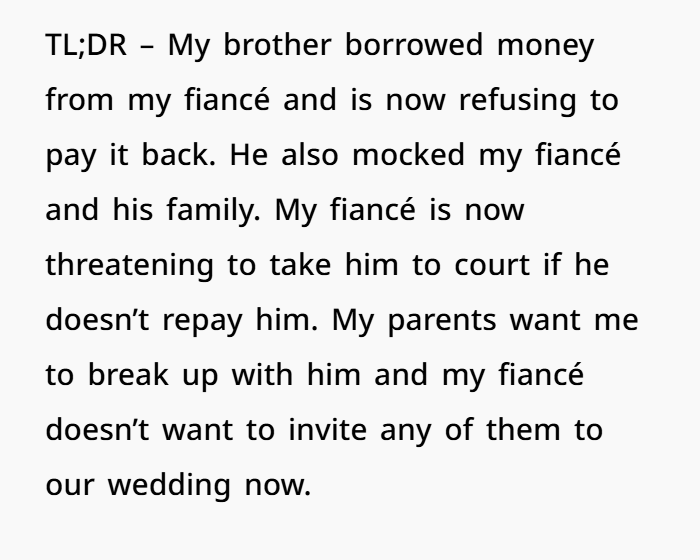
The trouble began when her 28-year-old brother borrowed £15,000 from her 27-year-old fiancé. Her brother had a history of borrowing money and not paying it back. Knowing this, her fiancé made sure they both signed a loan agreement before handing over the money.
But when it came time to repay the loan, her brother refused. To make matters worse, he began treating her fiancé and his family with disrespect.
Instead of holding her brother responsible for the unpaid loan, her parents turned against her fiancé. They accused him of being unfair and even claimed he was not the right person to marry into their family.
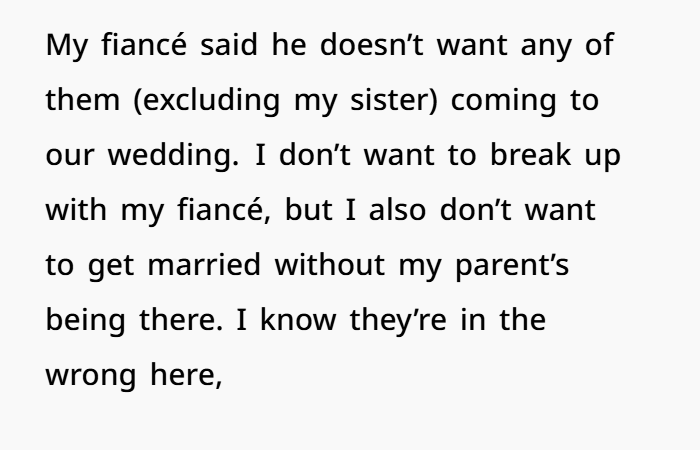
Her fiancé was deeply upset by their reaction. He felt he had tried to help her brother, only to be treated badly in return. As the conflict grew, he warned that her parents might not be welcome at their wedding unless things changed.
Now, the woman feels stuck in the middle.
She loves her fiancé and wants to build a future with him. But she also wants her parents to be there when she gets married. The thought of celebrating such an important day without them is painful.
The situation has also brought back old feelings about how her family treats her. She believes her parents have always favored her brother, often defending him even when he is wrong.
Seeing them take his side again has left her feeling hurt and unsupported.
What started as a simple loan has now become a much bigger problem. It has raised questions about trust, family loyalty, money, and respect.
The woman now faces a difficult choice between protecting her future marriage and keeping peace with her family.
She wants her parents and fiancé to find a way forward, but she also knows the problem cannot be ignored. With her wedding approaching, she must decide how to set fair boundaries without losing the people she loves.
Her Brother Refuses to Repay the Loan, Leaving Her Torn Between Her Fiancé and Her Family







This situation is about more than money. It involves family loyalty, trust, respect, and the future of a marriage.
A £15,000 loan has caused a serious dispute between a woman’s fiancé and her family. Now, she feels caught between the man she plans to marry and the parents she wants at her wedding.
The main issue is not just the unpaid money. It is how her family has reacted to her fiancé asking for it back.
When Money and Family Mix
Lending money to family members can be risky. Even when people have good intentions, things can go wrong if they do not agree on clear terms.
Advertisement – Continue Reading Below
Family loans can lead to arguments when one person expects repayment while the other treats the money as a gift.
In this case, the fiancé took steps to protect himself. Before lending £15,000 to his future brother-in-law, he made sure they signed a written agreement.
That was a sensible choice, especially since the brother had borrowed money before without paying it back.
The agreement made one thing clear: the money was a loan, not a gift.
But when the brother refused to repay it, the situation quickly became a family dispute.
The woman’s parents appeared to expect her fiancé to let the matter go. He believed the agreement should be honored.
Those different views have now created a serious divide.
Family Conflict and Money Problems
Money disputes within families often involve more than unpaid bills. They can bring up old feelings about fairness, trust, and how family members treat each other.
When someone keeps borrowing money without paying it back, other relatives may begin to feel used.
If the family continues to excuse that behavior, the problem can become worse.
In this story, the brother already had a history of failing to repay loans. His sister also felt that their parents had often favored him.
The £15,000 loan brought those old problems back into focus.
Her fiancé expected the brother to keep his promise. Instead, he faced anger and disrespect for asking for his money.
This has left the woman questioning why her parents are defending her brother rather than asking him to take responsibility.
Understanding the Fiancé’s Point of View
For the fiancé, £15,000 is a large amount of money. Lending that much to a family member is a serious decision.
He trusted his future brother-in-law enough to help him, but he also wanted to protect his savings.
That is why he asked for a written loan agreement.
When the brother refused to pay and began treating him badly, the fiancé had reason to feel upset.
From his point of view, he tried to help someone in need and received disrespect in return.
His frustration may now be about more than getting the money back.
He may also be worried about how his future wife’s family will treat him after the wedding.
If they refuse to respect his boundaries now, he may fear that similar problems will happen again.
Setting limits does not mean someone lacks kindness. Sometimes, it is necessary to protect their money, peace, and relationships.
Why the Parents’ Reaction Matters
The woman’s parents have accused her fiancé of being greedy and unfair.
They may believe that helping family should come before strict money rules.
But there is a difference between offering help and being expected to give away a large amount of money.
The fiancé agreed to lend the money, and the brother agreed to repay it.
Asking someone to honor that promise is not the same as refusing to help family.
The parents’ reaction has made the conflict harder for their daughter.
She wants to support her fiancé, but she also wants to keep a close relationship with her parents.
Their decision to defend her brother has left her feeling hurt, especially because she believes they have favored him for years.
What She Can Do Next
The woman does not have to solve every family problem on her own. But she can take steps to protect her future marriage and reduce the tension.
First, she should have an open conversation with her fiancé.
They need to understand each other’s feelings and agree on how to handle family money issues in the future.
She should also ask what he needs from her parents before he feels comfortable having them at the wedding.
Next, she can speak with her parents and explain why the situation has hurt her.
Some important points to discuss include:
- Her brother signed an agreement to repay the loan.
- Her fiancé has a right to ask for his money back.
- Family members should treat each other with respect.
- Money disputes should not be used to create problems in her marriage.
- Her parents need to understand how their actions affect her.
These talks may not be easy. But avoiding the issue could allow the anger to grow.
If everyone is willing, a calm discussion with a neutral person may help.
Possible Ways to Resolve the Conflict
One possible solution is for the brother to agree to a clear repayment plan.
If he cannot return the full £15,000 at once, smaller payments may be an option.
However, any new plan should be accepted by both him and the fiancé.
The woman can also make it clear that she wants a good relationship with her parents, but she will not accept them treating her partner badly.
At the same time, she and her fiancé should talk about the wedding.
He may feel uncomfortable inviting people who have insulted him. She may feel heartbroken at the thought of getting married without her parents.
Both feelings deserve to be heard.
Rather than making the wedding another source of conflict, the couple should try to reach a decision they can both accept.
They may also find that couples counseling helps them discuss these issues without turning against each other.
What She Should Prepare For
There is no promise that her parents will change their minds.
They may continue defending her brother or blaming her fiancé for the dispute.
Her fiancé may also refuse to back down, especially if he feels his trust has been broken.
The woman may need to accept that she cannot make everyone happy.
What she can do is decide how she wants to handle future family problems.
For example, she and her fiancé can agree not to lend large amounts of money to relatives without discussing it first.
They can also decide how to respond when family members cross their boundaries.
Making these choices before marriage may help them avoid similar disputes later.
Why This Matters for Their Future
Marriage brings two people together, but family relationships can still affect their daily lives.
Disagreements about money, loyalty, and respect may continue long after the wedding.
If these problems are ignored, they could return during family visits, holidays, or other major events.
That is why this conflict deserves attention now.
The woman and her fiancé need to know they can work as a team when difficult situations arise.
They do not need to agree on every detail, but they should be able to listen, support each other, and make choices together.
The Bigger Lesson
This story began with a £15,000 loan, but it has turned into a much deeper family problem.
The fiancé wants his money back and expects to be treated with respect. The parents are defending their son, while their daughter feels torn between the people she loves.
The brother’s refusal to repay the loan has placed pressure on a relationship that should be focused on planning a future together.
Helping family should not mean giving up the right to fair treatment.
The woman can love her parents while still standing up for her fiancé. She can also support her future husband without cutting off her family before trying to resolve the conflict.
What matters now is finding a way forward that protects their marriage, respects fair boundaries, and leaves room for healthier family relationships.
Many readers called out the bride’s family for their behavior, and some encouraged the groom to end their engagement