How Your Partner’s Illness Can Change the Way You Feel About Your Marriage
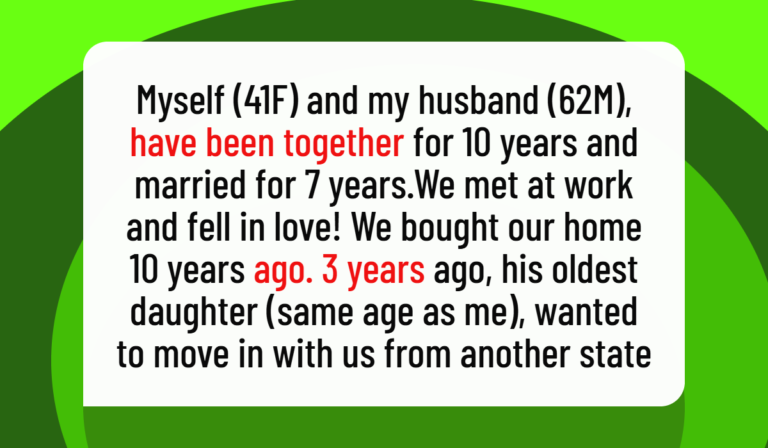
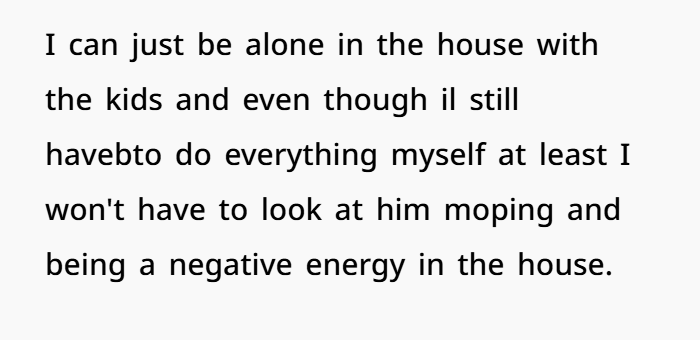
After 10 years of marriage and raising two young children, one mother says she has reached her limit. She feels tired, stressed, and overwhelmed by the amount of work she handles every day.
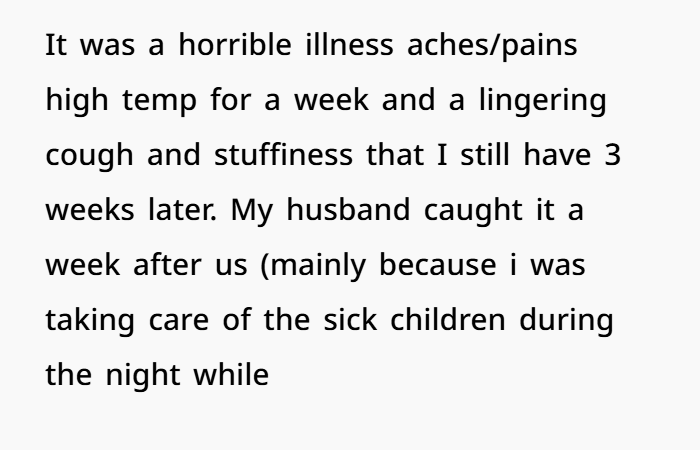
Things became even harder when the whole family caught the flu. Despite feeling sick herself, she kept working, looking after the children, and taking care of the house. She felt she had no choice because everyone relied on her to keep things running.
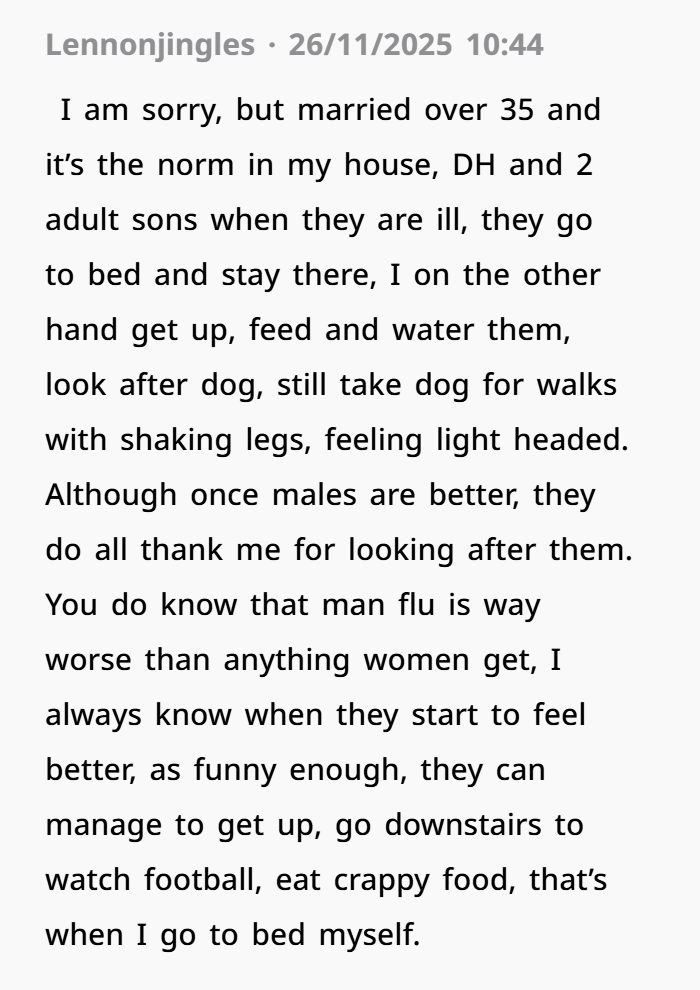
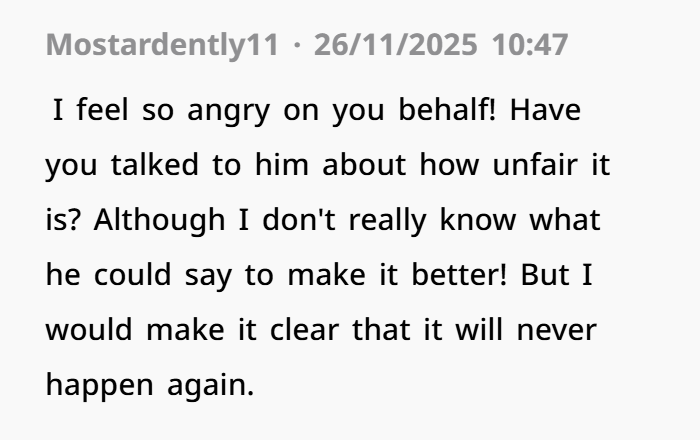
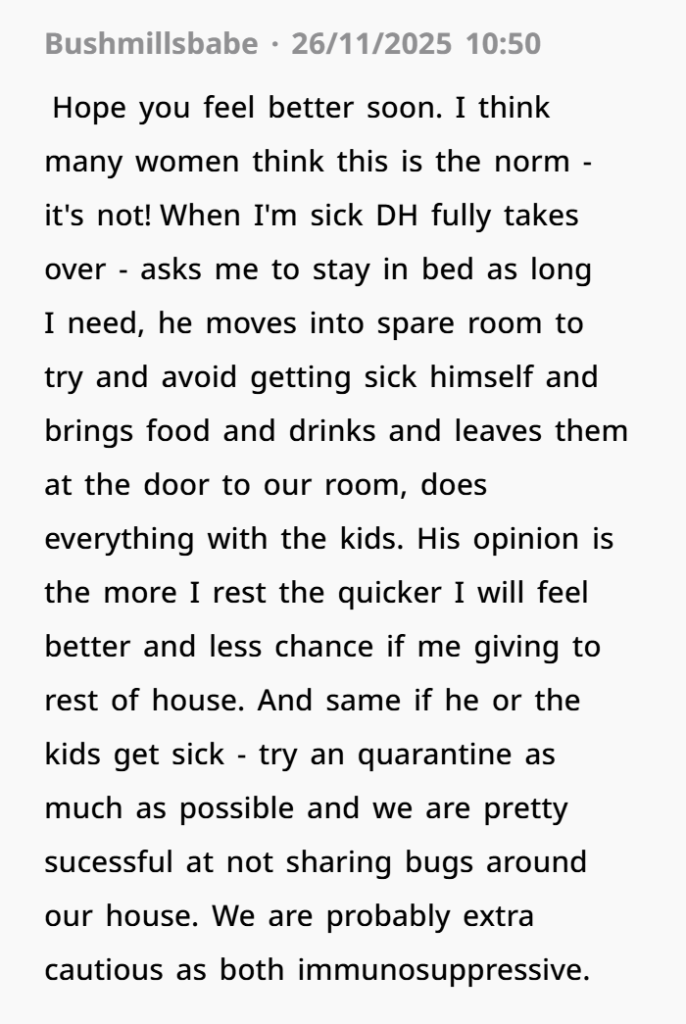
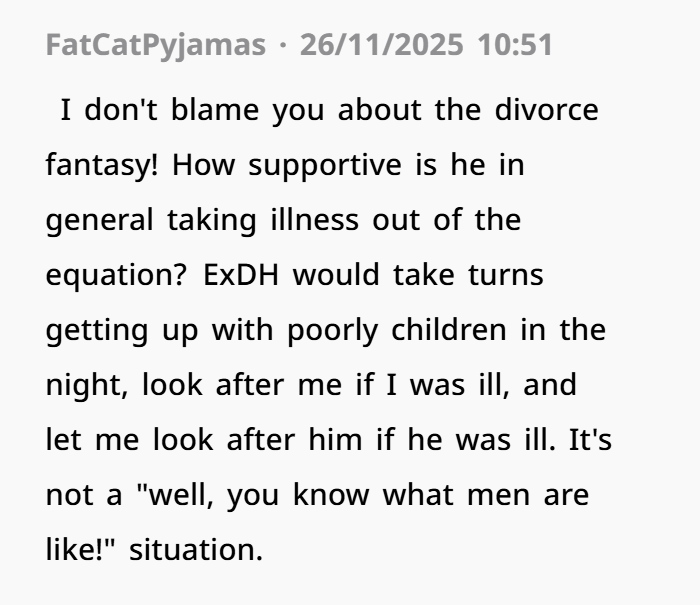
Her husband, however, spent most of his time resting while he was ill. He could not help much with the children or household chores. According to her, this was not the first time. Whenever he gets sick, she feels that nearly all the family duties fall on her.
Over the years, this pattern has left her feeling alone in their marriage. She is tired of being the person who must keep going, even when she needs rest and care herself.
The experience made her question the balance of responsibilities in their relationship. Between raising children, managing money, working, and keeping the house in order, she feels she has little time or energy left for herself.
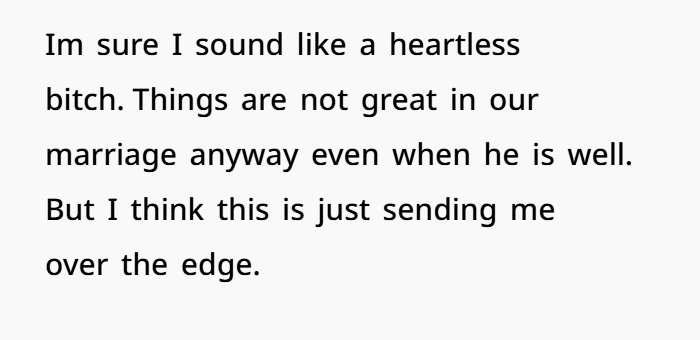
She also worries about how this constant pressure is affecting her health and happiness. What started as frustration over her husband’s behavior during an illness has turned into deeper concerns about their marriage.
Although she feels guilty for thinking about leaving, she knows she cannot keep ignoring her feelings. She wants a marriage where both partners share the work and support each other during difficult times.
Her story has raised questions about marriage counseling, fair parenting duties, and the need for better communication between couples.
A strong marriage is not just about staying together through hard times. It is also about making sure neither partner feels they must face those hard times alone.
When both people share responsibilities, listen to each other’s needs, and offer support, they have a better chance of building a happy and lasting relationship.
The Whole Family Caught the Flu, but the Mother Had to Manage Work, Sick Kids, and Her Own Illness

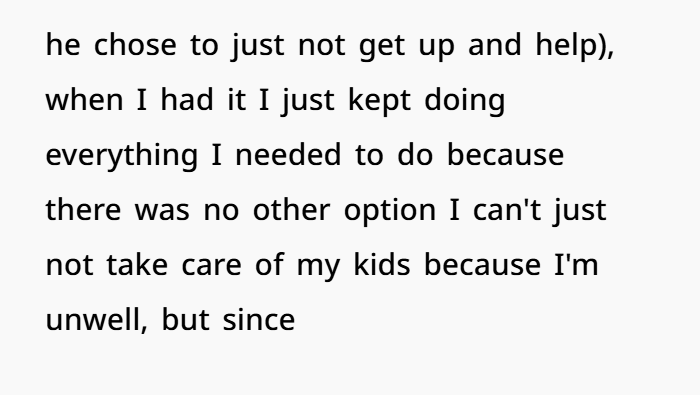
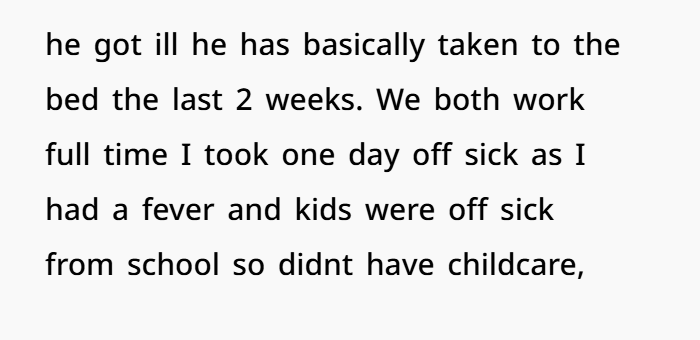
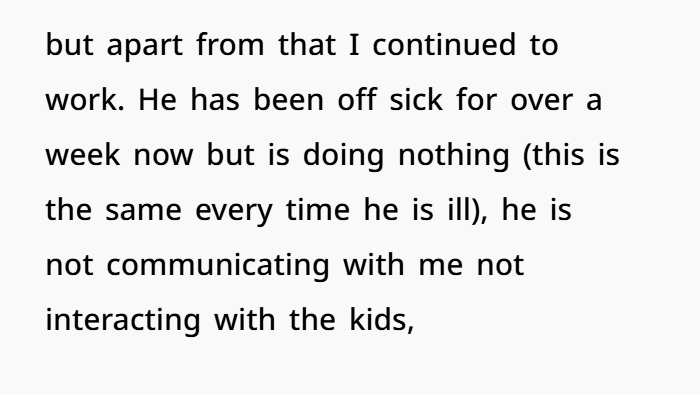
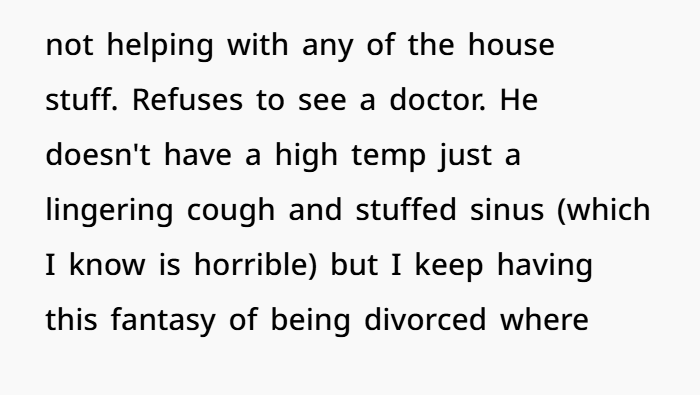
This story is about more than a family catching the flu. It shows how years of stress and unfair workloads can affect a marriage.
The real problem is not that the husband got sick. It is that his wife feels she must handle everything whenever life gets hard.
She wants support, understanding, and a partner who shares the work. Instead, she feels alone with duties that should not always fall on her.
Carrying Too Much Responsibility
In many homes, one partner ends up doing most of the daily work. This can include raising children, earning money, cleaning, cooking, and keeping track of family needs.
Some common duties include:
- Working a full-time job
- Looking after children
- Cooking and cleaning
- Booking doctor visits and other appointments
- Managing bills and family plans
- Offering care and emotional support
Handling all these tasks can be tiring, even when everyone is healthy.
Advertisement – Continue Reading Below
For this mother, things became much harder when the entire family caught the flu. She was sick herself but still had to work, care for the children, and keep the house running.
Meanwhile, her husband spent most of his time resting. She felt he had stepped away from his share of the work.
When this happens again and again, the partner doing most of the work may feel tired, angry, and alone.
Understanding Emotional Burnout
Emotional burnout can happen when someone deals with too much stress for too long.
It often develops when a person keeps caring for others without getting enough rest or support.
At first, they may try to push through the stress. But over time, even small tasks can begin to feel difficult.
Common signs may include:
- Feeling tired most of the time
- Getting upset more easily
- Losing patience with loved ones
- Feeling unhappy in the relationship
- Struggling to focus or relax
For someone raising children, working, and managing a home, these feelings can become hard to ignore.
Feeling burned out does not mean a person has stopped caring about their family.
It may simply mean they have been giving more than they can manage for too long.
Why Thoughts About Divorce Sometimes Appear
One of the most painful parts of this story is that the wife has started thinking about divorce.
Some people may see this as a sign that she no longer loves her husband. But thoughts about leaving do not always mean someone has made up their mind.
Sometimes, people think about divorce because they feel trapped in a stressful situation.
They may be longing for:
- A calmer home
- More help with daily tasks
- Better talks with their partner
- A fairer share of family duties
- Time to rest and care for themselves
In this case, the wife may not simply want her marriage to end. She may want the pressure she feels every day to stop.
Those are two different things.
Before making a major choice, it may help to understand what needs to change and whether both partners are willing to make those changes.
Relationship Burnout Can Change How Partners Feel
A marriage can become stressful when one partner feels they are always giving more than they receive.
This can happen with housework, childcare, money, or emotional support.
Over time, the partner carrying most of the load may begin to feel taken for granted.
Tasks that once seemed small can become sources of anger. Even simple requests may lead to arguments because the deeper problem has never been addressed.
For this mother, her husband’s illness may have brought years of frustration to the surface.
She was not only upset that he needed rest. She was upset because she felt she never had the same chance to rest when she was sick.
When one partner feels they must always be strong, it can become difficult to feel supported in the marriage.
Communication Problems Can Make Things Worse
Good communication helps couples understand what each person needs.
But when partners stop talking openly, small problems can grow.
The wife feels her husband does not fully understand how much she handles each day. She also feels he becomes less involved when he is unwell.
This may leave her asking herself:
- Does he see how much work I do?
- Does he know how tired I feel?
- Does he value the effort I put into our family?
- Would he care for me the same way if I needed help?
When these questions go unanswered, hurt feelings can build.
Couples need to talk about their needs before anger becomes a regular part of their relationship.
It also helps when both partners listen without turning every concern into an argument.
Looking at the Bigger Pattern
One bad week does not always show the true state of a marriage.
People get sick, feel tired, and sometimes need more help than usual. That is part of family life.
But the wife says this problem has happened many times before.
Whenever her husband becomes ill, she feels that most of the family work falls on her.
That repeated pattern is what concerns her most.
She may be able to handle a few difficult days. What she finds harder is knowing she may face the same situation every time someone gets sick.
Repeated problems can slowly damage trust and closeness between partners.
Recognizing these patterns is an important first step toward making things better.
Why Sharing Responsibilities Matters
A healthy marriage does not require both partners to do the exact same amount of work every day.
There will be times when one person needs more rest or support.
The goal is to make sure both people feel cared for and that the workload remains fair over time.
For example, one partner may handle more childcare while the other works longer hours. During an illness, those roles may need to change.
What matters is that both partners notice each other’s needs and help when they can.
When one person always carries the heavier load, frustration can grow.
Sharing duties can ease stress and give both partners more time to rest, enjoy family life, and connect with each other.
Helpful Resources for Couples
When stress and arguments become common, outside support may help.
Couples can explore options such as:
- Marriage counseling
- Couples therapy
- Family counseling
- Mental health support
- Stress management programs
- Classes that teach better communication
A trained counselor can help couples talk about difficult issues in a calm setting.
Counseling may also help them understand why certain problems keep happening and what changes could improve their daily lives.
Both partners need to be willing to listen and take part for this work to help.
What Needs to Change Moving Forward
Waiting for the flu to pass may solve the family’s short-term problem. But it will not fix years of frustration.
The couple may need to talk about how they manage their home and care for each other.
Some important topics include:
- How household chores are divided
- Who handles childcare when someone is sick
- How both partners can get enough rest
- How they can offer better emotional support
- How work and family duties can be balanced
- What each person needs to feel happy in the marriage
These talks may be easier once everyone has recovered and emotions are less intense.
It is also important to turn promises into real changes.
For example, the couple could agree on clear childcare duties or make a plan for future illnesses.
Small changes in daily habits may help rebuild trust over time.
The Bigger Lesson
This story is not just about a husband resting while his wife struggles with the flu.
It is about a woman who feels she has spent years putting everyone else’s needs before her own.
She wants to know that when she is tired, sick, or overwhelmed, someone will be there to help her too.
Marriage should not leave one partner feeling responsible for everything.
Both people will face difficult days, and both deserve care and support during those times.
A strong marriage is not measured by how much one person can endure. It is built when both partners share the work and look after each other.
For this couple, the next step may be finding a fairer way to handle family life.
If both partners are willing to listen and make lasting changes, they may be able to ease the stress and rebuild their connection.
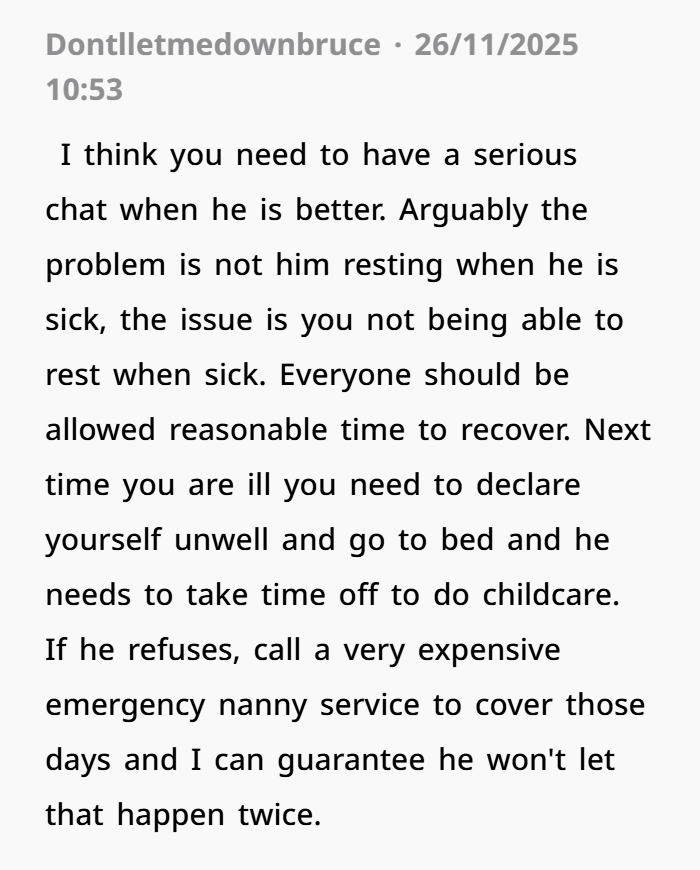
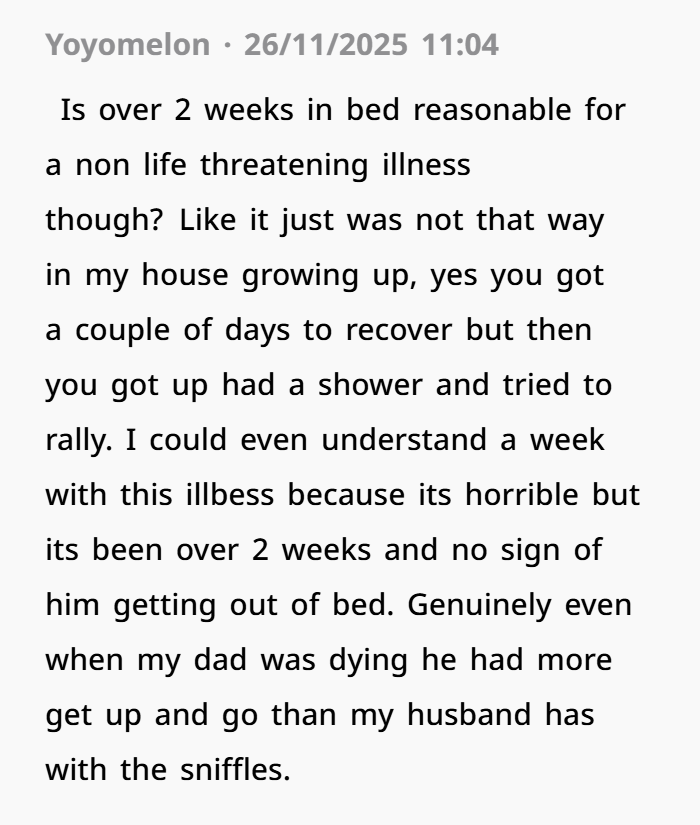
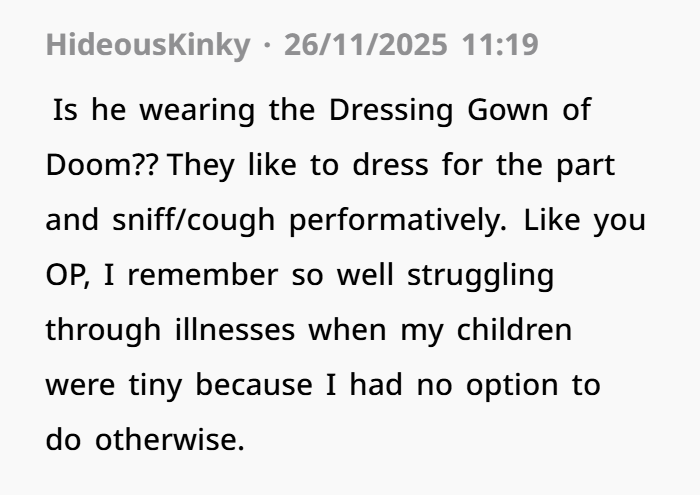
Many People Were Shocked She Had Put Up With Her Husband’s Behavior for Years and Urged Her to Consider Divorce