I Reported My Parents for Neglecting My Disabled Brother, and Now My Entire Family Is Against Me
A person who spent much of their life caring for their disabled brother finally reached their breaking point. After years of putting their family’s needs first, they made a decision that left their relatives divided.
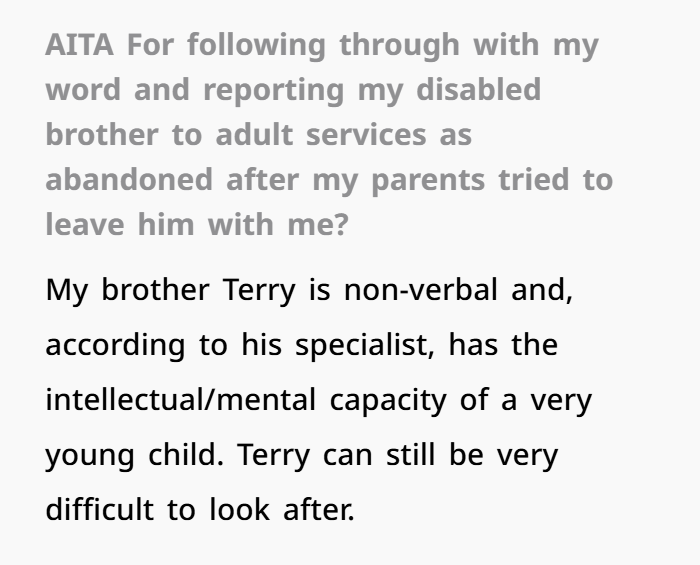
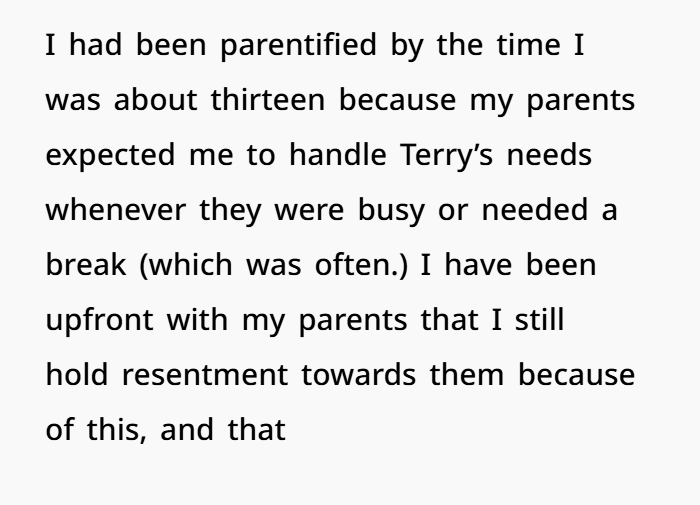
Their brother, Terry, has serious developmental disabilities and struggles to communicate. He needs regular care and support with daily tasks. From a young age, the person was expected to help look after him because their parents depended heavily on them.
At first, helping Terry was simply part of family life. But as the years passed, the responsibility became harder to manage.
They wanted to focus on their career, build relationships, and make plans for their own future. Yet their parents continued expecting them to be available whenever Terry needed care.
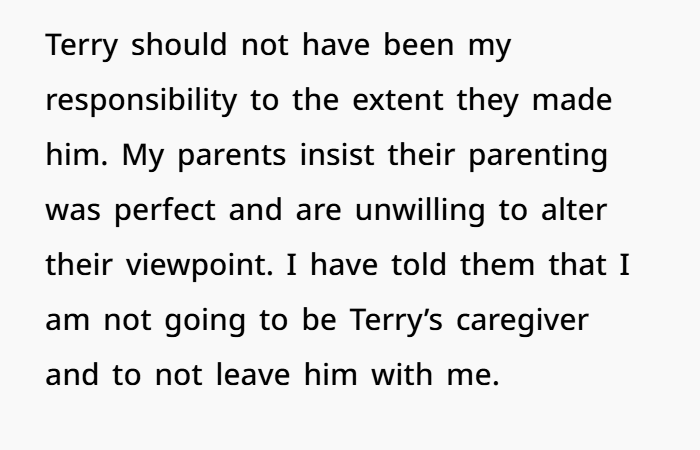
They tried explaining how much pressure they were under. They told their parents they could still help, but they needed advance notice and a clear plan.
Unfortunately, those conversations didn’t lead to much change.
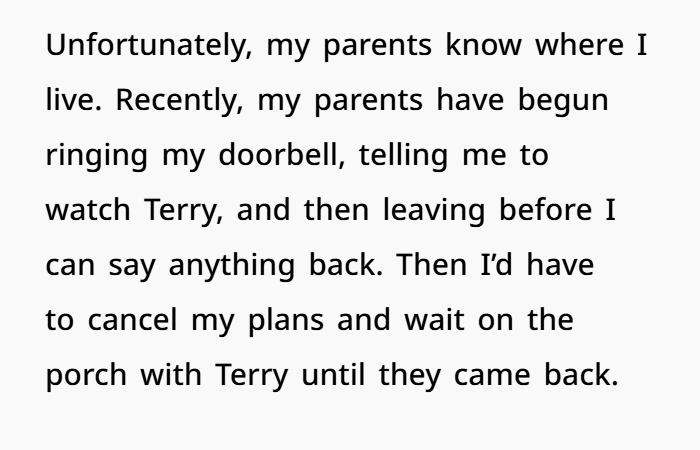
According to their Reddit post, their parents kept leaving Terry with them without asking permission first.
These unexpected visits disrupted their work, personal plans, and daily routine. They felt they had little control over their own time.
After dealing with the same problem repeatedly, they decided something had to change.
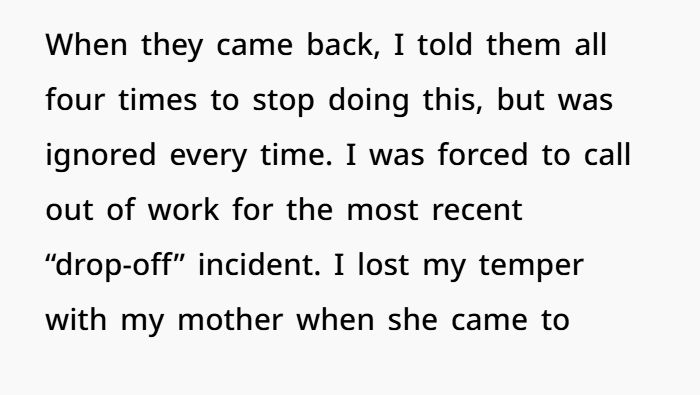
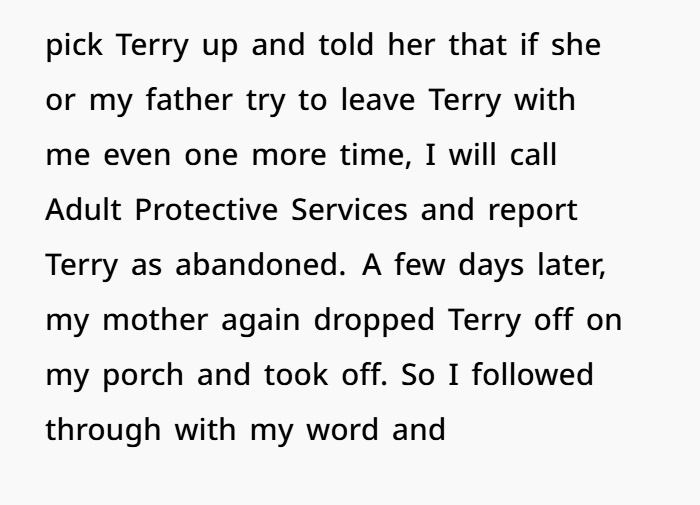
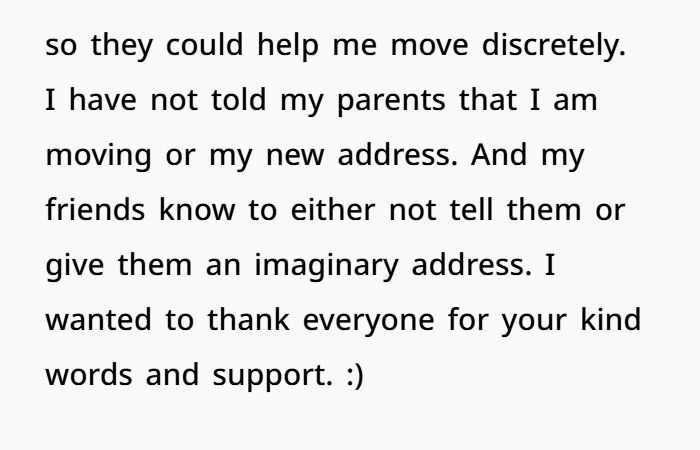
They warned their parents that they would contact adult care services if Terry was left with them again without an agreement.
This wasn’t a decision they made lightly. They cared about their brother and wanted him to be safe. But they also knew they couldn’t keep taking on the role of caregiver without proper support.
Despite the warning, their parents left Terry in their care once again.
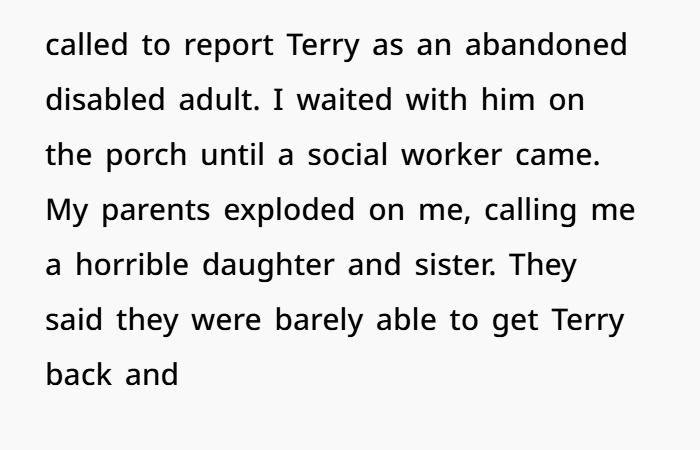
This time, they followed through.
They contacted the agency responsible for adult care and explained the situation. Their hope was that trained staff could review Terry’s needs and help the family find a better care plan.
However, the decision caused serious tension within the family.
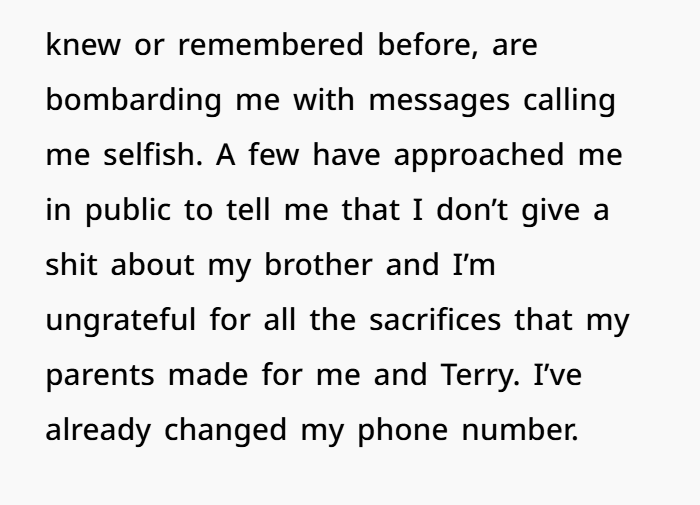
Some relatives were angry and believed they should have continued looking after Terry. They felt involving outside services was unnecessary and criticized them for taking such a serious step.
Advertisement – Continue Reading Below
Others saw things differently. They understood that caring for someone with major support needs can be exhausting, especially when the responsibility falls on one person.
The person was left facing criticism from relatives while trying to stand by their decision.
They never wanted Terry to suffer or feel abandoned. Their concern was that his long-term care needed more planning than the family had provided.
The situation also raised a difficult question about family duty.
How much should one person be expected to sacrifice when caring for a family member with disabilities?
Helping a loved one can be an act of care and kindness. But when that help becomes a constant demand, it can affect someone’s health, work, and personal life.
Parents and relatives may have different views about who should provide care. Still, those duties need to be discussed rather than forced onto someone without their consent.
Terry’s needs also deserve proper attention. He requires safe, reliable care from people who can meet those needs.
This story shows why families need clear plans, honest talks, and access to outside support when caring for someone with a disability.
It also highlights the importance of setting boundaries, even when doing so leads to painful family conflict.
Caring about a family member doesn’t mean one person must give up their entire life to meet everyone else’s expectations. A good care plan should protect both the person who needs help and those who provide it.
But one person has spent their teen years looking after their disabled brother, and has decided enough is enough




Was I Wrong for Reporting My Parents? A Closer Look at What Happened
This situation raises difficult questions about family duty, caring for someone with disabilities, and setting personal boundaries.
When family members disagree about caregiving, emotions can run high. Some may feel that helping is a duty, while others believe everyone deserves control over their own life.
Looking at what happened can help explain why this decision was made and whether it was fair.
1. Taking on Caregiving Duties at a Young Age
Growing up, you were often expected to help care for your brother, Terry. Your parents relied on you to look after him whenever they needed help.
Helping family is normal, but caring for someone with major support needs can be demanding. For a teenager, those duties can become even harder to manage.
Young people who take on too much family responsibility may struggle with stress, frustration, and exhaustion.
They may also miss out on time with friends, school activities, or chances to focus on themselves.
After years of helping, it’s understandable that you wanted to build your own life. Choosing not to become Terry’s full-time caregiver doesn’t mean you stopped caring about him.
2. Why Setting Boundaries Matters
As an adult, you have the right to decide how much help you can provide.
You explained to your parents that you couldn’t keep caring for Terry without advance notice or a clear agreement.
That was an important boundary.
Healthy boundaries help protect your time, mental health, work, and personal relationships.
They also make it easier for family members to understand what they can expect from one another.
Saying you cannot handle a responsibility is different from saying you don’t care about someone.
You can love your brother while being honest about what you’re able to do.
3. Your Brother Deserves Reliable Care
Terry has serious developmental disabilities and struggles to communicate. Because of this, he needs regular care from people who understand his needs.
Looking after someone who requires daily support can be difficult, even for experienced caregivers.
A good care plan should consider his safety, daily routine, health, and long-term needs.
It may also involve trained care workers, health services, or local disability programs.
The goal should be to make sure Terry receives steady support rather than depending on someone who may not always be available.
4. Why Outside Support Can Help Families
Many families struggle to manage the needs of a loved one with disabilities.
That’s why support services exist.
Depending on where someone lives, help may be available through adult care agencies, social workers, disability programs, or health services.
These groups may help families:
- Review a person’s daily care needs
- Find trained caregivers or support workers
- Explore care programs and financial aid
- Plan for long-term care
- Address concerns about safety or neglect
Adult Protective Services may also review reports when a vulnerable adult could be at risk.
Contacting an agency doesn’t always mean someone will be punished. The agency may first assess the situation and decide what help is needed.
5. Understanding Both Sides of the Conflict
Your parents have spent years caring for Terry. That responsibility may have taken a toll on their health, time, and energy.
They may feel overwhelmed and unsure how to manage without your help.
However, their struggles don’t mean you must take over whenever they need a break.
You had already explained that unexpected caregiving duties were affecting your work and personal life.
Despite those conversations, your parents continued leaving Terry with you without asking.
This created a situation where your needs and boundaries were being ignored.
The problem wasn’t simply that you didn’t want to help. It was that your family had no clear agreement about who would care for Terry and when.
6. Was Reporting Your Parents the Wrong Decision?
Before contacting adult care services, you warned your parents several times.
You explained what would happen if they continued leaving Terry with you without permission.
When it happened again, you followed through.
Based on those details, seeking outside help was a reasonable response to a problem that had continued for some time.
You weren’t asking for Terry to be left without care. You wanted trained staff to review his needs and help find a safer, more reliable plan.
Still, whether the situation meets the legal definition of neglect depends on the facts and local laws. That is something the agency must assess.
Reporting a concern and proving neglect are not the same thing.
What matters is that the report was made in good faith, with Terry’s safety and care needs in mind.
7. Dealing With Family Criticism
After you contacted the agency, some relatives became angry.
They believed you should have continued helping because Terry is your brother.
Family loyalty can be important, but it shouldn’t mean one person has no choice over their time or future.
There is a major difference between helping occasionally and being expected to provide care whenever someone demands it.
Each family member has their own responsibilities, limits, and needs.
Relatives who disagree with your decision may also need to consider what support they can offer.
Criticizing someone for setting boundaries doesn’t solve the larger problem of finding reliable care.
8. You Can Love Your Brother Without Being His Full-Time Caregiver
One of the hardest parts of family caregiving is the guilt that can come with saying no.
You may worry that refusing to help makes you selfish or uncaring.
But love and caregiving are not the same thing.
You can care deeply about Terry, spend time with him, and support his well-being without managing every part of his life.
In some cases, trained caregivers can offer more steady support than relatives who are already exhausted.
What matters is finding care that meets his needs and allows everyone involved to maintain a healthy life.
Final Thoughts
This family conflict didn’t begin with one report to adult care services.
It grew from years of caregiving demands, ignored boundaries, and a lack of clear planning.
You tried to explain your limits and gave your parents several chances to make other arrangements.
When the same problem continued, you reached out for outside help.
That decision may have upset your relatives, but their anger alone doesn’t mean you were wrong.
The most important issue is making sure Terry has safe, reliable care while respecting your right to build your own future.
Being part of a family means caring for one another. It doesn’t mean one person must carry every responsibility alone.
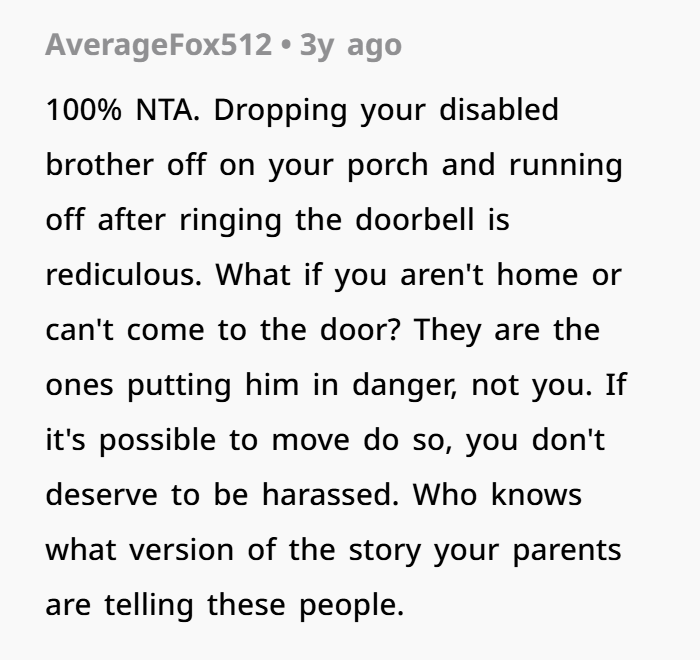
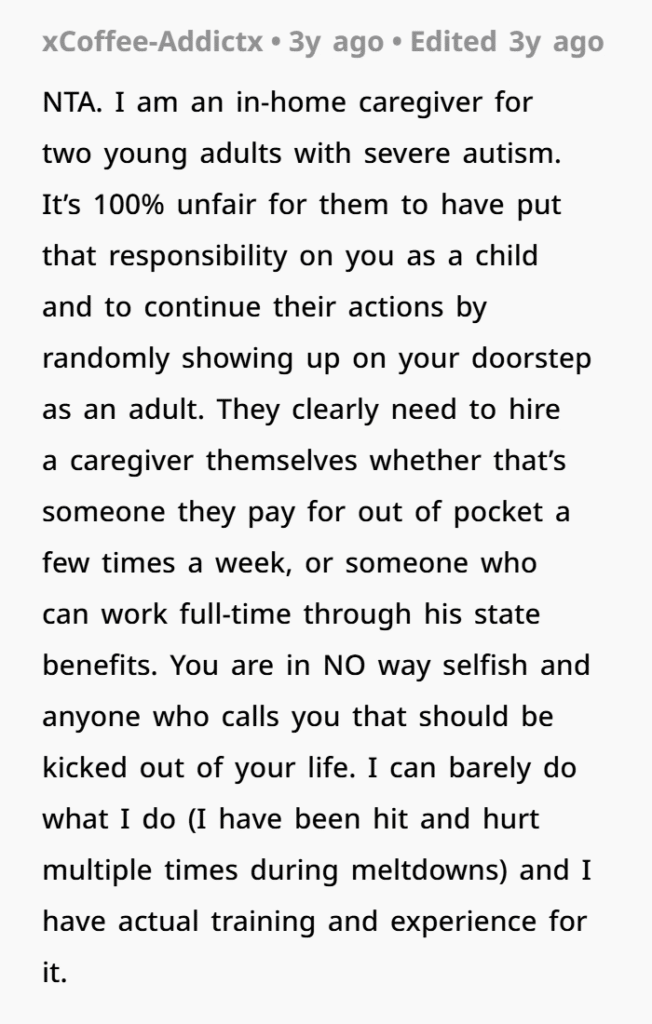
Many people sided with the sibling, even those who work as caregivers



Key Takeaways
- Caregiving can be stressful: Looking after a loved one can affect your mental health, energy, and daily life.
- Setting boundaries is important: You can care about your family while protecting your own time and well-being.
- Long-term care needs planning: People with disabilities may need steady support from trained caregivers and care services.
- Outside help can make a difference: Adult Protective Services and other support agencies can help address safety concerns and care needs.
- Asking for help isn’t abandonment: Seeking support doesn’t mean you have stopped loving or caring for someone.
- Family support matters: Counseling and caregiver support groups can help families handle stress and disagreements.
- A clear care plan benefits everyone: Reliable care can protect the person who needs help while easing pressure on family members.
Caring for someone you love doesn’t mean you have to manage everything on your own.
Sometimes, the best way to show you care is to ask for help and find a long-term plan that works for everyone.
Everyone deserves support, including the person receiving care and the family members providing it.