My Family Wants to Take the Same Vacation We Agreed Never to Repeat. Am I Wrong for Refusing?
This story is about a husband and wife who disagree over their family’s yearly vacation.
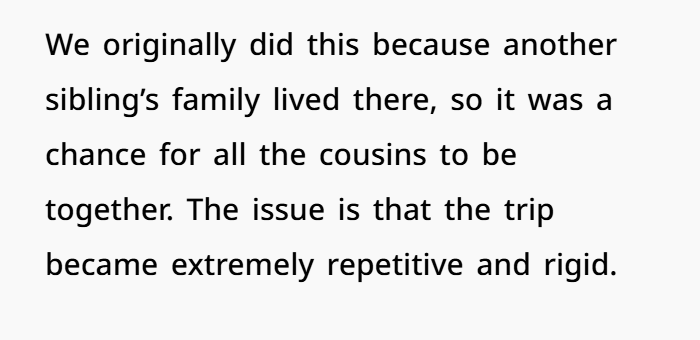
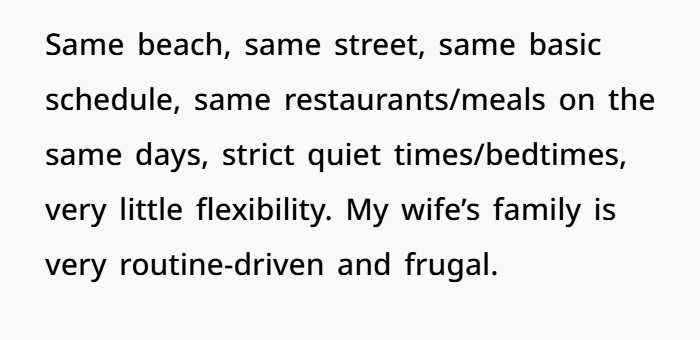
For years, the wife’s family has spent a week at the same beach town. Every trip follows almost the same plan. They stay in the same place, eat meals at fixed times, follow quiet hours, and stick to a daily schedule.
At first, these trips were enjoyable because many relatives came along. There were plenty of people to spend time with, and the family enjoyed being together.
But things changed as fewer relatives started joining. The group became smaller, yet those who still attended wanted to keep every tradition exactly the same.
Over time, the husband began to dislike these vacations.
He wanted trips where the family could relax, explore new places, and make their own plans. He also felt that vacations with children should include fun activities and some freedom.
Instead, every beach trip felt like repeating the same week over and over.
The children were starting to feel the same way. They were losing interest because they already knew what each day would look like.
After their most recent trip, the husband and wife talked about the problem. They agreed that they wouldn’t spend another full week at the same beach town.
Instead, they discussed trying something different. They considered visiting the mountains, staying near a lake, or finding a new place where the children could enjoy fresh experiences.
The husband thought they had finally reached an agreement.
But later, his wife brought up the beach vacation again.
She explained that her mother wanted all the grandchildren together. Most of the extended family had already agreed to go, and she wanted their children to be part of it.
The husband was frustrated.
He felt they had already made a decision as a couple, and now his wife wanted to change it because of pressure from her family.
He also felt that his wishes and the children’s feelings weren’t being taken seriously.
Advertisement – Continue Reading Below
Rather than refusing to attend at all, he offered a compromise.
He said he would join the family for a few days near the end of the vacation. That way, the children could spend time with their relatives without having to follow the same routine for an entire week.
But his wife wasn’t happy with that suggestion.
She felt he was turning his back on a family tradition that meant a lot to her. From her point of view, the trip wasn’t just about the beach. It was also about bringing everyone together and giving the children time with their grandparents and cousins.
Their disagreement soon became more than an argument about vacation plans.
The husband felt his opinion had been ignored, while his wife felt he wasn’t making enough effort to spend time with her family.
The tension began affecting other talks about parenting and family choices.
Now, the husband is wondering whether refusing to attend the full vacation makes him unreasonable.
He isn’t trying to stop his wife or children from seeing their relatives. He simply doesn’t want to spend another entire week on a trip that no longer feels enjoyable.
The situation raises a question many families face Should family traditions always come first, or should couples be free to make new plans when those traditions stop working for them?
Both spending time with relatives and making new memories matter. The challenge is finding a plan that respects the family’s traditions without ignoring what the couple and their children want.









This situation shows how a simple family vacation can turn into a serious disagreement between a husband and wife. Both have different ideas about spending time with relatives, keeping traditions, and making choices for their children.
How Extended Family Can Affect Marriage Decisions
Family relationships are important, but problems can arise when relatives have too much say in a couple’s plans.
In a healthy marriage, both partners should have a voice in major decisions. This includes where to travel, how to spend money, and how much time to spend with extended family.
When parents or other relatives begin making these choices, one spouse may feel ignored or pressured.
In this case, the wife’s mother wanted all her grandchildren together for the yearly beach trip. The wife valued that time with her family, but her husband had already made it clear that he didn’t want to repeat the vacation.
The problem wasn’t simply about visiting the beach. It was also about whether the couple could make decisions together without feeling pressured by relatives.
Broken Agreements and Trust Between Partners
Trust in a marriage isn’t only about being faithful. It also means keeping promises and respecting decisions made together.
After their last beach vacation, the husband and wife agreed to try something new the following year.
They talked about visiting the mountains or spending time near a lake. The husband believed they had settled the issue.
But when his wife suggested returning to the same beach town, he felt disappointed.
From his point of view, they had already agreed not to repeat the trip. Now, he felt that his wishes mattered less than what her family wanted.
Changing plans isn’t always wrong. People can change their minds, especially when family needs are involved.
However, both partners should have a chance to discuss those changes before making new plans.
A calm conversation could help them understand why the trip matters to each of them and whether another plan might work.
Family Traditions vs. Personal Choice
Many families enjoy doing the same things every year. These traditions can bring people closer and create lasting memories.
A yearly beach vacation may remind relatives of happy times spent together. For grandparents, seeing all their grandchildren in one place can mean a great deal.
But not everyone enjoys repeating the same activities.
Some people prefer trying new places, exploring different areas, and having more freedom during their time off.
That’s where this couple’s disagreement began.
The wife saw the beach vacation as a chance to spend time with family. Her husband saw it as another week of strict schedules and activities their children no longer enjoyed.
Neither view is unusual.
The challenge is finding a way to respect family traditions while allowing room for new experiences.
Family Mediation and Parenting Decisions
This disagreement is mainly a family matter, not a legal dispute.
However, similar problems can come up when parents struggle to agree on plans involving their children.
Family mediation can help couples talk through disagreements without turning every decision into an argument.
A mediator is a neutral person who helps both sides explain their concerns and work toward a shared plan.
For this couple, that might mean discussing how long to attend the beach trip, what activities the children want, and whether they can plan another vacation.
The most important thing is keeping the children out of the conflict.
Children shouldn’t feel they must choose between their parents or take sides in arguments about grandparents and other relatives.
Parents can disagree while still showing their children that problems can be handled with respect.
Why Families Keep Repeating the Same Plans
People often stick with familiar routines because they feel safe and comfortable.
In psychology, this is linked to the status quo bias, which means people tend to prefer keeping things as they are.
For some families, returning to the same vacation spot feels easier than planning something new.
They already know where to stay, what to do, and how the week will unfold.
But familiar doesn’t always mean enjoyable.
A trip that once brought everyone together may start feeling stressful when family needs change.
Some people may even attend because they feel guilty about saying no.
This can turn a vacation into an obligation rather than a chance to relax.
In this story, the husband felt that the strict routine had taken away much of the fun. He wanted his children to enjoy new places instead of following the same schedule every year.
His wife, however, wanted to keep the family tradition alive.
Their disagreement shows why families sometimes need to rethink old plans as children grow and circumstances change.
How Family Arguments Can Affect Children
Children often notice tension between their parents, even when adults try to hide it.
When arguments continue, children may feel worried or confused about what is happening.
Problems can become worse if parents ask their children to take sides.
Family therapists sometimes call this triangulation. It happens when a child becomes involved in a conflict between two adults.
For example, a child might feel pressured to agree with one parent about the vacation because they don’t want to upset the other.
This can place an unfair emotional burden on them.
In this case, the parents should try to settle their disagreement privately.
They can also listen to what their children enjoy without making them responsible for the final decision.
The goal should be to plan a vacation that allows the children to have fun, spend time with relatives, and feel comfortable.
Final Thoughts
This disagreement isn’t just about spending another week at the beach. It’s about keeping promises, respecting each other’s wishes, and deciding how much influence extended family should have.
The husband wants more freedom and new experiences for his children. His wife wants to protect a family tradition and give the children time with their relatives.
Both concerns deserve to be heard.
A shorter visit, a more flexible schedule, or a separate family trip could help them find common ground.
The real question is whether keeping a family tradition is worth the stress when the people involved no longer agree on it.
A vacation should give families time to enjoy being together, not become another reason for conflict.
See the comments to know what people said





This story shows how family traditions and different expectations can cause tension in a marriage, especially when couples struggle to agree on important plans.
A strong relationship depends on open talks, mutual respect, and making decisions together. Both partners should feel heard, while children should be kept out of adult arguments. Whether planning a vacation or making family choices, finding common ground can help avoid stress and keep the family close.