Dinner Host Spends $300 on a Special Meal, but an Unexpected Guest Ruins the Evening
Hosting a dinner party takes time, money, and effort. When someone invites friends over, they usually plan the food and seating based on how many people are coming.
That’s why guests are expected to ask before bringing someone along.
In this case, a host had spent several days getting ready for a special dinner with a small group of close friends. They had carefully planned the menu, arranged everything, and spent around $300 to make the evening special.
The plan was simple: enjoy a relaxed dinner with good food and conversation.
But things took an unexpected turn when one friend arrived with his girlfriend.
The problem was that she hadn’t been invited, and the friend hadn’t asked if he could bring her.
The host was caught off guard. Everything had already been planned for a set number of guests, and there wasn’t an extra meal ready.
Instead of enjoying the evening, the host now had to figure out how to handle the surprise without making anyone uncomfortable.
It put them in an awkward position. They didn’t want to be rude to the girlfriend, but they also felt their friend should have asked first.
What was supposed to be a pleasant dinner with close friends quickly became stressful because of one unexpected guest.
The situation raises a simple question: Should a host be expected to make room for an uninvited guest, or is it fair to stick to the original dinner plans?

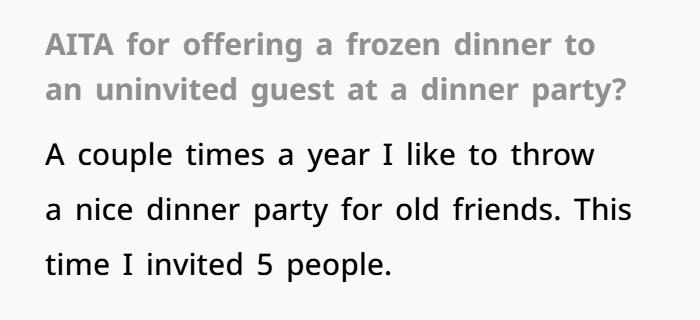
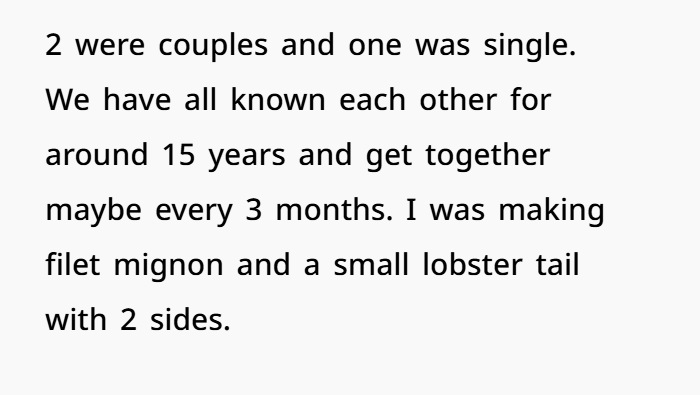
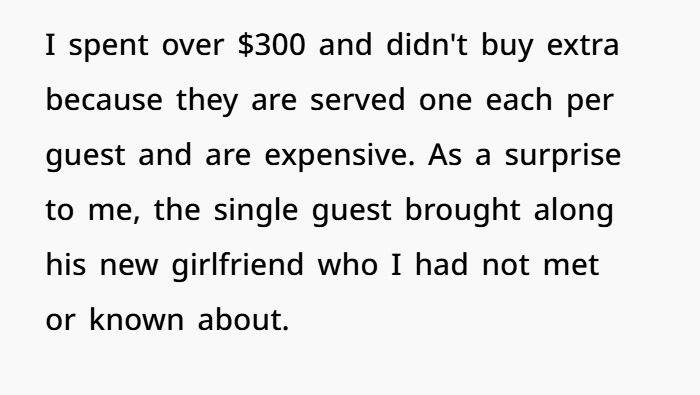
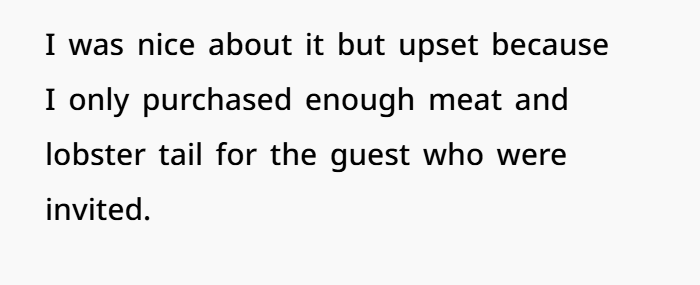
The evening took an awkward turn when the friend became angry and accused the host of embarrassing him and his girlfriend. Things got so tense that he decided to leave with her.
The original poster (OP) explained that she enjoys hosting special dinners for her close friends a few times each year. This time, she wanted to make the evening extra special.
She invited just five friends and spent several days planning the meal. The food alone cost more than $300.
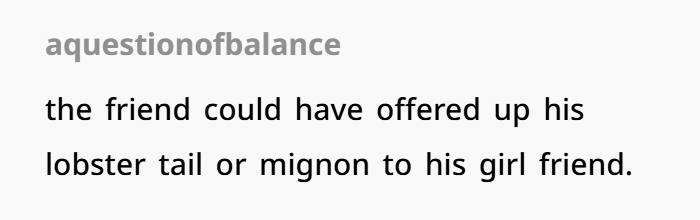
The menu included filet mignon, lobster tails, and homemade side dishes. She had even planned to cook each steak exactly how her guests liked it.
Everything was ready for a small, enjoyable dinner with close friends.
Advertisement – Continue Reading Below
But when one of her friends showed up, he had someone with him.
He had brought his new girlfriend without telling the host or asking if she could come.
OP was surprised because she had prepared enough food for only the five people she invited. There wasn’t an extra steak or lobster tail for another guest.
Rather than making a scene in front of everyone, she pulled her friend aside to explain the problem.
She told him that she hadn’t planned for an extra person and didn’t have another serving of the special meal.
Still, she didn’t want his girlfriend to go hungry or feel completely left out.
As a solution, she offered to heat up a frozen dinner for her.
But her friend didn’t appreciate the offer.
Instead, he became upset and accused OP of trying to embarrass both him and his girlfriend.
He also claimed she didn’t like his new partner, even though the problem was simply that he hadn’t told her he was bringing someone.
OP felt his reaction was unfair. She had spent a lot of time and money preparing the dinner and couldn’t suddenly create another expensive meal.
The disagreement soon turned into a heated argument.
Rather than accepting the frozen dinner or finding another solution, the friend decided to leave with his girlfriend.
The other guests were left surprised by what had happened. A night that was supposed to be about good food and friendship had become uncomfortable.
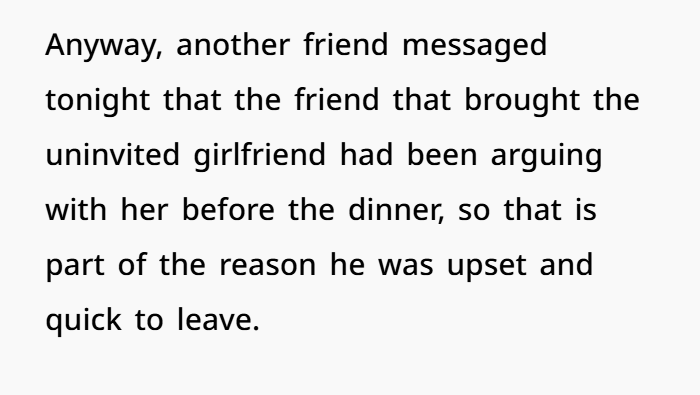
Later, OP heard that the couple might have been dealing with relationship problems before they arrived.
Another friend suggested that the boyfriend may have already been upset and taken his frustration out on the host.
That could explain why he reacted so strongly to what seemed like a reasonable offer.
Still, OP was left wondering whether she had handled the situation poorly.
She hadn’t invited the girlfriend, but she had offered her something to eat. Her friend, however, believed the offer was insulting.
Now the question is whether OP was wrong for offering an uninvited guest a frozen dinner while everyone else enjoyed the expensive meal she had planned.
See the comments to know what people said
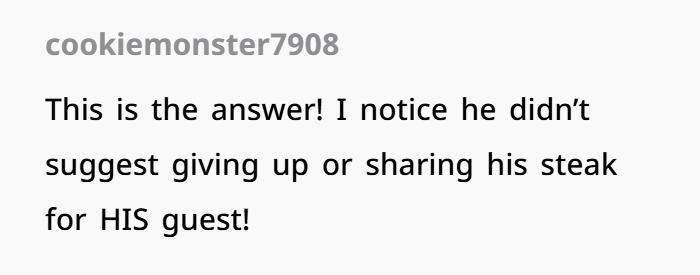
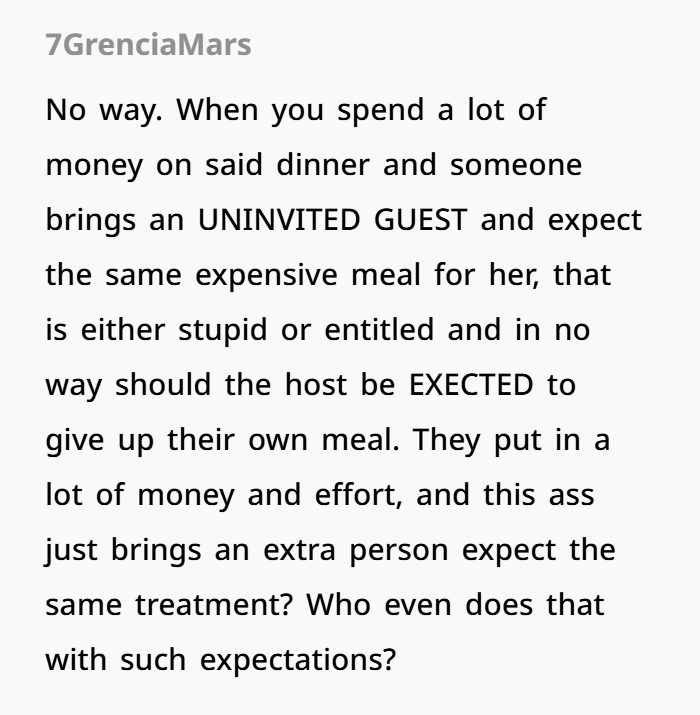
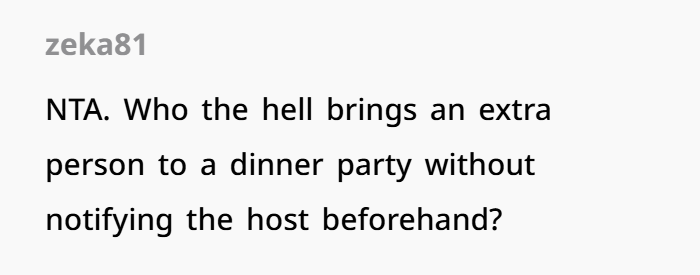
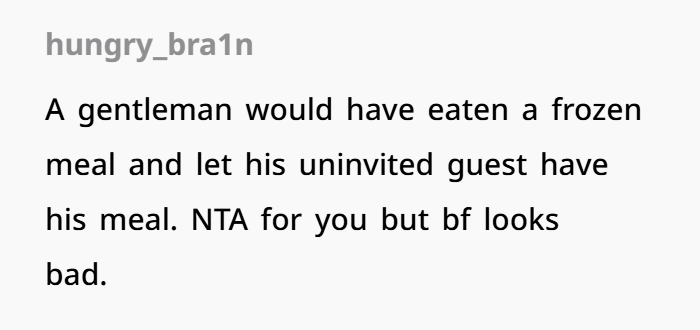

In the end, the dinner was spoiled by something that could have been easily avoided. The host had spent days planning the meal and more than $300 on food. Bringing an extra guest without asking put her in an unfair position.
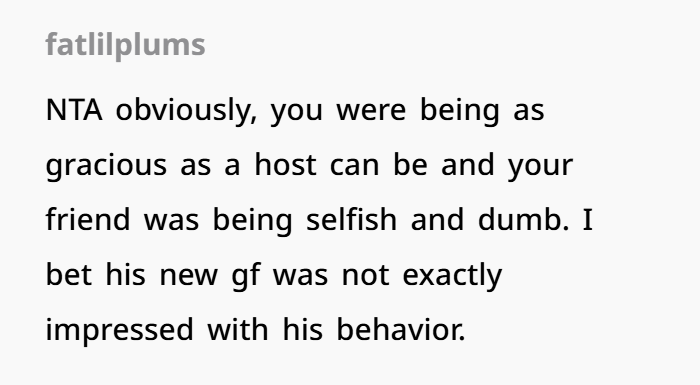
Many people felt she handled the situation fairly. She wasn’t trying to make the girlfriend feel unwelcome. She simply hadn’t prepared enough food for another person and offered what she had.
The situation shows how a small mistake can turn into a bigger argument when emotions get involved.
A quick message or phone call before the dinner could have prevented the whole problem.
After all, being a good guest means respecting the host’s time, effort, and plans.