I Found Out My Daughter Was Cheating and Taught Her a Harsh Lesson—AITA?
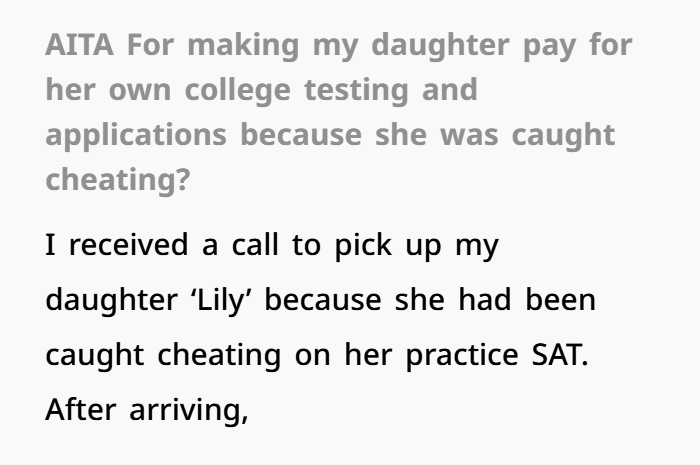
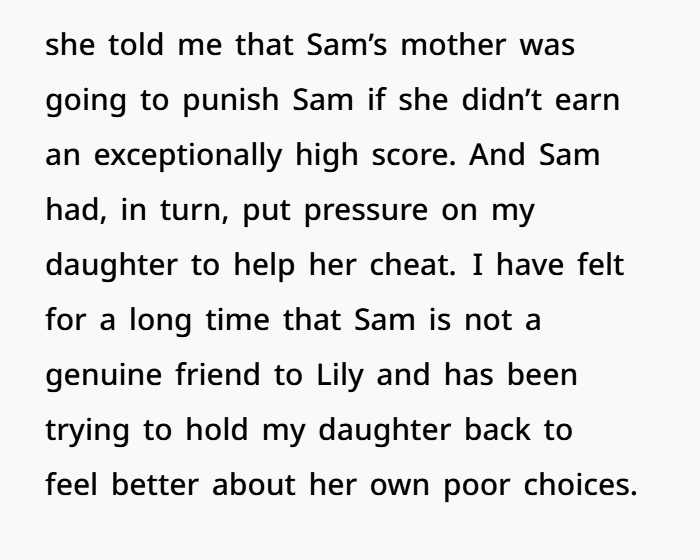
A parent faced a tough choice after learning that their daughter, Lily, had cheated on a practice SAT.
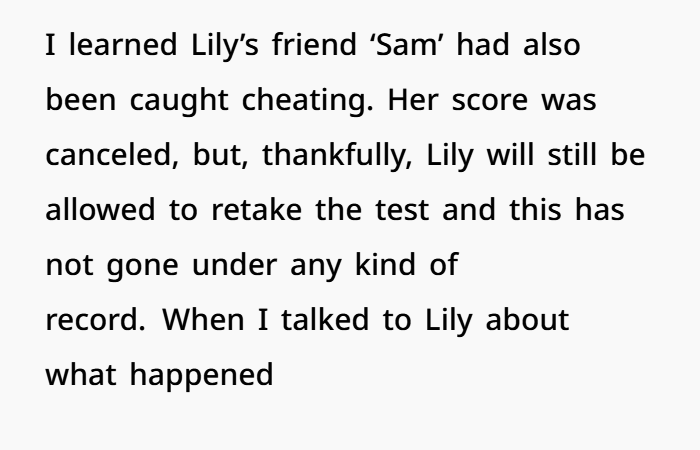
The school gave Lily a fairly small consequence. Her test score was canceled, but the cheating incident did not go on her school record.
For her parent, that did not feel like enough.
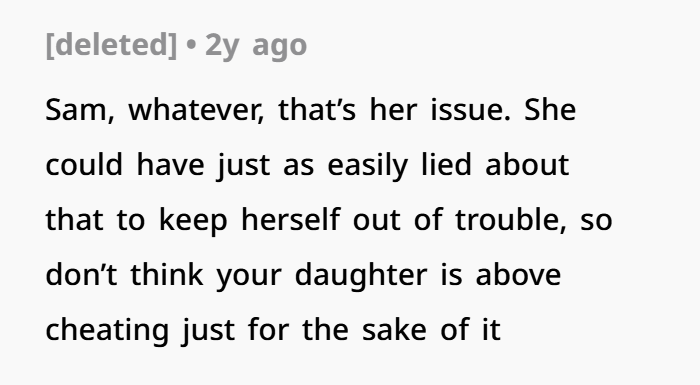
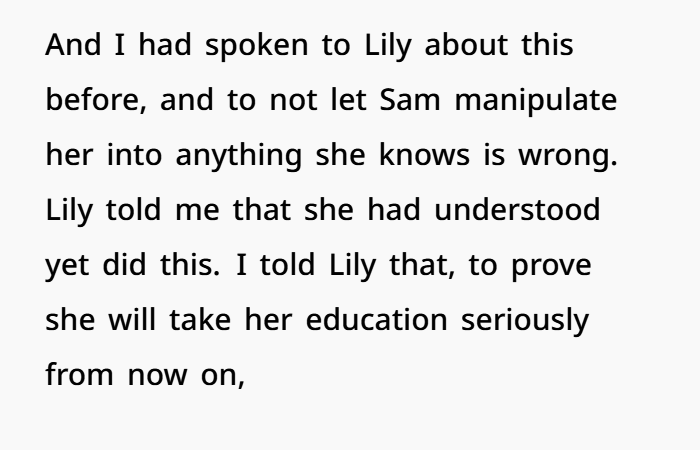
Lily admitted she knew cheating was wrong. Her parent had also warned her about following the choices of her friend, Sam.
After the incident, the parent felt Lily needed a stronger lesson about responsibility.
Instead of grounding her or taking away her phone, the parent chose a different punishment.
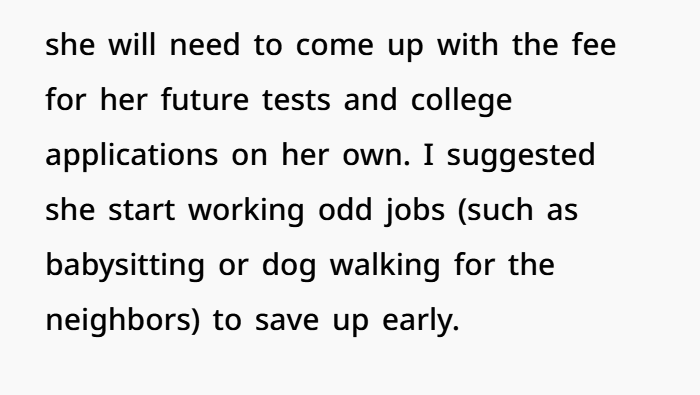
Lily would have to pay for her own SAT fees and college applications.
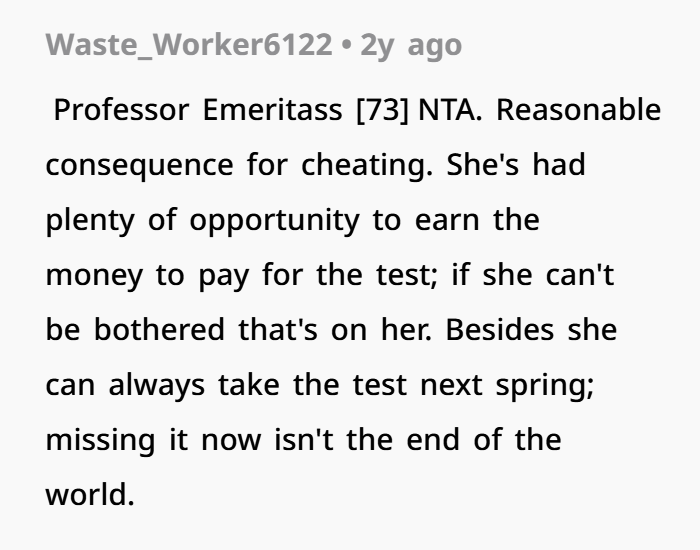
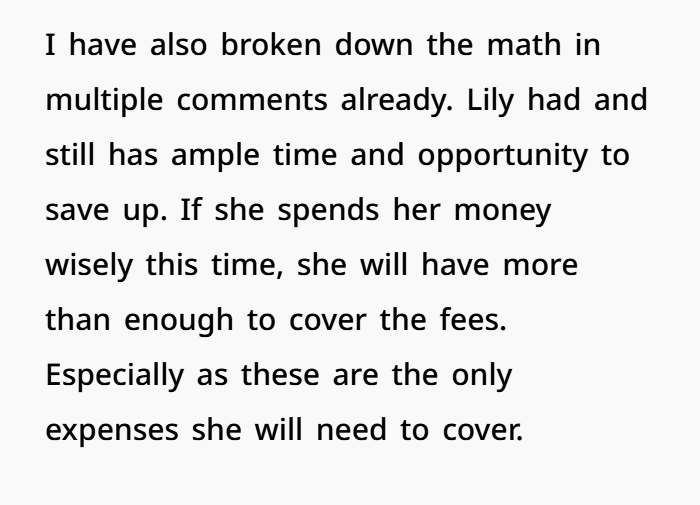
The idea was simple. If Lily had to earn the money herself, she might better understand what her education costs. Her parent also hoped a part-time job would teach her about planning, effort, and responsibility.
At first, the plan seemed like a firm but clear consequence.
Then the next SAT date started getting closer.
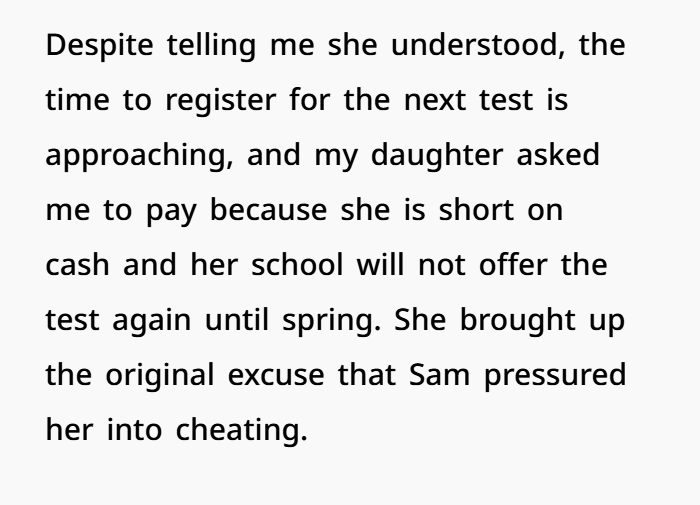
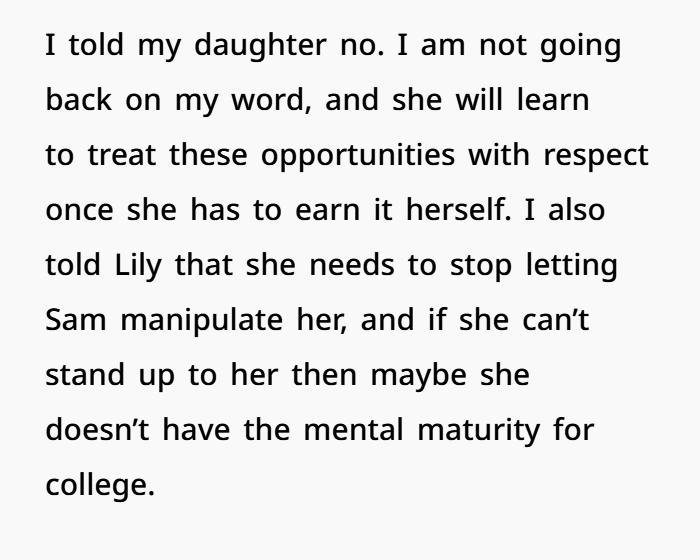
Lily had not saved enough money to cover the test fee. She asked her parent to help pay for it.
The answer was no.
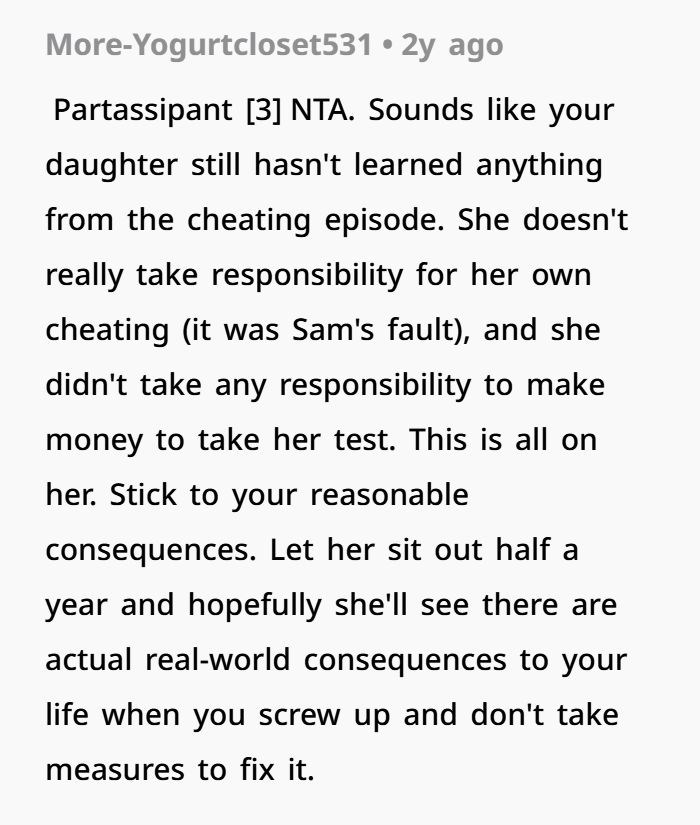
Her parent believed giving her the money would weaken the lesson. If they backed down once the consequence became difficult, Lily might not take it seriously.
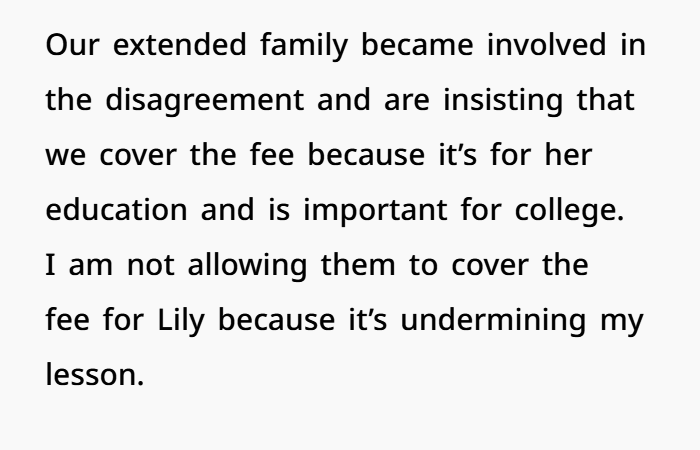
Other family members saw the situation differently.
They felt Lily had made a bad choice and deserved a consequence. But they questioned whether that consequence should affect her path to college.
Some relatives even offered to cover the test fee themselves.
Advertisement – Continue Reading Below
The parent did not want them to step in. From their point of view, someone else paying would allow Lily to avoid the result of her actions.
That disagreement turned a punishment into a much larger family debate.
Everyone seemed to agree that cheating was wrong. The real question was how far a parent should go when teaching that lesson.
Making Lily earn money could teach her useful skills. She could learn how to budget, plan ahead, and understand the cost of her choices.
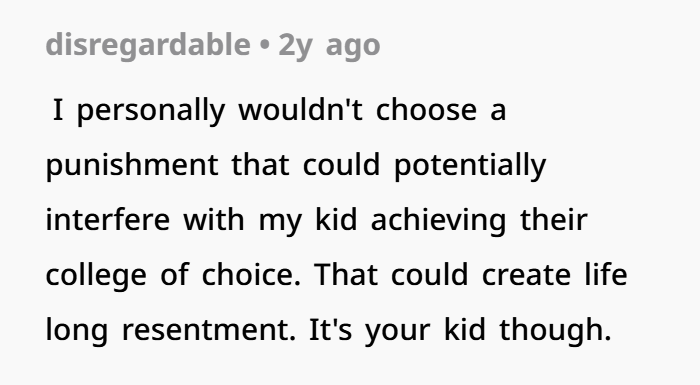
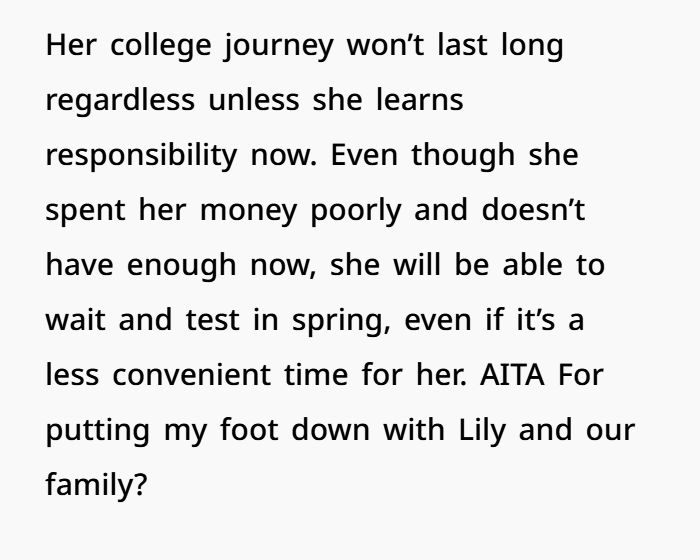
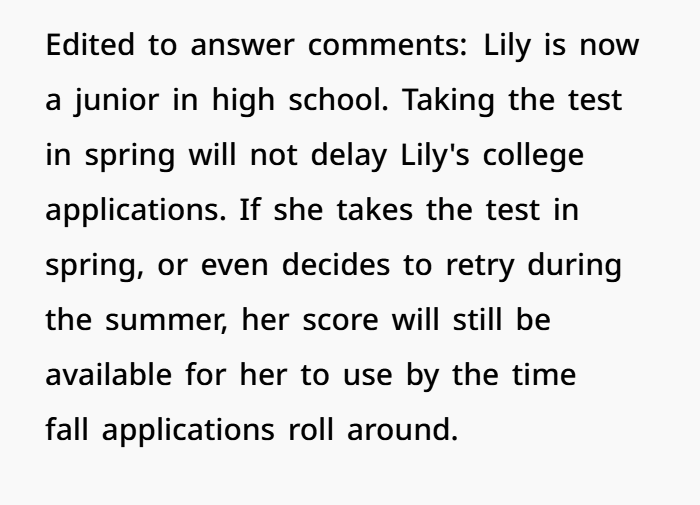
But missing an SAT date could also affect her college plans.
That is where the situation becomes more complicated.
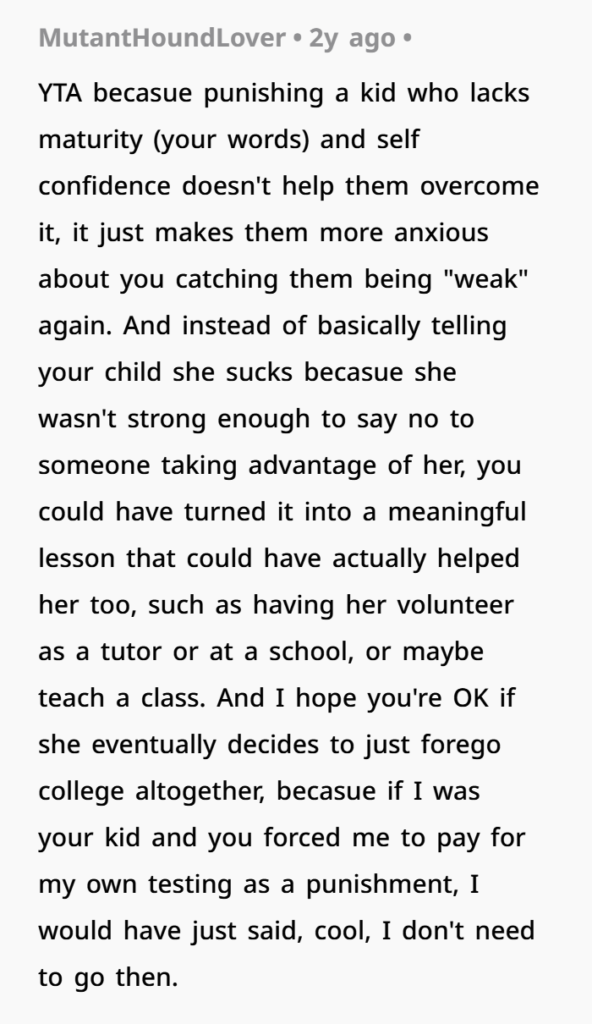
A consequence is meant to help a child learn from a mistake. Yet parents must also consider whether that consequence could create problems that last far longer than the lesson itself.
There is also a difference between holding a teenager responsible and removing support completely.
Lily made the choice to cheat. She now has to rebuild trust and show that she understands why her actions were wrong.
Her parent also has to decide what matters most: making sure the original punishment stands or helping Lily move forward after learning from her mistake.
The conflict is no longer about one practice test.
It has become a question about discipline, second chances, and how parents can hold their children accountable without placing their future at risk.
For Lily and her family, finding that balance may be the hardest lesson of all.

This story goes beyond one teenager cheating on a practice SAT.
It raises bigger questions about honesty, discipline, money, peer pressure, and preparing a teenager for adulthood.
Lily clearly made a poor choice. She knew cheating was wrong but went along with it anyway.
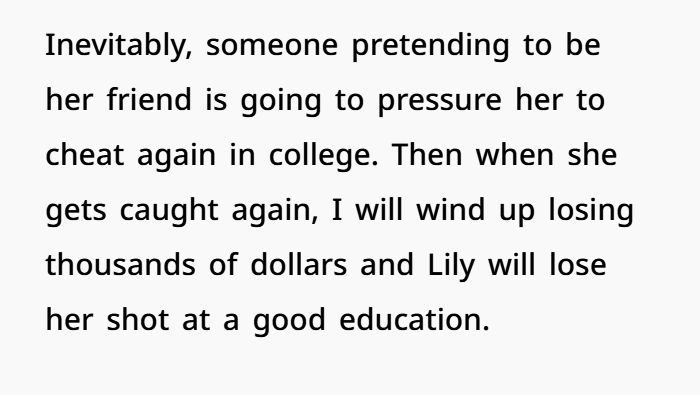
Her friend Sam may have influenced her decision. Peer pressure can be powerful, especially during the teenage years. Young people sometimes make choices they would avoid on their own.
That does not remove Lily’s responsibility.
Her parent had already warned her about making her own choices instead of following friends. So when the cheating happened, it felt like Lily had ignored advice she had already received.
The school handled the matter by canceling her score. The incident did not become part of her permanent school record.
Her parent wanted the lesson to go further.
Instead of grounding Lily or taking away her privileges, the parent tied the consequence to her education. Lily would now pay her own SAT fees and college application costs.
There was a clear reason behind the choice.
Working for that money could teach Lily how to save and budget. It could also show her how much college preparation actually costs.
Those are useful skills for any teenager preparing to live on their own.
But the punishment became harder to defend once deadlines entered the picture.
SAT dates cannot simply be moved whenever a student needs more time. College applications also follow firm schedules.
If Lily cannot afford a test in time, the consequence could affect more than her spending money. It could change which college options remain open to her.
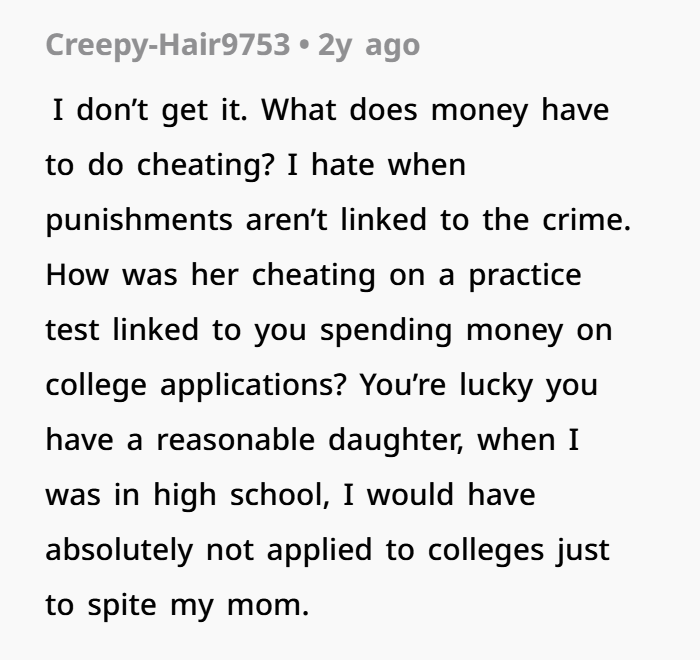
That raises a key question: How closely should a punishment match the original mistake?
Lily cheated on a practice test. She did not cheat on an official SAT, and the school chose not to place the incident on her record.
Some people may see paying future education costs as too harsh for that mistake.
Others may see it differently.
A school can enforce its own rules, but parents also teach values at home. From that view, the parent is trying to show Lily that dishonesty can carry consequences beyond the classroom.
The disagreement became even more complicated when relatives offered to help.
They worried that missing the SAT could hurt Lily’s college plans. Paying the fee seemed like a simple way to keep her future on track.
Her parent saw that offer as a way around the punishment.
If another relative paid every time Lily fell short, she might never face the full consequence. But refusing all help could turn a lesson about honesty into a barrier to education.
Lily’s actions after the incident matter too.
She admitted what she had done. While that does not erase the cheating, admitting a mistake can be the first step toward learning from it.
Teenagers need consequences when they make serious mistakes. They also need guidance about how to make better choices next time.
The goal of discipline is not simply to make a mistake painful.
A useful consequence should connect actions with results. It should also give a young person a path toward rebuilding trust.
That may leave room for a middle ground.
For example, Lily could pay part of each fee herself. Her parent could cover the rest if she meets clear goals, such as working, saving money, or preparing seriously for the SAT.
She would still carry some financial responsibility without missing an important deadline.
Another option could involve Lily repaying part of the cost over time.
Either approach would keep a consequence in place while protecting her college plans.
The larger lesson is not really about an SAT fee.
Lily needs to learn how to handle pressure, make her own choices, and accept responsibility when those choices go wrong.
She will need those skills even more once she reaches college.
At the same time, one bad choice does not have to shape every opportunity that follows.
Parents often face the difficult task of deciding when to stand firm and when to adjust a consequence. Changing the details does not always mean abandoning the lesson.
The aim is to help a teenager understand what went wrong and make a better choice next time.
For Lily, that lesson could matter far longer than any SAT score.
Comments From The Community