Teen Feels Left Out After Dad Takes His New Family on Vacation Without Her, Then Calls Her Entitled for Sharing Her Hurt Feelings
A teenager thought she was included in a family vacation, but later learned her dad had gone without her. He took his new wife and stepchildren on the trip but never told her.
The situation hurt even more when he tried to justify leaving her behind.
The story sheds light on the challenges of blended families. These can include hurt feelings, divided attention, and tough family choices. After learning she was the only one left out, the teen decided to speak up.
Now, Reddit users are weighing in. Many believe the real issue is not her reaction, but the way her father treated her.
OP said she discovered that her dad had gone on vacation with her stepmom and stepbrothers without telling her.
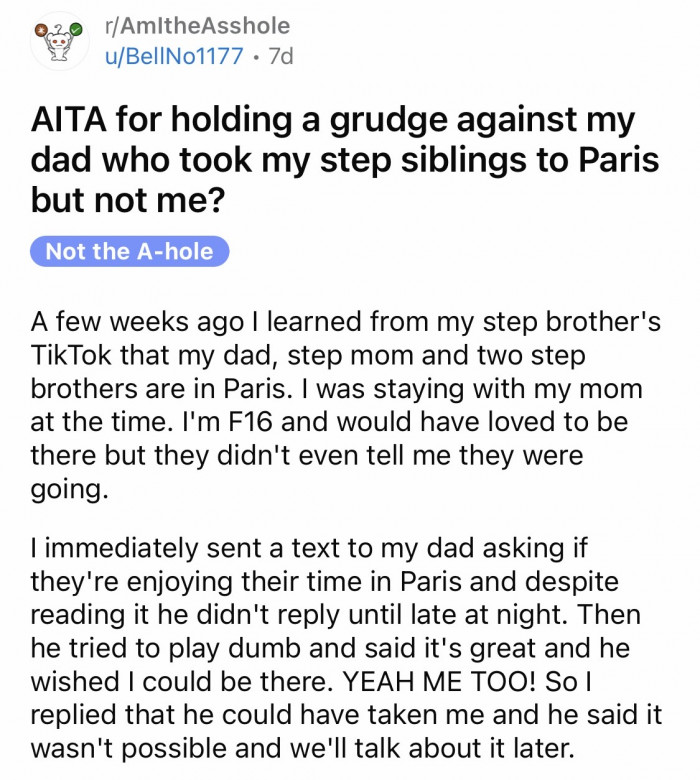
OP made it clear that money was not the issue. What hurt most was being left out and feeling like she no longer belonged in her own family.
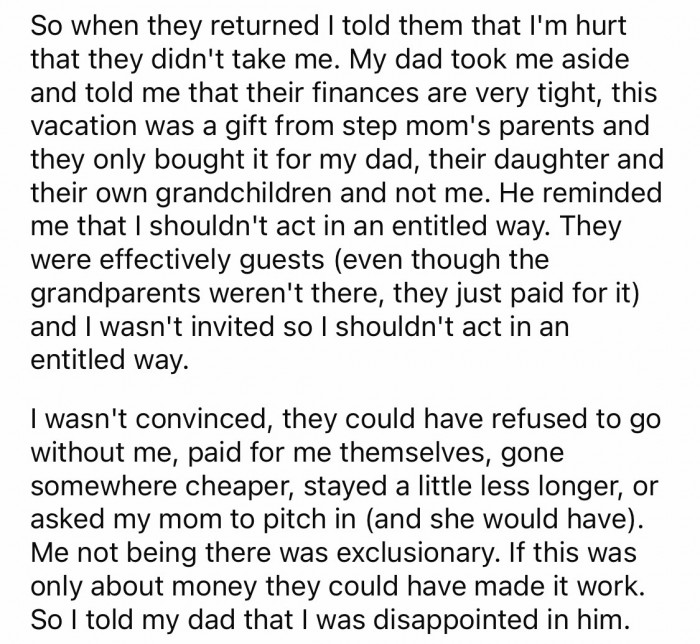
She finally spoke up and told her dad and the rest of the family how much being left out had hurt her. After sharing her feelings, she walked away.
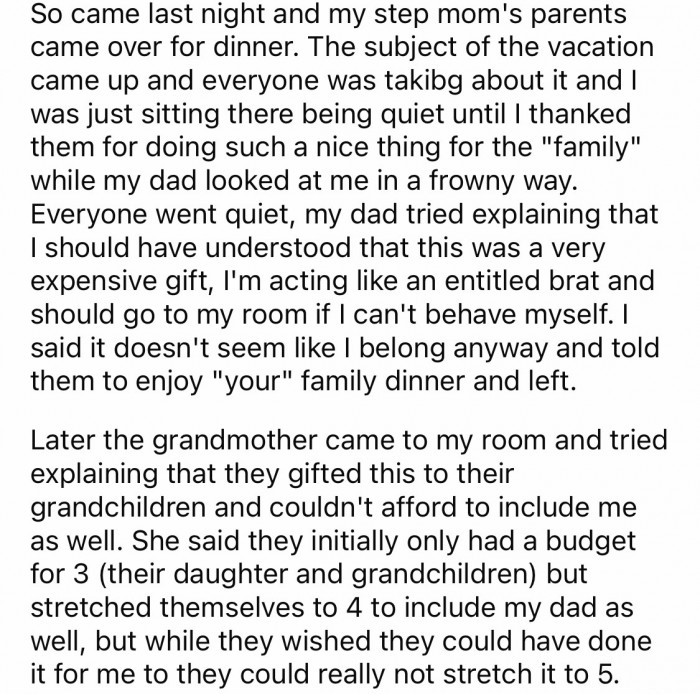
Blended families can face many challenges, especially when teenagers are still adjusting to new family roles.
Family bonds play a big part in a person’s feelings and sense of belonging. Being left out or ignored can lead to sadness and loneliness. In this case, the teenager felt pushed aside when her dad went on vacation without her.
OP made it clear that she had no problem with her step-grandmother.
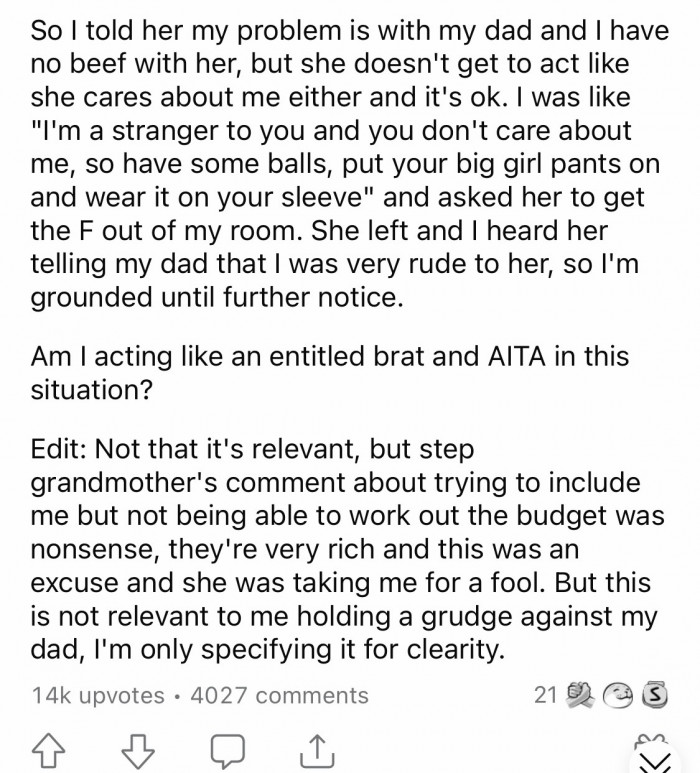
The way her father handled the situation could push OP to cut ties with him and the rest of his family.
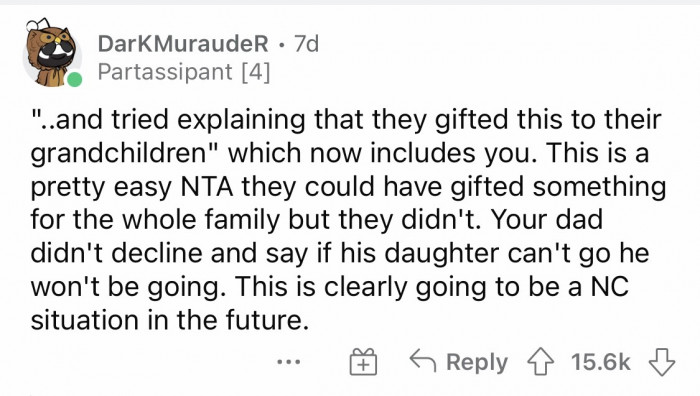
One commenter encouraged OP to go home, reminding her that she was old enough to make that choice for herself.
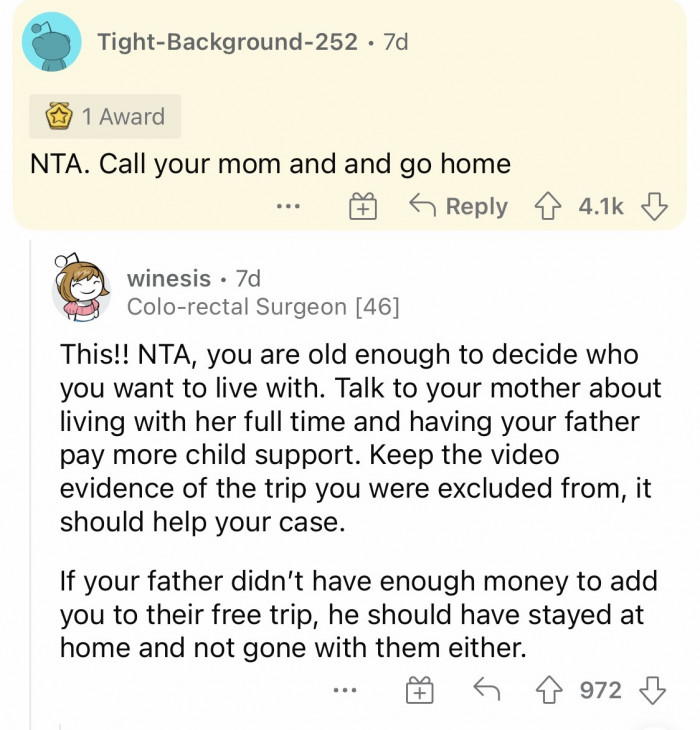
Teenagers can feel deeply hurt when they are ignored or treated unfairly. This can be even harder in blended families, where belonging and loyalty can become sensitive issues.
Most young people want to feel valued and included. Parents who listen and take their feelings seriously can build trust and stronger family bonds.
Blended families need care and effort from everyone. Having money and a comfortable life cannot replace emotional support and understanding.
Some commenters felt the family had money but lacked the care and understanding OP needed.

Commenters argued that the family could have found a way to include OP if they really wanted to. Her father had the chance to tell her about the trip but chose not to.
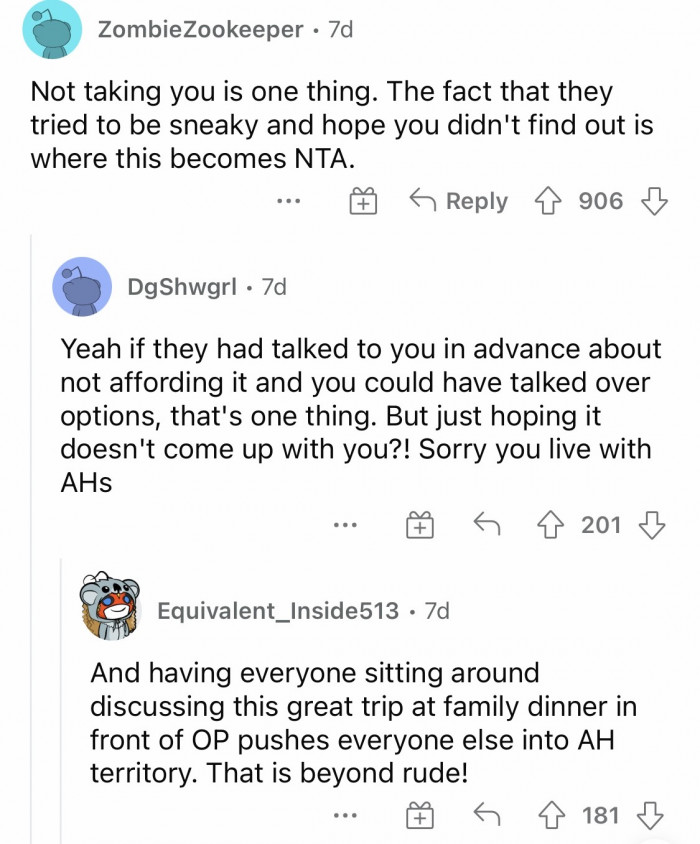
“This kid feels betrayed, and that feeling is completely valid.”
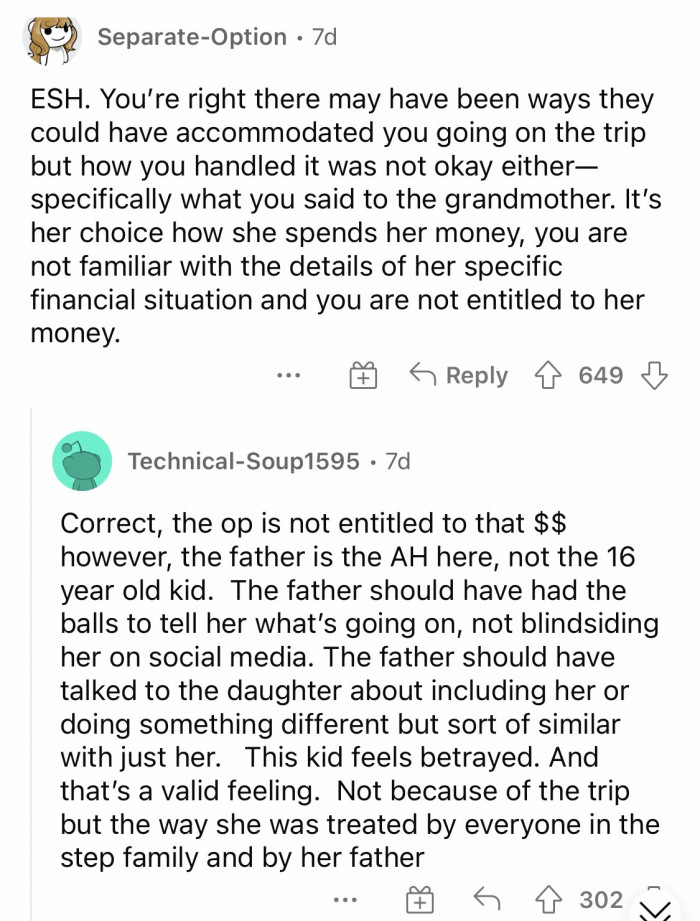
Blended families can bring difficult emotions, especially when children feel left out or less valued in their new family.
Being excluded can lead to hurt, anger, and feelings of being forgotten. Honest conversations can help family members understand each other and stop resentment from building.
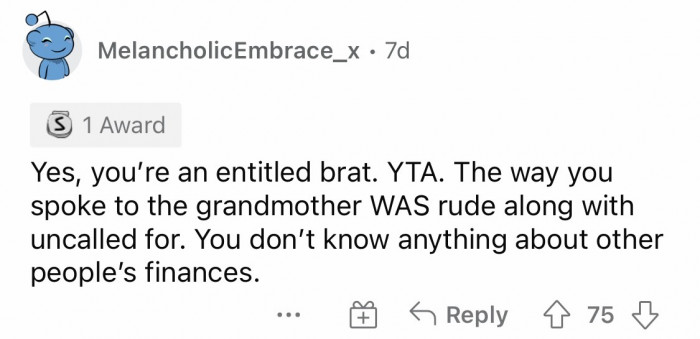
“Your step-grandmother is not obligated to include you.”
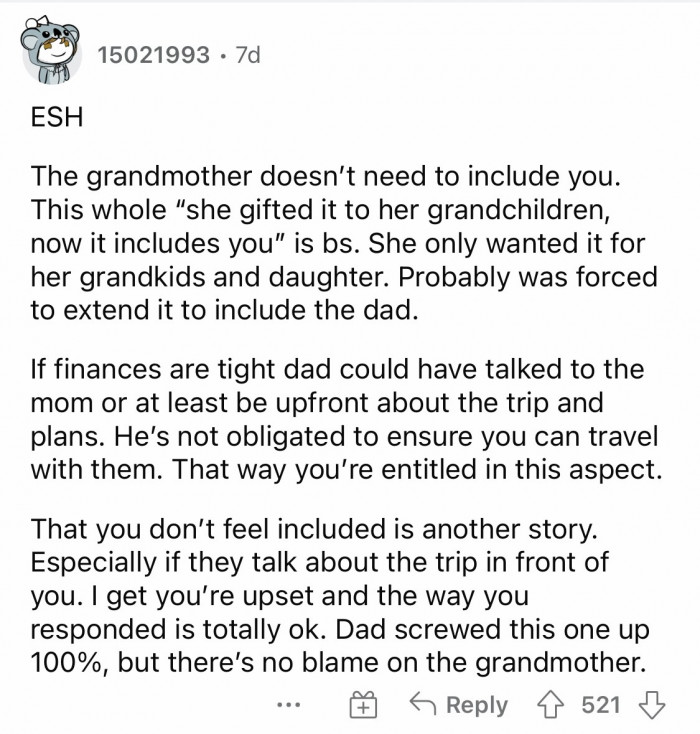
“You have every right to be upset with your dad, but blaming your stepmom for his actions was unfair.”
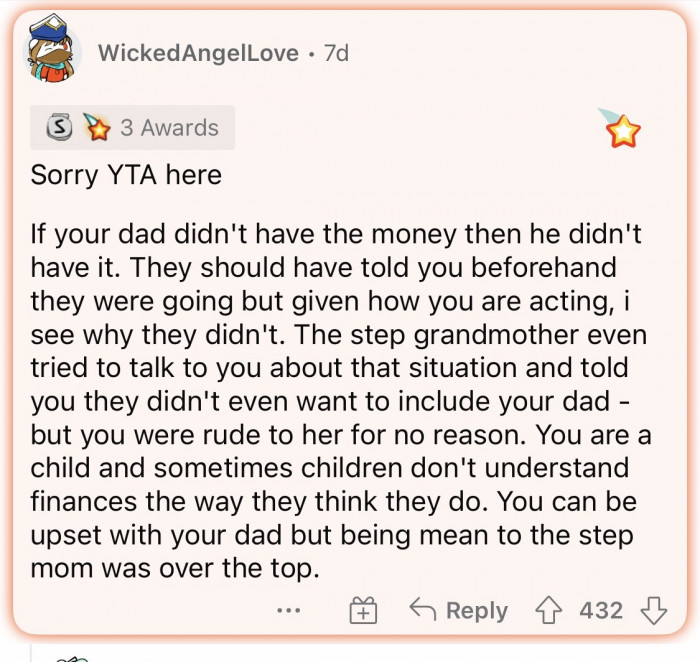
They should have told her about the vacation and let her decide whether she wanted to go.
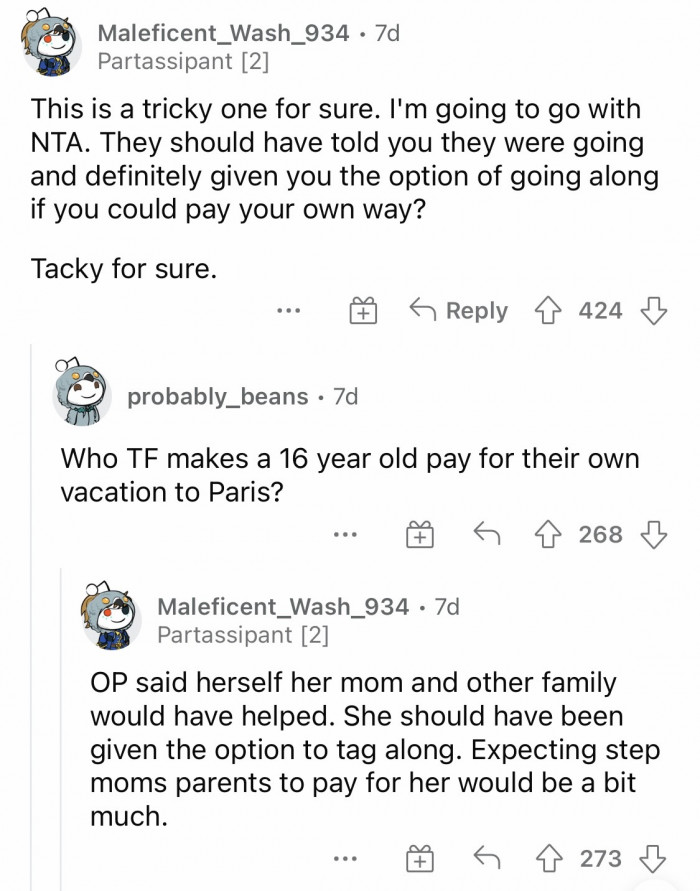
Open communication plays an important role in blended families. Without it, small misunderstandings can turn into bigger problems.
Talking openly with her father could help the teenager express why she felt left out. It may also help both sides understand each other and begin rebuilding trust.
Handling these talks with care can help families resolve conflicts and maintain stronger bonds.
“Life will only get harder if you keep behaving this way.”
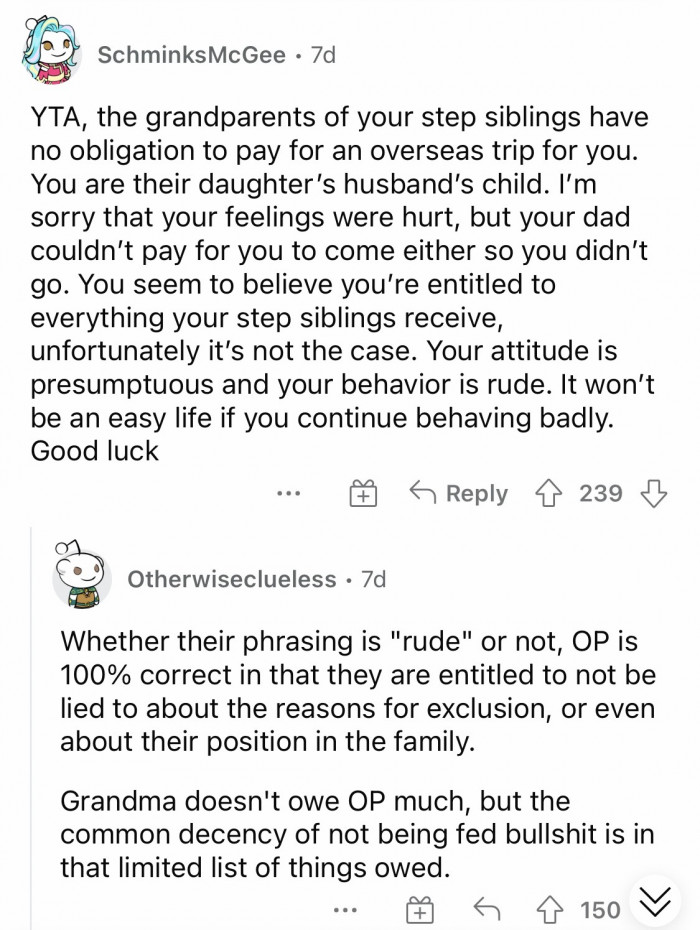
“She was clearly left out, so it is easy to understand why she feels hurt.”
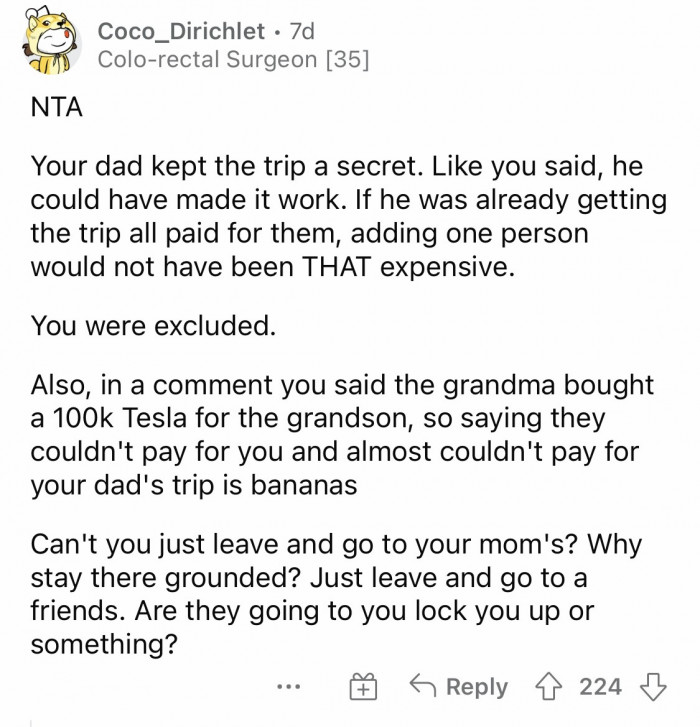
She should think about returning to her mom’s home if that is where she feels more loved, supported, and accepted.

Children in blended families may struggle to understand where they fit as family roles change. Family therapy can give them a safe space to share their feelings and help parents respond with care.
When everyone feels heard and valued, it can reduce resentment and create a stronger sense of belonging.
Advertisement – Continue Reading Below
Acknowledging each person’s feelings is important when working through blended family challenges.
“This comment says it perfectly.”

“Put your big girl pants on.”

Teenage years and family issues.
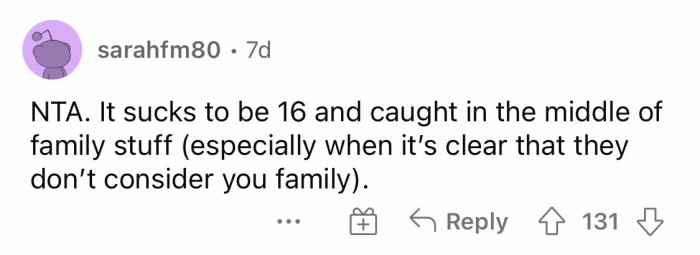
In this situation, the father’s decision to take his new family on vacation without his daughter shows why inclusion matters in blended families. Being left out of family moments can make children feel hurt, ignored, and unwanted.
Families can avoid many of these problems by talking openly and making sure everyone feels included. Spending time together and involving each family member in decisions can help build trust and stronger bonds.
This story is a reminder that everyone’s feelings matter in a blended family. Ignoring them can cause lasting hurt and damage important relationships.
With time, OP may look back on what happened and reconsider how she treated her step-grandmother.
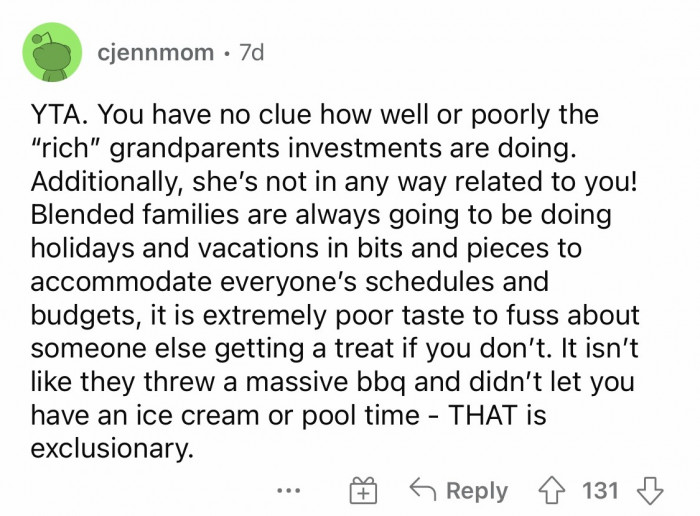
“People often misuse the word ‘entitled’ without understanding what it really means.”
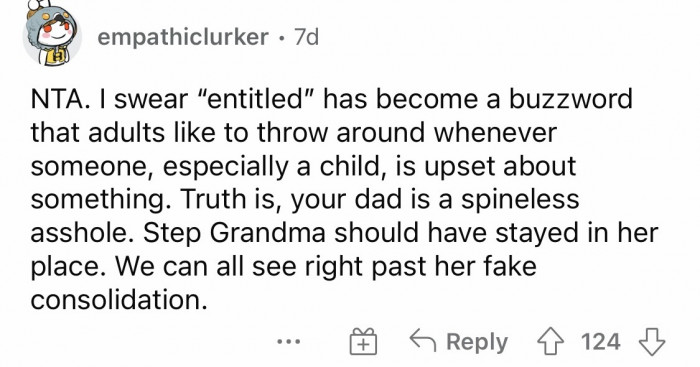
Cons of having 2 families.
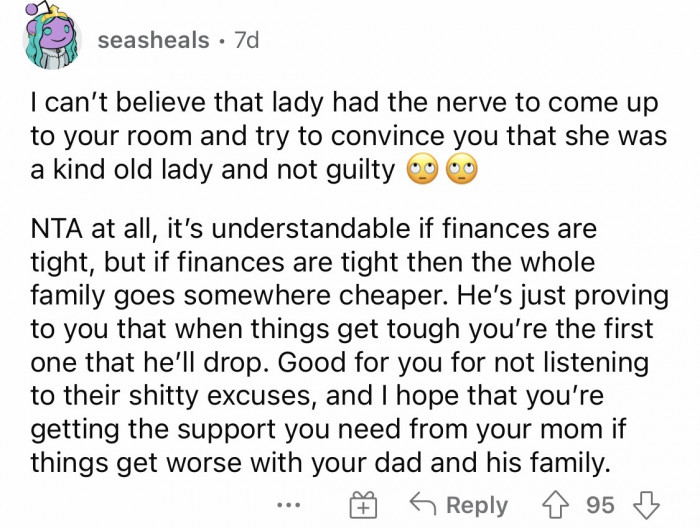
Emotional support plays an important role in healthy family relationships, especially in blended families where children may feel left out. Parents should listen to their concerns and take their feelings seriously. This helps build trust, improve communication, and strengthen family bonds.
Learning to handle difficult emotions is also important. Parents can help by encouraging honest talks and teaching their children healthy ways to deal with family problems.
“You were simply excluded, and your feelings about it are valid.”

The rudeness was uncalled for.
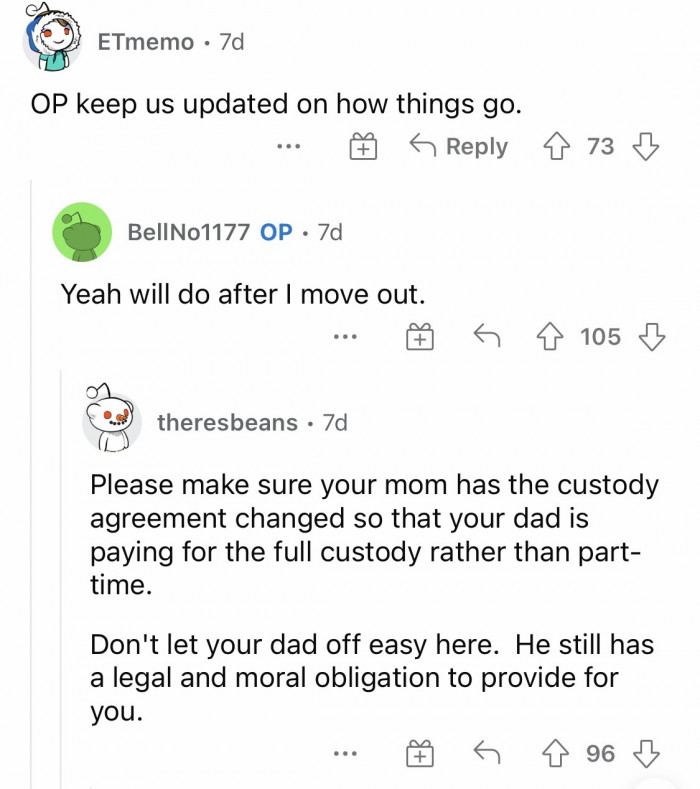
A fair custody agreement should cover not only legal duties but also a parent’s responsibility to love, support, and care for their child.
Helping children feel like they belong is important in blended families. Simple traditions, shared activities, and time together can help them feel loved and accepted.
Parents should make an effort to include everyone and create happy memories as a family. This can reduce feelings of exclusion and help build stronger bonds.
Building a family takes more than love. It also requires financial stability, emotional maturity, and a willingness to meet each child’s needs.
In this situation, the teenager needs a home where she feels welcome, valued, and supported. Creating that sense of belonging takes effort from everyone involved.
This story highlights some of the challenges blended families can face. When parents ignore a child’s feelings, it can create distance and break trust.
Honest communication and emotional support can help prevent this. When family members listen to each other and respect their feelings, they can build stronger bonds and create a home where everyone feels they belong.