Mom Pays Her Son’s $1,000 Medical Bill Without Asking Her Husband, and His Angry Reaction Sparks a Family Money Dispute
A mother was worried about her adult son after he received a medical bill of over $1,000. He had recently found a job after going through a difficult time with work. During those months, he had also been without health insurance. Now that he was trying to get his finances back on track, another big bill was the last thing he needed.
His mother wanted to make things a little easier for him, so she offered to cover the medical expenses.
She earned more than four times her husband’s salary and had enough money in her personal savings to help. But because the money was in another bank account, she took $700 from their joint savings to make the payment right away. She planned to return it within two business days.
Later, she told her husband what she had done. His reaction surprised her. He wasn’t worried about the $700 being taken from their shared account. Instead, he was upset that she had decided to give her son money without asking him first.
The mother believed she had every right to spend her personal money on her children. Her husband felt he should have been included in the decision.



A Marriage With Shared Finances but Separate Spending Money
The woman explained that she and her husband had been together for more than ten years and married for five.
She had children from a previous relationship. They were already teenagers when her husband entered their lives, so he never really took on a traditional stepfather role. Their relationship was closer to that of a mother’s husband and her children.
When it came to money, the couple had a system that seemed to work well for them.
The woman handled the household finances. They shared checking and savings accounts, but each also kept separate personal accounts.
There was a large difference in their incomes. She earned more than four times what her husband made, so she contributed most of the money to their joint accounts.
Instead of splitting household costs equally, they contributed based on their earnings.
This kind of arrangement is often called proportional budgeting. It allows couples with different incomes to share expenses without expecting both people to contribute the same dollar amount.
Their setup also meant that each person had personal savings they could use separately from the household money.
For this mother, that distinction became a major part of the disagreement.
Her Son Was Recovering From a Difficult Financial Period
The woman’s oldest son had recently been through a tough time.
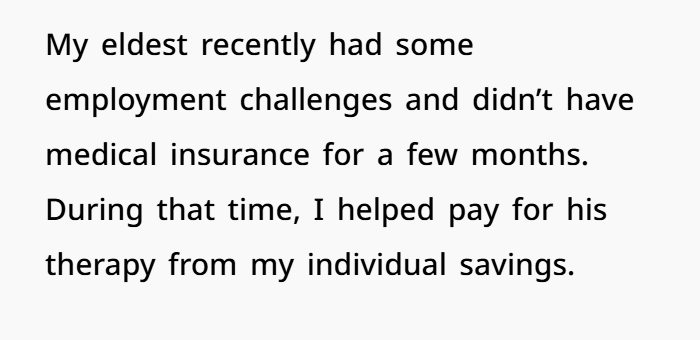
He had faced problems with employment and spent several months without medical insurance. During that period, his mother helped pay for his therapy using her own savings.
Advertisement – Continue Reading Below
Things had finally started looking better after he found a new job.
Unfortunately, his financial problems weren’t completely behind him.
He had needed medical treatment while he was uninsured. Later, he received a bill for more than $1,000.
For someone just starting to recover from a period without steady work, that was a lot of money to handle.
His mother understood the pressure he was facing. When he told her about the bill, she offered to pay it.
She didn’t describe the payment as a loan or ask him to repay her. She simply wanted to help her son get back on his feet.
Medical expenses can create serious financial pressure, especially during a gap in insurance coverage. The Consumer Financial Protection Bureau’s medical debt resources explain how unpaid medical bills can become a financial burden for consumers.
In this case, the mother had enough personal savings to help. The problem came from how she moved the money.
A $700 Transfer From Their Joint Savings Started the Trouble
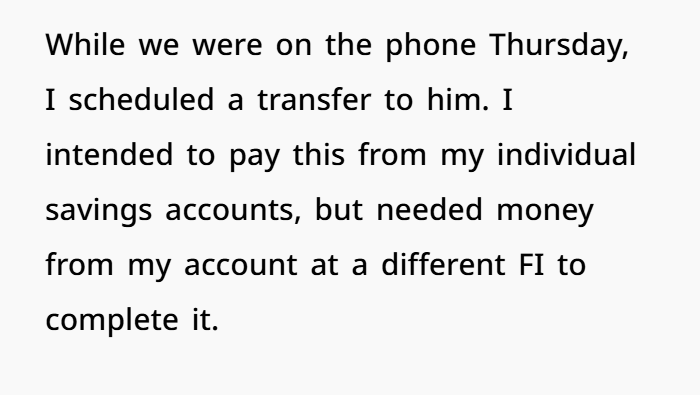
While speaking with her son on Thursday, the woman arranged to send him money.
Her original plan was to use her individual savings account. However, some of her money was held at a different financial institution.
She needed to transfer funds between her accounts before she could complete the payment.
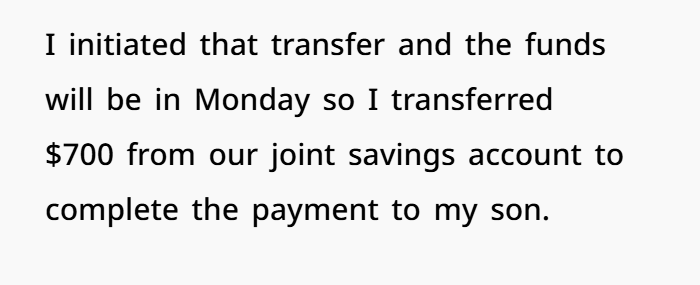
That transfer would not arrive until Monday.
Rather than make her son wait, she temporarily moved $700 from the savings account she shared with her husband.
She had already arranged for money from her personal savings to arrive on Monday, when she planned to replace the $700.
The couple’s joint savings held several thousand dollars and served as their emergency fund. According to the woman, they did not depend on that account to cover their everyday living expenses.
She also explained that their primary financial institution offered Zelle, while the institution holding her individual savings did not.
That made the shared account a convenient way to send the payment right away.
The Consumer Financial Protection Bureau’s guide to money transfers offers information about how transfers work and what consumers should know when moving money.
From the woman’s point of view, the $700 was only a short-term transfer. She wasn’t planning to make their household pay her son’s bill.
Still, she soon learned that her husband saw the situation very differently.
Her Husband Became Angry When She Told Him About the Payment
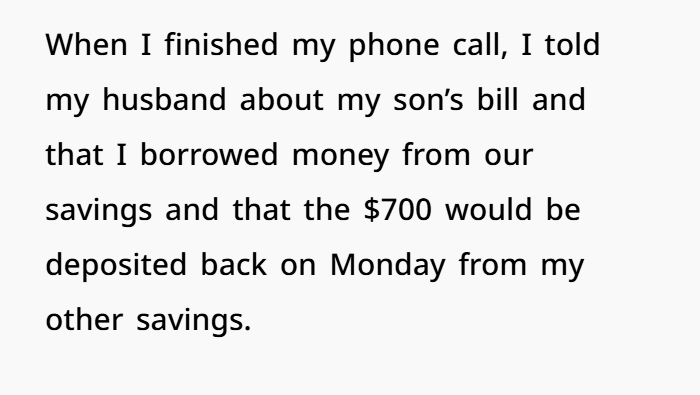
After ending the phone call with her son, the woman told her husband what had happened.
She explained the medical bill, the money she had sent, and the temporary $700 withdrawal from their joint savings.
She also made it clear that the money would be replaced on Monday.
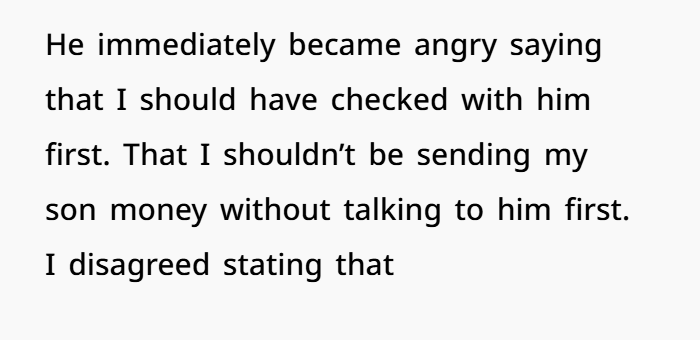
Instead of understanding her decision, her husband became angry.
He believed she should have spoken to him before offering her son more financial help.
The woman disagreed.
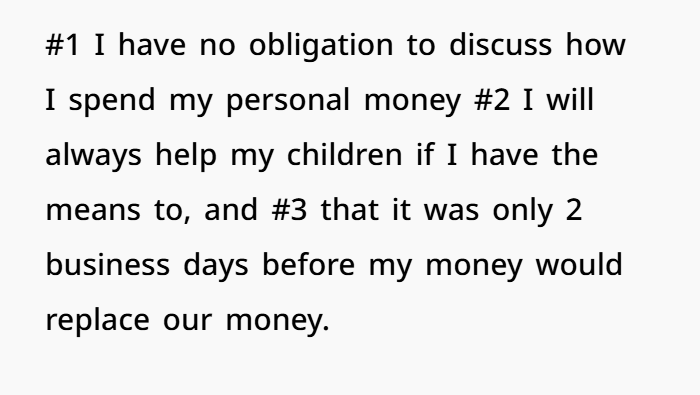
She felt that because she was paying from her personal savings, she did not need her husband’s permission.
She also made it clear that helping her children was something she would always do when she had the means.
And since the $700 would be back in their shared account after just two business days, she didn’t see why the situation had become such a serious argument.
Her husband, however, continued to feel that he should have had a say.
What started as a discussion about one medical bill had now become a disagreement about financial independence, marriage, and parental responsibilities.
The Real Argument Wasn’t About Their Joint Bank Account
After sharing her story, the woman added more details to explain what was really bothering her husband.
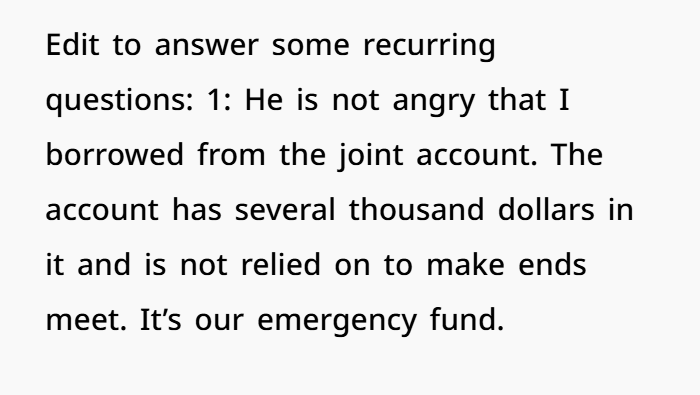
She said he was not upset about the $700 taken from their emergency savings.
That account had several thousand dollars in it, and the couple did not rely on those savings to pay their regular bills.
His frustration came from something else.
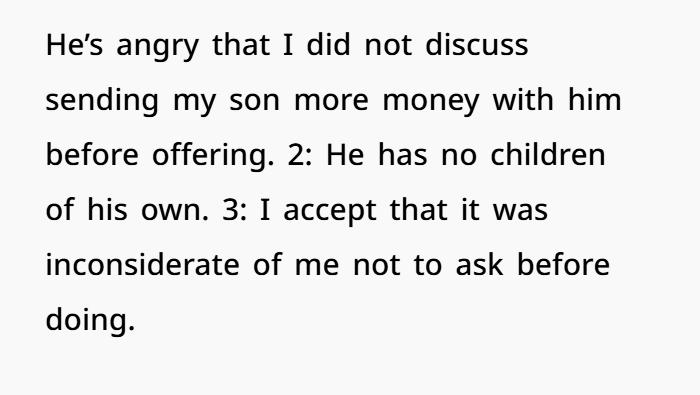
He believed she should have discussed giving her adult son more money before making the offer.
This detail changed how the disagreement could be understood.
It wasn’t simply about taking money from a joint account without asking. It was about how much say one spouse should have over the other’s personal spending.
The Federal Deposit Insurance Corporation (FDIC) explains that qualifying joint bank accounts are owned by two or more people who have equal withdrawal rights. But having access to shared money does not settle every question about how couples should make spending decisions. fdic.gov
The couple had already chosen to keep separate personal accounts alongside their shared finances.
That arrangement appeared to give both partners some freedom over their own money.
For the mother, helping her son was a personal decision.
For her husband, the fact that they were married meant he should have been included before she promised financial support.
Neither seemed willing to change their position.
She Admitted One Mistake but Refused to Give Up Her Financial Independence
The woman later acknowledged that she could have handled one part of the situation differently.
She accepted that using their shared savings without asking first was inconsiderate.
Even though she planned to replace the money quickly, she understood why discussing a withdrawal from their emergency fund would have been the better choice.
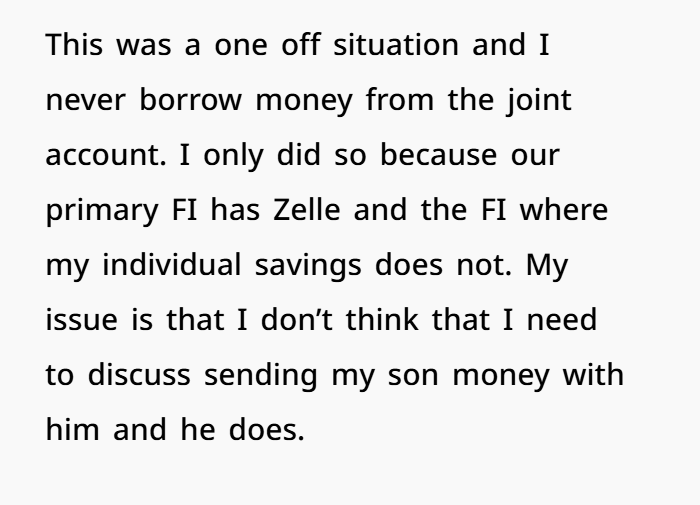
She also explained that borrowing from their joint account was not something she normally did.
This was a one-time situation caused by the difference between their banking services.
But she drew a clear line between borrowing shared money and deciding how to spend her own savings.
She was willing to accept criticism for the temporary withdrawal. She was not willing to agree that her husband should approve financial help for her children.
That distinction matters because couples often have different expectations about personal spending.
The FDIC’s guidance on sharing finances in marriage recommends that couples discuss how they will handle bank accounts, household expenses, savings, and debt. Clear agreements can help prevent money problems from turning into relationship conflicts. fdic.gov
In this marriage, the couple had already agreed on how to divide household contributions.
What remained unclear was whether helping an adult child from a previous relationship required a discussion first.
The Husband Had No Children of His Own
Another detail the woman shared was that her husband did not have any biological children.
She did not claim this was the reason for his reaction, but it added context to their family situation.
Her children were already teenagers when the relationship began, and she described her husband as more of a mother’s husband than a traditional stepfather.
She had been responsible for her children long before their marriage.
That may help explain why she viewed supporting her adult son as a decision she could make independently.
Of course, it does not prove why her husband felt differently.
His exact reasons for wanting to be consulted were not fully explained in the original post.
Still, the disagreement raises a question that many blended families may recognize.
When one spouse has children from an earlier relationship, how much involvement should the other spouse have in decisions about financial support?
There isn’t one answer that works for every family.
A couple might agree to discuss all large gifts, even when the money comes from personal savings. Another couple might prefer to let each partner decide how to use their individual funds.
The important difference is whether both people understand and accept the arrangement.
The Medical Bill Was More Than Just Another Expense
The mother’s decision also came at a difficult time for her son.
He had already gone through months without medical insurance. During that period, she had helped pay for his therapy.
Now that he had found work again, he was trying to rebuild his financial stability.
Receiving a bill of more than $1,000 was another setback.
The Consumer Financial Protection Bureau advises people struggling with medical bills to check for billing errors, ask about financial assistance, and explore payment plans or negotiated costs. These options can sometimes make medical debt easier to manage. Consumer Financial Protection Bureau
The original story does not say whether the son had explored those options.
What is clear is that his mother wanted to take some of the pressure off him while he was getting back on his feet.
She had the personal savings to do it and believed helping him was the right choice.
Her husband did not appear to challenge the size of their emergency fund or their ability to cover regular expenses.
His concern was that he had not been part of the decision.
A Family Money Dispute With Two Different Questions
The situation comes down to two separate issues.
The first is whether someone should discuss a temporary withdrawal from a joint savings account with their spouse.
The mother eventually agreed that she should have done so.
The second is whether a married person needs to consult their spouse before using personal savings to help an adult child.
That was the question she continued to struggle with.
The couple’s income difference made the situation more complicated. She earned more than four times what her husband did and contributed most of their shared savings.
But she did not argue that earning more gave her the right to ignore their joint financial arrangements.
Instead, she believed that money kept in her individual account should remain hers to spend.
Research from the CFP Board on couples and financial decisions discusses how different money habits, expectations, and communication styles can create tension between partners. CFP Board
That seems especially relevant here.
Both spouses appeared to have different ideas about what financial independence should look like within their marriage.
The woman wanted to make her own decisions about helping her children. Her husband wanted to be consulted before she offered more financial support.
Neither the original post nor the woman’s later explanation showed that they had reached an agreement.
Was the Mother Wrong for Helping Her Son Without Asking?
The woman brought her story to Reddit because she genuinely did not believe she had done anything wrong by offering her son money.
She recognized that using the joint account without checking first was inconsiderate, even though the money was only being borrowed for a short time.
But she did not believe that mistake meant her husband should control how she used her personal savings.
Her position remained simple: she would always help her children when she could afford to.
The original account does not provide enough information to know whether the couple had previously agreed to discuss large personal payments. It also does not include the husband’s full explanation of his concerns.
Those missing details make it difficult to give a definite judgment about their marriage.
Still, one thing stands out.
The argument was never really about whether the mother could afford the medical bill. It was about who should have a voice in the decision.
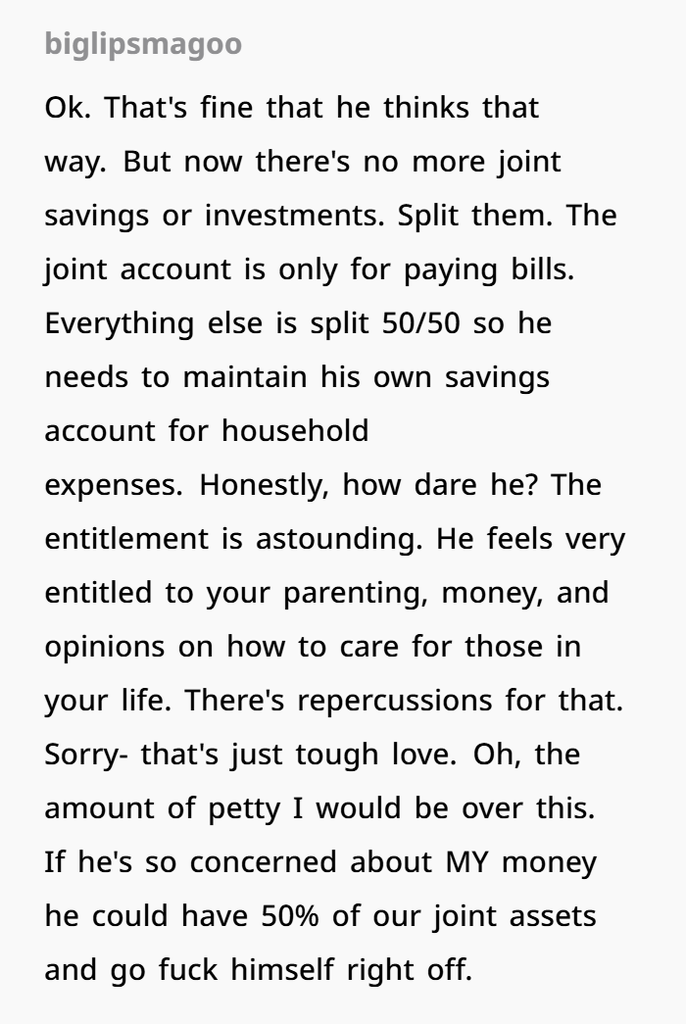
And that left the couple facing a much bigger question than how to replace $700 in their savings account: Does sharing a marriage mean sharing every financial decision, even when the money belongs to one spouse?
See the comments to know what people said






What started as a mother’s simple decision to help her son with a medical bill turned into a serious disagreement about money and marriage.
She believed she had every right to use her personal savings to support her child, especially when he was struggling financially. Her husband felt hurt and frustrated because she had made the decision without talking to him first.
The mother admitted that borrowing $700 from their joint savings without asking was inconsiderate. But she stood by her decision to help her son, making it clear that she would always support her children when she could afford to.
The situation shows how even couples who keep separate bank accounts can have different expectations about financial decisions.
In the end, the biggest issue wasn’t the medical bill or the money itself. It was the difference between asking for permission and keeping a partner informed.