In Labor at 3 A.M., a Mom Turns to Her Neighbor After Her Childcare Plans Fall Apart
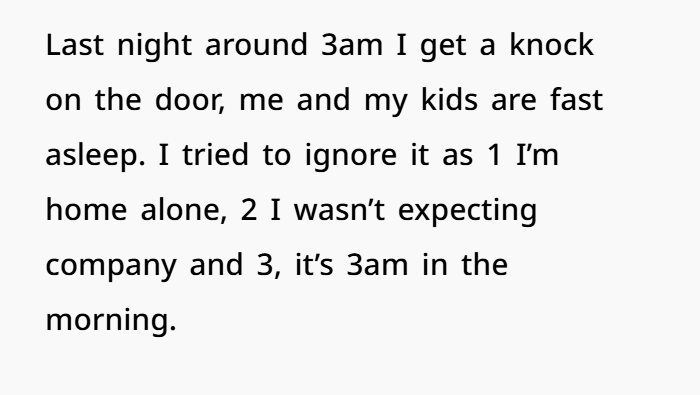
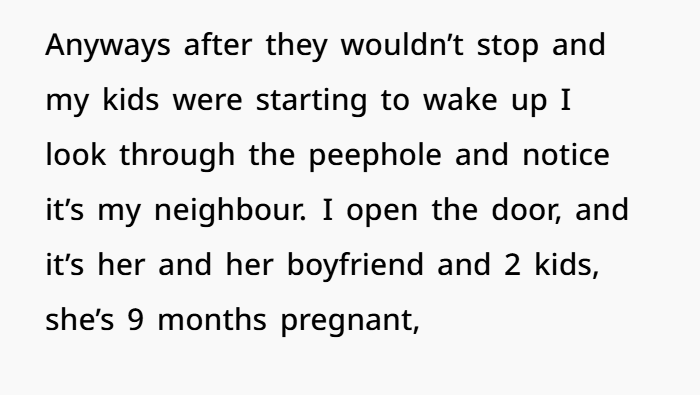
A 26-year-old mother of two found herself in an uncomfortable situation when her pregnant neighbor knocked on her door at 3 a.m., asking for help.
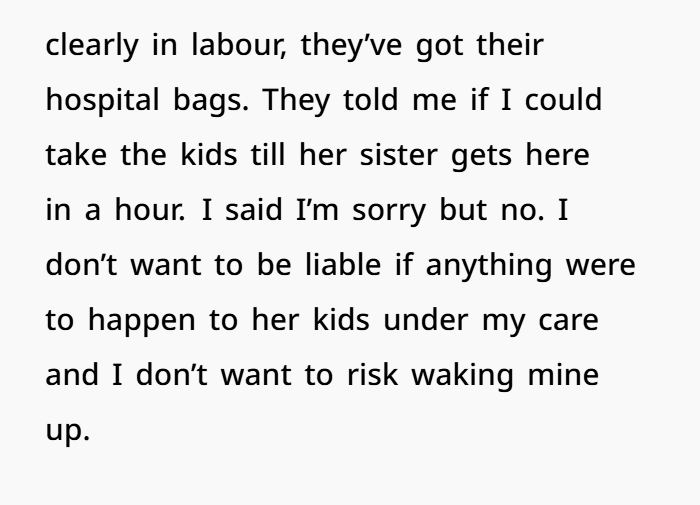
The neighbor needed to get to the hospital and was looking for someone to watch her children while she was away.
Under normal circumstances, helping a neighbor might seem like a simple act of kindness. But for this mother, the request wasn’t easy to accept.
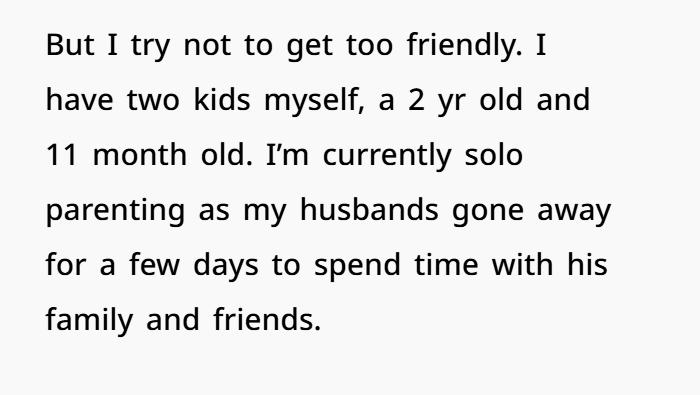
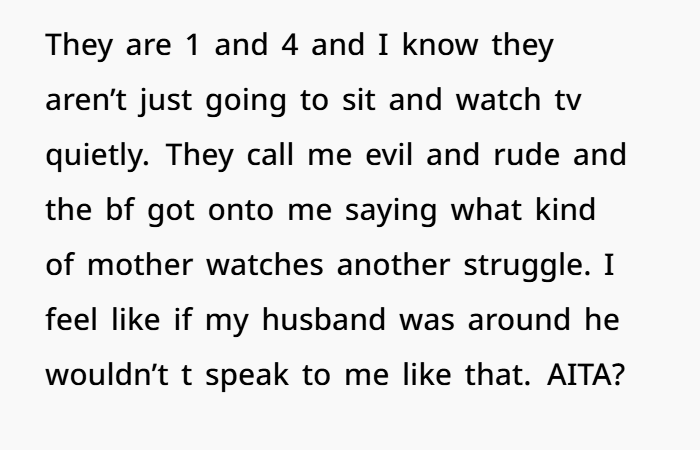
She was home alone with her two young children, ages 2 years and 11 months.
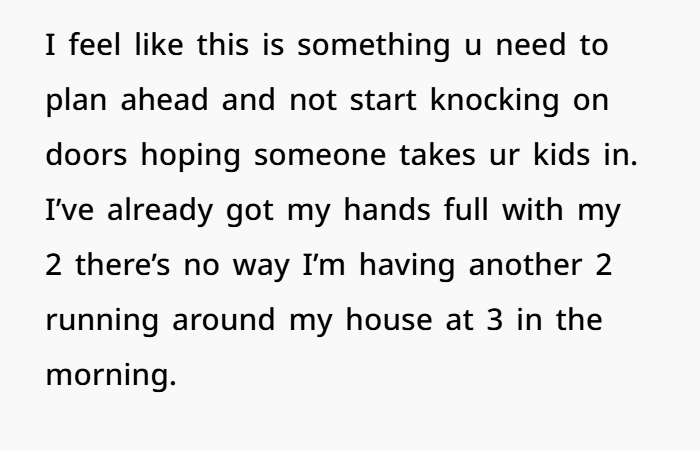
Both children were still very young and needed constant care and attention. Taking responsibility for more kids in the middle of the night felt overwhelming.
The mother also didn’t know her neighbor’s children very well.
That made her even more hesitant.
She had no idea how the children might react to being left with someone unfamiliar, especially at such an unusual hour.
She also worried about whether she could safely manage several children while caring for her own babies.
Although she understood that her neighbor was facing an emergency, she didn’t feel prepared to take on such a big responsibility.
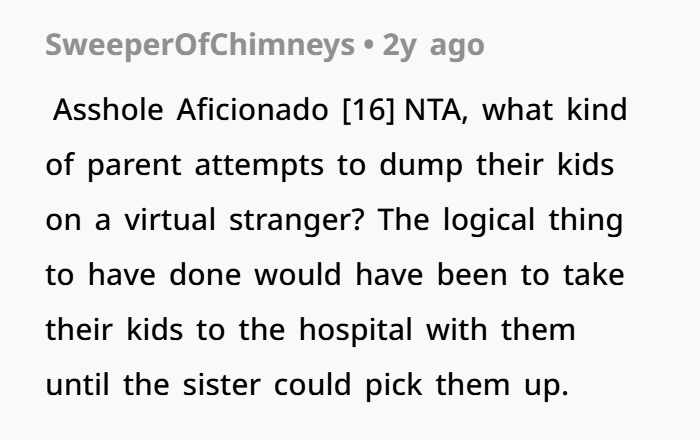
After thinking about the situation, she told her neighbor that she couldn’t watch the children.
It wasn’t an easy decision.
She felt sorry for the pregnant woman and understood that she needed help. But she also believed she had to put her own children’s safety and needs first.
The neighbor and her partner weren’t happy with her answer.
From their point of view, they were dealing with an urgent situation and needed someone nearby to step in.
They felt the mother should have helped, even if it meant watching the children for a short time.
Advertisement – Continue Reading Below
But the mother saw things differently.
She was already caring for two very young children on her own. Agreeing to watch more kids, especially ones she barely knew, felt like more than she could safely handle.
For her, the issue wasn’t about refusing to help someone in need.
It was about knowing her limits and being honest about what she could manage.
Thankfully, the situation didn’t leave the pregnant neighbor without help.
Another neighbor eventually agreed to watch the children until a family member could arrive.
This gave the couple a way to get the help they needed while making sure their children were cared for.
Still, the disagreement left some hurt feelings.
The mother began questioning whether she had been too harsh by refusing the request.
She knew her neighbor had been in a stressful situation, but she also felt her own concerns were being overlooked.
Looking after children is a serious responsibility, especially during the night.
Young kids may wake up, become upset, need feeding, or require help with other basic needs.
Adding unfamiliar children to that situation can make things even harder.
The story also raises questions about how much help people should expect from their neighbors during emergencies.
Being part of a community often means supporting one another when unexpected problems arise.
But that support also depends on what each person can safely and reasonably provide.
Someone may genuinely want to help while still being unable to take on a particular task.
For this mother, saying no wasn’t about ignoring her neighbor’s emergency.
It was about recognizing that she was already responsible for two small children and couldn’t promise proper care for more.
The fact that another neighbor stepped in showed that there was another way to handle the situation.
Her experience raises an important question: Does being a good neighbor mean saying yes during every emergency, or is it sometimes fair to refuse when helping could put too much responsibility on your shoulders?
When Her Neighbors Banged on Her Door at 3 A.M., This Mom Refused to Watch Their Kids
This Story Is About More Than One Late-Night Emergency
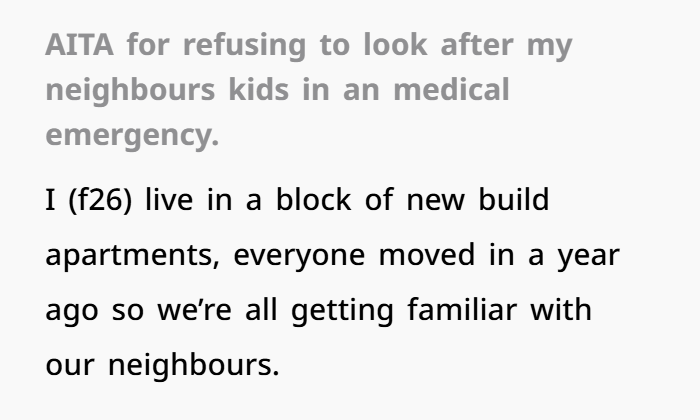
This situation wasn’t just about a mother refusing to babysit her neighbor’s children. It raised questions about kindness, family duties, and knowing when to say no.
Emergencies can happen without warning, forcing people to make quick choices.
In this case, a pregnant woman went into labor at 3 a.m. and needed someone to watch her children.
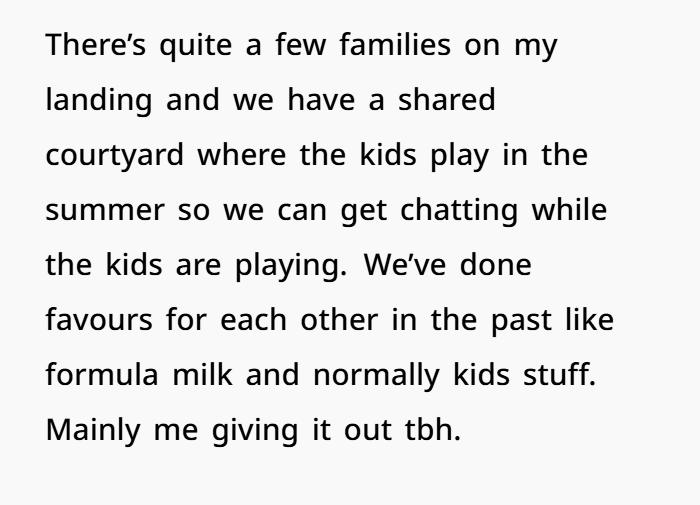
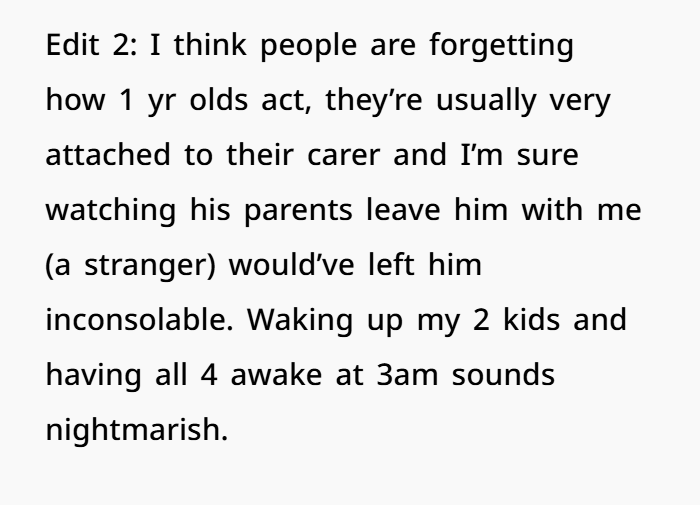
She turned to a neighbor who was also a mother. But that woman was already home alone with two very young kids.
She understood that her neighbor needed help, yet she wasn’t sure she could manage more children.
It was a difficult position for both families.
One mother needed to get to the hospital, while the other had to think about her own children’s safety.
Caring for Several Young Children Is a Big Responsibility
The 26-year-old mother already had her hands full with a 2-year-old and an 11-month-old baby.
Anyone who has cared for young children knows how much attention they need.
Babies may wake up hungry, need diaper changes, or struggle to fall asleep. Toddlers can also become upset when their routines change.
Managing two young children alone can be exhausting, especially during the night.
Taking in two more children would have made things even harder.
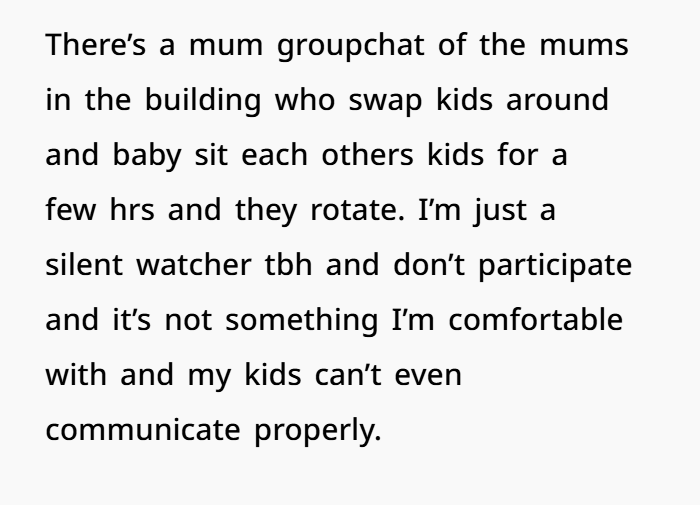
There was also the fact that she barely knew her neighbor’s kids.
Young children can become frightened or confused when their parents suddenly leave them with someone unfamiliar.
At 3 a.m., that could mean crying, trouble sleeping, or needing extra comfort.
The mother had no way of knowing how the night would go.
She wasn’t being asked to watch the children for a quick afternoon visit. She was being asked to take responsibility for them during an emergency with no clear end time.
That was a lot to consider.
Why Setting Personal Boundaries Matters
One of the biggest questions in this story is whether someone should feel guilty for refusing to help during an emergency.
Most people want to support others when they can.
But being kind doesn’t mean agreeing to every request, no matter how difficult it might be.
The mother had to think about her own children first.
She also needed to consider whether she had enough energy and attention to care for four young kids by herself.
Saying yes without being prepared could have created problems for everyone.
She knew her limits and decided not to take on more than she could safely handle.
That doesn’t mean she didn’t care about her neighbor.
It means she understood that caring for children comes with real duties.
Sometimes, being honest about what you can manage is better than making a promise you may struggle to keep.
Why Parents Need Backup Plans for Emergencies
The situation also shows why having backup childcare plans can be helpful.
Pregnancy comes with many unknowns, including when labor might begin.
Even when parents have a due date, babies don’t always arrive when expected.
That’s why arranging childcare before the baby arrives can make things less stressful.
Parents can speak with trusted relatives, close friends, or neighbors who are willing to help.
It’s also useful to have more than one person available in case the first choice can’t make it.
Keeping phone numbers ready and discussing plans ahead of time can save precious time during an emergency.
Of course, even the best plans can fall apart.
Someone might be unavailable, live too far away, or face an emergency of their own.
But having several options can make a difficult night easier to manage.
In this case, the pregnant woman needed help quickly, and her neighbor wasn’t prepared to provide it.
The lack of an immediate childcare option added stress to an already urgent situation.
What Happened Later Made the Situation Clearer
Another important detail emerged after the initial disagreement.
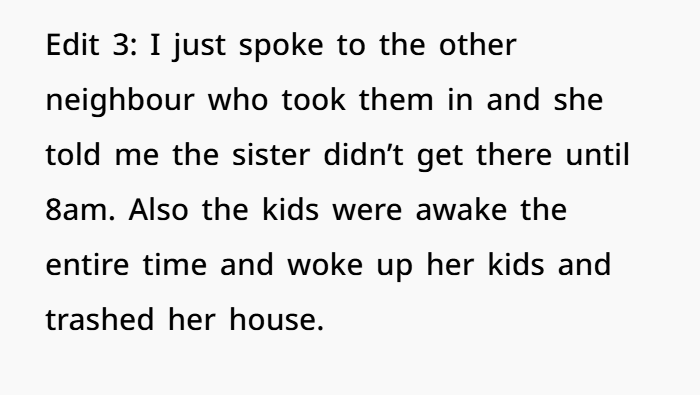
A different neighbor eventually agreed to care for the children until a family member could arrive.
However, the arrangement reportedly lasted several hours.
That meant the original request wasn’t necessarily going to be a short babysitting job.
For someone already caring for a baby and a toddler, several extra hours with unfamiliar children could have been exhausting.
It also meant taking responsibility for their meals, comfort, safety, and other needs.
The mother couldn’t have known exactly how long the children would need care when the request was made.
That uncertainty was part of her concern.
Although another neighbor was able to help, it doesn’t mean the first mother had the same ability.
Every household has different needs, limits, and duties.
What one person can comfortably manage may be too much for someone else.
Was the Mother Wrong to Refuse?
Looking at the situation, both sides had understandable concerns.
The pregnant woman was dealing with a medical event and needed someone to care for her children.
She likely felt frightened and frustrated when her neighbor couldn’t help.
At the same time, the 26-year-old mother was already responsible for two small children.
She didn’t know the other kids well and wasn’t comfortable taking on more childcare during the night.
Her refusal wasn’t meant to punish the family or make their situation worse.
She simply didn’t believe she could provide the care the children needed.
Some people might have agreed to help despite the challenges.
Others would have made the same choice she did.
The important point is that caring for children requires more than good intentions.
A person also needs the time, energy, and ability to keep them safe.
Thankfully, another neighbor stepped in, and the children were looked after until their family member arrived.
Respect Still Matters During Stressful Moments
Emergencies can bring out strong emotions.
When someone is scared, tired, or worried, even a simple disagreement can turn into an argument.
The pregnant neighbor and her partner were upset because they needed help right away.
But the mother who refused was also dealing with a difficult situation.
She had been woken in the middle of the night and asked to take on a major responsibility without warning.
Both families were under pressure.
Still, anger and blame rarely make these moments easier.
A respectful response can help people work toward another solution, even when the answer is no.
The neighbor could acknowledge the emergency without agreeing to babysit.
The couple could also feel disappointed without assuming she was being cruel.
Understanding each other’s limits can help prevent one stressful night from damaging a neighborly relationship.
You Can Be Kind and Still Say No
One lesson from this story is that kindness and personal boundaries can exist together.
Someone can feel sorry for another person’s situation without being able to solve it.
The mother understood that her neighbor needed urgent help.
But she also knew she was already caring for two children who depended on her.
Taking on more responsibility wasn’t something she felt ready to do.
That doesn’t erase her concern for the pregnant woman.
It simply shows that people have different limits.
Parents often face choices where they must put their own family’s needs ahead of other requests.
Those decisions can feel uncomfortable, especially when someone else is upset.
But agreeing to something out of guilt isn’t always the safest choice.
Why Having People You Can Count On Matters
Families often rely on relatives, friends, and neighbors when unexpected problems arise.
Having people who can step in during emergencies can make a huge difference.
But those relationships work best when everyone understands what kind of help they can offer.
For example, one neighbor may be comfortable watching older children but not babies.
Another person might be available during the day but unable to help overnight.
Some families may have relatives nearby, while others need to arrange care through trusted friends.
Talking about these things before an emergency can help avoid confusion.
It also gives parents a chance to find people their children already know and trust.
In this story, another neighbor eventually helped until a family member arrived.
That support gave the pregnant woman and her partner a way to handle the emergency.
It also showed why having more than one possible caregiver can be valuable.
The Bigger Lesson: Knowing Your Limits Doesn’t Mean You Don’t Care
This story isn’t simply about whether the mother should have opened her door and agreed to babysit.
It’s about the difficult choices people face when their own duties clash with someone else’s urgent needs.
The pregnant woman needed help, and her situation deserved care and understanding.
But the neighbor also had two young children depending on her.
She had to decide what she could realistically manage at 3 a.m.
In the end, she chose not to take on a responsibility she felt unable to handle.
Another person stepped in, and the children received care until a relative arrived.
The situation reminds us that people can respond differently to the same emergency without either choice being driven by bad intentions.
Helping others matters, but so does knowing your limits. Sometimes the most responsible answer is admitting when you can’t safely take on more.
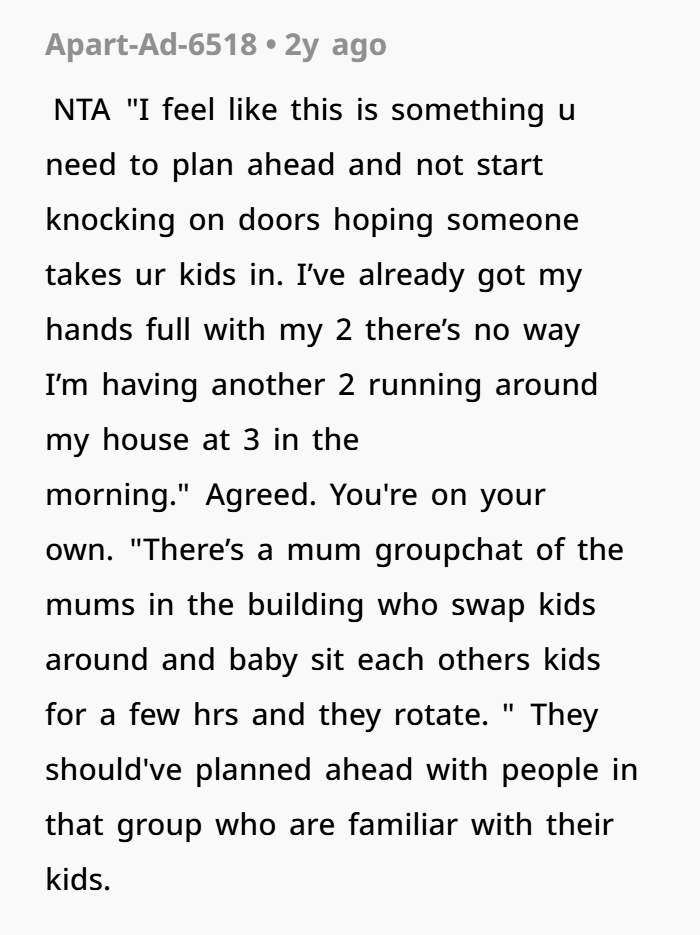
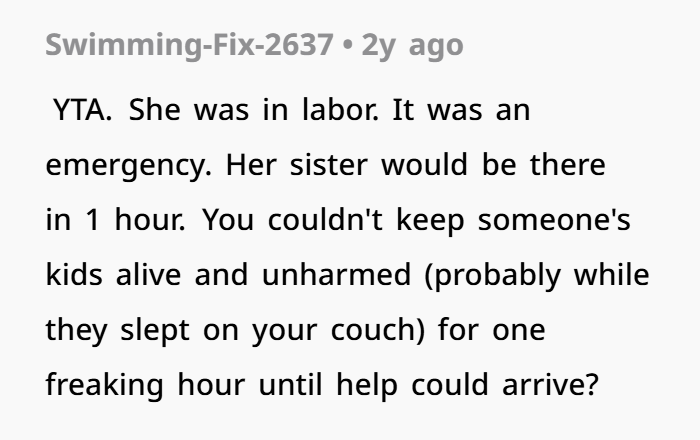
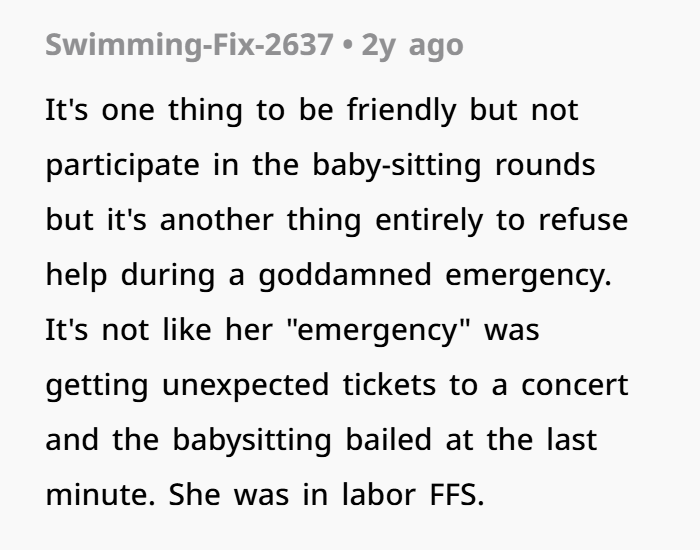
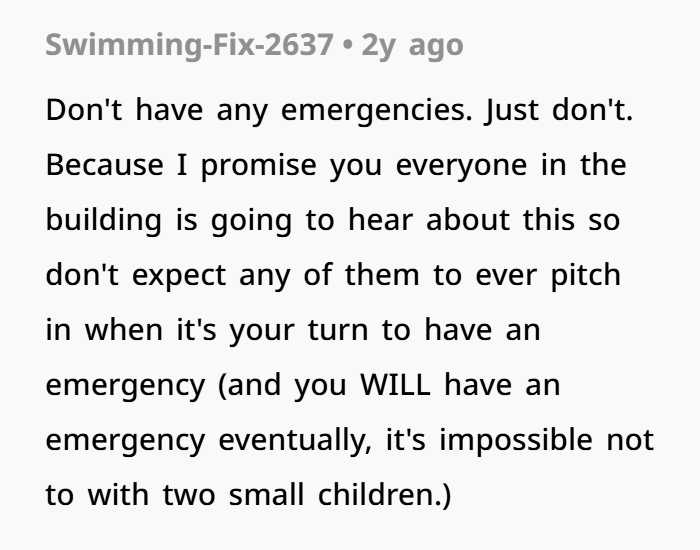
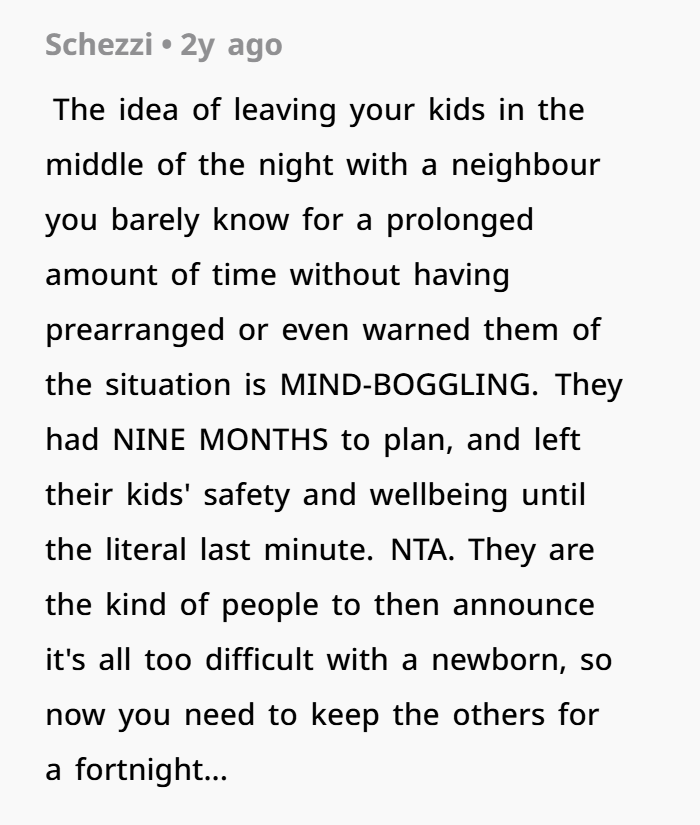
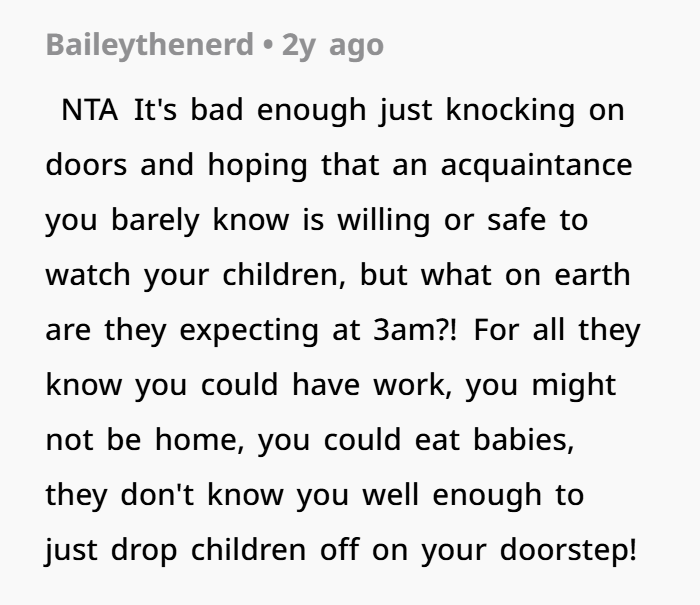
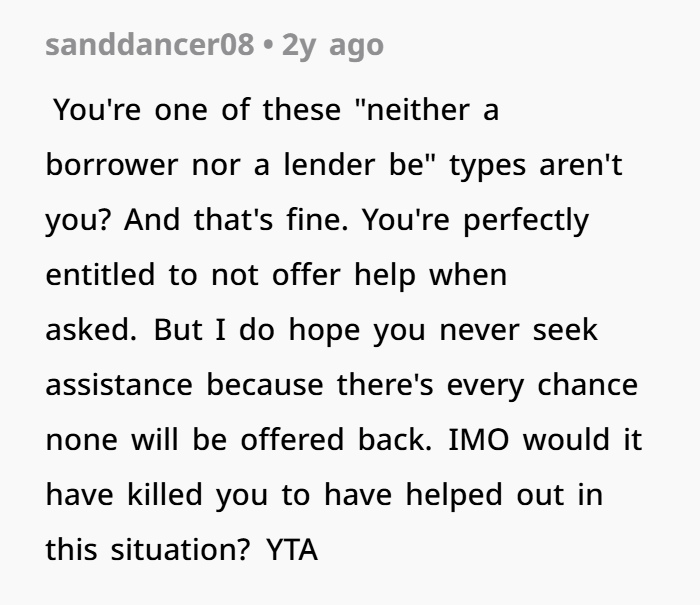
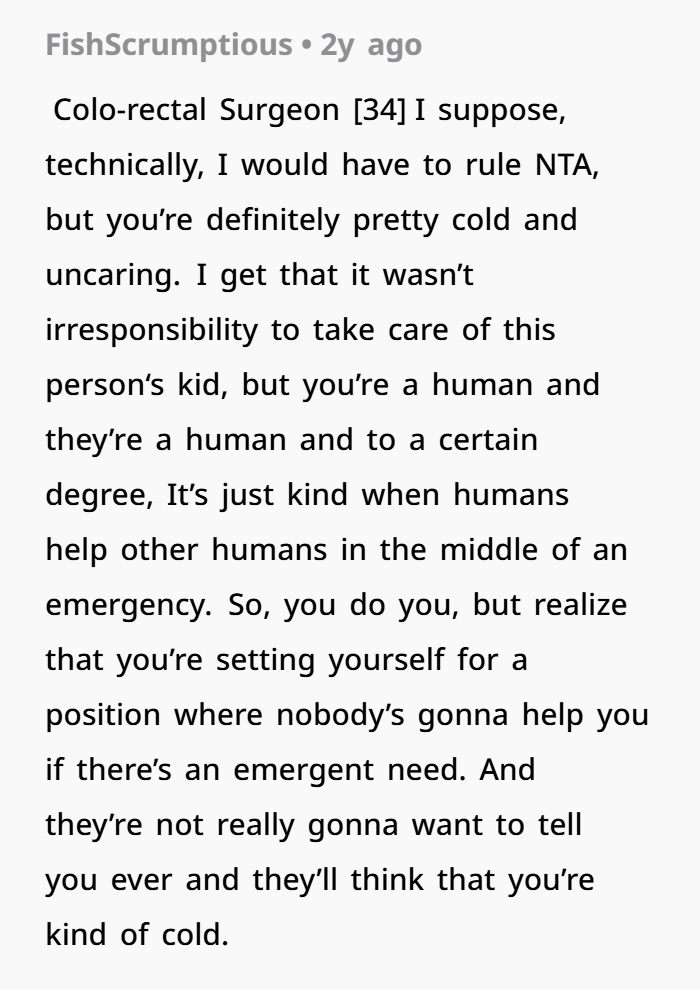
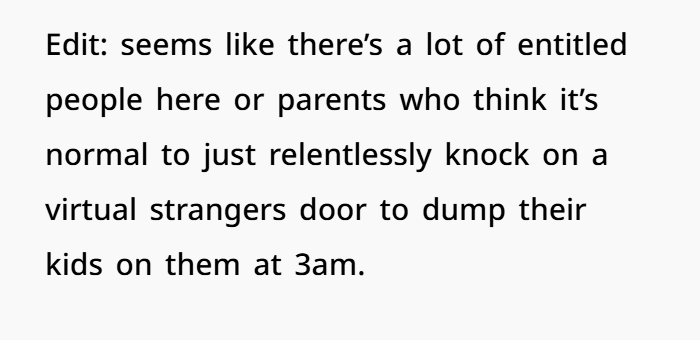
Some readers took the mother’s side, and she joined in on the conversation