I Kept My Half-Sibling Away From Our Dad’s Funeral, but Now I Wonder If I Was Wrong
Losing a parent is hard enough, but dealing with family drama during that time can make the pain even worse.
One 25-year-old woman found herself facing this situation after her father’s death. She decided not to let her half-siblings attend his funeral, and the choice led to a heated family dispute.
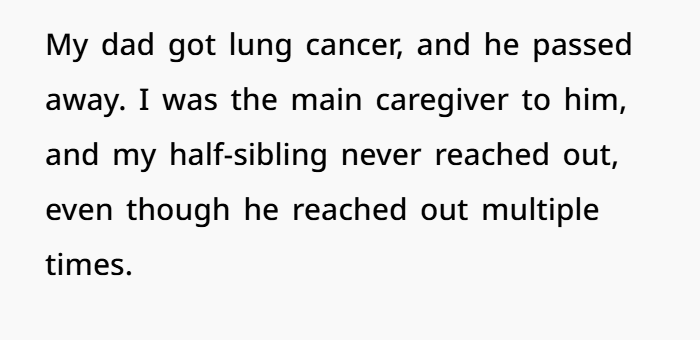
The woman explained that she was born from an affair. Her father’s relationship with her mother had caused serious problems in his first marriage.
Growing up, she felt that her half-siblings blamed her for their parents’ divorce.
Instead of building a close bond, their relationship became filled with anger and resentment.
Her half-siblings treated her badly for years. She described being bullied, insulted, and made to feel unwanted.
The painful experiences stayed with her, and their relationship never improved.
Things became even harder when their father was diagnosed with lung cancer.
As his health got worse, she stepped in to care for him. She spent his final days looking after him and making sure he had the help he needed.
She said her half-siblings weren’t involved in his care, even though their father had tried to rebuild his relationship with them.
After he passed away, she was left grieving while also handling his funeral plans.
That’s when she made a choice that would upset the rest of the family.
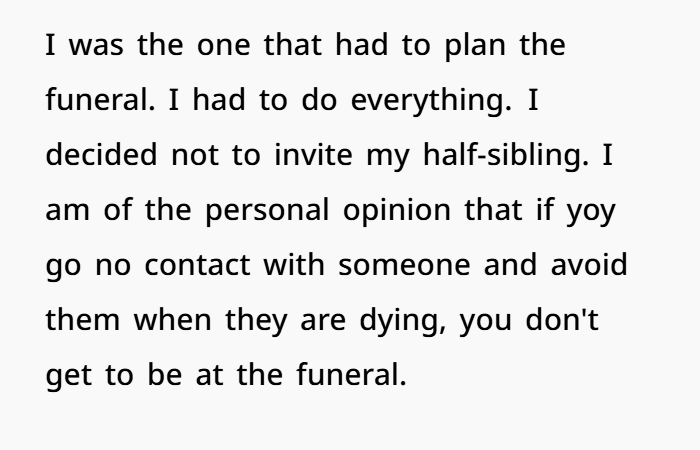
She decided not to invite her half-siblings to the funeral.
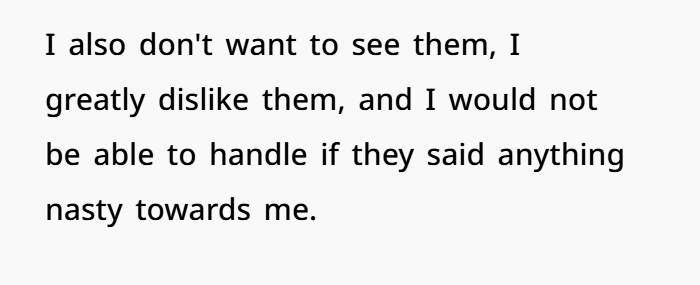
For her, the decision came after years of painful treatment and the lack of support during their father’s illness.
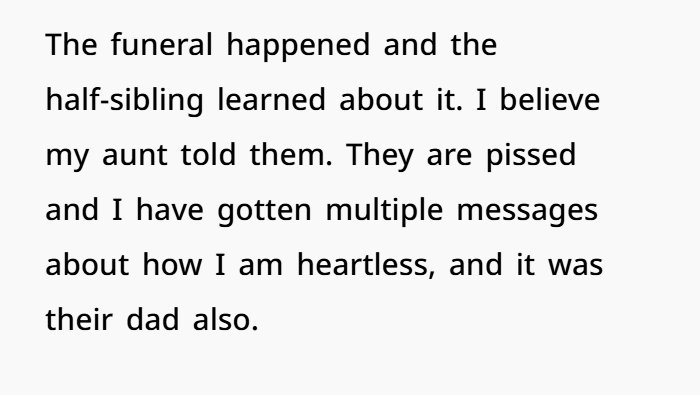
But her half-siblings didn’t see it the same way.
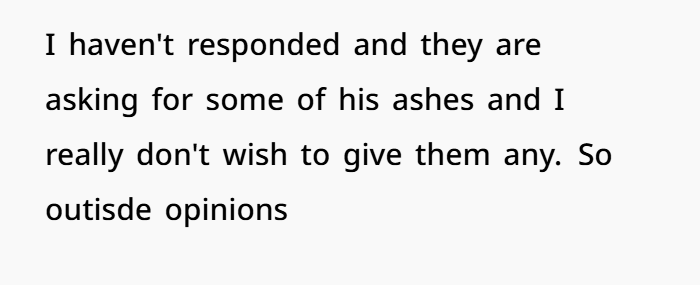
They were angry about being kept away from their father’s funeral. Later, they also asked for a share of his ashes.
Advertisement – Continue Reading Below
Their request created even more tension, leaving the woman unsure about how to handle the situation.
She had spent years dealing with their hurtful behavior, but she also knew they had lost their father.
Now, she was left wondering whether keeping them away from the funeral had been the right choice.
Her story raises a difficult question: Should painful family history decide who gets to say goodbye to a loved one?
It also shows how grief can bring old wounds back to the surface, especially when family ties have been damaged for years.


The problems in this family didn’t begin after their father’s death. According to the woman, the tension had been there since she was a child.
She explained that her half-siblings blamed her for their parents’ divorce because she was born from an affair.
But she had no control over how she came into the family.
Despite that, she said her half-siblings treated her badly whenever they visited their father.
Their behavior went beyond ordinary sibling arguments.
One incident left a lasting mark on her.
She claimed her older half-sister took away her anxiety medication and laughed while she suffered a panic attack.
For someone already dealing with fear and stress, that experience was deeply upsetting.
As she grew older, the woman sought help for her mental health. She said therapy helped her work through years of painful memories.
She also believed her half-siblings hadn’t received the same support because their mother was against therapy.
Without help or honest conversations, the problems between them continued to grow.
Things finally reached a breaking point when the woman turned 18.
According to her story, her half-siblings gave their father an ultimatum.
They told him he had to make her leave his home, or they would cut him out of their lives.
Her father refused to send her away.
After that, she said her half-siblings stopped speaking to him.
Years passed, and the family remained divided.
Then their father received a lung cancer diagnosis.
As his health declined, the woman took on the role of his main caregiver.
She helped with his daily needs, looked after him during his illness, and stayed by his side as his condition got worse.
Caring for a sick parent can be both physically tiring and emotionally painful.
It often means handling daily tasks while also facing the fear of losing someone you love.
For this woman, the experience was even harder because she said her half-siblings weren’t there to help.
After their father passed away, she also took charge of planning his funeral.
Before the service, she said she tried to let her half-siblings know about his death.
But she received no response.
She believed they might have blocked her, which would explain why her messages went unanswered.
With years of no contact between them and their father, she decided not to include them in the funeral plans.
From her point of view, they had chosen to stay away from him long before he became ill.
But the situation didn’t end there.
After the funeral, her half-siblings reportedly learned about it from another relative.
They were furious.
They argued that, no matter what had happened in the past, he was still their father. They believed they should have been allowed to attend his funeral and say goodbye.
They also asked the woman to give them some of his ashes.
She refused that request as well.
For her, sharing the ashes was difficult after years of hurtful treatment and the lack of contact during their father’s final days.
But her decision raised another painful question.
Did their past behavior mean they should lose the chance to say goodbye to their father?
Family relationships can become strained for many reasons. Sometimes, years of anger, broken trust, and painful memories make it hard for relatives to reconnect.
Even when someone wants to repair those bonds, the other person may not be ready.
And when a death happens before those problems are resolved, the pain can become even more complicated.
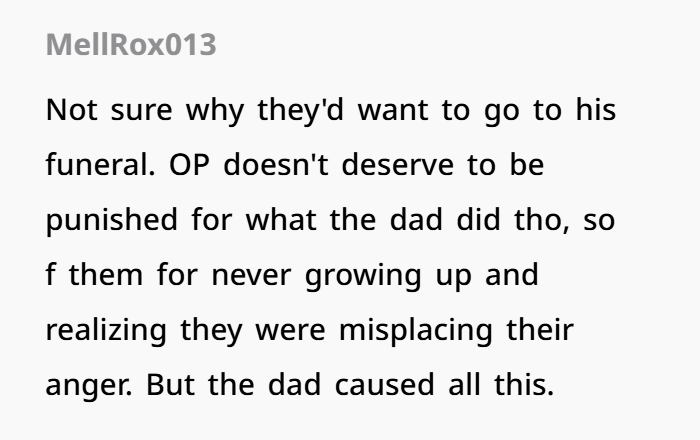
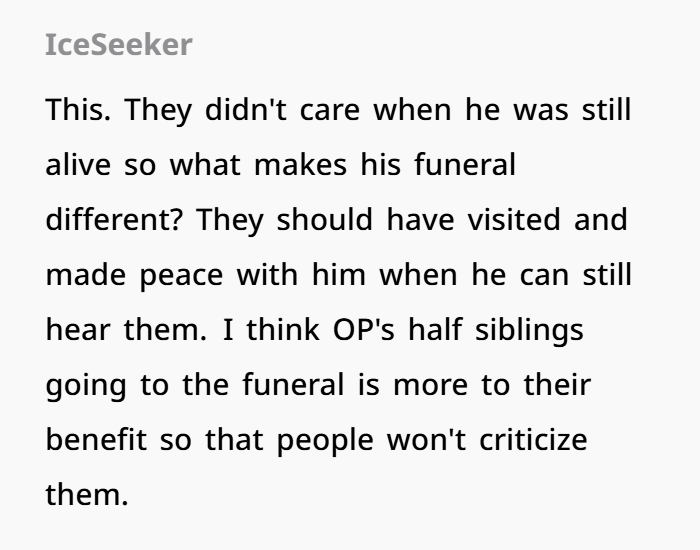
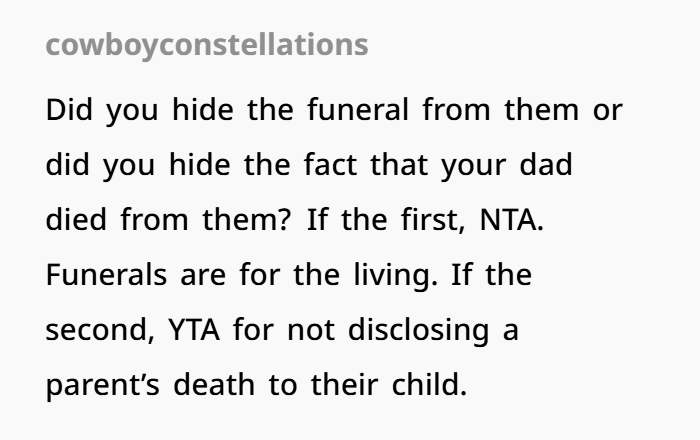
The woman’s story sparked mixed reactions from readers online.
Some people supported her decision. They felt she had been the one caring for her father when he needed help most.
Others believed her half-siblings still deserved the chance to attend the funeral, regardless of their past actions.
They argued that losing a parent is painful, even when the relationship was distant or damaged.
In the end, the situation left people divided.
The woman had spent years dealing with family conflict, followed by the pain of losing her father.
Her half-siblings, meanwhile, felt they had been denied a final goodbye.
The story shows how difficult family decisions can become when grief, old wounds, and broken relationships all come together.
Add a stronger opening hookReduce repetitive emotional explanations
See the comments to know what people said


This story shows how years of family problems can lead to painful choices when someone dies.
The woman felt her half-siblings had chosen to stay away from their father. They weren’t involved during his final illness, and she was left to care for him.
After years of being hurt by them, she believed keeping them away from the funeral was the right choice.
But not everyone agreed.
Some people felt that, despite their troubled past, her half-siblings should have been allowed to say goodbye to their father.
After all, losing a parent can be painful, even when the relationship has been strained for years.
That’s what made this situation so difficult.
The woman wanted to protect herself from more pain, while her half-siblings believed they had lost their chance for a final goodbye.
When families have been divided for a long time, there isn’t always an easy answer.
Old arguments, broken trust, and feelings of regret can become even harder to deal with after someone passes away.
And once that person is gone, there may never be another chance to make things right.
In the end, this story is a reminder that family conflicts can leave wounds that last for years.
It also raises a difficult question: Should someone’s past actions decide whether they get to say goodbye to a parent?