Mom Expects Her 20-Year-Old Son to Care for Her Fiancé’s Disabled Child, but He Refuses
A 20-year-old college student is facing family pressure after refusing to help care for his mother’s fiancé’s disabled child.
He lives on his own while attending college and is working toward building an independent future. Although he still keeps in touch with his mother, their relationship isn’t as close as it used to be.
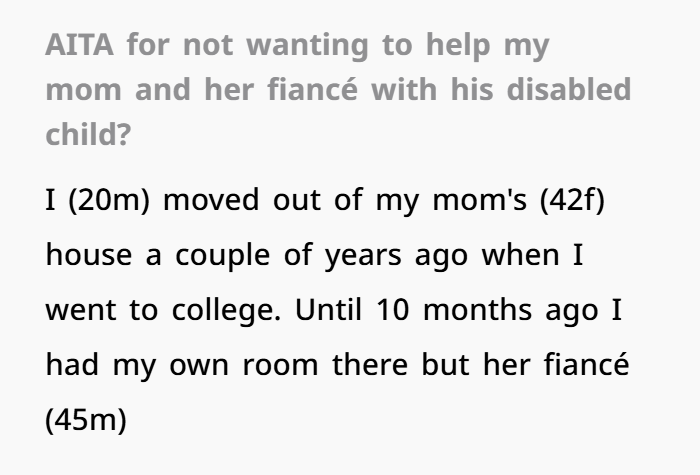
Things began changing about 10 months ago when his mother moved in with her fiancé and his two young children.
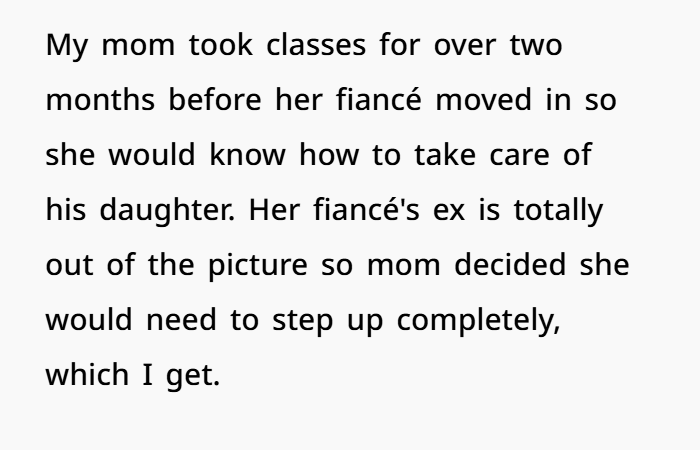
One of the children has serious health problems, including seizures and brittle bone disease. These conditions require close attention, careful handling, and ongoing medical care.
The new living arrangement also meant major changes for the family.
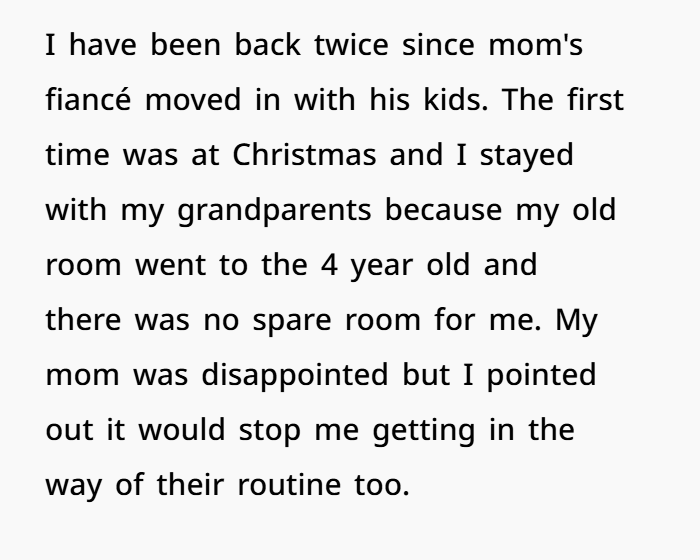
After his mother moved in, OP’s old bedroom was changed to meet the needs of the new household.
Because of this, he no longer feels comfortable staying there when he visits.
Instead, he chooses to stay with his grandparents, where he has more space and feels at ease.
But the bigger issue isn’t where he sleeps.
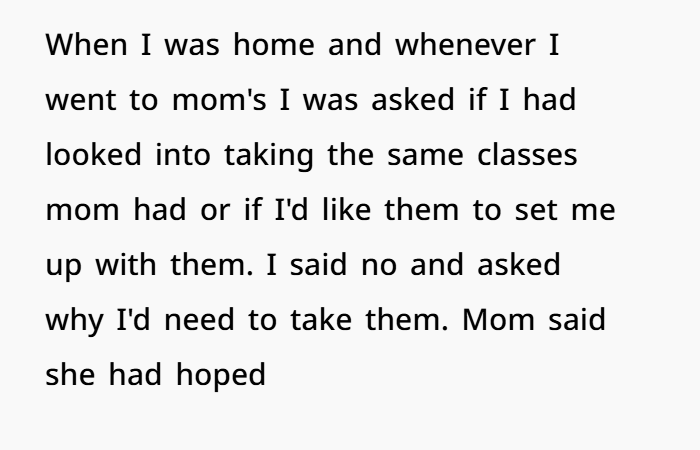
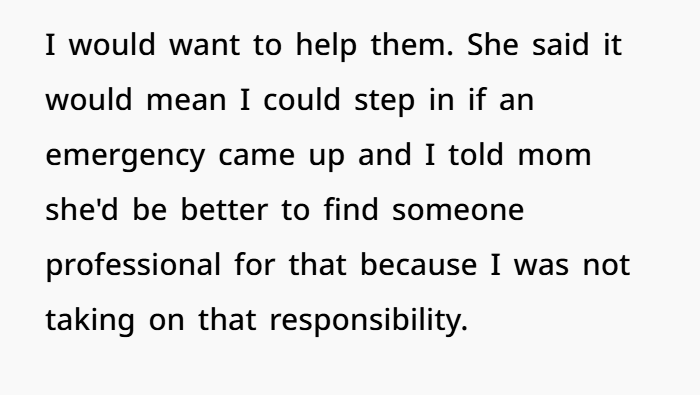
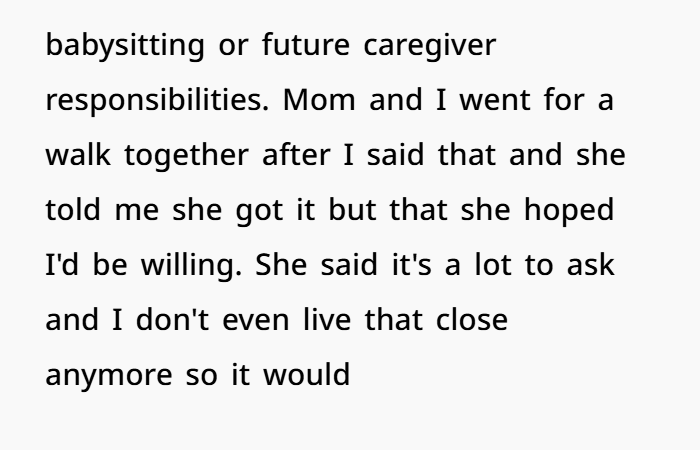
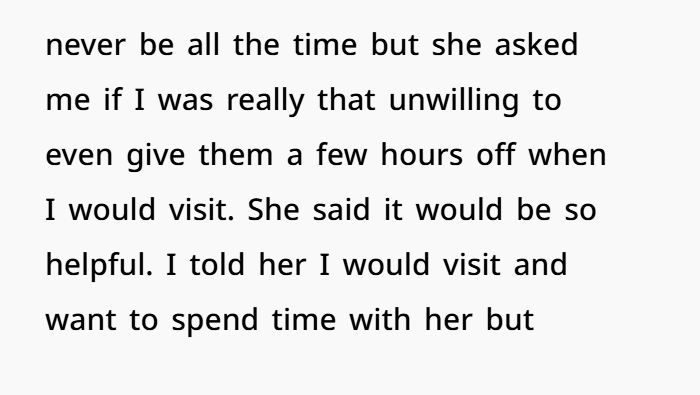
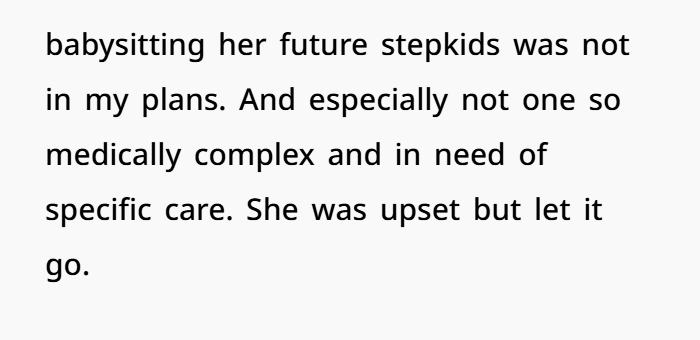
His mother wants him to become more involved in caring for her fiancé’s child.
She even offered to teach him how to handle some of the child’s medical needs.
However, he wasn’t comfortable taking on that responsibility.
He politely declined and explained that he didn’t want to be responsible for medical emergencies or daily care.
He wasn’t saying he didn’t care about the child. He simply didn’t feel ready or willing to take on such a serious role.
At 20, he wants to focus on college, his future career, and learning how to support himself.
He also believes that caring for the child should remain the responsibility of the child’s parents.
Advertisement – Continue Reading Below
Unfortunately, his decision didn’t sit well with everyone.
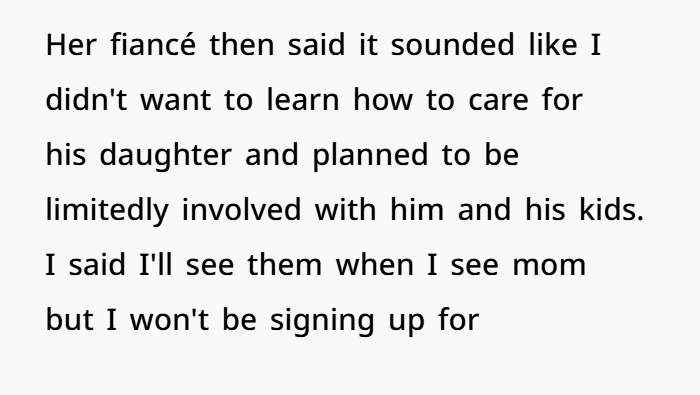
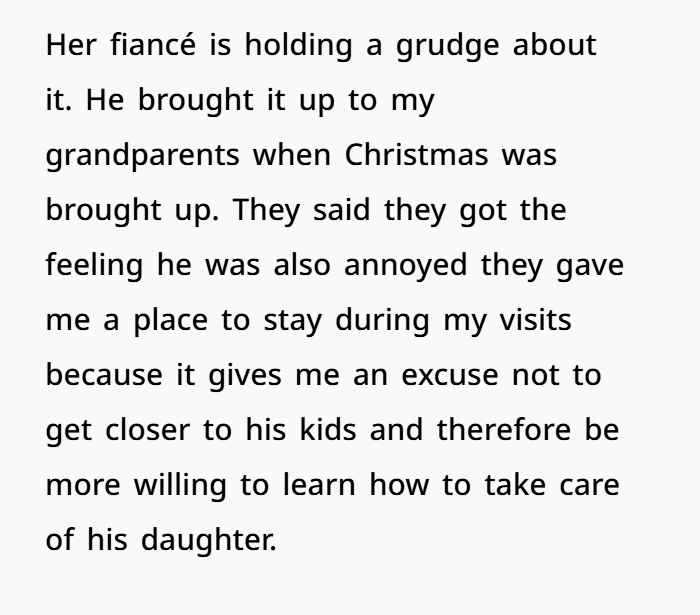
His mother’s fiancé believes that because the young man is part of the family, he should be willing to help.
This has created tension between them.
The fiancé sees caregiving as something family members should share. But the college student believes being part of a family doesn’t mean he must accept duties he never agreed to take on.
He understands that the child’s health needs are serious and that caring for them can be difficult.
Still, he doesn’t believe that makes him responsible for stepping into a caregiver role.
The disagreement has left him feeling pressured to choose between keeping his family happy and protecting his own boundaries.
What started as a change in living arrangements has now become a larger argument about family duties and personal choice.
The situation raises an important question: Does becoming part of a blended family mean someone must take on caregiving responsibilities, even when they aren’t comfortable doing so?
For this 20-year-old, the answer is clear.
He loves his mother and wants to maintain a relationship with her. But he also wants the freedom to make decisions about his own life.
He believes he can care about his family without becoming responsible for a child’s medical needs.
And as the family continues to disagree, he remains firm about what he is willing and able to handle.
His Mom’s Fiancé’s Kids Took Over His Old Room, So He Stayed With His Grandparents When Visiting




Caring for a Medically Complex Child: Why It Is a Big Responsibility
Caring for a child with serious health problems is a big responsibility. It takes patience, time, and sometimes special medical skills.
In this story, the child has osteogenesis imperfecta (OI), also known as brittle bone disease, along with seizures.
OI is a genetic condition that makes bones weaker and more likely to break. Depending on how severe it is, a child may deal with frequent fractures, ongoing pain, and trouble moving around.
Seizures bring their own challenges and may require close attention and a clear plan for emergencies.
Some children with OI also face muscle weakness, hearing problems, or other health concerns.
Because of these conditions, everyday tasks may require extra care.
A caregiver might need to help the child move safely, give prescribed medicine, watch for signs of trouble, and know what to do during a seizure.
This isn’t the same as watching a healthy child for a few hours.
It can involve serious medical needs, and mistakes could put the child at risk.
That’s why expecting a 20-year-old college student to take on this role without proper training or a clear agreement isn’t fair.
Being Family Doesn’t Mean Taking On Every Responsibility
Families often help each other during difficult times. There’s nothing wrong with asking a relative for support.
But asking for help and expecting someone to become a caregiver are two very different things.
In this case, the mother chose to build a life with a man who has two children. One of those children needs extra care because of serious health problems.
That was her decision.
Her adult son didn’t make the same choice, and he shouldn’t be expected to take on a major caregiving role simply because his mother is getting married.
He can love his mother, respect her relationship, and still decide that caring for her fiancé’s child isn’t something he wants to do.
Family support works best when people offer help because they’re willing and able, not because they feel guilty or pressured.
A healthy family should respect each person’s limits.
Setting Boundaries Doesn’t Make Someone Selfish
The young man didn’t respond by insulting anyone or making cruel comments about the child.
He explained that he wasn’t comfortable taking on medical duties.
He also made it clear that he wanted to focus on college and his own future.
Those are reasonable concerns for someone who is only 20 years old.
He is still working toward his education, career, and financial independence.
Taking on regular caregiving duties could affect his classes, study time, and personal life.
He also chose to stay with his grandparents when visiting because his old room had been changed for the new household.
That decision gave him a place where he felt more comfortable.
Instead of agreeing to something he couldn’t handle, he was honest about his limits.
Suggesting a trained caregiver was also a practical option, especially given the child’s medical needs.
Saying no to a serious responsibility doesn’t mean he lacks compassion.
It means he understands what he is willing and able to do.
Why the Fiancé’s Expectations Feel Unfair
The mother’s fiancé believes the young man should help because they are becoming part of the same family.
From his point of view, he may see caregiving as something relatives should share.
Raising a child with serious health needs can be stressful, and extra support would likely make daily life easier.
But that doesn’t mean he can decide what role someone else must take.
The college student didn’t agree to become a caregiver when his mother started dating this man.
He also wasn’t involved in making the choices that led to their new living arrangement.
Expecting him to learn medical care and take responsibility for emergencies places a heavy burden on him.
It’s especially unfair if his concerns are treated as selfish simply because he doesn’t want that role.
The fiancé and the child’s other responsible adults need to make sure proper care is available.
They can ask relatives for help, but they also need to accept that some people may decline.
A child’s safety should never depend on pressuring someone who doesn’t feel ready to provide care.
Caregiver Stress and Burnout Are Real
Caring for someone with serious medical needs can affect nearly every part of daily life.
Depending on the child’s condition, caregivers may need to follow strict routines, attend medical visits, and stay prepared for emergencies.
Over time, these duties can become physically and emotionally tiring.
Caregivers may struggle with stress, poor sleep, and finding enough time for their own needs.
For a college student, regular caregiving could also make it harder to attend classes, complete assignments, or prepare for exams.
That doesn’t mean family members should never help.
It means the amount of care someone provides should match their skills, time, and willingness.
Training can help someone learn how to support a child safely, but training alone doesn’t mean they must accept the role.
Professional caregivers and medical teams can provide support based on the child’s needs.
Families may also benefit from planned breaks, shared duties among willing adults, and outside help when available.
The goal should be to make sure the child receives safe, steady care without placing unfair pressure on one person.
The Young Man Has a Right to Choose His Future
At 20, the young man is at a stage where his education and future plans matter.
He is learning to live on his own and make decisions about the kind of life he wants.
His mother’s new relationship doesn’t erase those goals.
He can remain part of the family without becoming responsible for her fiancé’s child’s medical care.
He may choose to spend time with the children, attend family events, or offer small amounts of help when he feels comfortable.
But those choices should be his to make.
The child deserves proper care from people who are ready and able to provide it.
And the young man deserves the chance to build his own future without feeling guilty for setting limits.
The main lesson is simple: Helping family can be a kind choice, but serious caregiving should never be treated as an automatic duty.
Respecting someone’s boundaries doesn’t mean caring less about the family. It means understanding that everyone has different limits, needs, and responsibilities.
Netizens Criticized His Mom and Her Fiancé for Their Unfair Demands and Praised Him for Standing His Ground

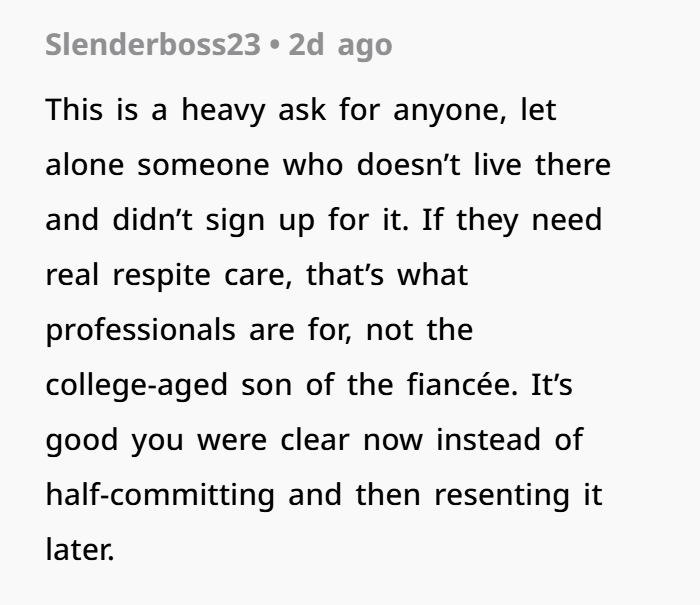
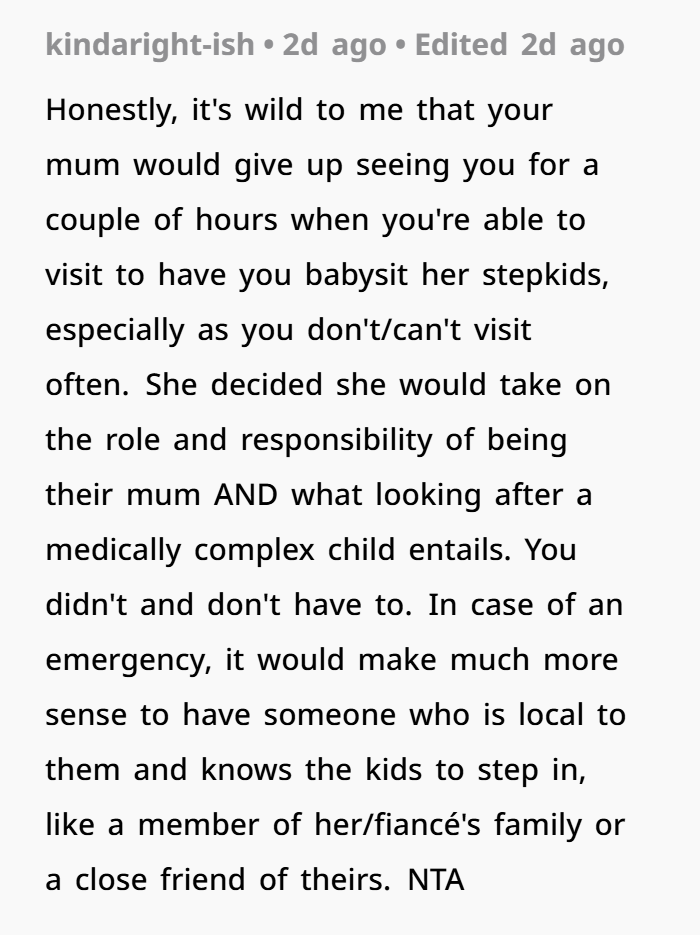

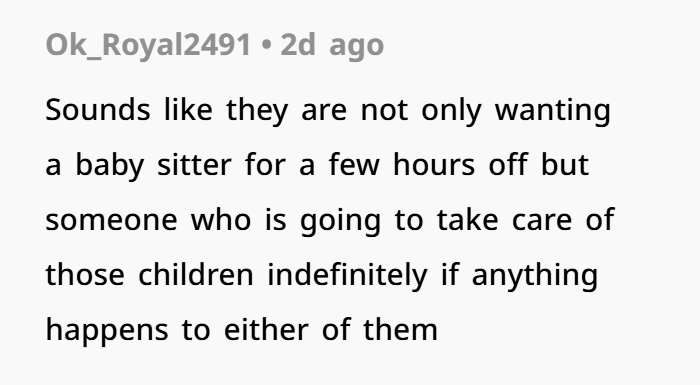
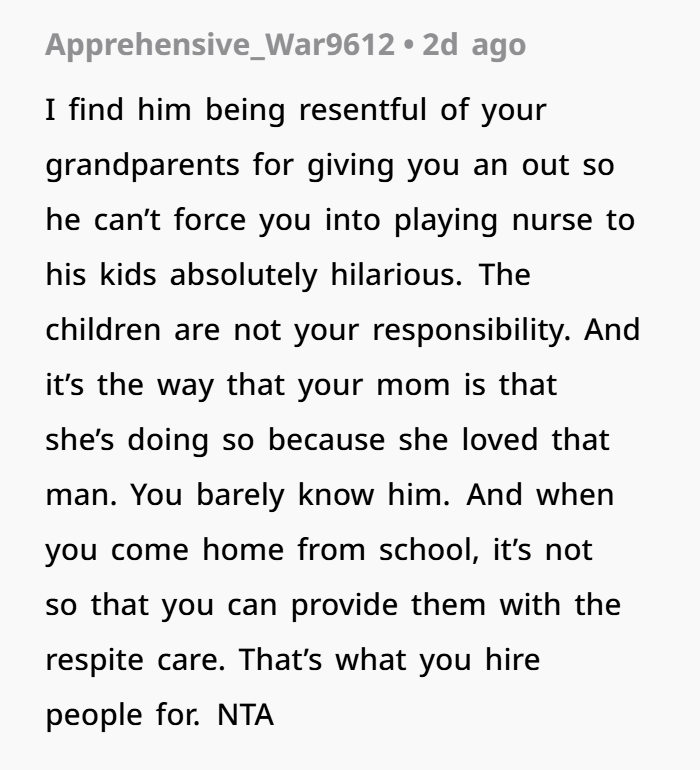
The 20-year-old handled the situation in a fair and mature way. He explained his feelings without being rude and made it clear that he wasn’t comfortable taking on a caregiving role.
He had never agreed to care for his mother’s fiancé’s child. With college and his own future to think about, he had good reasons to set limits.
He also suggested hiring a trained caregiver instead of leaving the child’s medical needs to someone without the right skills or experience.
Caring for a child with serious health problems takes time, patience, and proper training. It’s not a responsibility someone should be pushed into accepting.
His mother and her fiancé may need extra help, but that doesn’t mean he must provide it.
Being part of a family doesn’t mean saying yes to every request. People can care about their loved ones while still protecting their own time, goals, and well-being.
In the end, the young man wasn’t refusing to respect his family. He was simply being honest about what he could handle.
Healthy family relationships depend on understanding those limits, offering support without pressure, and respecting each person’s choices.