Med Student Warns Shopaholic Friend That Her Spending Could Leave Her Parents Broke
Some people don’t realize when a friend is trying to help them. In this Reddit story, a medical student tried to warn her friend Jane about her careless spending habits. Jane wanted an expensive handbag she claimed she needed, even though she couldn’t afford it without help.
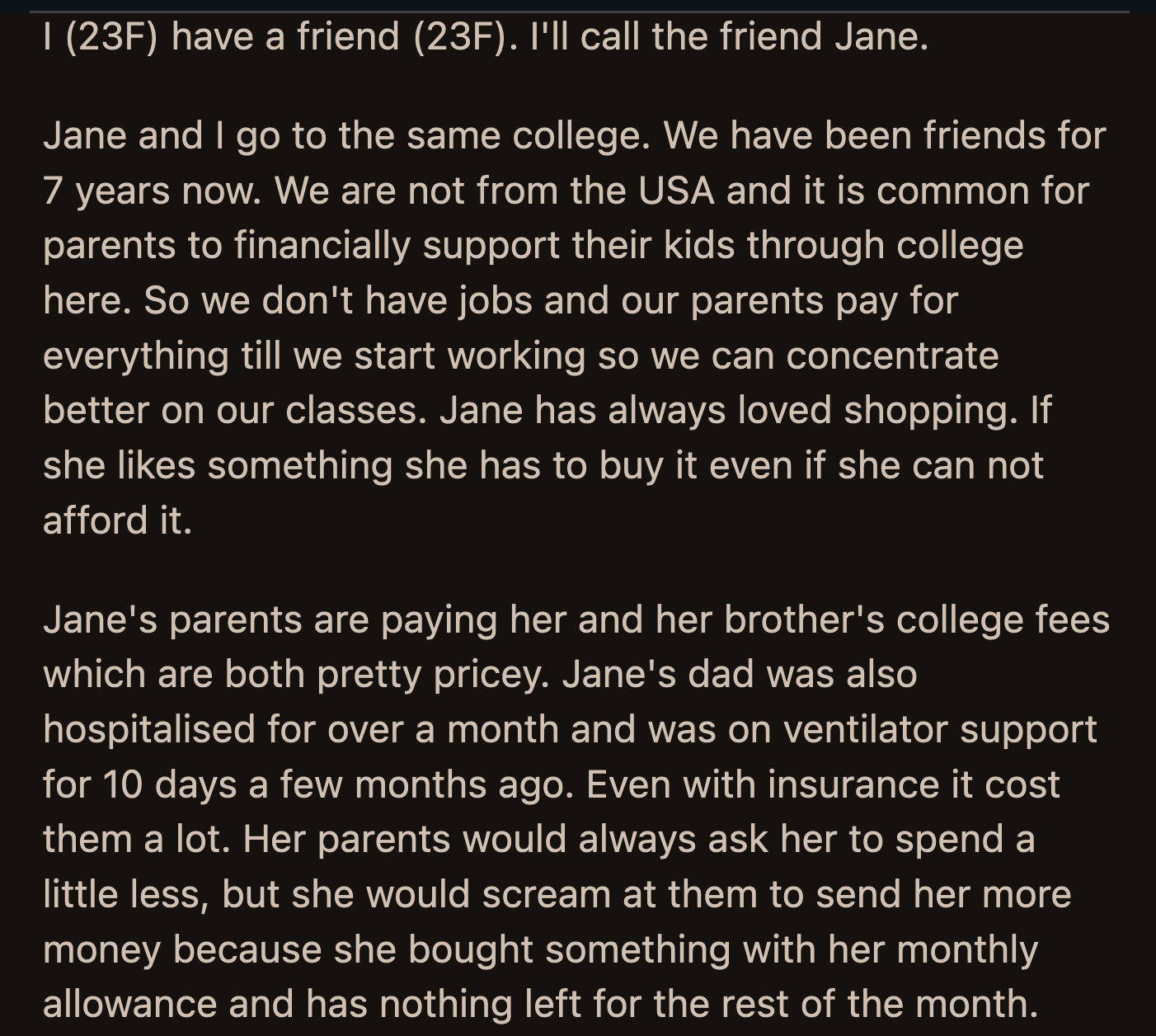
Things started when Jane asked OP to lend her money for the bag. She had already saved half the cost and planned to borrow the rest from friends. Her idea was to make her parents repay everyone so she wouldn’t owe a penny.
But OP knew this wasn’t a one-time problem. She had watched Jane spend her parents’ money without much thought for years. When Jane’s demands became too much, OP decided it was time to speak up.
Her warning left Jane speechless. The mood at the family dinner quickly turned tense, making it clear that OP’s words had struck a nerve.
OP finally spoke up when her friend asked for help buying a handbag she couldn’t afford but claimed she needed.

Jane had saved half the money for the handbag and wanted to borrow the rest from friends. She assumed her parents would repay them because they wouldn’t want her owing anyone money.
Jane’s spending habits resemble compulsive shopping, also known as oniomania. Research suggests that some people shop too much to deal with stress, sadness, or other difficult feelings.
Buying something new can bring a quick burst of happiness. But that excitement may soon fade, leaving the person feeling guilty or upset. Over time, this cycle can become hard to control.
OP eventually ran out of patience and warned Jane that her careless spending could leave her parents in financial trouble if she didn’t learn to manage her money.
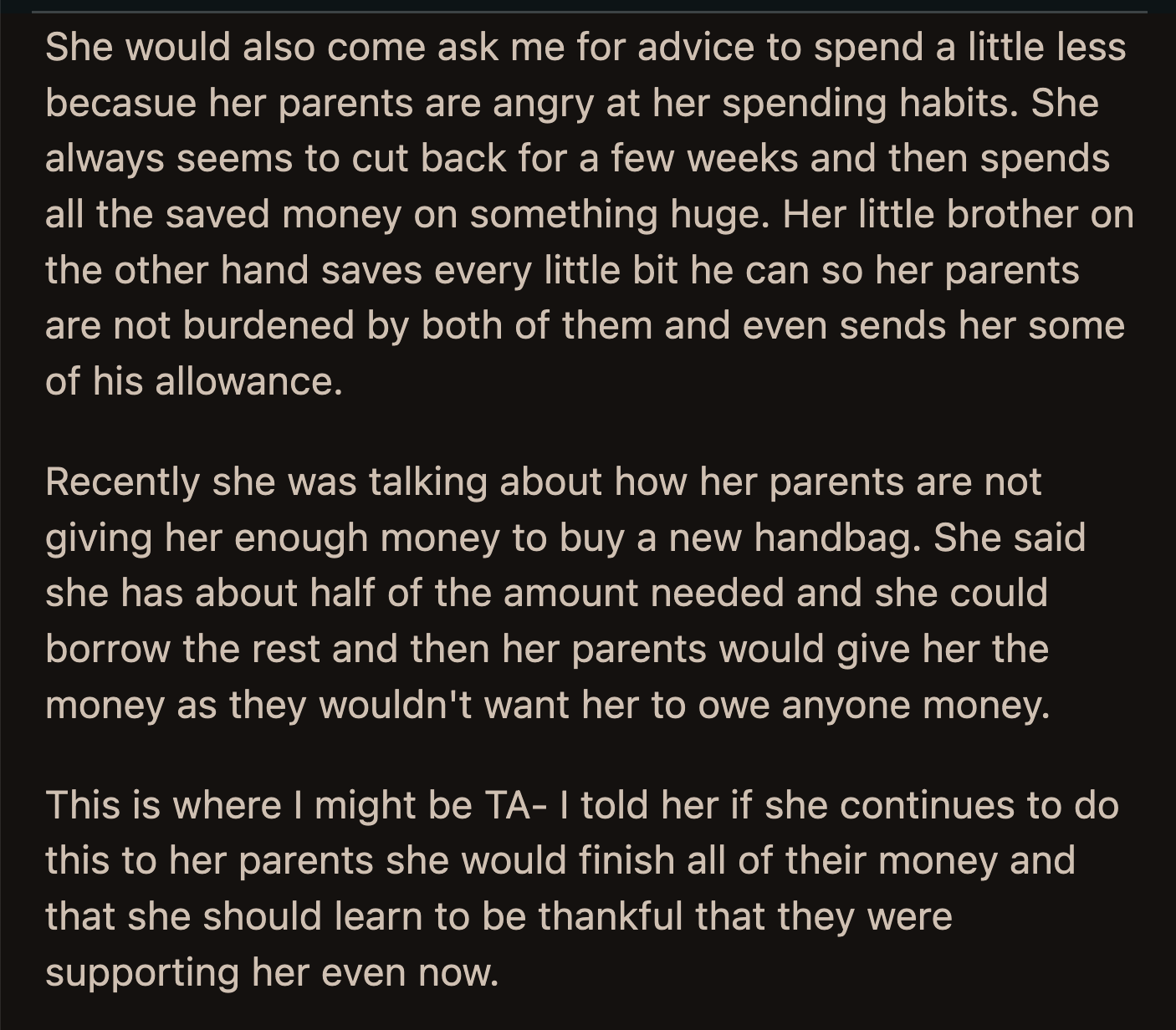
Jane fell silent after hearing OP’s warning, leaving OP wondering whether she had gone too far with her words.
The trouble began when Jane approached OP with a plan that would leave her parents paying for the handbag.
Friends can have a big influence on how young people spend their money. Some buy things they can’t afford because they want to fit in or look successful.
When someone starts judging their worth by the things they own, spending can quickly get out of hand. It becomes even harder to change when friends stay silent instead of pointing out the problem.
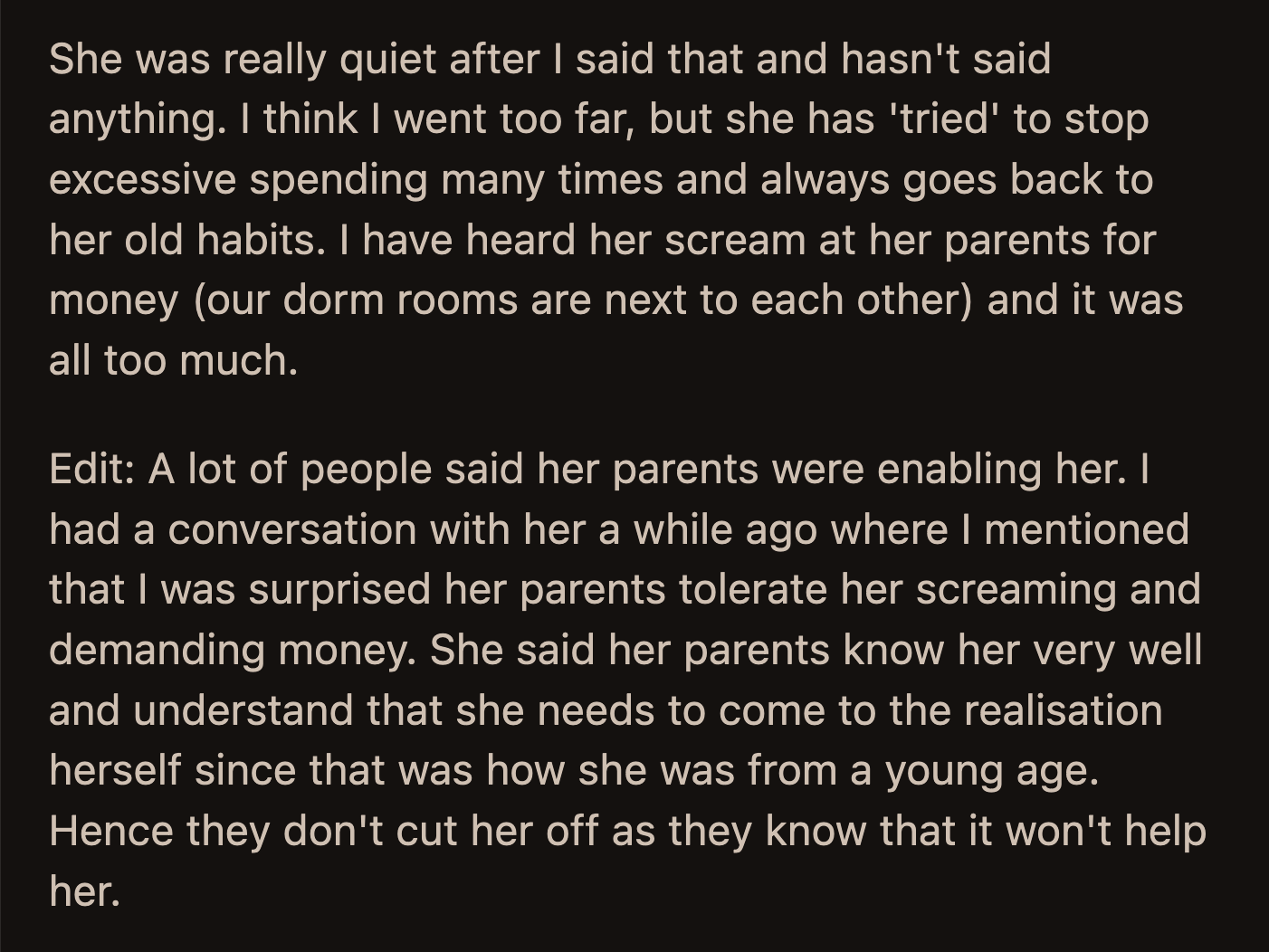
OP shared why Jane’s parents continued paying for her expensive habits. She also believed she had done all she could to help her friend.
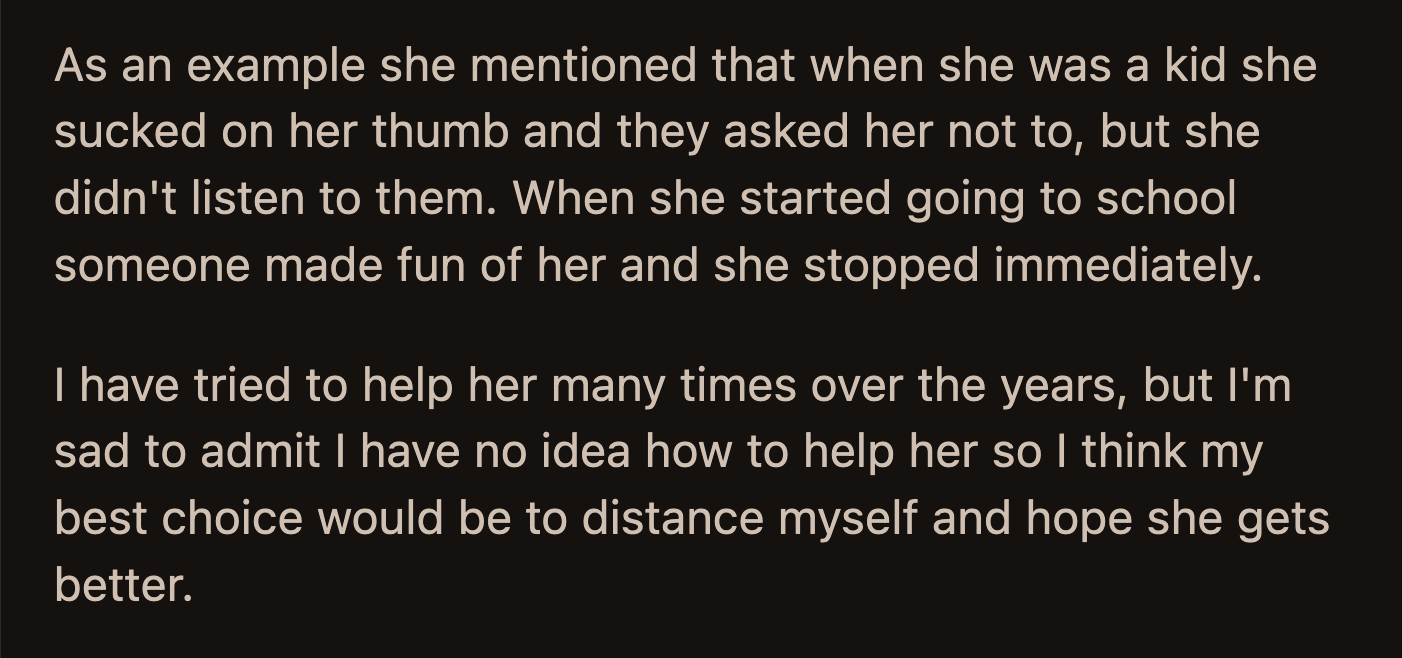
Jane needed to realize that her spending choices affected more than just herself. She seemed to expect others to pay without caring how it might hurt them.
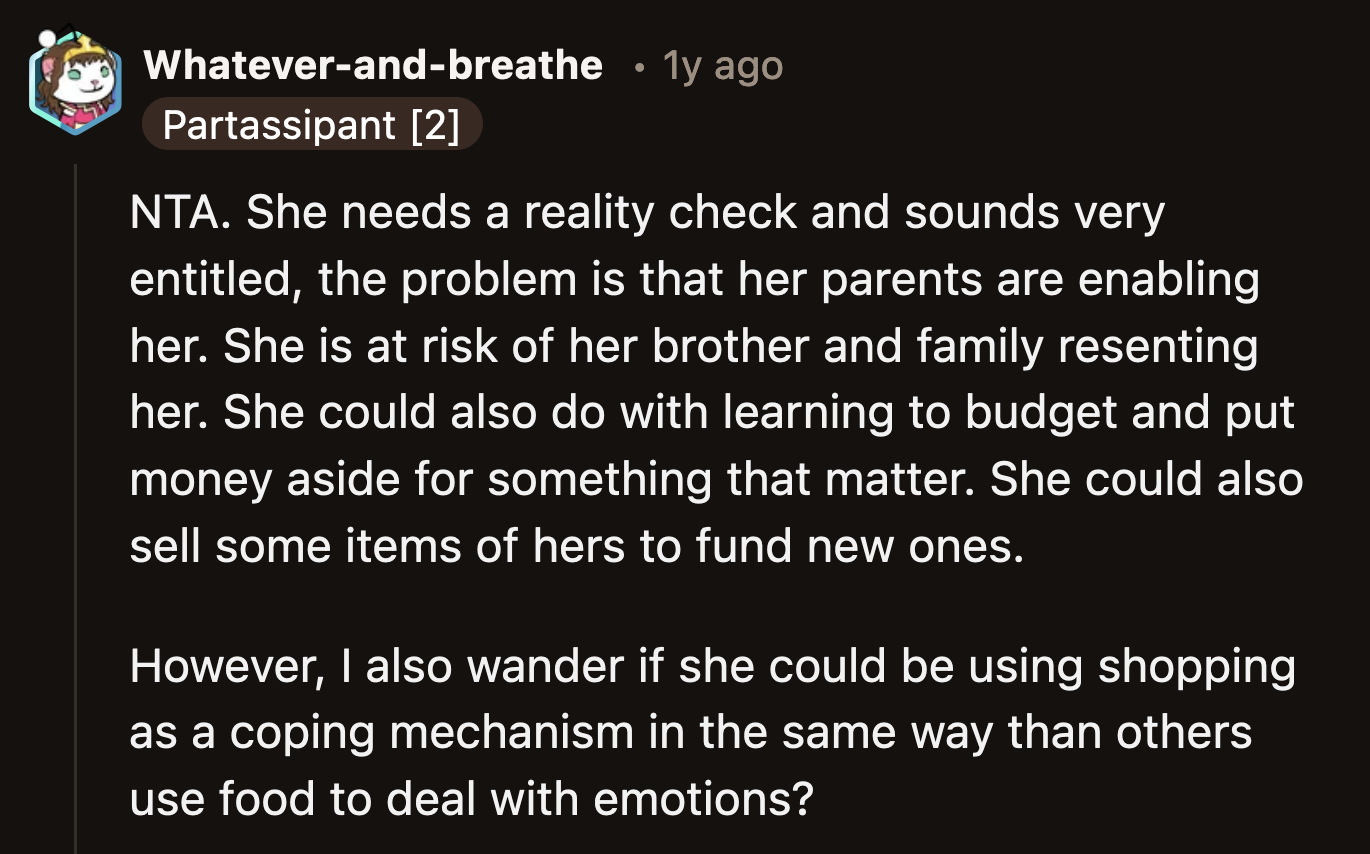
When OP warned Jane that her spending could leave her parents broke, Jane fell silent. For once, she seemed to have no answer to what her friend was saying.
Ads, social media, and the people around us can all shape our spending habits. Seeing others show off expensive things can make people feel pressured to buy more than they need.
Jane couldn’t even sell her old belongings to repay her parents because she hadn’t taken proper care of the things she bought.
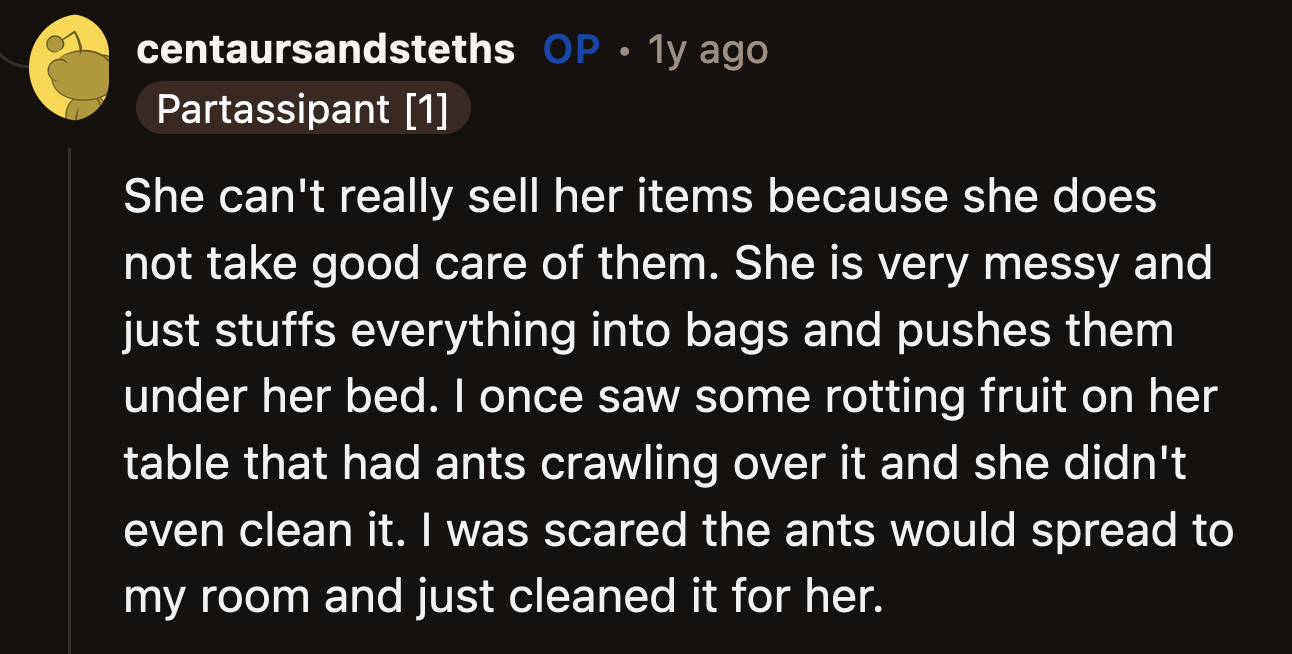
Unless Jane realizes how much harm her spending is causing, she may never see a reason to change her ways.
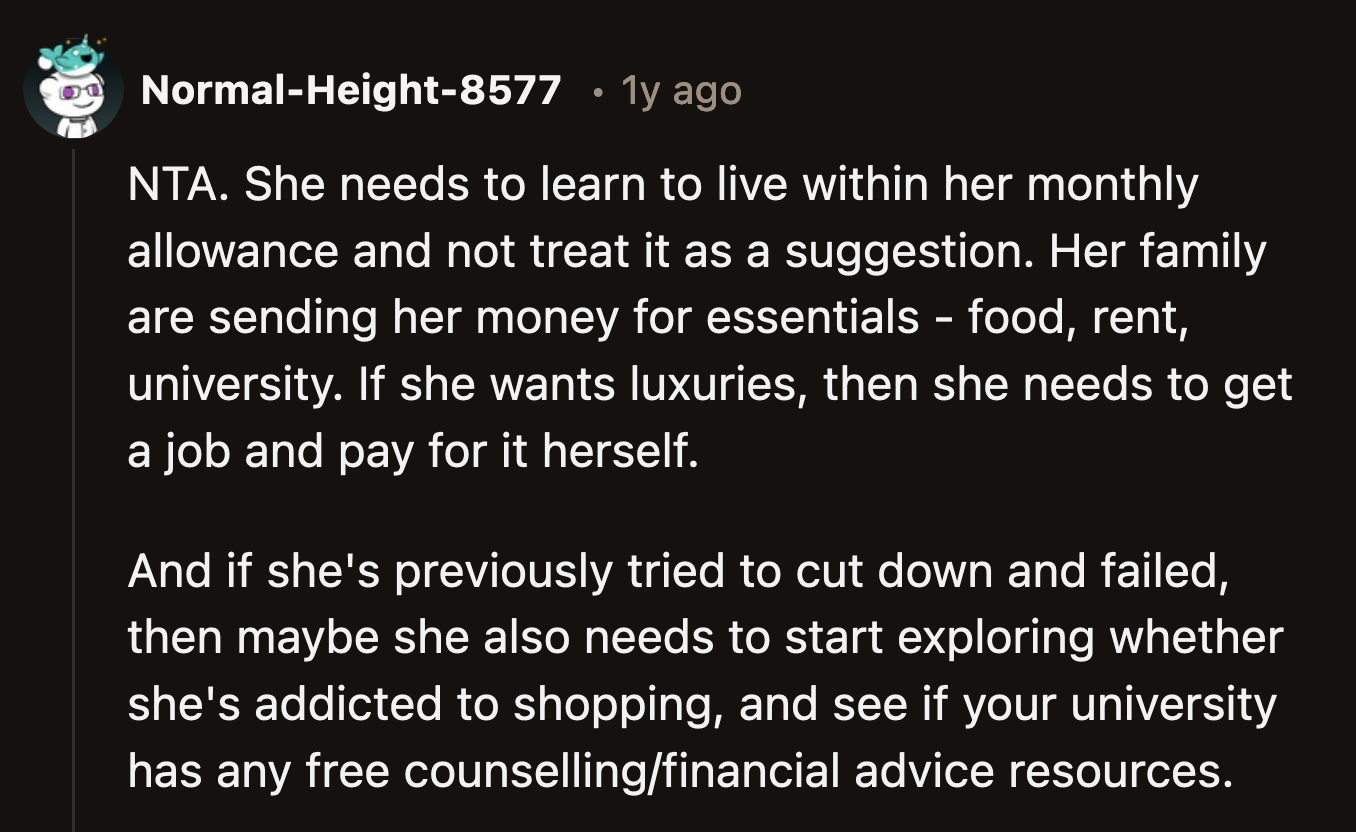
The tension between OP and Jane grew because Jane’s shopping wasn’t just about owning expensive things. It also seemed tied to the image she wanted others to have of her.
People who struggle with compulsive shopping can learn ways to manage their spending. One helpful step is finding out what makes them want to shop, such as stress, sadness, or pressure from friends.
Keeping a spending diary can also help people see patterns in their buying habits. By tracking what they buy and how they feel, they may learn to avoid purchases they don’t need.
Jane would struggle to change her spending habits as long as she continued to see nothing wrong with them.
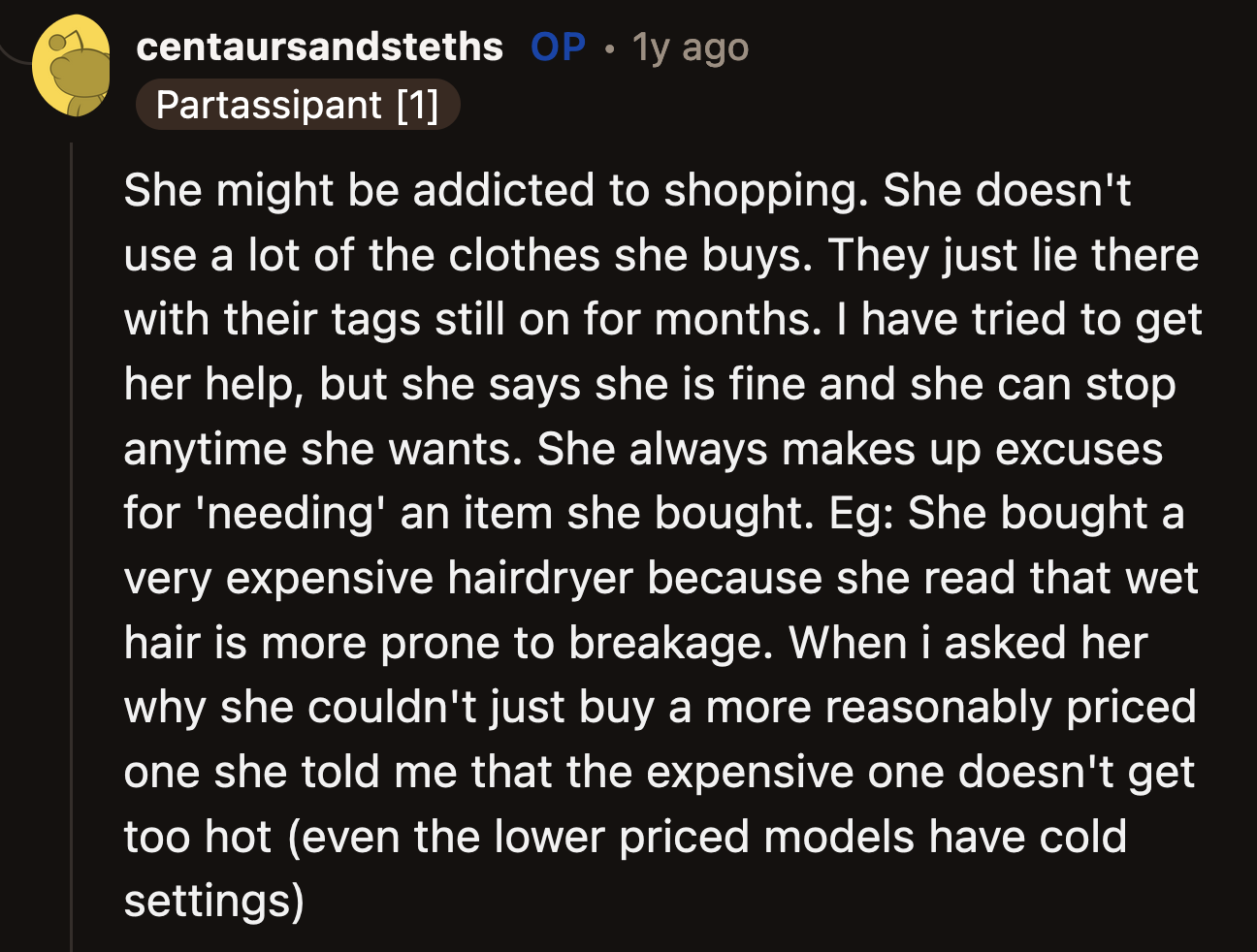
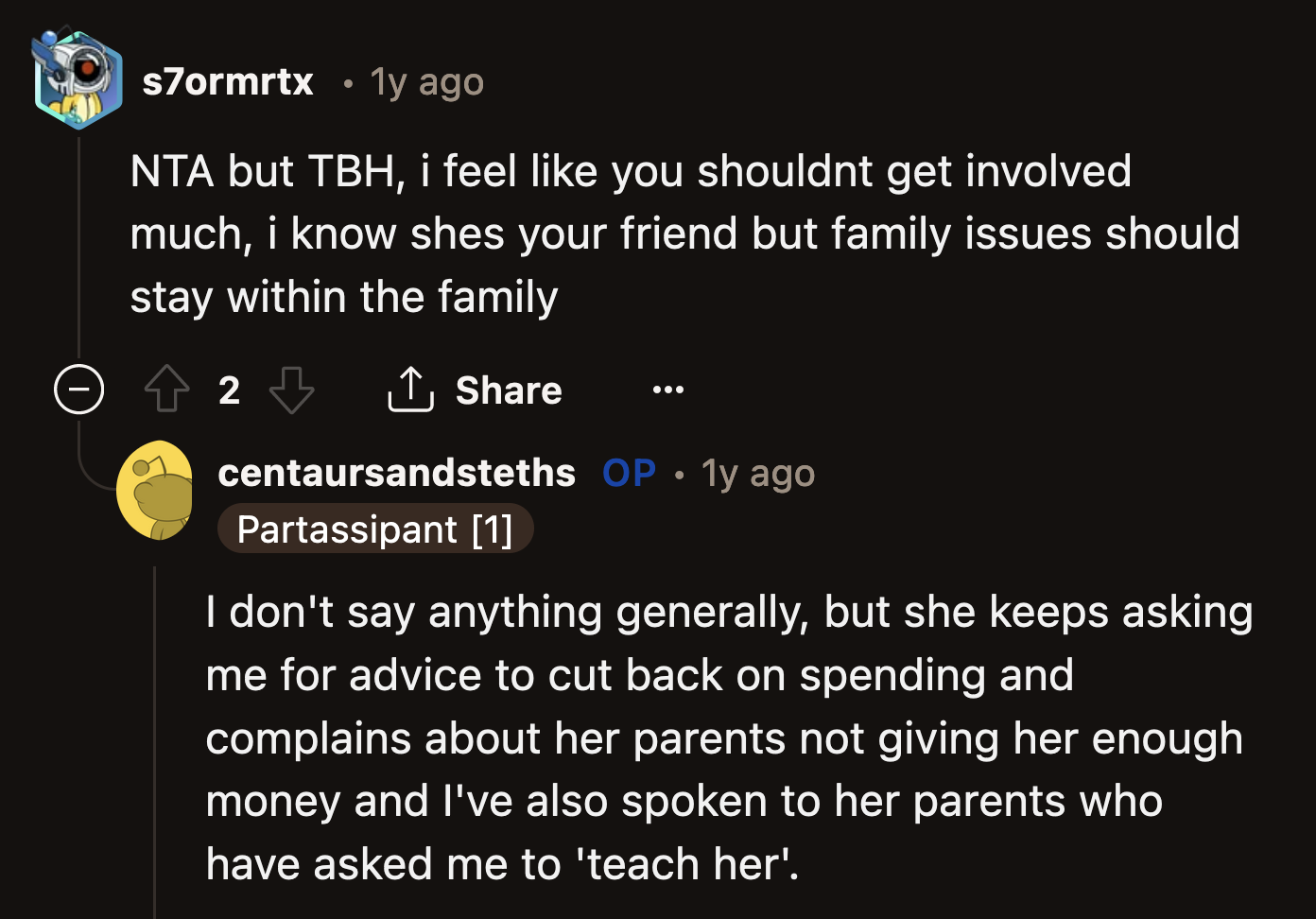
Jane needs to learn to pay for her own purchases instead of expecting others to cover the cost. Her parents, brother, and friends may need to stop lending her money.
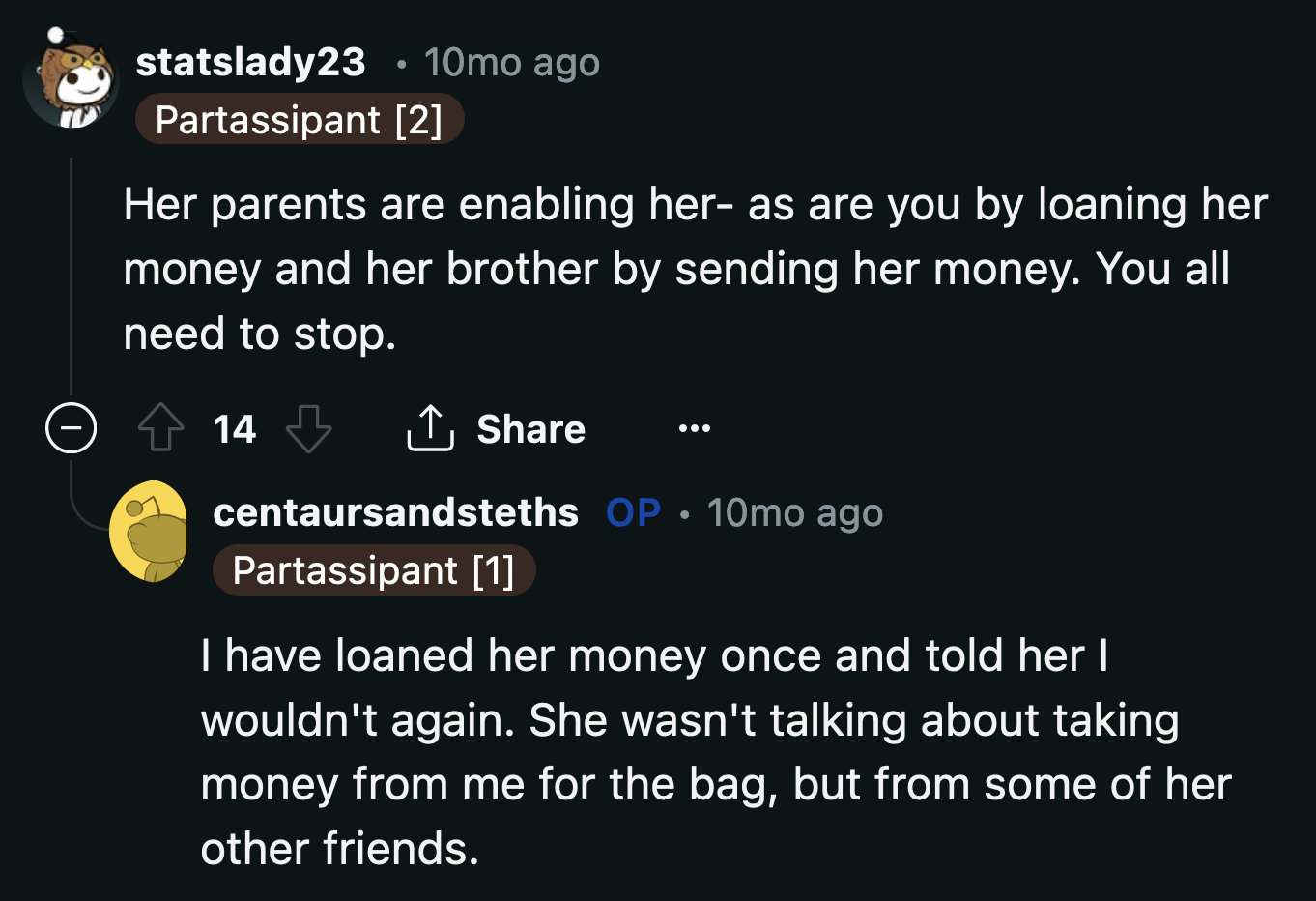
Jane may need to live on her own and learn how to handle her money. As long as she expects her parents to cover every expense, she may never understand the cost of her choices.
Her spending habits may also need more help than OP or Reddit users can offer. OP did her part by speaking up and warning Jane about the harm she could cause. Now, Jane and her family must decide what happens next.
Advertisement – Continue Reading Below
One Reddit user wondered whether Jane had watched the movie as nothing more than a sweet love story, completely missing its deeper message.
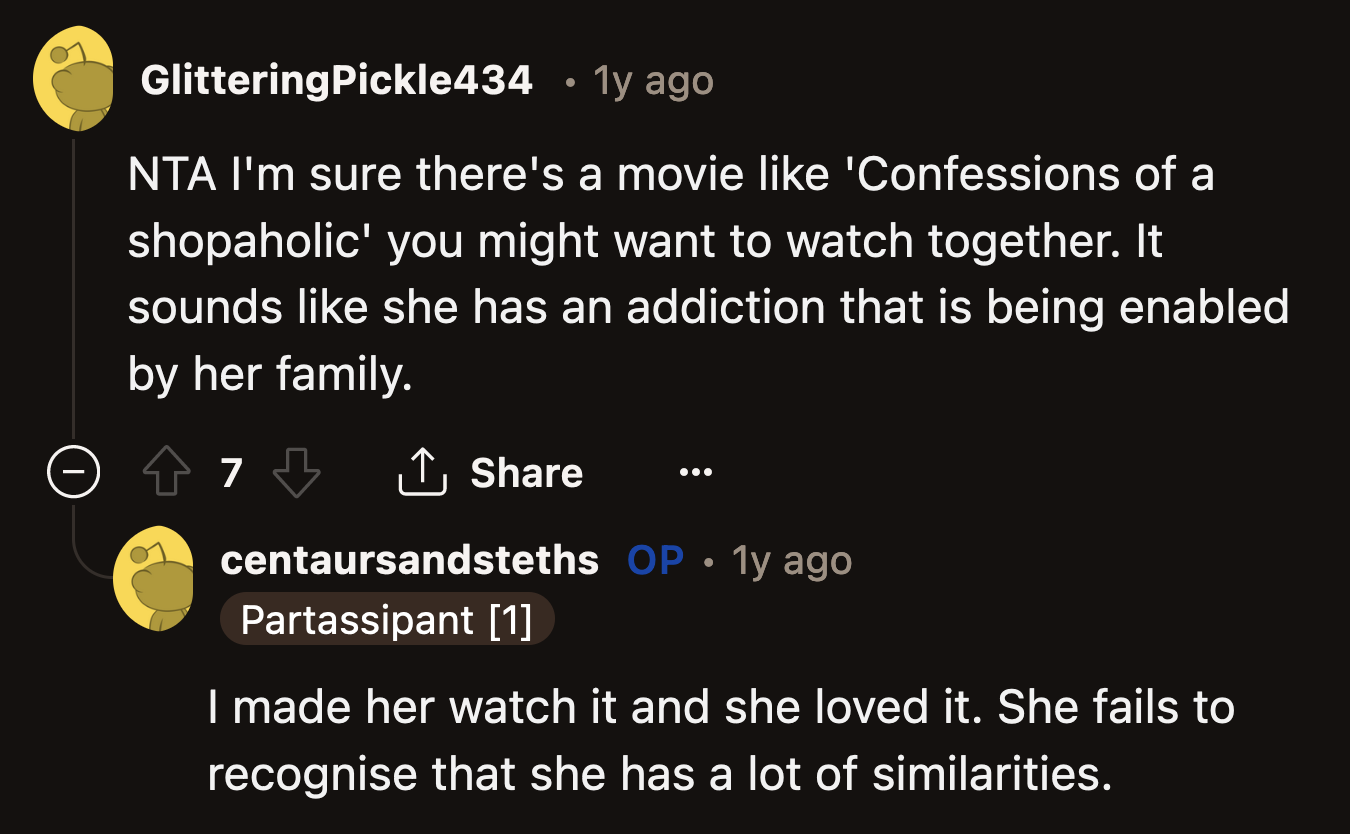
A medical student having this kind of attitude was concerning.
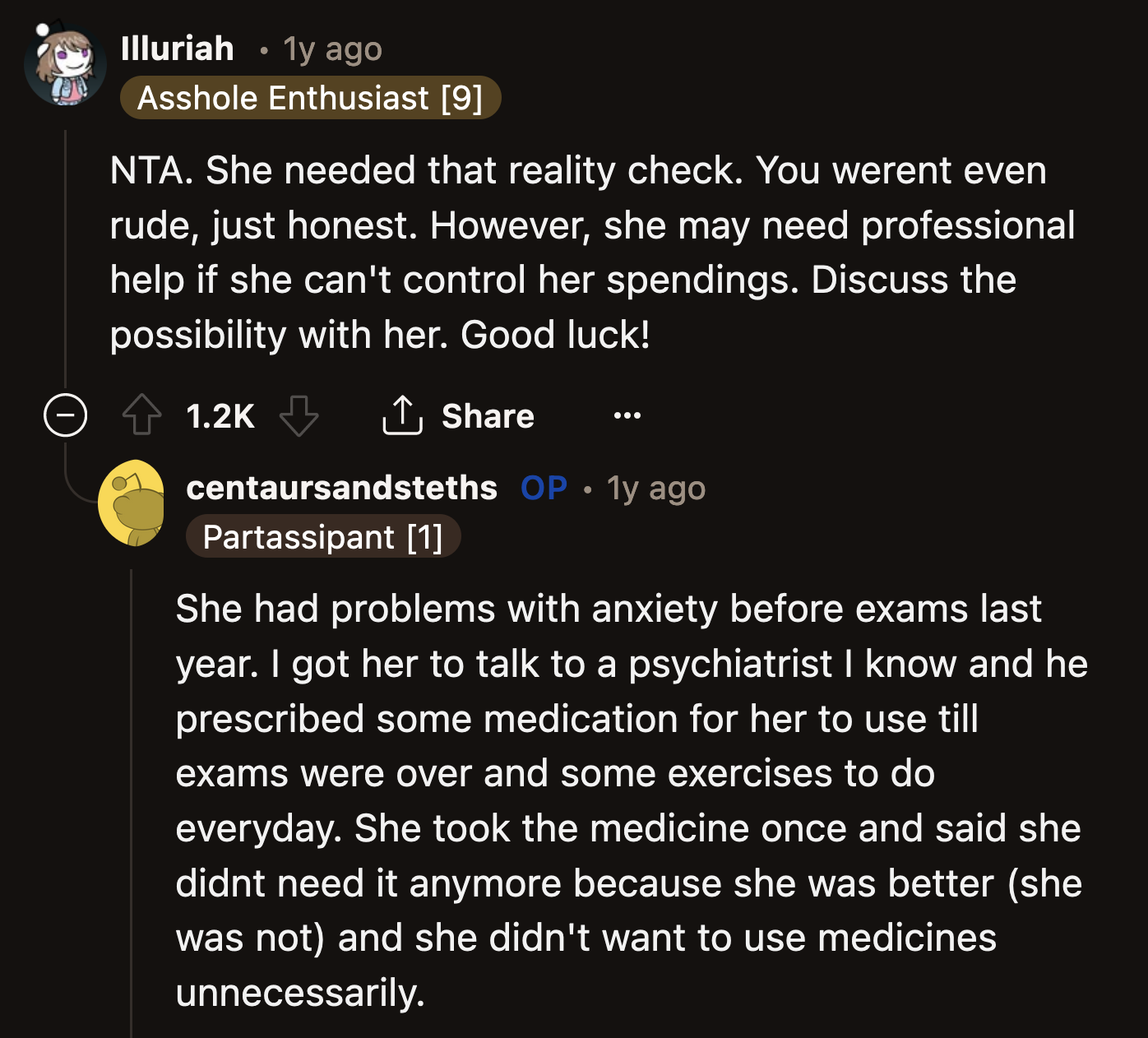
OP should distance herself from Jane’s money problems, as it’s not her job to fix her friend’s spending habits.
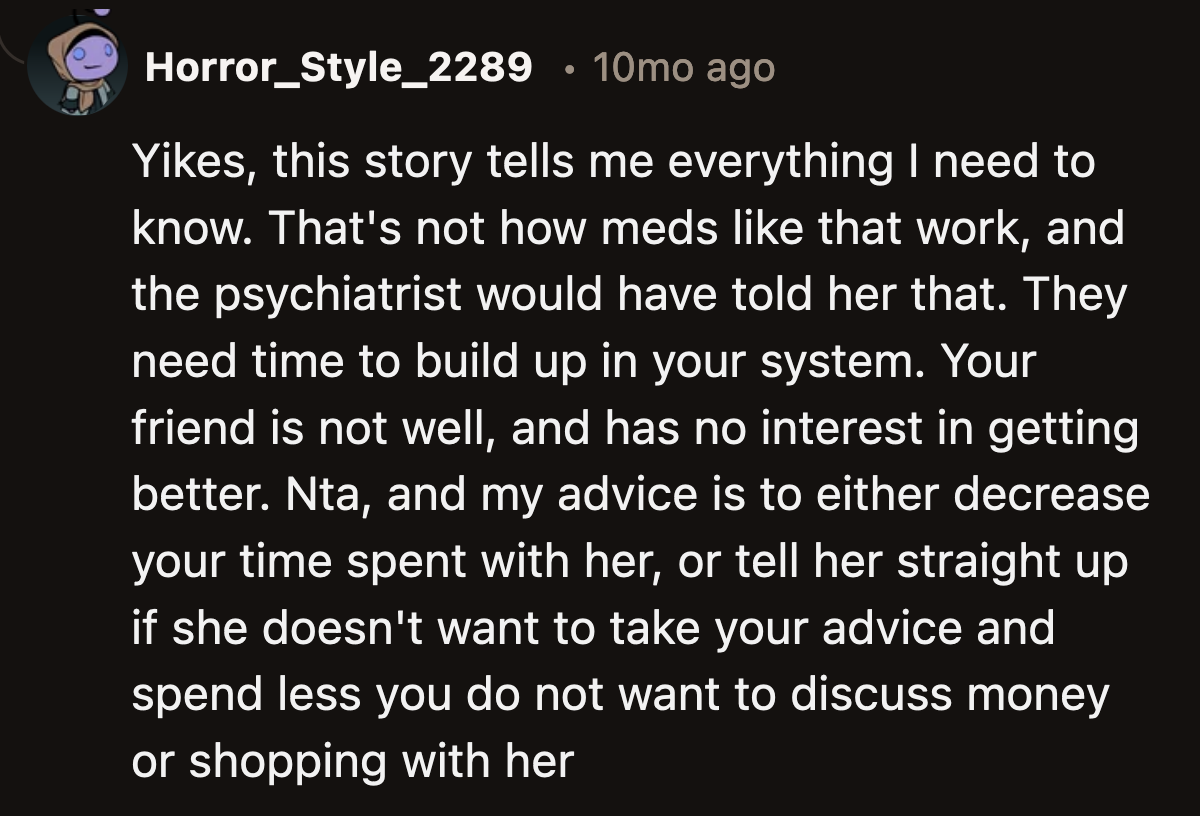
Jane may need professional help to understand and manage her unhealthy spending habits.
OP’s remark about Jane being unable to sell her old belongings seemed to hit especially hard. Jane hadn’t cared for her purchases, so selling them to repay her parents wasn’t even an option. She had little to say in her own defense.
The situation shows why people need to recognize when their spending gets out of hand. Jane’s choices didn’t just affect her bank account. They also put pressure on her parents and others who were expected to pay for her expensive habits.
Her silence suggested that OP’s words had struck a nerve. Hearing the truth about her spending may have been difficult, especially when she was used to getting what she wanted.
By speaking up, OP gave Jane a reason to think about how she handled money. Learning to budget, understanding why she shops so much, and taking responsibility could help her make better choices.
The family dinner ended with tension between the two friends. Jane wanted an expensive handbag, but OP wanted her to understand that her spending came at a cost to others.