Man Tells Parents He Won’t Become His Disabled Sister’s Caregiver, Sparking Family Conflict
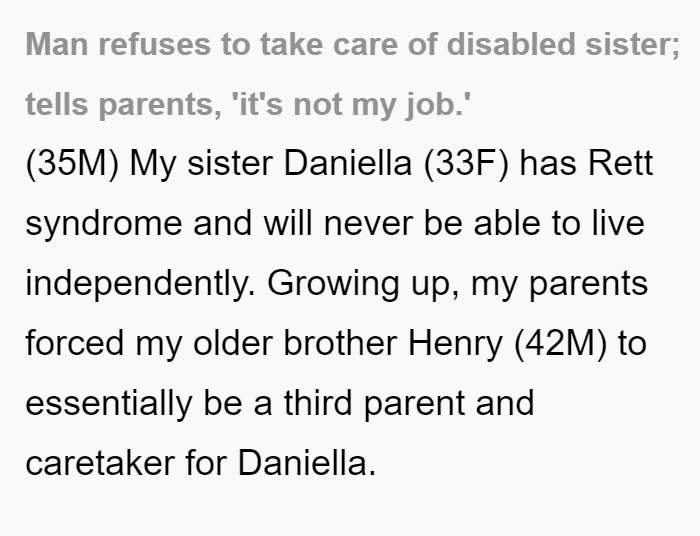
A 35-year-old man is facing criticism from his family after refusing to become his disabled sister’s main caregiver.
His younger sister, Daniella, is 33 and has Rett syndrome. Her condition means she needs a high level of support and cannot fully live independently.
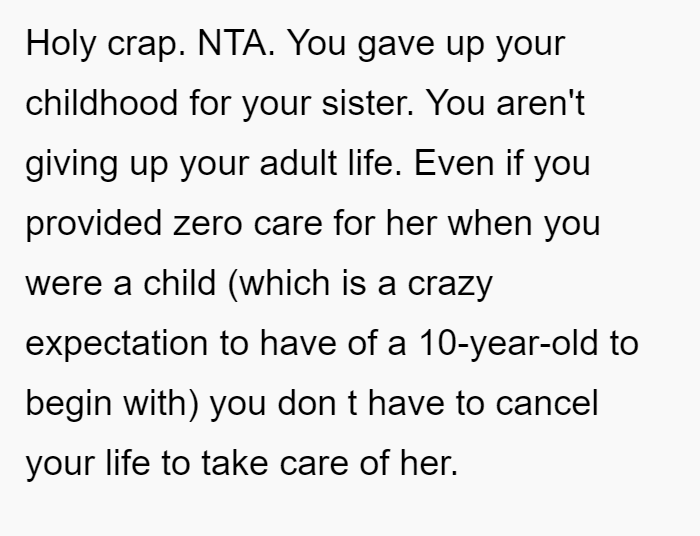
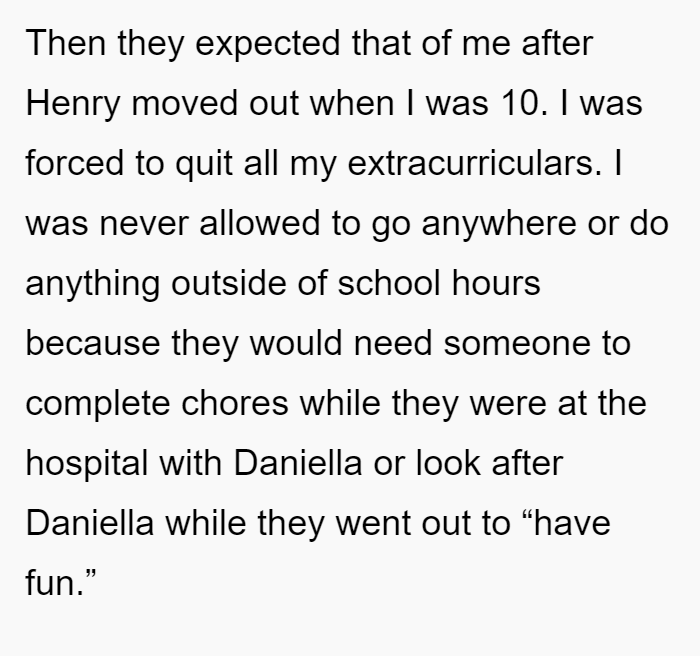
The man says caregiving was a major part of his childhood. His parents expected him to help care for Daniella from a young age.
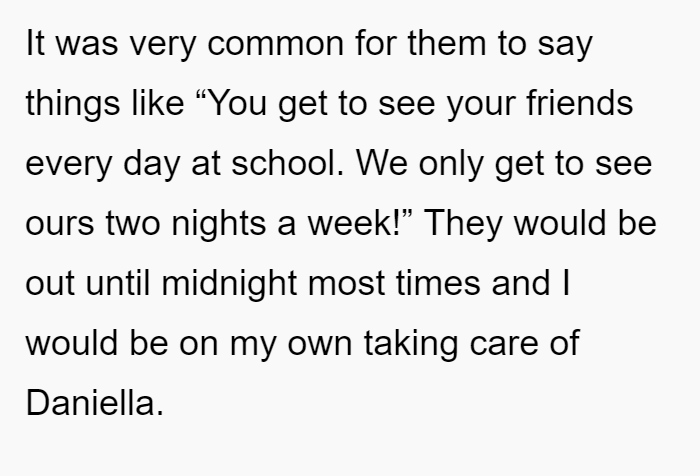
As a teenager, he says those responsibilities affected his own life. He missed social activities and gave up personal interests because someone needed to stay with his sister.
Over time, he felt more like a caregiver than a brother. The responsibility created frustration and changed how he viewed his role in the family.
After finishing high school, he moved away from home. He reduced contact with his family and focused on creating a life of his own.
Years later, the same issue came up again.
His father recently had a health scare, which made his parents worry about Daniella’s future care. They began thinking about who would support her as they got older.
They explored long-term care options, but finding a place may take time. Because of this, they asked their son to step in and help.
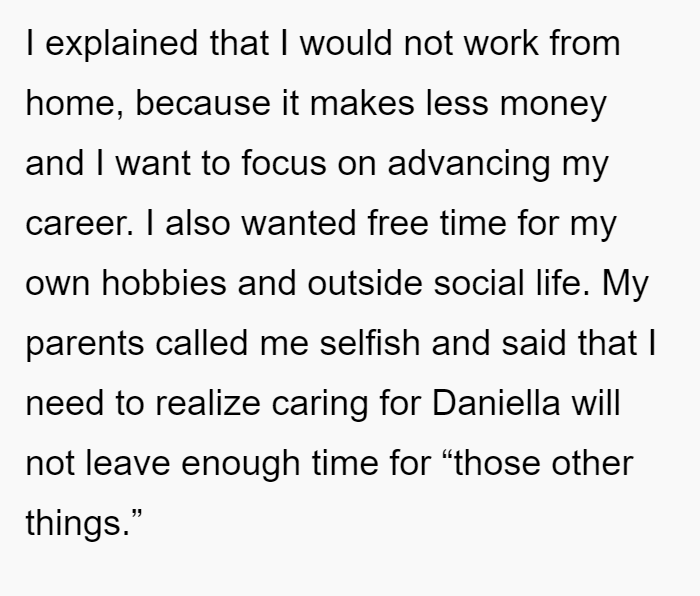
His parents pointed out that he works from home. They believed this would make caregiving easier for him.
He refused.
The man explained that working from home does not mean he is always available. He wants time for his career, interests, and personal life.
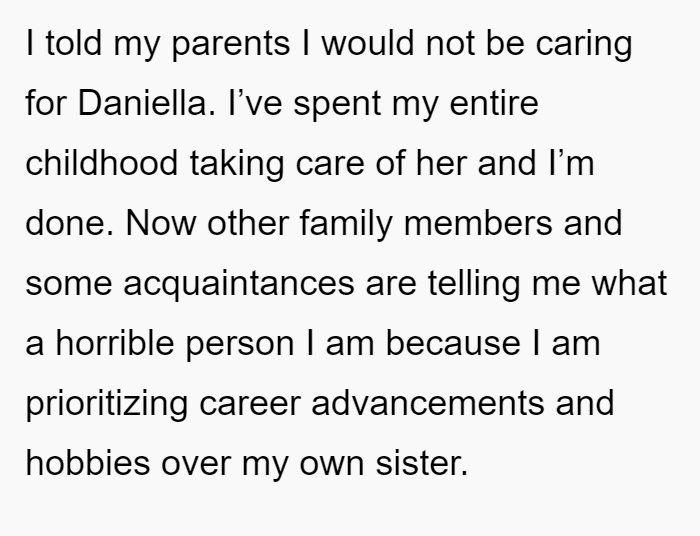
He also feels that he already spent much of his childhood taking on caregiving duties. He does not want to return to that role as an adult.
His decision upset his family. Some relatives accused him of being selfish and not doing enough for his sister.
He disagrees with that view.
He believes Daniella deserves proper care and support. However, he does not believe that responsibility should automatically become his lifelong duty.
Advertisement – Continue Reading Below
For him, caring about his sister does not mean giving up his own future. He believes his parents need a long-term plan that does not depend only on him.
The situation raises difficult questions about family responsibility. How much care should adult siblings be expected to provide for a disabled family member?
It also shows how childhood caregiving roles can affect relationships later in life. When children take on major responsibilities early, those experiences can leave lasting effects.
Daniella needs stable support as her parents age. Her brother also wants the freedom to make choices about his own adult life.
Now the family must address a challenge they may have delayed for years: finding a care plan that supports Daniella without forcing her brother into a role he never agreed to take on.
Read for more info Reddit
The man’s decision has started a debate because he already spent much of his childhood helping care for his disabled sister.
Now that he is in his mid-thirties, his parents want him to help again. They are getting older and are worried about their daughter’s future care.
A long wait for professional support has made the situation more urgent. His parents see him as the most available option.
He does not agree.
He feels he already gave up a large part of his childhood to caregiving. He does not want the same responsibility to control his adult life.
Supporters Say He Has Already Done Enough
Many people support his choice because he did not choose this role as a child.
He says he missed social activities, friendships, and normal teenage experiences because he was expected to help care for his sister.
Supporters believe becoming an adult does not mean he must continue as a full-time caregiver forever.
They also argue that his parents should have created a long-term care plan earlier. Depending only on another child was not a reliable solution.
His remote job does not automatically mean he has extra time. Working from home still requires focus, deadlines, and professional commitment.
He also wants time for his own interests and personal life. Supporters believe those needs matter too, even when the family is facing a difficult situation.
Critics Say Family Members Should Help
Some people believe siblings should support each other, especially when one family member needs extra care.
However, this creates another question: how much responsibility should one person be expected to take on?
Some argue that people who criticize his decision should consider offering practical help themselves. Providing care every day can be much harder than simply giving an opinion.
Long-term caregiving can require major time, emotional energy, and lifestyle changes. It can affect jobs, relationships, and personal choices.
The Larger Issue Is Future Planning
This situation shows why families with long-term care needs often need clear plans for the future.
Parents may not always be able to provide care. Adult siblings may also have jobs, relationships, children, and responsibilities of their own.
Placing the entire burden on one sibling can create stress and resentment.
The man is not saying his sister should be left without support. He is saying he does not want to become her main caregiver again.
His choice shows the difference between loving a family member and taking full responsibility for their daily care.
Family support can be important, but personal boundaries also matter. This is especially true when someone has already carried responsibilities they never chose.
Let’s find out.
scrappy177 writes: