Ex-Wife Refuses to Help Her Alcoholic Ex-Husband, but His Mother Blames Her.
Helping someone you care about can feel rewarding. But over time, it can become exhausting when they rely on you to solve every problem.
This becomes even harder when you are always the one stepping in. Once you decide to set boundaries and focus on your own well-being, others may accuse you of being selfish.
That is what happened to one woman. She had been divorced from her ex-husband for more than 10 years. Still, she continued helping him because he was the father of her children.
His drinking problems often led to stressful situations. She wanted to support him, but she also had her own life, family duties, and limits.
After years of keeping her feelings to herself, one talk with her ex-husband’s mother changed everything. She finally spoke up about the frustration she had carried for so long.

















She Finally Set Boundaries, But Her Ex-Husband’s Mother Called Her Selfish
The woman’s marriage ended because her ex-husband’s drinking became too difficult to handle. Even after their divorce, she continued helping him.
For more than 10 years, she supported him because she wanted their children to stay close to their father. She believed having both parents involved was important for their kids.
When the COVID-19 pandemic began, her ex-husband moved back into her home as a roommate. He helped care for the children while she worked. For a while, the setup seemed to work.
Sadly, things did not stay that way.
As the years passed, his drinking became worse. He also faced mental health struggles, which added more stress to an already difficult family situation.
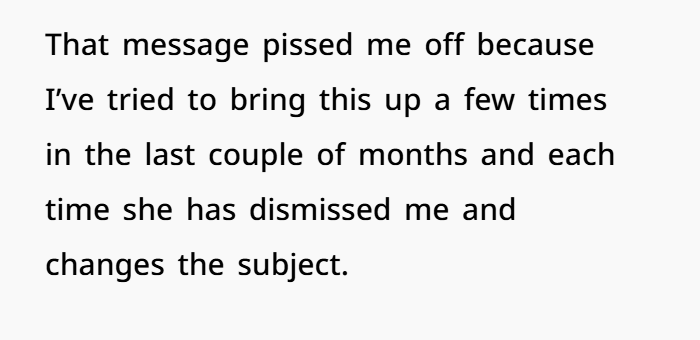
His mother gave some money to help support the children. But whenever the woman tried to explain how much stress her son was causing, she felt ignored.
For years, she had told the family how tired she was. Yet she remained the person everyone called whenever something went wrong.
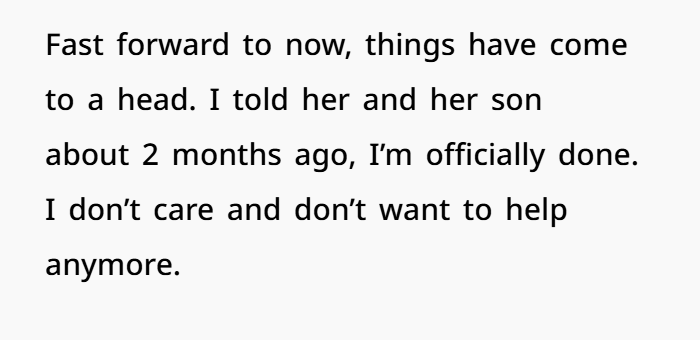
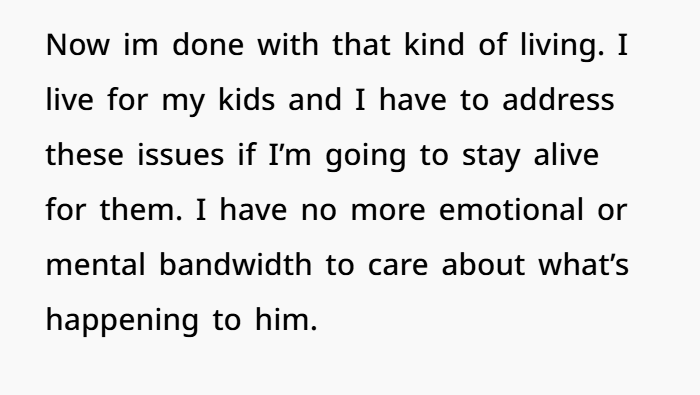
Eventually, she realized she needed to put her health first. She told her ex-husband and his mother that she could no longer take responsibility for his choices. Her focus needed to be on herself and her children.
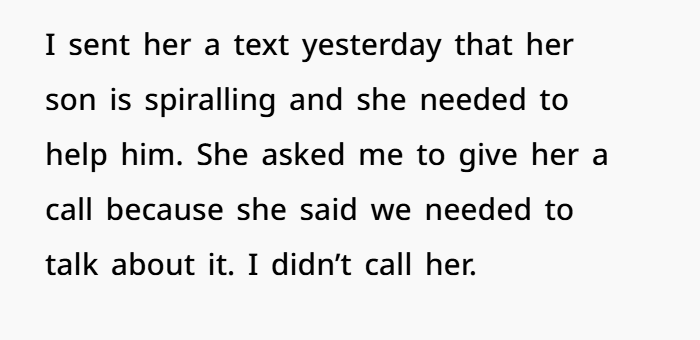
When her ex-husband began struggling again, she contacted his mother and explained that he needed help.
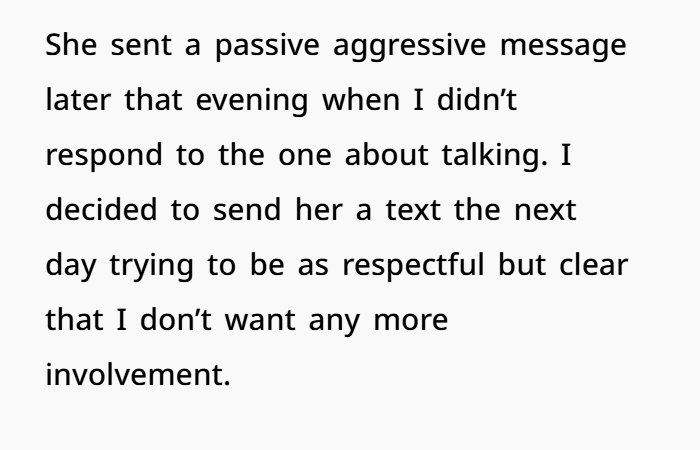
His mother asked her to call and discuss the matter. But after years of feeling unheard, the woman did not want another talk that might change nothing.
Instead, she sent a polite message. She explained that she cared about her former mother-in-law but could no longer spend all her time and energy trying to fix her ex-husband’s problems.
Advertisement – Continue Reading Below
That message led to an argument.
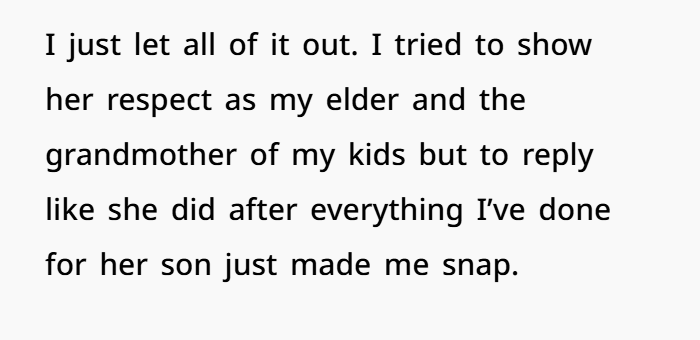
Her mother-in-law called her selfish. After keeping her feelings inside for so long, the woman finally spoke about the pain and stress she had carried for years.
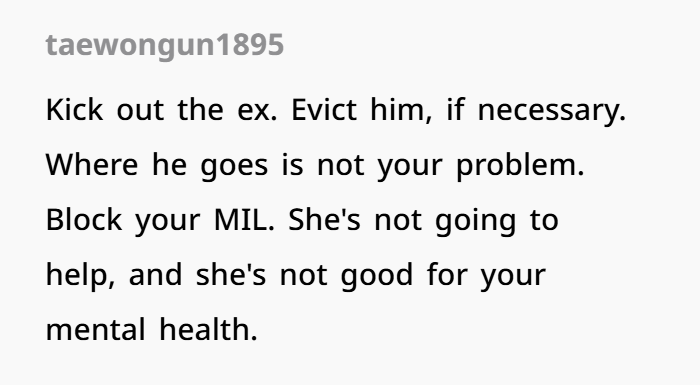
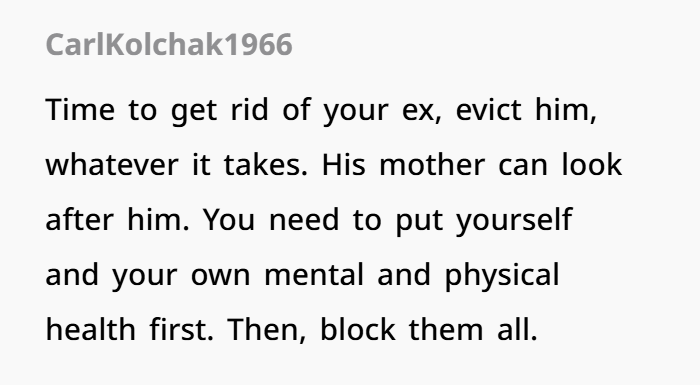
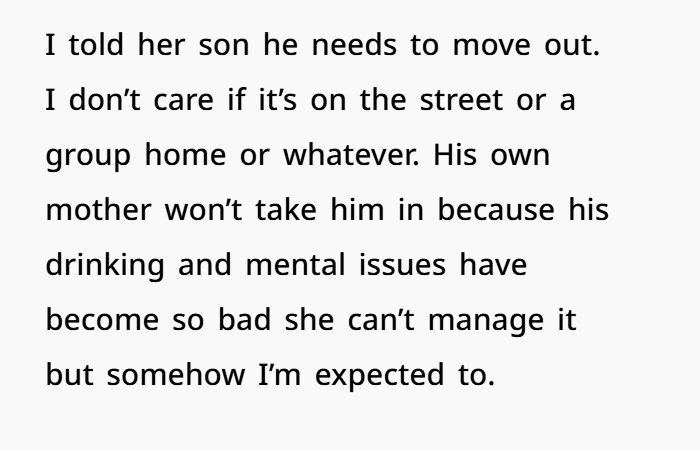
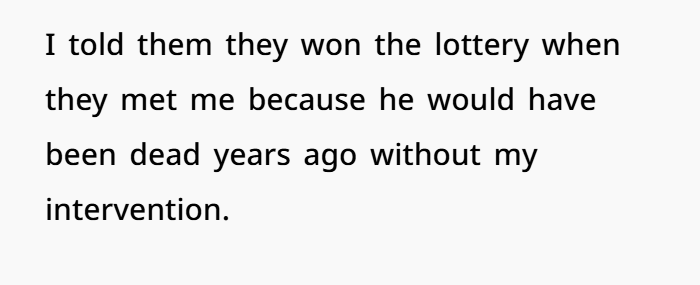
She then blocked her former mother-in-law and told her ex-husband to find another place to live. After spending so much time helping others, she decided to protect her own well-being and her children’s future.
Experts often point out that supporting someone with an alcohol problem can take a heavy emotional toll on family members. Loved ones may want to help, but they also need to protect their own mental health.
The children had always been a big part of the woman’s decisions. She wanted them to have a relationship with their father, even when his struggles made family life difficult.
Research shows that children who grow up with a parent who has substance use problems may face challenges at home, school, and in social settings. This may help explain why she worked so hard to keep their father involved in their lives.
Alcohol treatment programs often encourage families to support loved ones in seeking help. But they also stress that no one can control another person’s choices.
After years of trying to save her ex-husband, the woman finally stepped back. She left him and his family to deal with his problems.
Many people agreed with her choice. They felt she had done more than enough and deserved to focus on herself and her children. Others believed she should have walked away much sooner.
Her story raises an important question: How long should someone keep helping a loved one before putting their own peace and well-being first?
See the comments to know what people said