She Started Hiding Snacks for Her Niece, and Her Brother Was Furious About It
A man wondered if he had crossed a line after secretly buying extra snacks for his 14-year-old niece.
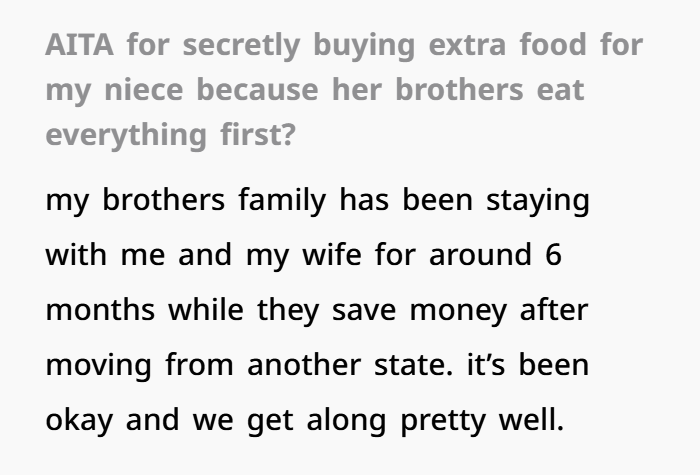
His brother, sister-in-law, and their three children had been staying in his home for about six months. They were saving money while settling into a new area.
For the most part, everyone got along well. But over time, the uncle noticed something that bothered him.
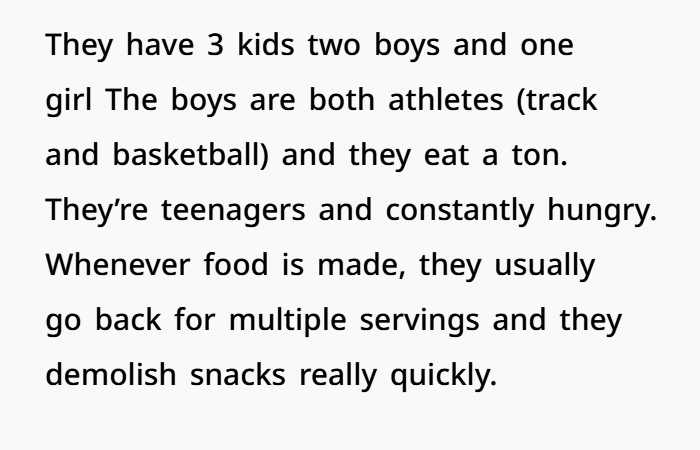
The family’s two teenage boys played sports, including basketball and track. They had big appetites and often ate large portions.
Snacks disappeared quickly. Dinner rarely lasted long, and leftovers were usually gone before anyone could save them.
His niece seemed to be getting the short end of the deal.
She sometimes reached the kitchen only to find there was little food left. She told her uncle this happened often enough to frustrate her.
That made him question whether all three children were being treated fairly around food.
He brought the issue up with his brother.
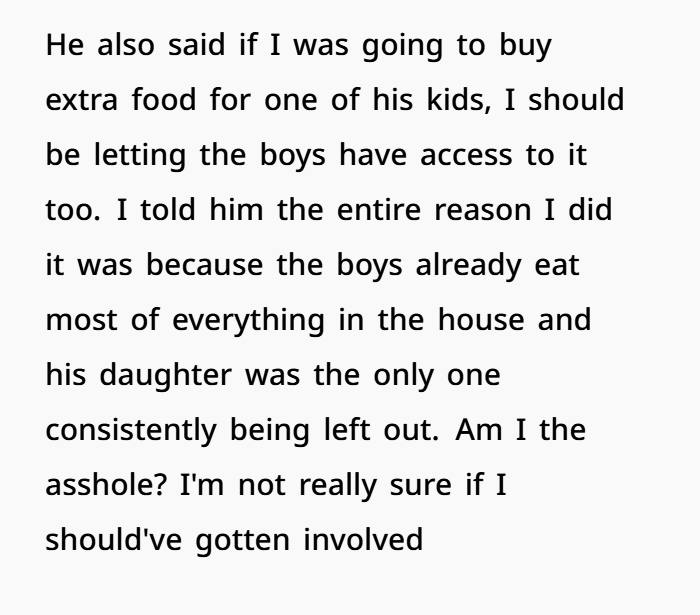
His brother said the boys needed more calories because they were active in sports. He also said he was worried about his daughter gaining weight because she exercised less.
That explanation didn’t sit well with the uncle.
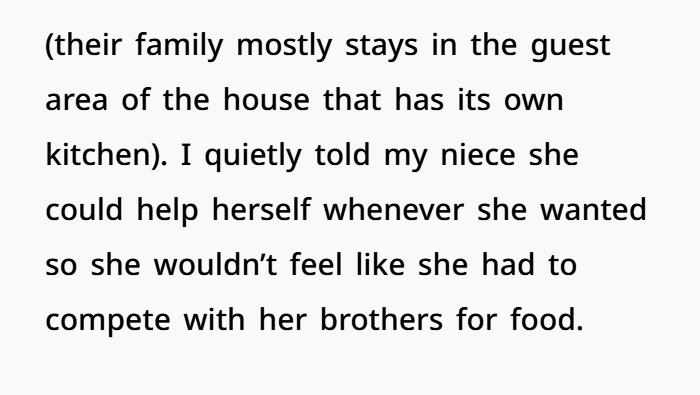
His niece was only 14. He worried that restricting her food because of her weight could harm her relationship with eating. He was also concerned about how those comments might affect her body image.
So he decided to help in his own way.
He began buying extra snacks for his niece and keeping them aside for her. He told her she could eat them whenever she was hungry.
Eventually, his brother found out.
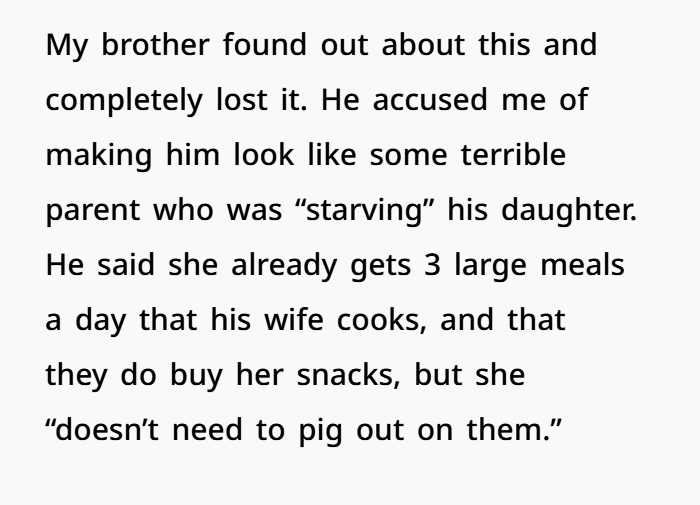
He was furious.
Advertisement – Continue Reading Below
He accused the uncle of going behind his back and interfering with how he raised his children. From his point of view, another adult had ignored a parenting choice inside the family.
The uncle saw things differently. He wasn’t trying to undermine his brother. He simply didn’t want his niece going hungry while her brothers had plenty to eat.
The conflict raises a difficult question about family boundaries.
Parents usually decide how their children are fed. But when a teenager says food is often gone before she can eat, another adult may feel compelled to act.
It also raises concerns about treating teenage boys and girls differently based on activity levels, weight, and body size.
For the uncle, setting aside a few snacks seemed like a small way to make sure his niece had something to eat.
For his brother, it was an unwanted challenge to his authority as a parent.
And that’s where a few hidden snacks turned into a much bigger family dispute.

This story struck a nerve because it was never really about snacks.
It raised harder questions about fairness, family roles, teen nutrition, and body image. It also showed how children in one family can receive very different messages about food.
At first, the parents’ reasoning might sound reasonable. Teen athletes often need more food because they burn more energy through sports and training.
The two boys played basketball and ran track. Giving them larger portions or extra snacks wasn’t what concerned most readers.
The concern was what happened to their sister.
There is a big difference between feeding active children more and leaving another child feeling there isn’t enough food for her.
The situation became even more troubling when her father brought up her weight.
He said he worried about his 14-year-old daughter gaining weight because she wasn’t as active as her brothers. He may have thought he was looking after her health. Still, many readers saw a problem with that approach.
The teenage years can already bring intense pressure around appearance and self-esteem.
Comments about weight can make that pressure worse. When food becomes tied to body size, teenagers may also begin viewing hunger as something they should ignore.
That’s why the niece’s comments mattered.
She had repeatedly noticed
Top Comments From Readers
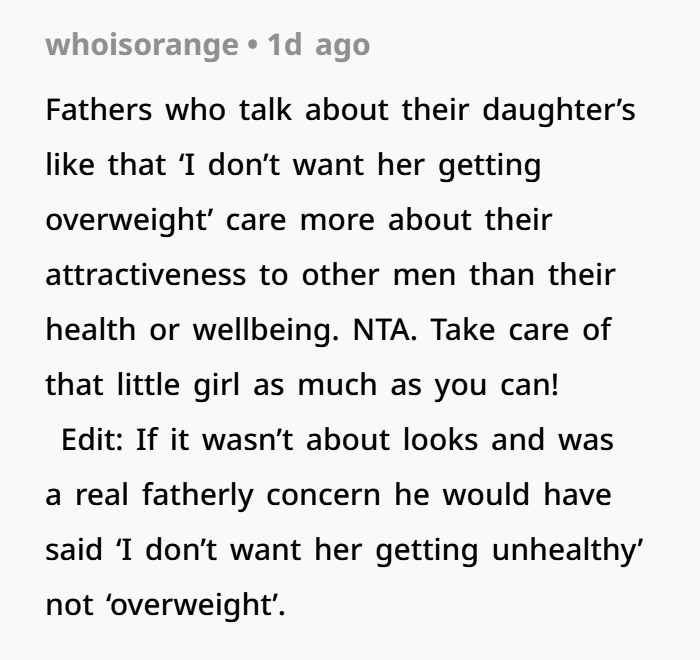
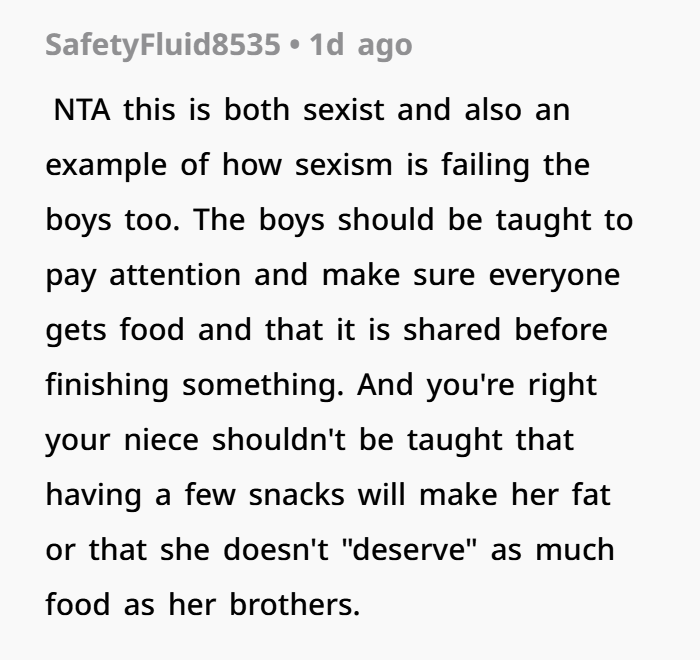
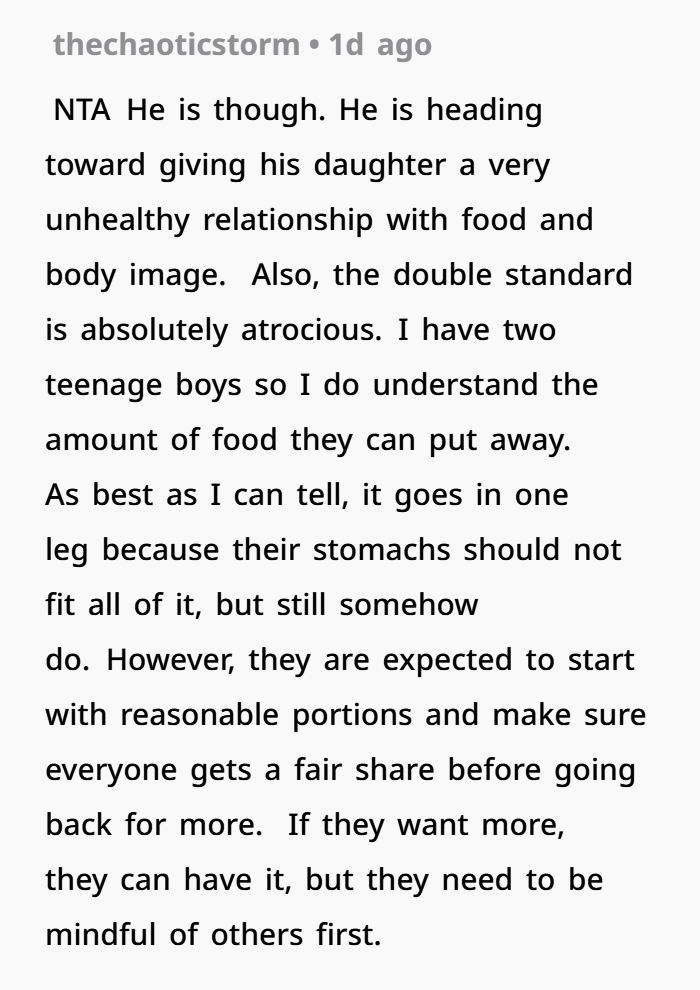
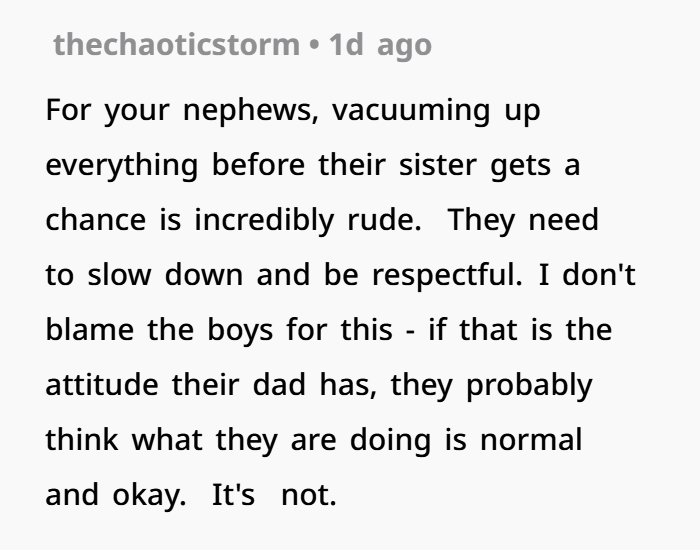
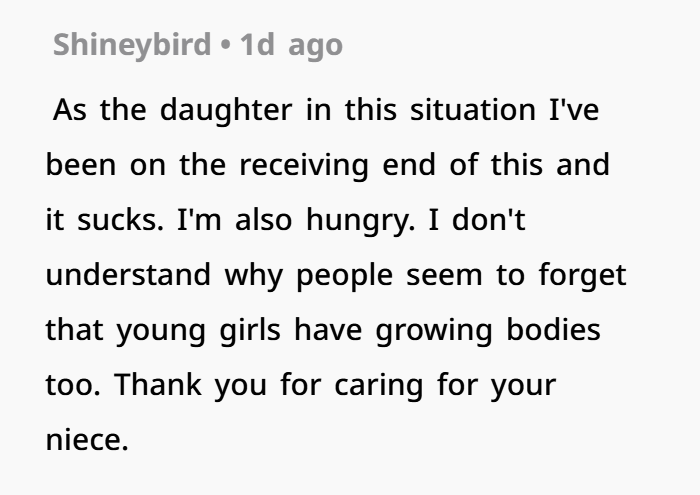
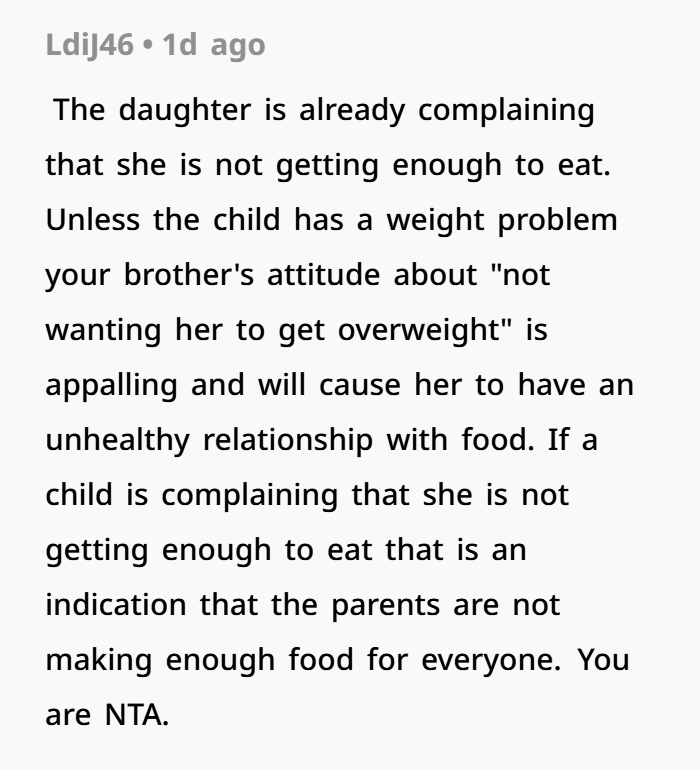
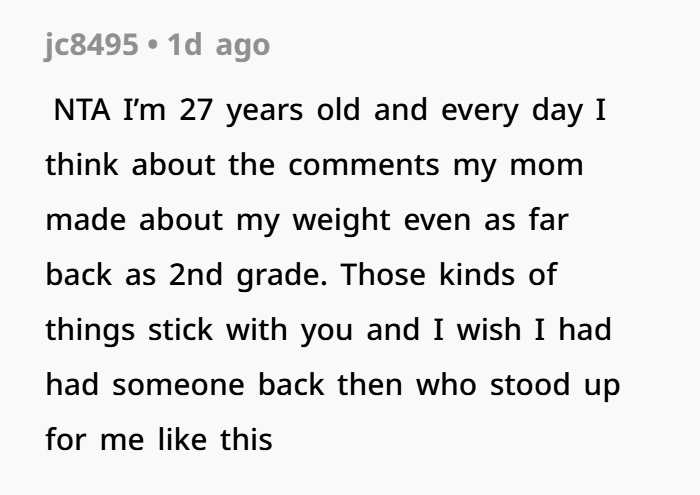
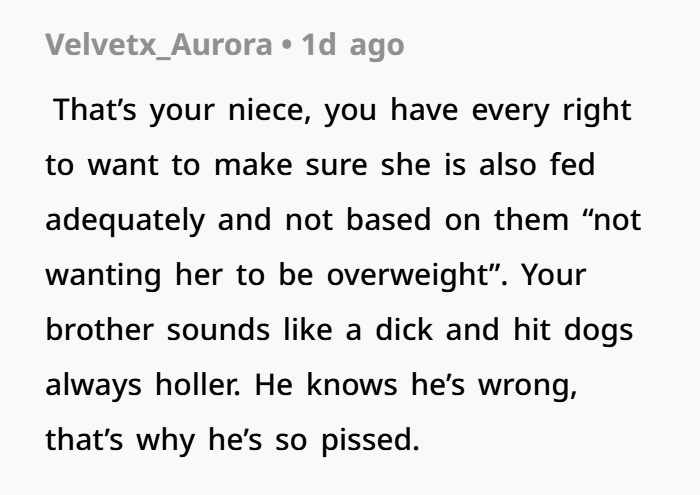
Many readers would likely see the uncle as caring, not interfering.
He noticed his niece often felt overlooked and made sure she had something to eat. For many people, the real concern wasn’t that he bought extra snacks. It was why she needed someone to do it.
Being told her athletic brothers needed more food was one thing. Hearing concerns about her own weight sent a very different message.
At 14, those messages can shape how a girl thinks about food and her body. They can also make normal hunger feel like something to feel guilty about.
That’s why many readers focused on fairness rather than the snacks themselves.
Children may have different needs, but each child should have enough to eat. No one should feel less deserving of food because of their weight or activity level.
In the end, the uncle’s small gesture showed his niece that someone had noticed her. For many readers, that sense of care was the most important part of the story.