He Wanted Half the House but None of the Responsibility — Why I Called Off the Wedding
Money disagreements can create serious pressure in relationships, but they often reveal deeper issues about trust, responsibility, and expectations.
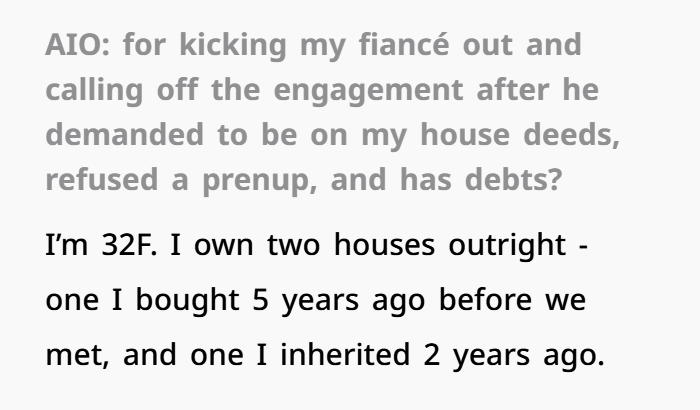
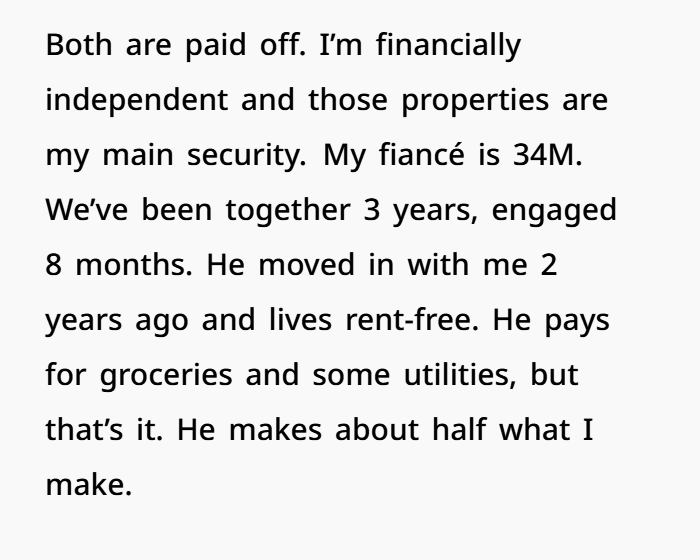
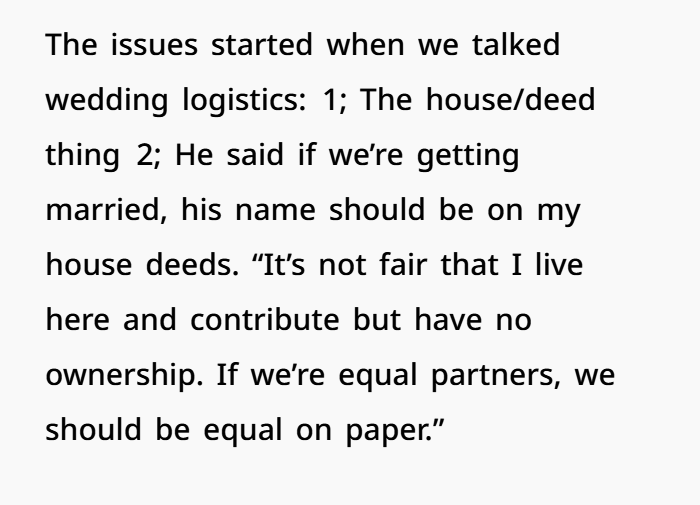
A 32-year-old woman began questioning her engagement after her fiancé asked to be added to the deeds of her two homes. One property was purchased before they started dating, while the other was inherited from her family.
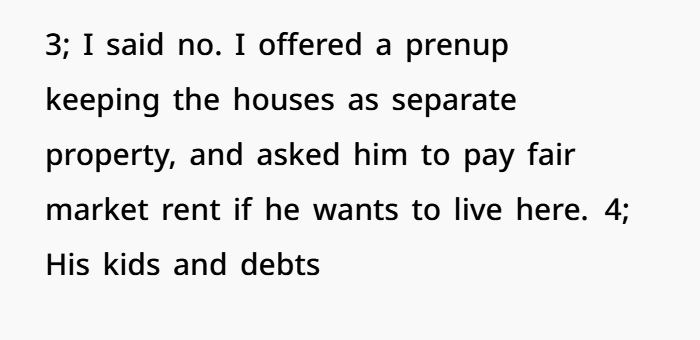
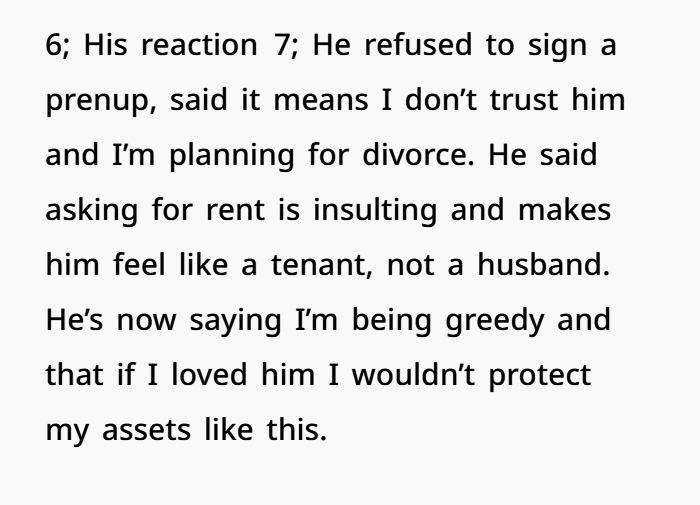
Wanting to protect the assets she had built and received, she suggested signing a prenuptial agreement before marriage. However, her fiancé viewed the request as a sign that she did not fully trust him.
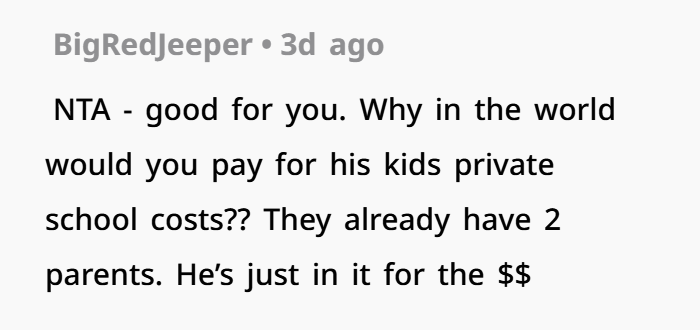
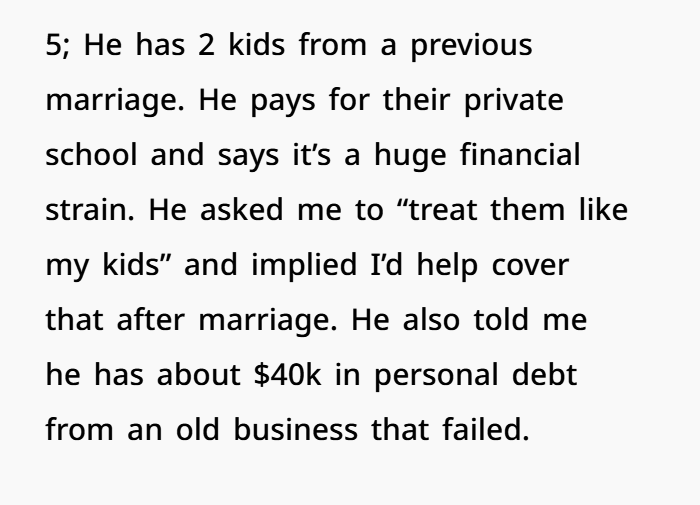
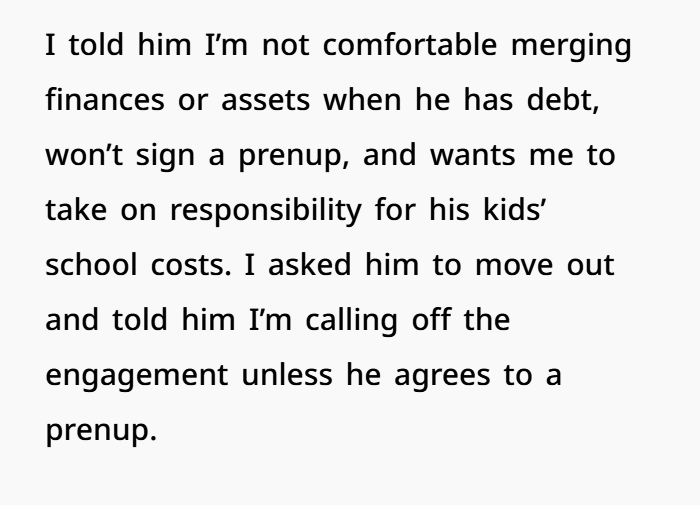
As they discussed their finances, more concerns came to light. She learned that he had about $40,000 in business debt and significant expenses related to his children’s private school education. She also felt there was an expectation that she would help cover these costs after marriage.
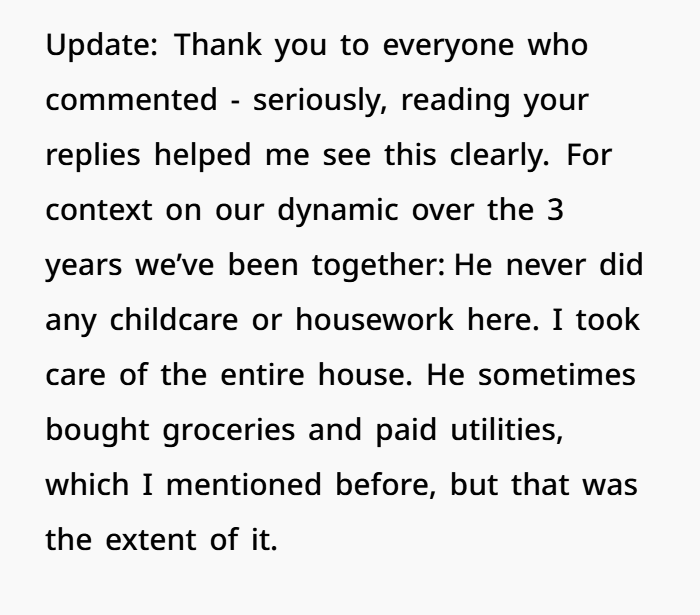
The woman believed their financial contributions were already unequal. She said her fiancé had lived in her home for years while contributing little toward household expenses. Because of this, she wanted to keep her property separate and create clear financial boundaries through a prenup.
As the disagreement continued, money became a major source of tension in their relationship. She wanted a more balanced approach to shared expenses and a clear understanding of ownership and responsibility.
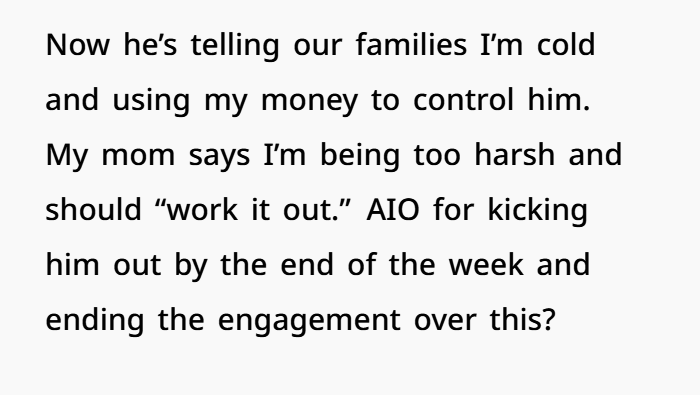
After carefully considering the situation, she decided to end the engagement and asked him to move out.
The story sparked conversations about financial planning, debt, property rights, and the importance of discussing money before marriage. Many people believe clear financial conversations can help couples avoid serious conflicts later.

This story gained attention because it highlights a challenge many couples face: balancing love, trust, and financial expectations.
While emotional connection is important in relationships, money decisions can strongly affect a couple’s future. Many readers focused on the woman’s two properties, which she owned before the relationship. One was purchased through her own work, and the other was inherited from her family.
For many people, the issue was not only about money. It was about boundaries. There is a difference between building assets together and gaining ownership of property that one partner already had before the relationship.
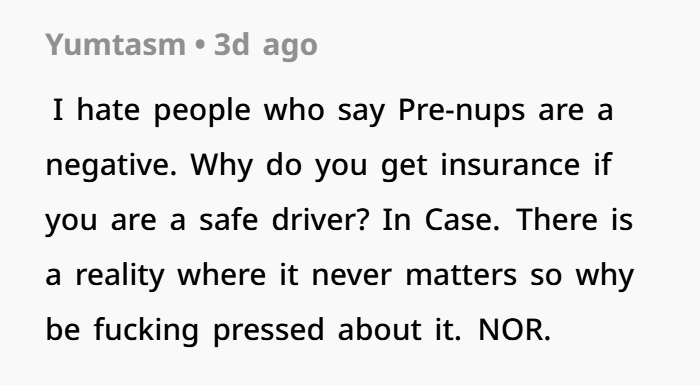
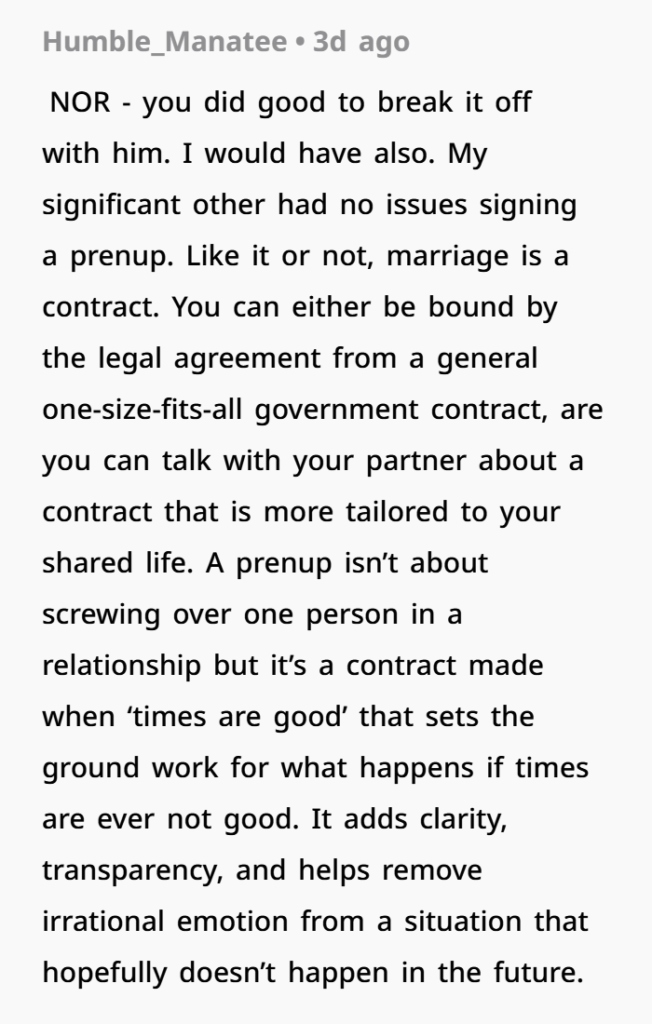
The discussion also focused on prenuptial agreements. Many couples consider prenups when they have significant assets, inherited property, businesses, debt, or children from previous relationships. These agreements can help clarify financial expectations before marriage.
Some readers felt the main problem was not the request itself but the way the couple handled the conversation. Instead of becoming a shared financial discussion, it turned into a disagreement about trust and commitment.
The fiancé’s financial situation also became part of the debate. According to the story, he had business debt and responsibilities related to his children. Debt alone does not define someone’s character, but many people believe honesty about finances is important before marriage.
Financial compatibility involves more than income. Spending habits, savings goals, debt, and expectations about shared expenses can all affect a relationship.
The story also raised questions about blended family responsibilities. Supporting a partner and their children can be part of a committed relationship, but major expenses should be discussed and agreed upon by both partners.
Advertisement – Continue Reading Below
Another issue was the balance of responsibilities. The woman felt she was carrying most housing and property-related costs, while her fiancé contributed less financially. Many readers discussed the difference between equal contributions and fair contributions. Couples may contribute in different ways, but both partners should feel respected and valued.
Property ownership was another major point. Adding someone to a property deed is a serious financial decision that can affect ownership rights and future planning. Many readers felt such choices should only be made after careful consideration.
Many people supported the woman’s decision to request a prenup because she was seeking clarity and protection for assets she already owned. They viewed it as financial planning rather than a lack of trust.
The situation shows how money disagreements often represent deeper concerns about responsibility, communication, and shared goals.
The biggest lesson from the discussion is that financial conversations before marriage are important. Clear discussions about assets, debt, and expectations can help couples build a stronger foundation for the future.
See The Comments Below