New Mom Faces Cruel Accusations From Her Mother-in-Law Just Moments After Giving Birth
The birth of a baby is usually a happy time for the whole family. Relatives often look at the newborn and try to spot familiar features. Some notice the baby’s eyes, while others see a parent’s smile or hair.
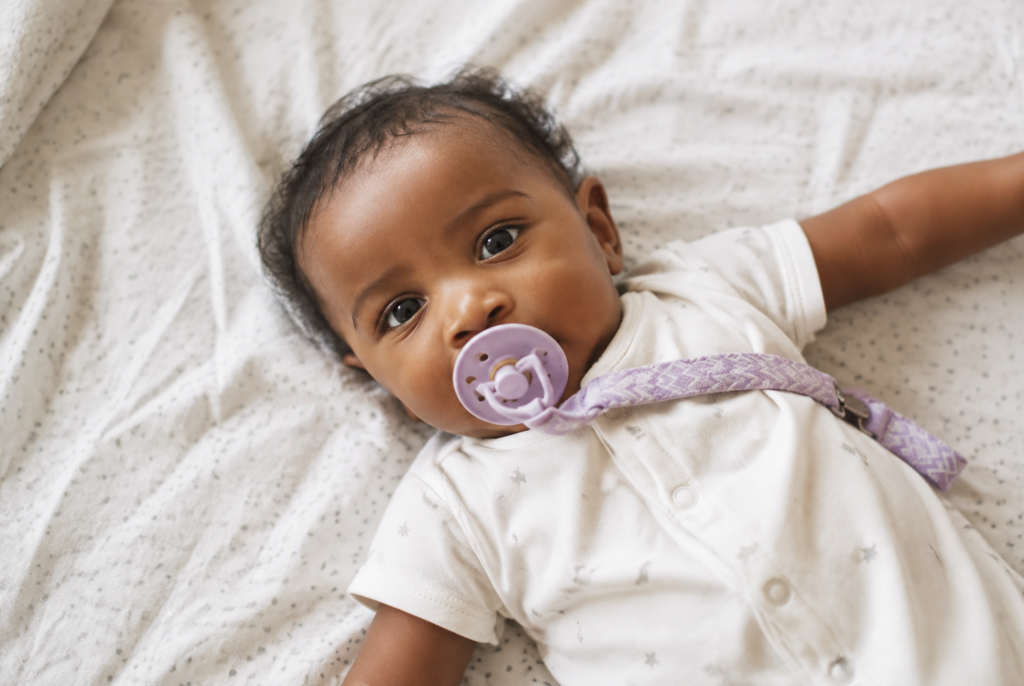
But for one new mom, this happy moment took an upsetting turn. Her baby was born with a skin tone that seemed different from both parents.
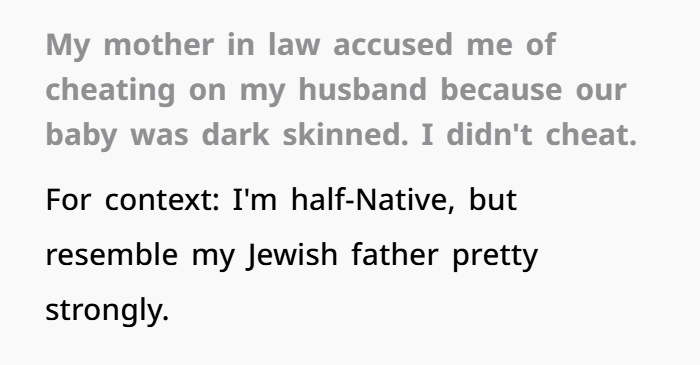
Rather than sharing in the family’s joy, her mother-in-law jumped to a cruel conclusion. She accused the new mom of cheating on her son because of the baby’s appearance.
The accusation came at the worst possible time. The mother had just gone through childbirth and was tired and emotional. Instead of getting the love and care she needed, she had to face questions about her loyalty.
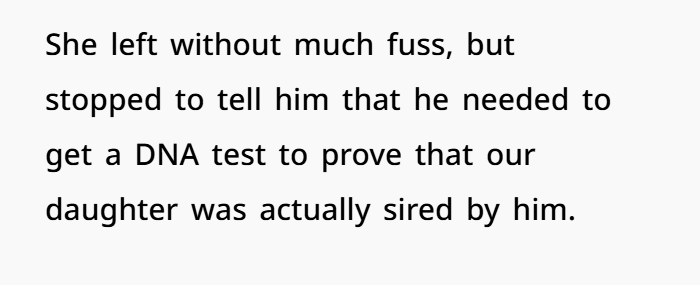
Thankfully, her husband refused to believe the accusation and stood up for his wife. Hospital staff also stepped in to protect the new mom from further stress and hurt.
As the situation unfolded, it became clear that the mother-in-law had been wrong. She had made a serious claim without knowing how traits can pass through families.
A baby’s looks aren’t always a perfect match with either parent. Skin tone, eye color, and hair color can be shaped by genes passed down through several generations. Sometimes, a child may have features that remind relatives of a grandparent or another family member.
The mother later shared her story on Reddit, showing how much harm a quick judgment can cause.
What should have been a joyful day became a painful memory because of one unfair assumption.
Her experience is a reminder that families should offer love and support when a baby arrives. A child’s appearance should never be used as a reason to accuse someone of cheating.
It also shows why knowing a little about genetics matters. Children can inherit traits in ways that surprise even their closest relatives.



The Science Behind Skin Tone and Hidden Genetic Traits
Having a mother-in-law question a baby’s skin tone can be deeply hurtful for a new mother. It becomes even more painful when those comments suggest the baby may not belong to the father.
But a baby’s appearance is not proof of anything. Genetics can explain why children sometimes look different from their parents.
How Genetics Can Affect a Baby’s Skin Tone
Human skin color is a complex trait controlled by many genes. These genes work together to determine how much pigment a person’s skin produces.
This is known as a polygenic trait. Since several genes are involved, children can inherit a mix of features from different family members. Some traits may even seem to skip a generation before appearing in a child.
In this story, the mother was half-Native and had lighter skin. However, she also carried genes from her darker-skinned Native mother. Some of those traits could have been passed on to her baby.
Advertisement – Continue Reading Below
Simply put, children inherit a mix of family traits. A baby may look like a parent, grandparent, or even a relative from several generations ago.
A baby’s skin tone can also change during the first months of life.
Research published in Skin Research and Technology in 2017 found that newborns’ skin can change as they grow. Their skin may become less red and develop a different shade over time.
These changes vary from one baby to another and depend on several factors, including genetics.
Every baby inherits half of their DNA from each biological parent. However, this does not mean they will look like an exact blend of both parents. Some children strongly resemble one parent, while others show features from older generations.
Why Do People Care So Much About Who a Baby Looks Like?
Guessing who a newborn looks like is a common family habit. Relatives often compare the baby’s eyes, nose, smile, and other features with those of their parents.
Some fathers feel a stronger connection when they notice their own features in their children.
Researchers have also studied how physical resemblance may affect a father’s feelings toward his child. Some studies suggest that fathers who see their own features in their children may feel more connected.
Even before birth, people try to guess who a baby will resemble. In one study, researchers asked parents to look at ultrasound images and decide whether the baby looked more like the mother or father.
Many mothers guessed that their babies looked more like the father. However, ultrasound images are not clear enough to show all of a baby’s facial features.
These findings show how much people value family resemblance.
Why Judging a Baby’s Appearance Can Cause Harm
Being curious about a baby’s appearance is normal. Making serious accusations based on skin tone or facial features is not.
A newborn’s skin color, hair, or facial features cannot prove whether a parent has been unfaithful. Genetics are far more complex than many people think.
Families should welcome newborns with love instead of making unfair assumptions. A new mother needs care and support, especially after going through childbirth.
Dealing With Difficult In-Law Relationships
Sometimes, family problems go beyond one hurtful comment. Repeated criticism, manipulation, and disrespect can make relationships with in-laws very stressful.
In these situations, setting clear boundaries can help protect a couple’s peace. Both partners should support each other and deal with family problems as a team.
Calm conversations can help, but repeated disrespect should not be ignored. A couple has every right to set limits on hurtful behavior.
This story brings together genetics, family relationships, and the emotions that come with welcoming a new baby.
Understanding how inherited traits work can prevent many unfair judgments. Most importantly, every child deserves to be welcomed with love, and every new mother deserves kindness and respect.
See the comments to know what people said
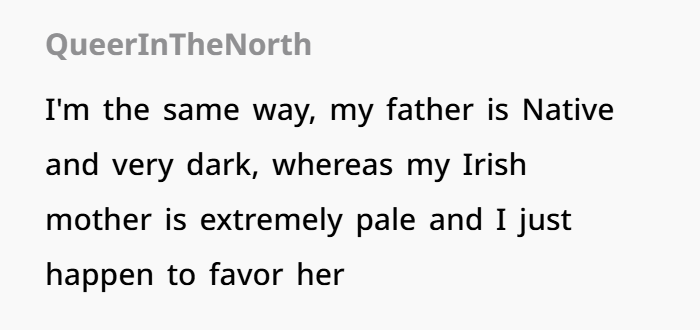



A baby’s appearance can sometimes surprise family members, but it should never lead to blame or hurtful accusations. Genetics are more complex than simply expecting a child to look like one parent.
Family traits can appear in unexpected ways. A newborn’s skin tone, hair, and facial features may reflect genes passed down through several generations.
This story reminds us that kindness, patience, and understanding matter most when welcoming a new baby. Instead of making quick judgments, families should focus on giving the new parents love and support. After all, a baby’s arrival should be a time of joy, not conflict.