AITAH for Refusing to Cover My Ex-Fiancée’s Wedding Costs After Calling Off Our Engagement?
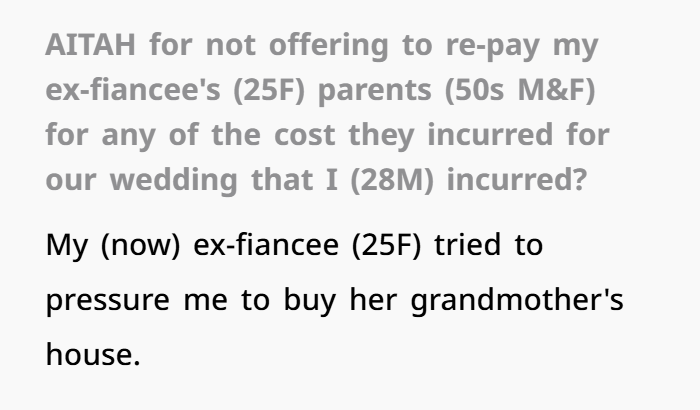
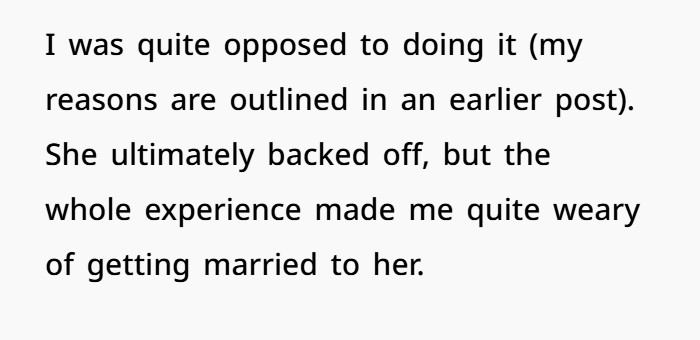
A man decided to call off his engagement after having serious doubts about his upcoming marriage. The trouble began when his fiancée asked him to buy her grandmother’s house. He was not comfortable making such a major financial commitment.
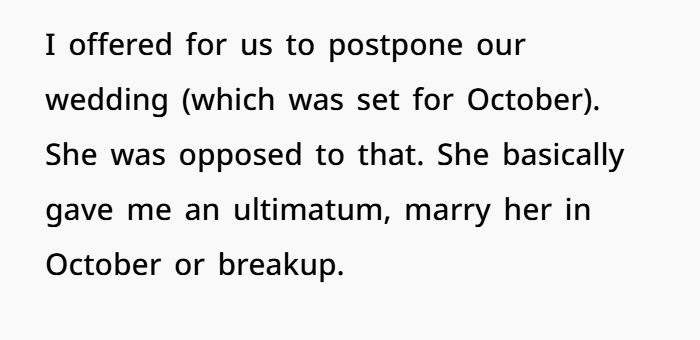
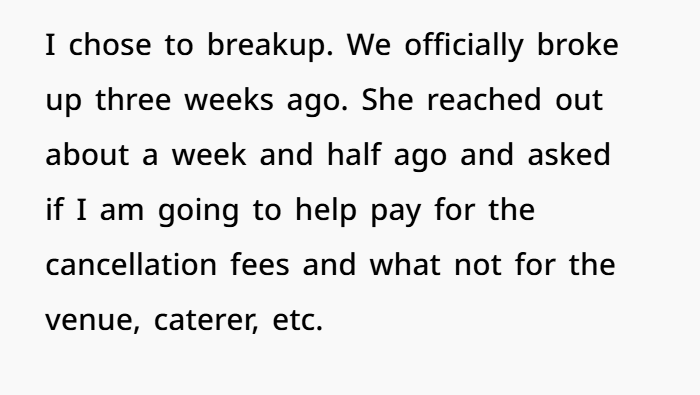
As the wedding date in October got closer, he suggested postponing the event. He wanted more time to think about their future and make sure they were both ready for marriage.
His fiancée refused to delay the wedding. She gave him a choice: go ahead with the marriage or end the relationship.
After thinking it over, he decided to walk away from the engagement.
Things became more complicated when his ex-fiancée contacted him about the money lost from cancelling the wedding. She wanted him to pay part of the costs, including deposits for the venue, catering, and other wedding services.
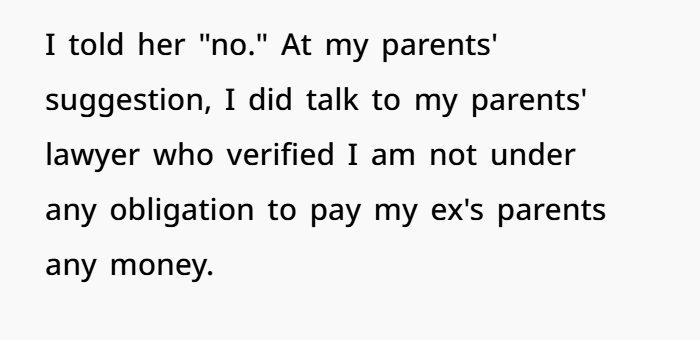
He refused to pay. He believed he had no legal responsibility for those expenses and even spoke with a lawyer before making his decision.
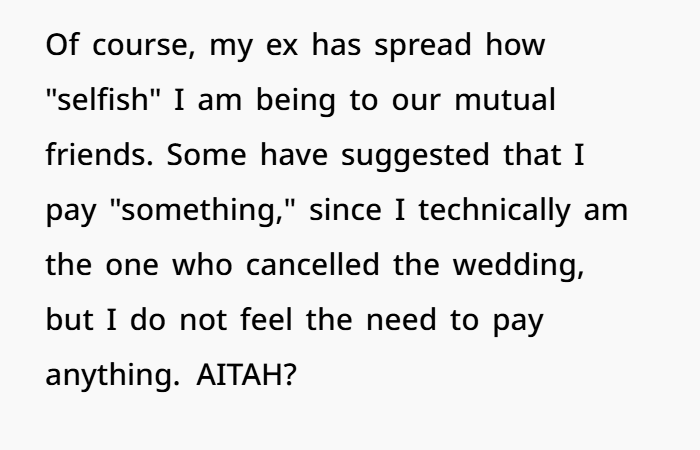
However, not everyone agreed with him. Some mutual friends felt he should help cover the costs because he was the one who ended the engagement. His ex-fiancée also called him selfish for refusing to contribute.
Now, he is questioning whether he made the right choice or should have taken some financial responsibility for the cancelled wedding.

Wedding cancellations can become stressful and expensive very quickly. Couples often spend thousands of dollars planning their big day. When an engagement ends, deciding who should cover the lost money can create even more conflict.
In this case, the relationship ended after a serious disagreement about buying a family property. The man was uncomfortable with the idea and began having doubts about their future together. He suggested delaying the wedding so they could think things through.
His fiancée refused to postpone the ceremony. She made it clear that they would either get married in October or end the relationship. After thinking about his options, he chose to call off the engagement.
The breakup was already painful, but the financial dispute made things worse.
Who Should Pay for Wedding Cancellation Costs?
When a wedding is called off, couples may lose money paid to vendors. These expenses can include:
- Wedding venue deposits
- Catering payments
- Photography fees
- Decorations and flowers
- Wedding invitations
- Travel and hotel bookings
According to wedding planning advice from sources like The Knot, vendor contracts often explain what happens when a wedding is cancelled. Some deposits are non-refundable because vendors have already reserved the date and may have turned down other bookings.
However, there is no single rule that makes one person responsible for every cancellation cost after a breakup.
Does Calling Off the Engagement Make Him Responsible?
This is where opinions begin to differ.
Advertisement – Continue Reading Below
Some people believe the man should help cover the lost money because he was the one who ended the engagement. His ex-fiancée and her family had spent money expecting the wedding to take place.
Others believe marriage is a shared choice. Nobody should feel forced to marry someone when they have serious doubts about the relationship.
Delaying or cancelling a wedding can be painful, but moving forward with a marriage without feeling ready can lead to much bigger problems.
How the House Disagreement Changed Everything
The disagreement over buying the grandmother’s house appears to have exposed deeper problems between the couple.
Buying property is a major financial commitment. It can affect savings, debt, ownership rights, and long-term plans.
Couples should discuss these matters carefully before making such decisions. They need to understand who will own the property, how payments will work, and what happens if their relationship ends.
For this couple, the argument may have been about more than buying a house. It raised questions about whether they could agree on important financial decisions and build a future together.
Was Refusing to Pay the Wedding Costs Unfair?
The biggest criticism against the man is that his decision left his ex-fiancée’s family dealing with wedding expenses.
That concern is understandable. Weddings can be expensive, and parents often contribute money because they expect the celebration to happen.
But there is another side to consider.
He did not simply cancel the wedding without trying to find another solution. He suggested postponing it because he had serious concerns about their future.
His fiancée refused to delay the ceremony and made it clear that the relationship would end if they did not marry in October.
Both of them had a role in how things ended. That makes it harder to argue that one person should automatically carry the entire financial burden.
Ultimately, any responsibility may depend on the agreements they made, the vendor contracts, and the laws where they live. His decision to speak with a lawyer was a sensible step before responding to the payment demand..
See the comments to know what people said
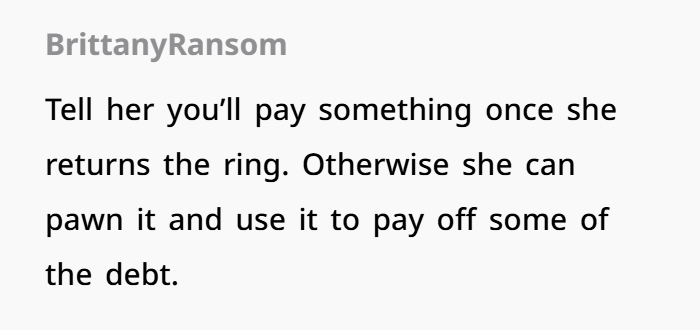

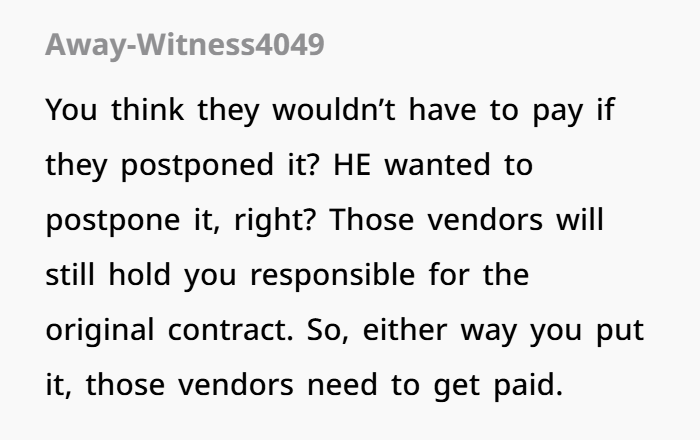
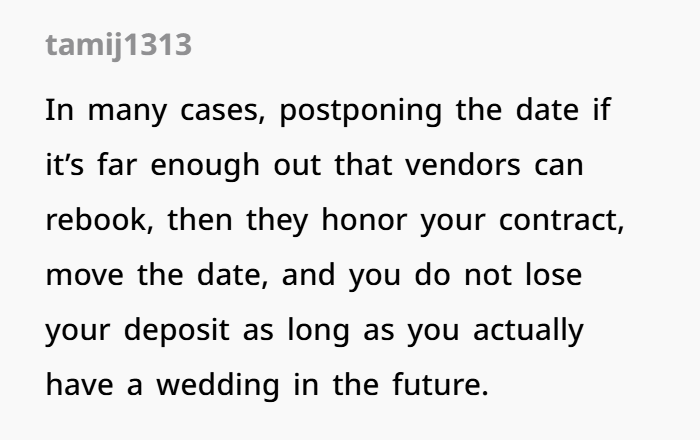

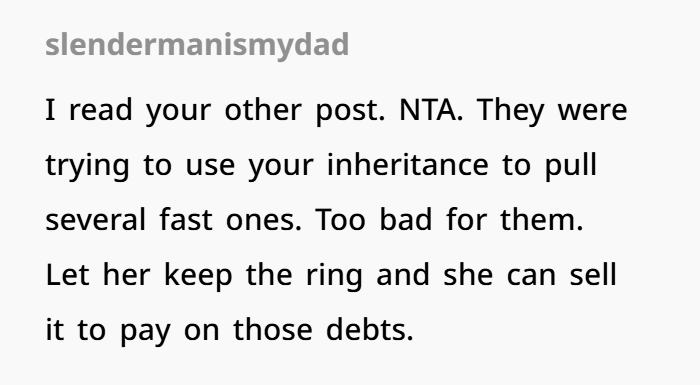
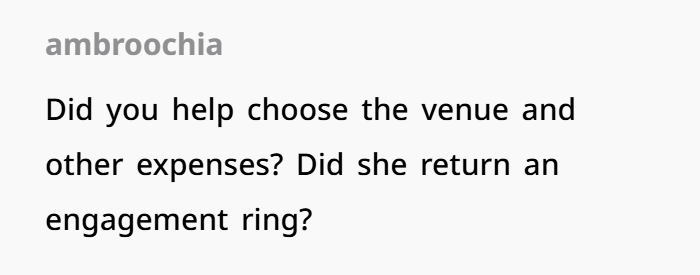
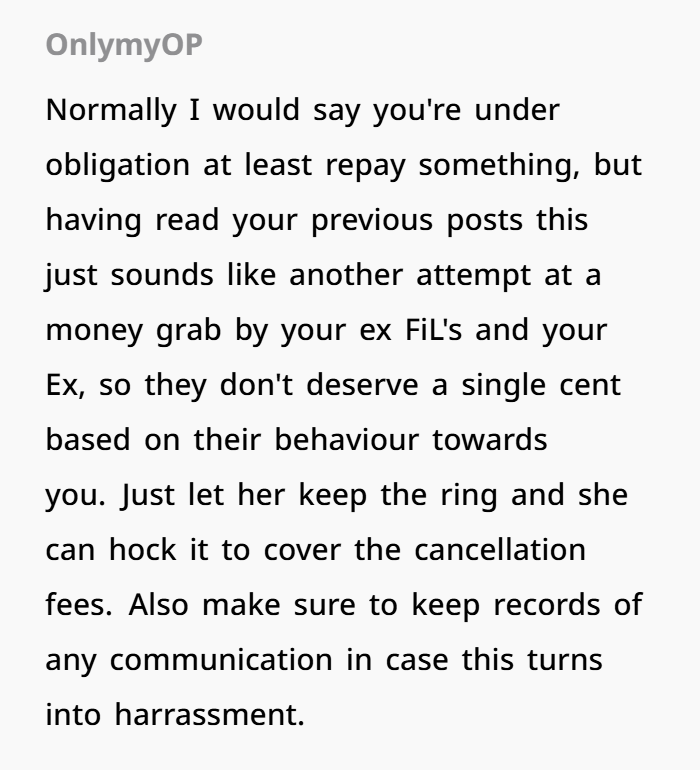
This situation is difficult because neither side can walk away without feeling hurt or disappointed.
His ex-fiancée and her parents may feel upset about losing money on a wedding they had spent months planning. At the same time, he may believe it is unfair to pay thousands of dollars for an event that never happened, especially after deciding he was no longer ready for marriage.
But this disagreement goes beyond money. It raises an important question: Should someone have to pay for ending an engagement when staying in the relationship could have led to even bigger problems?
Some people may feel he should offer to cover part of the costs as a kind gesture. Others believe he should not be expected to pay for a wedding he no longer wanted.
In the end, the answer depends on the couple’s agreements, personal values, and the circumstances surrounding their breakup. What matters most is handling the situation fairly and respecting each other’s decisions.