Woman Tells Her Sister-in-Law to Leave the Family Group Chat After She Complains About Photos of Her Daughter
A mother wanted to share happy pictures of her little girl with her family. But she never expected those simple photos to cause so much trouble.
Her sister-in-law had been dealing with infertility for years. She had also lost a pregnancy, which was a very painful experience for her.
The mother knew how hard things had been. She understood why baby pictures might bring back sad memories and agreed to be more careful about what she shared.
Sadly, the problems did not end there.
As the little girl grew up, her aunt continued to stay away from her. She avoided her at family gatherings and missed important celebrations.
Things became even more uncomfortable when she asked the mother not to bring her daughter to Christmas.
The mother was hurt by the request. Still, she tried to understand her sister-in-law’s feelings.
Then came a family group chat argument that changed everything.
Relatives were sharing photos from their fall outings. Some had gone apple picking, while others had visited farms and pumpkin patches.
The mother joined in and shared three pictures of her family enjoying a pumpkin patch. Her daughter was in the photos.
Not long after, her sister-in-law called. She wanted the mother to stop sharing pictures of the child.
But the mother had finally had enough.
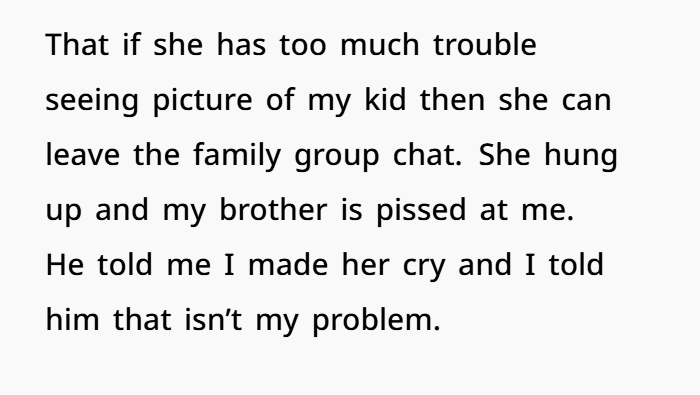
She refused and told her sister-in-law that she could leave the group chat if seeing the pictures was too upsetting.
Her sister-in-law ended the call in tears. Soon after, the mother’s brother called and expressed his anger.
Now, the family was dealing with another painful disagreement, and the mother was left wondering if she had been too harsh.
Now, the mother is questioning whether she went too far or simply stood up for her daughter’s place in the family.
Advertisement – Continue Reading Below



A Long Battle With Infertility Changed Everything
According to the mother’s account on Reddit’s Am I the A-hole community, the tension in her family had been building for around five years.
Her sister-in-law had been diagnosed with infertility years earlier, possibly while she was still in high school or college. She had known for a long time that getting pregnant naturally could be difficult.
Her husband, who is the mother’s brother, had also undergone fertility testing. According to the post, he did not have the same problem.
The couple wanted children, but their hopes had not worked out as planned.
About three years before the argument, the sister-in-law became pregnant. Sadly, she suffered a miscarriage around four months into the pregnancy.
The loss was devastating for her.
The American College of Obstetricians and Gynecologists explains that pregnancy loss can bring deep sadness, anxiety, anger, and grief. Some people also find it painful to see others enjoying the family life they had hoped for.
For this woman, those feelings seemed to affect nearly every interaction involving her young niece.
The Trouble Started When Her Niece Was Born
Around the same time as the miscarriage, the mother welcomed her daughter into the family.
It should have been a happy moment for everyone. But the timing made things especially painful for her sister-in-law.
When the mother shared pictures of her newborn daughter in the family group chat, her sister-in-law complained.
She felt that posting baby photos was cruel, given what she had recently experienced.
The mother understood that the loss was still fresh. Rather than argue, she agreed to be more careful about sharing pictures.
At that point, she seemed willing to make changes to protect her sister-in-law’s feelings.
But as the months passed, the requests did not stop.
Family Gatherings Became Uncomfortable
The daughter was the only child in the extended family, yet her aunt wanted almost nothing to do with her.
According to the mother, her sister-in-law would avoid the little girl during family gatherings.
If the mother walked toward her while holding her daughter, the sister-in-law would simply leave.
She also refused to attend the child’s important celebrations.
When the little girl’s birthday came around, her uncle attended, but her aunt stayed home.
The mother found this increasingly upsetting. She understood that her sister-in-law was grieving, but she was also worried about how her daughter was being treated.
Research and medical guidance show why this situation can be difficult.
According to Northwestern Medicine, people dealing with infertility often need understanding, privacy, and emotional support from their families.
Still, the mother was facing a different concern. She wanted her daughter to feel welcome around relatives, not like someone others needed to avoid.
The situation became even more uncomfortable when Christmas came into the picture.
Then Came an Unexpected Christmas Request
The previous year, the sister-in-law made a request that left the mother frustrated.
She asked whether the mother could leave her daughter at home for Christmas.
This was no longer just about avoiding baby pictures in a group chat. The request involved keeping a child away from a family holiday.
The mother had already watched her sister-in-law avoid her daughter at gatherings and miss important milestones.
Now, she was being asked not to bring her own child to Christmas.
For someone trying to balance family relationships, that was a difficult request to hear.
A Prisma Health article about coping with infertility during the holidays explains that family celebrations can be painful for people struggling to have children.
The article suggests that people may need to set personal boundaries, skip certain gatherings, or take time away when things become overwhelming.
But in this family’s situation, the sister-in-law was asking for the child to stay away instead.
That difference became a major part of the disagreement.
The Mother Tried Talking About the Problem
Before the pumpkin patch argument, the mother had already tried to address her sister-in-law’s behavior.
She wanted to understand why her daughter was being treated like someone who should not be around.
Unfortunately, the conversation did not go well.
Her sister-in-law began crying, and her brother became angry with her for bringing up the subject.
The mother also spoke privately with her brother many times.
Each conversation seemed to end with the same explanation: his wife was having a difficult time.
The mother did not deny that.
She knew her sister-in-law had suffered a painful loss. But after years of trying to be understanding, she was growing frustrated.
There was also no clear sign that the family had found a way to handle the problem.
The Mayo Clinic’s guidance on miscarriage recovery explains that emotional recovery can take much longer than physical healing. Counseling and support groups may help people who continue to struggle with grief.
Of course, the Reddit post does not say whether the sister-in-law had sought professional support or infertility counseling.
What it does show is that the family had been struggling to communicate for years.
Three Pumpkin Patch Pictures Started Another Argument
The latest disagreement happened during the fall season.
Family members had been enjoying autumn activities throughout the month. Some went apple picking, while others carved pumpkins or visited local farms.
Naturally, they shared pictures of their outings in the family group chat.
The sister-in-law and her husband also joined in. They posted pictures from a trip to a nearby farm.
Seeing everyone share their fall memories, the mother decided to do the same.
She posted three pictures of herself and her family enjoying a visit to a pumpkin patch.
Her daughter appeared in the photos.
There was no pregnancy announcement or special message about having children. The pictures simply showed the family enjoying a seasonal outing, much like everyone else.
But the sister-in-law was upset.
A Phone Call Pushed the Mother to Her Limit
After seeing the pumpkin patch pictures, the sister-in-law called the mother.
She asked her not to share photos of her daughter in the family group chat anymore.
This time, the mother refused.
After years of trying to avoid upsetting her sister-in-law, she felt she had reached her limit.
She told her that if seeing pictures of the child was too difficult, she could leave the family group chat.
It was a firm response, and her sister-in-law clearly did not take it well.
She ended the call.
Soon afterward, the mother’s brother contacted her.
He was furious and said she had made his wife cry.
The mother was still upset about the situation. She told him that his wife’s reaction was not her problem.
That response only added to the tension.
Why the Family Disagreement Is So Complicated
There are two painful experiences at the center of this story.
On one side is a woman who has spent years dealing with infertility and the loss of a pregnancy. Seeing a child close to the age her own baby might have been could bring back difficult feelings, though the post does not confirm exactly what she was thinking.
On the other side is a mother who wants to share ordinary family memories without feeling that her daughter is unwelcome.
Neither concern is hard to understand.
The difficulty comes from deciding where personal boundaries should end and family expectations should begin.
The sister-in-law can choose not to attend certain celebrations or step away from conversations that upset her.
The mother, meanwhile, wants her child included in family events and photographs.
These needs do not have to be treated as opposites, but the family has struggled to find a solution.
The American College of Obstetricians and Gynecologists’ discussion of infertility and mental health describes how infertility can affect emotional well-being and how support groups or therapy can help some people manage those feelings.
That does not mean the sister-in-law’s grief has a simple fix. It does suggest that support can come from places beyond asking relatives to change every part of family life.
The Little Girl Is Also Part of the Story
One detail makes this family argument especially difficult.
The child has no control over what happened.
She did not cause her aunt’s infertility or pregnancy loss. She is simply growing up and taking part in ordinary family activities.
At the same time, the original post does not say how old the girl is now or whether she has noticed her aunt avoiding her.
That matters because there is a difference between an adult quietly taking space to manage grief and a child feeling personally rejected.
The mother appears worried about that possibility.
Her sister-in-law’s pain is real, but the mother does not want her daughter to grow up feeling that her presence causes problems.
The family may need to find a way to respect both concerns without putting the responsibility on the child.
The Group Chat Was Only Part of a Much Bigger Problem
At first glance, the argument seems to be about three pumpkin patch pictures.
But the disagreement started long before those photos appeared.
There had already been years of missed celebrations, uncomfortable family gatherings, and arguments about the child’s presence.
The group chat was simply where the latest conflict happened.
The mother had previously agreed to be more careful when sharing newborn photos, especially because her sister-in-law had recently suffered a miscarriage.
Years later, however, she was still being asked not to share pictures of her daughter.
For the mother, that request felt like another example of her child being pushed aside.
For the sister-in-law, the pictures may have brought up feelings she was still struggling to manage.
The brother’s reaction made things harder. He defended his wife, while his sister felt that her own concerns were being ignored.
In the end, the phone call left everyone upset, and the family was no closer to finding common ground.
Was Telling Her Sister-in-Law to Leave the Group Chat Too Harsh?
The mother’s words were direct, and her response to her brother may have sounded cold.
But her frustration did not appear out of nowhere.
She had spent years trying to respect her sister-in-law’s feelings while watching her daughter become a source of tension at family gatherings.
The sister-in-law had every reason to grieve her pregnancy loss and take space when she needed it.
Yet asking another parent to stop sharing ordinary pictures of her child in a family group chat is a much bigger request.
A possible middle ground would be for the sister-in-law to mute the conversation, avoid opening certain pictures, or step away when she needs time.
That would allow her to protect her emotional well-being without requiring the rest of the family to stop sharing memories.
The mother could also acknowledge her sister-in-law’s pain while making it clear that her daughter will continue to be part of family life.
The real question is not whether the sister-in-law deserves compassion. She does.
It is whether that compassion should mean keeping a little girl out of family pictures, celebrations, and holidays.
For the mother, the answer had finally become no.
And that is what turned three simple pumpkin patch photos into a much bigger family argument.
See the comments to know what people said


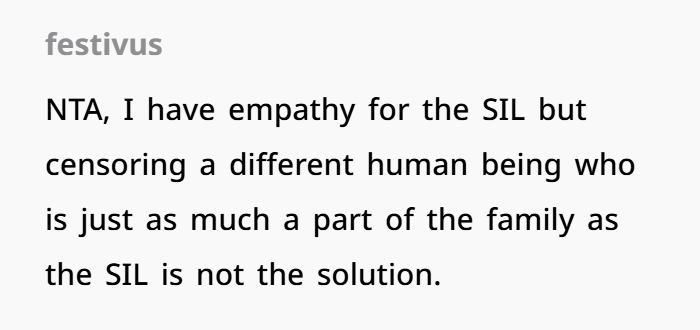
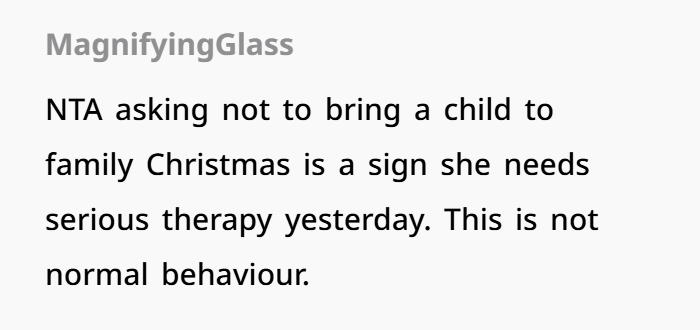
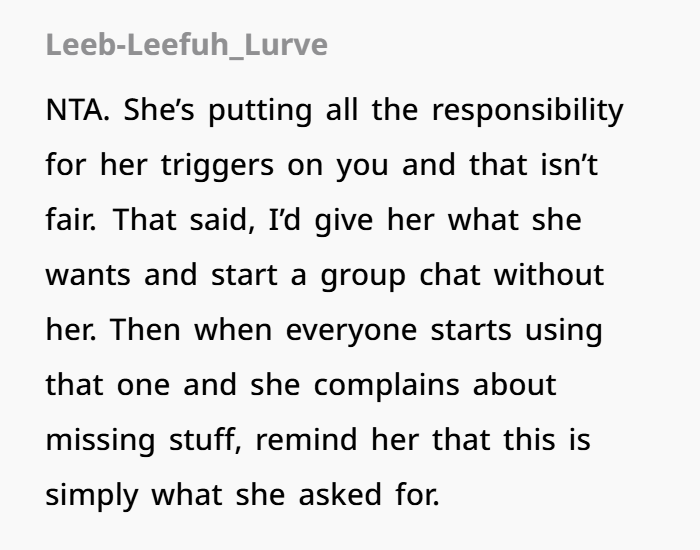

There is no doubt that infertility and pregnancy loss can be heartbreaking. The sister-in-law has been through something deeply painful, and her feelings deserve care and understanding.
But the mother has feelings, too. After years of watching her daughter being avoided at family gatherings, missing out on time with her aunt, and even being unwelcome at Christmas, her patience finally ran out.
Sharing a few pumpkin patch pictures in a family group chat was not meant to hurt anyone. It was simply a mother sharing happy memories with her relatives.
The sister-in-law has every right to protect her emotional health. She can mute the chat, skip certain conversations, or take time away when things become too painful. But asking the entire family to avoid sharing pictures of one child is a difficult expectation.
Perhaps the mother’s words could have been gentler. Still, her decision to stand up for her daughter’s place in the family is understandable.
In the end, this story is about more than infertility, family boundaries, or a group chat argument. It is about finding a way to respect someone’s grief without making an innocent child feel unwanted.